Coinbase Is Back In India—And It Wants 30% Crypto Tax Reconsidered

bitcoinistОпубликовано 2025-12-09Обновлено 2025-12-09

Введение

Coinbase has resumed cryptocurrency trading services in India after a two-year absence, following its registration with India’s Financial Intelligence Unit. The exchange initially entered India in 2022 but suspended services in 2023 after losing access to the Unified Payments Interface (UPI), which halted fiat deposits. Users can currently only trade crypto-to-crypto, but fiat on-ramps using Indian Rupees are planned for 2026. Coinbase is advocating for a reconsideration of India’s strict crypto tax policies, which include a 30% tax on profits and a 1% TDS on all transactions. The company has also invested in local exchange CoinDCX, signaling a long-term commitment to the Indian market.

Digital asset exchange Coinbase has restarted crypto trading in India after a two-year absence, with fiat deposits planned to arrive in 2026.

Coinbase Has Returned To India For The First Time Since 2023

As reported by TechCrunch, Coinbase has resumed user onboarding in India for the first time since pulling out of the country back in 2023, more than two years ago. The American crypto exchange ranks as the largest public digital asset company in the world, hosting around $516 billion in assets on its platform.

Initially, the exchange first entered India in 2022, but only a few days after beginning services, it had to suspend UPI payments. UPI, short for Unified Payments Interface, is the most widely adopted real-time digital payments instrument in India. The National Payments Corporation of India (NPCI) had said shortly after Coinbase’s launch that it wasn’t aware of any crypto exchange using UPI.

With UPI access gone, Coinbase users no longer had a way to purchase digital assets on the platform using fiat. The exchange stopped new user signups in June 2023, with a complete discontinuation of services happening in September 2023.

“We had millions of customers in India, historically, and we took a very clear stance to off-board those customers entirely from overseas entities, where they were domiciled and regulated,” said Coinbase’s APAC director, John O’Loghlen, at India Blockchain Week (IBW). O’Loghlen added that the decision to pull out didn’t come without hesitation.

Fast-forward to 2025, and Coinbase announced in March that it had registered with India’s Financial Intelligence Unit (FIU), allowing it to provide crypto services in the country. The platform opened in early access in October, and now, it has seen a full public launch. So far, users can only access crypto-to-crypto trading, but according to O’Loghlen, a fiat on-ramp is planned to become available next year. This would allow users to buy digital assets using the Indian Rupee (INR).

While India isn’t closed off to cryptocurrencies like its northern neighbor, China, it still has a relatively strict digital-asset regulation regime. The nation collects a 30% tax on investor crypto profits and allows for no offsets against losses. Additionally, it charges a 1% Tax Deducted at Source (TDS) on all transactions, as a method of tracking digital asset activity.

Naturally, this taxation regime isn’t ideal for crypto companies, as it directly affects adoption. O’Loghlen said that Coinbase is hoping the Indian government will relax the tax to make it more convenient for investors to hold digital assets.

Reopening its exchange isn’t the only move that Coinbase has made in the subcontinent recently. As announced on its blog, the platform has made an investment in Indian crypto exchange CoinDCX. “Taken together, these steps reflect a clear commitment: we believe India and its neighbors will help shape the future of the global onchain economy,” noted the post.

Bitcoin Price

At the time of writing, Bitcoin is trading around $91,800, up more than 7% over the last week.

The price of the coin seems to have recovered from its recent drop | Source: BTCUSDT on TradingView

Похожее

Can Alibaba Cloud Rewrite Itself?

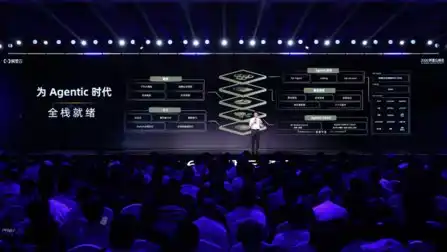
Over the past five months, Alibaba Cloud's MaaS (Model as a Service) revenue has surged 15x, marking a strategic overhaul where the company is shifting its 17-year-old system designed for "humans using cloud" to a new paradigm centered on "Agents consuming Tokens." At its recent summit, Alibaba Cloud announced a full-stack upgrade encompassing "chip-cloud-model-inference," all optimized for AI Agents. Key launches include the new AI product portal "QianWen Cloud," hyper-node servers powered by the in-house AI chip Zhenwu M890, and the latest flagship model, Qwen3.7-Max. Senior VP Liu Weiguang described this as building "China's largest AI factory," where chips are raw materials, the cloud is the workshop, models are machines, and the inference platform is the assembly line, with Tokens as the final product. The company is now emphasizing its chip strategy, unveiling the Zhenwu M890 and a two-year roadmap for future chips. With over 560,000 chips deployed across 400+ clients, Alibaba Cloud aims to control the marginal cost per Token, mirroring Google's integration of TPU and Gemini for optimal cost-performance. The cloud infrastructure itself is being rewritten. Traditional cloud interfaces are being transformed into standardized, Agent-callable Skills. A new scheduling logic focuses on "task scheduling" over "resource scheduling" to handle the unpredictable, elastic workloads of Agents. Liu noted that AI applications now automatically provision cloud resources, with one customer's daily automated provisioning equaling two weeks of manual work. For models, the focus has shifted from conversational prowess to execution capability. Qwen3.7-Max demonstrated this by autonomously writing and optimizing a production-grade AI compute kernel for the new Zhenwu M890 chip over 35 hours, achieving a 10x performance improvement. The underlying Bailian platform was upgraded for efficiency, and it maintains an open ecosystem, hosting third-party models. This restructuring extends beyond technology to sales, organization, and metrics. Alibaba Cloud has established dedicated MaaS sales teams, separated from traditional IaaS, with new KPIs focusing on high-quality Tokens that solve real problems, the number of core business systems integrated with models, and the efficiency of Agent task completion. The underlying bet is clear: AI represents an opportunity orders of magnitude larger than before. Despite the uncertainty, Alibaba Cloud is aggressively rebuilding its entire system, betting on an AI-driven future where Tokens could become its largest product line.

marsbit14 мин. назад

Can Alibaba Cloud Rewrite Itself?

marsbit14 мин. назад

Those Who Rushed into SpaceX's Private Secondary Market Are Bewildered in the Greatest Wealth Creation Wave Ever

Investors are rushing into SpaceX’s private secondary market ahead of its historic IPO, but many are finding confusion instead of clarity. While early backers like Darsana Capital are poised for astronomical returns—turning a $600M bet into roughly $150B—other buyers face uncertainty about whether they actually own SpaceX shares at all. The frenzy stems from AI-driven FOMO, as soaring valuations for private companies like OpenAI and SpaceX create intense demand for pre-IPO exposure. This has fueled a booming but opaque secondary market, where special purpose vehicles (SPVs) layer investments, adding fees and obscuring ownership. Some investors are three or four layers removed from the actual stock, unable to verify their holdings. With companies staying private longer—SpaceX for 24 years—secondary trading has grown complex and risky. Platforms have faced fraud, bankruptcy, and regulatory scrutiny. Now, firms like Anthropic and OpenAI are publicly rejecting unauthorized transfers, warning that shares sold through certain platforms may be invalid. SpaceX’s IPO filing in June will finally reveal the official shareholder list, resolving these uncertainties. Until then, buying into SpaceX through secondary channels remains a high-stakes gamble—a blind box in a market overflowing with capital and complexity.

marsbit26 мин. назад

Those Who Rushed into SpaceX's Private Secondary Market Are Bewildered in the Greatest Wealth Creation Wave Ever

marsbit26 мин. назад

Warsh's First Conundrum: Rate Cuts, Inflation, and a Fractured Fed

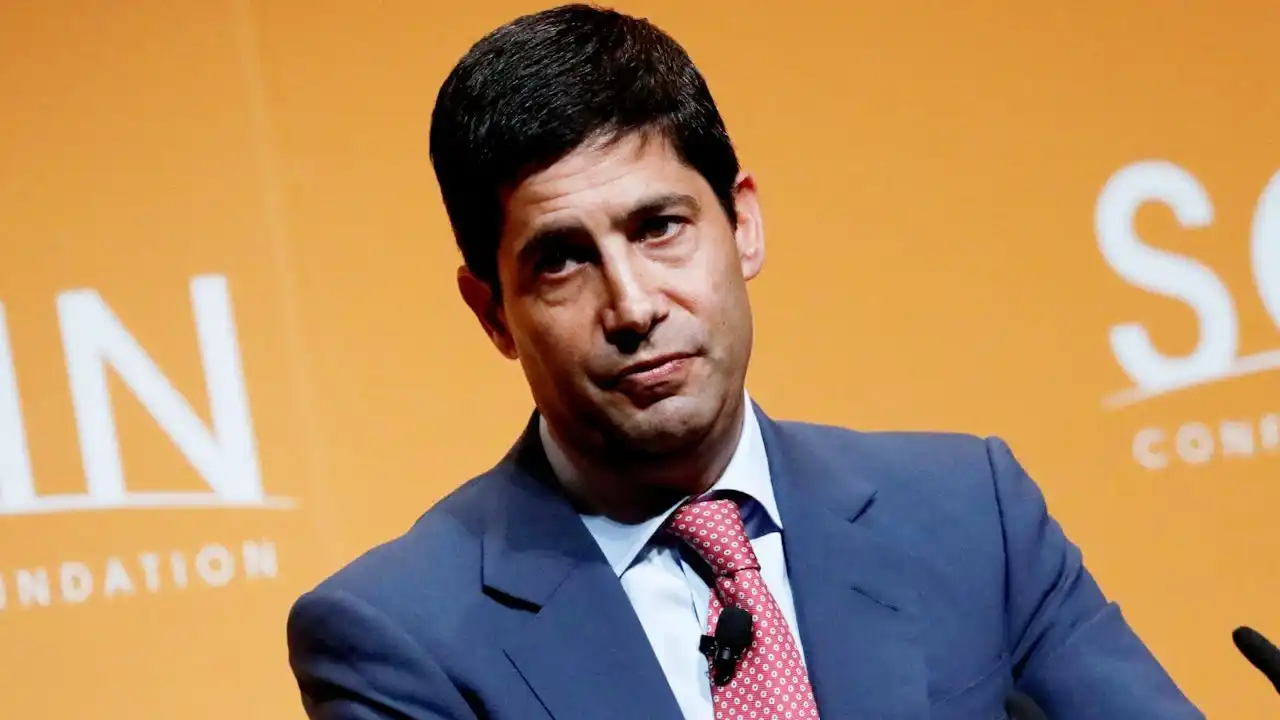
Walsh's First Dilemma: Rate Cuts, Inflation, and a Divided Fed Kevin Warsh officially assumed the Fed Chairmanship on May 15th, inheriting a central bank deeply divided over inflation. Contrary to market expectations of a dovish stance due to his appointment by President Trump, Warsh's historical record shows early and consistent hawkish concerns about inflation. The Fed he leads is fractured, with three FOMC members recently dissenting against even hinting at future rate cuts. The immediate challenge is surging inflation. While the Iran-related oil shock is a temporary factor, core CPI and services inflation are accelerating, showing signs of becoming entrenched—echoing the Fed's 2022 "transitory" misstep. Warsh faces the task of building consensus within a committee where several members believe policy may not be restrictive enough, especially if the neutral interest rate (r-star) is higher than currently estimated. Politically, Warsh is caught between Trump's desire for rate cuts and the economic reality of persistent price pressures. Any move perceived as bowing to political pressure could undermine Fed independence. Market implications are significant. Long-term Treasury yields (e.g., 30-year at 5.19%) could rise further, especially if the June FOMC statement hints at possible tightening. Tech stocks face continued valuation pressure from higher rates. The key variable is progress in Iran negotiations; a breakthrough before the June meeting could temporarily ease oil-driven inflation, but stubborn services inflation would remain. All eyes are on Warsh's first post-FOMC press conference on June 17th. His wording on inflation and policy will reveal how much the market has mispriced his stance and the Fed's likely path forward.

marsbit35 мин. назад

Warsh's First Conundrum: Rate Cuts, Inflation, and a Fractured Fed

marsbit35 мин. назад

Торговля

Спот
Фьючерсы

Популярные статьи

Как купить MEGA

Добро пожаловать на HTX.com! Мы сделали приобретение MegaETH (MEGA) простым и удобным. Следуйте нашему пошаговому руководству и отправляйтесь в свое крипто-путешествие.Шаг 1: Создайте аккаунт на HTXИспользуйте свой адрес электронной почты или номер телефона, чтобы зарегистрироваться и бесплатно создать аккаунт на HTX. Пройдите удобную регистрацию и откройте для себя весь функционал.Создать аккаунтШаг 2: Перейдите в Купить криптовалюту и выберите свой способ оплатыКредитная/Дебетовая Карта: Используйте свою карту Visa или Mastercard для мгновенной покупки MegaETH (MEGA).Баланс: Используйте средства с баланса вашего аккаунта HTX для простой торговли.Третьи Лица: Мы добавили популярные способы оплаты, такие как Google Pay и Apple Pay, для повышения удобства.P2P: Торгуйте напрямую с другими пользователями на HTX.Внебиржевая Торговля (OTC): Мы предлагаем индивидуальные услуги и конкурентоспособные обменные курсы для трейдеров.Шаг 3: Хранение MegaETH (MEGA)После приобретения вами MegaETH (MEGA) храните их в своем аккаунте на HTX. В качестве альтернативы вы можете отправить их куда-либо с помощью перевода в блокчейне или использовать для торговли с другими криптовалютами.Шаг 4: Торговля MegaETH (MEGA)С легкостью торгуйте MegaETH (MEGA) на спотовом рынке HTX. Просто зайдите в свой аккаунт, выберите торговую пару, совершайте сделки и следите за ними в режиме реального времени. Мы предлагаем удобный интерфейс как для начинающих, так и для опытных трейдеров.

236 просмотров всегоОпубликовано 2026.04.30Обновлено 2026.04.30

Как купить MEGA

Как купить TWT

Добро пожаловать на HTX.com! Мы сделали приобретение Trust Wallet (TWT) простым и удобным. Следуйте нашему пошаговому руководству и отправляйтесь в свое крипто-путешествие.Шаг 1: Создайте аккаунт на HTXИспользуйте свой адрес электронной почты или номер телефона, чтобы зарегистрироваться и бесплатно создать аккаунт на HTX. Пройдите удобную регистрацию и откройте для себя весь функционал.Создать аккаунтШаг 2: Перейдите в Купить криптовалюту и выберите свой способ оплатыКредитная/Дебетовая Карта: Используйте свою карту Visa или Mastercard для мгновенной покупки Trust Wallet (TWT).Баланс: Используйте средства с баланса вашего аккаунта HTX для простой торговли.Третьи Лица: Мы добавили популярные способы оплаты, такие как Google Pay и Apple Pay, для повышения удобства.P2P: Торгуйте напрямую с другими пользователями на HTX.Внебиржевая Торговля (OTC): Мы предлагаем индивидуальные услуги и конкурентоспособные обменные курсы для трейдеров.Шаг 3: Хранение Trust Wallet (TWT)После приобретения вами Trust Wallet (TWT) храните их в своем аккаунте на HTX. В качестве альтернативы вы можете отправить их куда-либо с помощью перевода в блокчейне или использовать для торговли с другими криптовалютами.Шаг 4: Торговля Trust Wallet (TWT)С легкостью торгуйте Trust Wallet (TWT) на спотовом рынке HTX. Просто зайдите в свой аккаунт, выберите торговую пару, совершайте сделки и следите за ними в режиме реального времени. Мы предлагаем удобный интерфейс как для начинающих, так и для опытных трейдеров.

127 просмотров всегоОпубликовано 2026.05.07Обновлено 2026.05.07

Как купить TWT

Обсуждения

Добро пожаловать в Сообщество HTX. Здесь вы сможете быть в курсе последних новостей о развитии платформы и получить доступ к профессиональной аналитической информации о рынке. Мнения пользователей о цене на A (A) представлены ниже.

活动图片