Early Bitcoin Titans Reduce Exposure As $130M BTC Hits Gemini Wallets – Details

bitcoinistОпубликовано 2026-03-11Обновлено 2026-03-11

Введение

Early Bitcoin investors Cameron and Tyler Winklevoss transferred approximately $130 million worth of BTC to Gemini exchange wallets over the past week, drawing market attention. Such large movements to exchange-linked wallets often suggest potential selling activity, though transfers may also occur for operational or liquidity management reasons. The move is notable given the twins' status as long-term Bitcoin holders and founders of Gemini. Despite the transfer, they still control around $764 million in BTC, with estimated total profits reaching about $1.8 billion. The timing coincides with increased market volatility, leading to speculation on whether this signals profit-taking or routine portfolio management. The market impact will depend on whether these coins are sold or held strategically.

Bitcoin is drawing renewed attention after Cameron and Tyler Winklevoss transferred approximately $130 million worth of BTC to Gemini hot wallets over the past week. Movements of this scale from early holders often attract market scrutiny because transfers to exchange-linked wallets can indicate that coins are becoming available for potential sale.

The Winklevoss twins are well-known figures in the cryptocurrency industry and among the earliest high-profile investors in Bitcoin. The entrepreneurs, who founded the Gemini cryptocurrency exchange in 2014, have remained closely tied to the digital asset ecosystem through exchange infrastructure, custody services, and long-term Bitcoin exposure.

When large holders move coins to exchange wallets, traders typically monitor the activity closely because it can affect short-term supply dynamics. Exchange inflows increase the amount of Bitcoin readily available for trading, which in some cases precedes profit-taking or portfolio rebalancing.

However, such transfers do not necessarily guarantee immediate selling. Large investors often move assets between custodial wallets for operational reasons, liquidity management, or internal accounting purposes.

Early Bitcoin Holders Remain Profitable as Market Volatility Builds

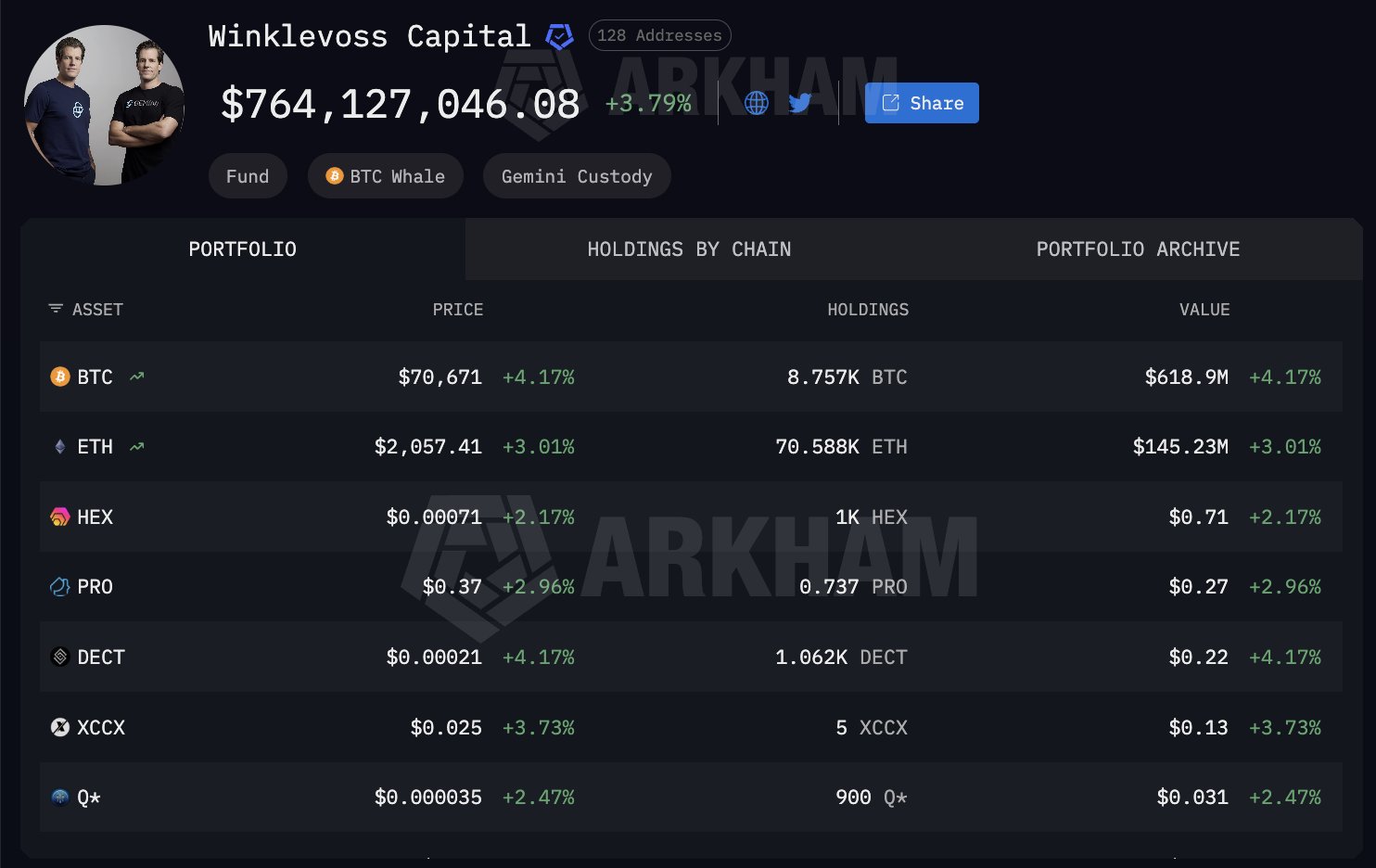
The recent transfer has also drawn attention to the scale of the Winklevoss twins’ long-term position in Bitcoin. Despite moving a portion of their holdings to Gemini wallets, the early investors still control approximately $764 million worth of BTC. Their overall profit from Bitcoin exposure is estimated at around $1.8 billion, reflecting the enormous appreciation the asset has experienced since its early adoption years.

Winkelvoss Capital Bitcoin Holdings | Source: Arkham

Positions of this magnitude often carry symbolic weight in the market. Early holders such as the Winklevoss twins represent a cohort of investors who accumulated Bitcoin when the asset traded at a fraction of today’s prices. As a result, even relatively small portfolio adjustments can translate into large nominal transfers.

The timing of the movement also feeds speculation because Bitcoin currently trades in an environment marked by rising volatility and uncertain direction. Price action in recent weeks has produced sharp swings as traders attempt to gauge the next phase of the market cycle.

In this context, transactions involving early Bitcoin investors can influence sentiment. Some participants interpret exchange transfers as a potential signal of profit-taking, while others view them as routine liquidity management.

Ultimately, the significance of the move will depend on whether these coins enter the open market or remain part of longer-term strategic positioning.

Связанные с этим вопросы

QWhy did the recent transfer of $130 million in BTC by the Winklevoss twins attract market attention?

ABecause large transfers to exchange-linked wallets from early holders often indicate that coins are becoming available for potential sale, which can affect short-term supply dynamics and attract scrutiny.

QWhat are some possible reasons, other than selling, for large Bitcoin holders to transfer assets to exchange wallets?

ALarge investors may move assets for operational reasons, liquidity management, or internal accounting purposes, not necessarily for selling.

QWhat is the estimated total value of Bitcoin that the Winklevoss twins still control after this transfer?

AThey still control approximately $764 million worth of BTC after the transfer.

QHow much total profit have the Winklevoss twins estimatedly made from their Bitcoin investments?

ATheir overall profit from Bitcoin exposure is estimated at around $1.8 billion.

QHow can transactions from early Bitcoin investors, like the Winklevoss twins, influence market sentiment in a volatile market?

AThey can influence sentiment as some participants interpret such transfers as a signal of profit-taking, while others view them as routine liquidity management, adding to market speculation.

Похожее

When Wall Street's ETH Starts to 'Earn': From BlackRock's ETHB to Ethereum's Asset Attribute Shift

Wall Street Embraces Staking: BlackRock's ETHB and Ethereum's Shift to a Yield-Generating Asset On March 12, 2026, BlackRock launched the iShares Staked Ethereum Trust (ETHB) on Nasdaq, a groundbreaking Ethereum ETF that not only holds spot ETH but also stakes a significant portion (70-95%) of its assets to generate and distribute yield to investors. This move effectively answers a long-debated question: whether ETH can be accepted by mainstream finance as a yield-bearing asset. ETHB operates by delegating staking to professional validators like Figment via Coinbase Prime. It distributes approximately 82% of the staking rewards (estimated at 2.3%-2.5% APY after fees) to shareholders monthly, while retaining 18% as service fees and charging a 0.25% annual management fee. This provides a predictable, automated cash flow, though it lacks the compounding effect of native on-chain staking unless investors manually reinvest distributions. This development is significant as it marks the formal entry of staking—a core crypto-native activity—into Wall Street's asset framework. Under new SEC leadership, regulatory barriers have eased, allowing BlackRock to legitimize staking rewards as a viable investment return. This paves the way for other PoS-based ETFs (e.g., Solana, Cardano) and may shift substantial capital from traditional spot ETFs to yield-generating products. While on-chain staking options remain popular (e.g., native staking, liquid staking via Lido/Rocket Pool, or wallet-based staking), ETHB’s introduction signals a broader shift: ETH is increasingly viewed not just as a speculative asset, but as a productive, cash-flow-generating machine. The trend of making assets "work" is now irreversible, whether through traditional financial products or decentralized protocols.

marsbit23 мин. назад

When Wall Street's ETH Starts to 'Earn': From BlackRock's ETHB to Ethereum's Asset Attribute Shift

marsbit23 мин. назад

The 4 Truths and Fee Traps Behind Polymarket's LP Market Making Incentives

Polymarket, a prediction market platform, has recently shifted its focus to incentivizing liquidity providers (LPs) to address its core issue of low liquidity. While most markets remain free, it now charges a taker fee on specific markets like crypto price movements and select sports events. This fee, highest near 50% probability, funds new LP reward programs. There are two primary reward systems: one pays LPs when their limit orders are executed (maker rewards), and another rewards simply for placing orders within a set spread to provide liquidity, even if they don't get filled. A third mechanism allows anyone to sponsor additional incentives for specific markets. A positive view argues this structure values genuine liquidity over mere trading volume, making fees earned and rewards received a potential key, anti-sybil metric for a future POLY token airdrop. It rewards users who improve market depth and stability. A contrasting, negative view claims the LP program is a "trap." Critics argue that professional market makers avoid it due to insider trading risks and that most LPs are actually losing money due to hidden "LP wear and tear" (impermanent loss), only participating based on speculation of a valuable airdrop. They warn that if Polymarket expands fees to fund these unsustainable rewards, it could lose its competitive edge of zero fees and better odds compared to traditional sportsbooks. Proposed solutions include a fixed fee only on profits, using a native POLY pool for liquidity, or charging for premium products like parlays instead of core markets.

marsbit2 ч. назад

The 4 Truths and Fee Traps Behind Polymarket's LP Market Making Incentives

marsbit2 ч. назад

The 4 Truths Behind Polymarket's LP Market-Making Incentives and the Fee Trap

Polymarket, a prediction market platform, has recently shifted its incentive structure towards rewarding Liquidity Providers (LPs) to solve its core problem of low market depth. While most markets remain free, it now charges a taker fee on specific markets (all Crypto markets, NCAAB basketball, and Serie A football) to fund new LP reward programs. The fee is calculated on a symmetric curve, highest near 50% probability. The platform has introduced two main incentive systems: one rewards LPs whose limit orders are executed (Maker Incentives), and another rewards LPs simply for providing resting liquidity, even if orders aren't filled (Liquidity Incentives). A third system allows anyone to sponsor additional rewards for specific markets. A key argument is that the fees paid and rewards earned could be a strong anti-sybil metric for a potential POLY token airdrop, valuing genuine liquidity provision over mere trading volume. However, a counter viewpoint argues the LP program is a potential trap. Critics claim that the displayed ROI for LPs is misleading as it doesn't account for "LP wear and tear"—losses from filled orders that can't be easily exited. They state professional market makers avoid it due to insider trading risks and that the model of subsidizing liquidity with massive daily rewards is unsustainable. The concern is that widespread fee implementation could erase Polymarket's competitive edge over traditional betting platforms. Proposed solutions include a fixed fee on profits only, using a POLY token for native liquidity, and charging for premium products like parlays instead of core markets.

Odaily星球日报2 ч. назад

The 4 Truths Behind Polymarket's LP Market-Making Incentives and the Fee Trap

Odaily星球日报2 ч. назад

Торговля

Спот
Фьючерсы

Популярные статьи

Тест по Bitcoin Биткоина

HTX Learn: Изучите Bitcoin halving и Заработаете Токены USDT

2.8k просмотров всегоОпубликовано 2024.04.16Обновлено 2024.04.16

Тест по Bitcoin  Биткоина

Что такое $BITCOIN

ЦИФРОВОЕ ЗОЛОТО ($BITCOIN): Комплексный анализ Введение в ЦИФРОВОЕ ЗОЛОТО ($BITCOIN) ЦИФРОВОЕ ЗОЛОТО ($BITCOIN) — это проект на основе блокчейна, работающий в сети Solana, который стремится объединить характеристики традиционных драгоценных металлов с инновациями децентрализованных технологий. Хотя он носит имя Биткойн, часто называемого “цифровым золотом” из-за его восприятия как средства хранения ценности, ЦИФРОВОЕ ЗОЛОТО является отдельным токеном, предназначенным для создания уникальной экосистемы в ландшафте Web3. Его цель — позиционировать себя как жизнеспособный альтернативный цифровой актив, хотя детали его применения и функциональности все еще развиваются. Что такое ЦИФРОВОЕ ЗОЛОТО ($BITCOIN)? ЦИФРОВОЕ ЗОЛОТО ($BITCOIN) — это токен криптовалюты, специально разработанный для использования в блокчейне Solana. В отличие от Биткойна, который выполняет широко признанную роль хранения ценности, этот токен, похоже, сосредоточен на более широких приложениях и характеристиках. Примечательные аспекты включают: Инфраструктура блокчейна: Токен построен на блокчейне Solana, известном своей способностью обрабатывать высокоскоростные и недорогие транзакции. Динамика предложения: ЦИФРОВОЕ ЗОЛОТО имеет максимальное предложение, ограниченное 100 квадриллионами токенов (100P $BITCOIN), хотя детали о его обращающемся предложении в настоящее время не раскрыты. Утилита: Хотя точные функциональные возможности не описаны, есть указания на то, что токен может быть использован для различных приложений, потенциально связанных с децентрализованными приложениями (dApps) или стратегиями токенизации активов. Кто создатель ЦИФРОВОГО ЗОЛОТА ($BITCOIN)? На данный момент личность создателей и команды разработчиков, стоящих за ЦИФРОВЫМ ЗОЛОТОМ ($BITCOIN), остается неизвестной. Эта ситуация типична для многих инновационных проектов в области блокчейна, особенно тех, которые связаны с децентрализованными финансами и феноменом мем-криптовалют. Хотя такая анонимность может способствовать культуре, ориентированной на сообщество, она усиливает опасения по поводу управления и ответственности. Кто инвесторы ЦИФРОВОГО ЗОЛОТА ($BITCOIN)? Доступная информация указывает на то, что у ЦИФРОВОГО ЗОЛОТА ($BITCOIN) нет известных институциональных спонсоров или значительных венчурных капиталовложений. Проект, похоже, функционирует по модели пирингового взаимодействия, сосредоточенной на поддержке и принятии сообществом, а не на традиционных путях финансирования. Его активность и ликвидность в основном сосредоточены на децентрализованных биржах (DEX), таких как PumpSwap, а не на устоявшихся централизованных торговых платформах, что еще больше подчеркивает его подход, ориентированный на grassroots. Как работает ЦИФРОВОЕ ЗОЛОТО ($BITCOIN) Операционные механизмы ЦИФРОВОГО ЗОЛОТА ($BITCOIN) можно подробно описать на основе его дизайна блокчейна и характеристик сети: Механизм консенсуса: Используя уникальный механизм доказательства истории (PoH) Solana в сочетании с моделью доказательства доли (PoS), проект обеспечивает эффективную валидацию транзакций, что способствует высокой производительности сети. Токеномика: Хотя конкретные дефляционные механизмы не были подробно описаны, большое максимальное предложение токенов подразумевает, что оно может быть предназначено для микротранзакций или нишевых случаев использования, которые еще предстоит определить. Интероперабельность: Существует потенциал для интеграции с более широкой экосистемой Solana, включая различные платформы децентрализованных финансов (DeFi). Однако детали относительно конкретных интеграций остаются неуточненными. Хронология ключевых событий Вот хронология, которая подчеркивает значимые вехи, касающиеся ЦИФРОВОГО ЗОЛОТА ($BITCOIN): 2023: Первоначальное развертывание токена происходит в блокчейне Solana, отмеченное его адресом контракта. 2024: ЦИФРОВОЕ ЗОЛОТО приобретает видимость, когда оно становится доступным для торговли на децентрализованных биржах, таких как PumpSwap, позволяя пользователям обменивать его на SOL. 2025: Проект наблюдает спорадическую торговую активность и потенциальный интерес к инициативам, возглавляемым сообществом, хотя на данный момент не зафиксировано никаких значительных партнерств или технических достижений. Критический анализ Сильные стороны Масштабируемость: Основная инфраструктура Solana поддерживает высокие объемы транзакций, что может повысить полезность $BITCOIN в различных сценариях транзакций. Доступность: Потенциально низкая цена торговли за токен может привлечь розничных инвесторов, способствуя более широкому участию благодаря возможностям дробного владения. Риски Отсутствие прозрачности: Отсутствие публично известных спонсоров, разработчиков или процесса аудита может вызвать скептицизм относительно устойчивости и надежности проекта. Волатильность рынка: Торговая активность сильно зависит от спекулятивного поведения, что может привести к значительной волатильности цен и неопределенности для инвесторов. Заключение ЦИФРОВОЕ ЗОЛОТО ($BITCOIN) является интригующим, но неоднозначным проектом в быстро развивающейся экосистеме Solana. Хотя он пытается использовать нарратив “цифрового золота”, его отход от установленной роли Биткойна как средства хранения ценности подчеркивает необходимость более четкого различения его предполагаемой утилиты и структуры управления. Будущее принятие и усвоение, вероятно, будут зависеть от решения текущей непрозрачности и более четкого определения его операционных и экономических стратегий. Примечание: Этот отчет охватывает синтезированную информацию, доступную на октябрь 2023 года, и с тех пор могут произойти события.

99 просмотров всегоОпубликовано 2025.05.13Обновлено 2025.05.13
Что такое $BITCOIN

Fractal Bitcoin: масштабирование Биткоина с помощью рекурсивной системы

Fractal Bitcoin — масштабное Layer-1-решнение, созданное на базе кода Биткоина, позволяющего достигать бесконечного масштабирования с помощью рекурсивного подхода.

2.1k просмотров всегоОпубликовано 2025.06.30Обновлено 2025.06.30

Fractal Bitcoin: масштабирование Биткоина с помощью рекурсивной системы

Обсуждения

Добро пожаловать в Сообщество HTX. Здесь вы сможете быть в курсе последних новостей о развитии платформы и получить доступ к профессиональной аналитической информации о рынке. Мнения пользователей о цене на BTC (BTC) представлены ниже.

活动图片