The Evolution Path of Physical Bitcoin

marsbitОпубликовано 2026-05-27Обновлено 2026-05-27

Введение

The Evolution of Physical Bitcoin Bitcoin's digital nature is its core strength, enabling self-custody and rapid global transfers. However, its intangibility also hinders mainstream adoption. For over a decade, creators have attempted to materialize Bitcoin while preserving its cash-like properties, yielding notable results. Casascius Coins, launched in 2011, were the first and most iconic physical Bitcoin. Creator Mike Caldwell generated private keys offline, printed them on coins, and sealed them with tamper-evident holograms. This model relied on user trust in the centralized issuer. Production ceased in 2013 due to regulatory pressure from FinCEN. RavenBit Coins emerged in 2014 aiming to decentralize minting by letting users generate and apply their own keys. However, this led to trust issues with numerous untrusted minters and insecure key generation methods. In 2016, Coinkite introduced Opendimes—a breakthrough in bearer asset technology. These USB-shaped devices generate and store keys internally. Funds can be received by checking the public key, but spending requires physically breaking the device to extract the private key. While innovative and open-source, its cost (~$20) and form factor limit its use for small, everyday transactions. Satochip's Satodime, a card-shaped device using similar secure chip technology, followed. It supports NFC interaction and comes in various forms. While potentially cheaper in bulk (~13€), it remains a high-security hardware wallet...

Author: Juan Galt

Compiled by: Saoirse, Foresight News

Bitcoin's digital nature is its core strength. Thanks to its programmability, Bitcoin enables self-custody, making it significantly harder for assets to be stolen or seized. Meanwhile, its digital form allows for extremely fast circulation, enabling global value transfer and settlement to be completed in just a few minutes.

However, Bitcoin has also been controversial due to its intangible nature. In its native state, Bitcoin cannot be touched or held in hand; people can only rely on imagination and understanding to perceive it, which has also become a major obstacle to its widespread acceptance. For over a decade, entrepreneurs and creators have continuously attempted to physicalize Bitcoin, striving to preserve its core characteristics similar to cash. Although no one has completely solved all the problems so far, related explorations have yielded many results and have given rise to a large number of classic physical products.

Casascius Coins
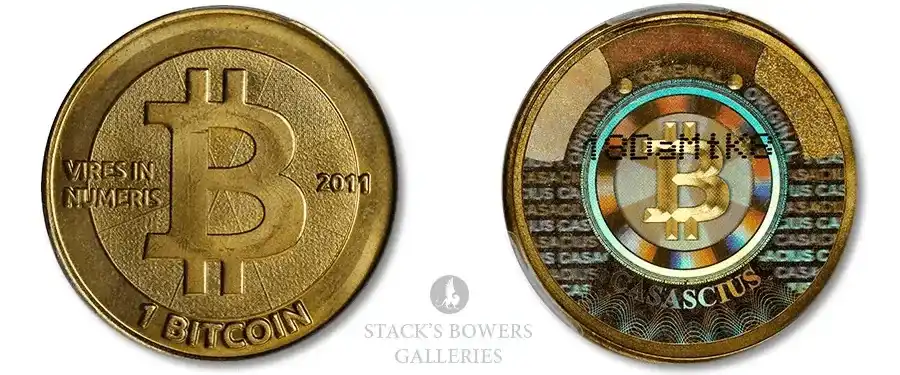
Image source: Stacks Bowers Galleries

Casascius Coins were first minted on September 6, 2011, when the price of a single Bitcoin was only $8. It is undoubtedly the most iconic physical Bitcoin collectible in history, and a large number of imitations have appeared since then. The name originates from Mike Caldwell's username on the Bitcointalk forum. The numerous design concepts established by this coin have also become important references for subsequent various physical Bitcoin products.

A major challenge in creating physical Bitcoin is the safekeeping of the private key. Bitcoin is a native digital asset that operates based on cryptographic public-private key pairs. The private key, as confidential information, can generate the corresponding public key through Bitcoin-specific encryption algorithms. Mike Caldwell used an offline device to generate private keys, printed them, and attached them to precious metal coins, and likely destroyed any private key backups left on the computer. He also detailed the entire set of security measures on his personal website for potential buyers to review.

The printed private key would be covered with a special tamper-evident sticker. Once the sticker is removed, a clear honeycomb-like pattern would remain on the surface. Based on this, buyers could determine whether the private key of a coin purchased from a third party had been previously accessed.

Private key management is the biggest security risk in creating physical Bitcoin. The solution of Casascius Coins relied on user trust in the developer. By the standards of the time, Mike Caldwell was transparent and meticulous, and he still maintains a good reputation today. The trust of users has been rewarded. Such collectibles now command a considerable collector's premium on top of the intrinsic value of the Bitcoin itself and the precious metal value, and holders have thus reaped substantial returns.

In November 2013, Casascius Coins officially ceased production. The Financial Crimes Enforcement Network (FinCEN) under the U.S. Department of the Treasury informed Mike Caldwell that the act of minting physical Bitcoins was considered a money transmission business, requiring strict compliance. The centralized trust mechanism involved in the private key generation process also made him a focus of regulatory attention.

RavenBit Coins

One year after Casascius Coins ceased production, RavenBit was officially launched, aiming to solve the problem of trustworthy minting in the physical Bitcoin space by attempting to decentralize the minting process. RavenBit's appearance is very similar to Casascius Coins, but it did not come pre-installed with a private key, and the tamper-evident sticker was also unsealed. Users could generate their own key pair, paste it onto the coin, and then seal it with the tamper-evident sticker.

Theoretically, this design achieved decentralization of minting rights, which could be considered a breakthrough. However, in practice, it only spawned a large number of unbranded, low-reputation individual minters, and many of the office devices used to generate private keys might have been infected with malware. When you received a RavenBit coin from someone else, you had no way to confirm whether they kept a copy of the private key or if they had implemented proper security measures.

The RavenBit project has long since ceased operations, but it also brought enlightenment to the entire industry: to truly achieve the physicalization of Bitcoin, more advanced technology is needed.

Opendimes
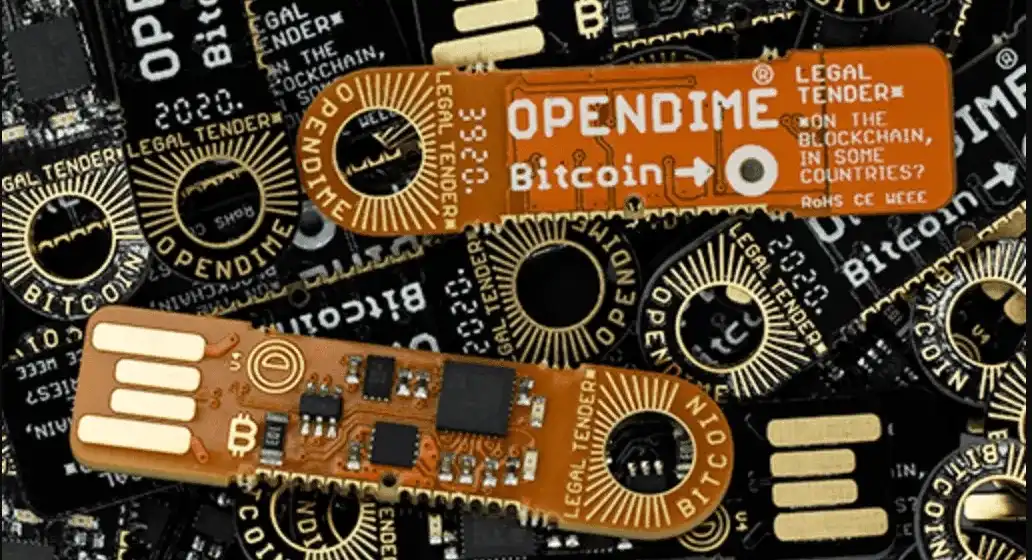
To completely solve the trust problem in minting physical Bitcoin in both centralized and decentralized scenarios, hardware wallet manufacturer Coinkite developed Opendimes. This is a micro hardware device specifically designed to carry Bitcoin bearer assets. NVK, co-founder of Coinkite, discussed the motivation behind the product in an interview with Bitcoin Magazine: "Bitcoin is a digital currency. Everything we do is just to create a physical backup for it. Perhaps someone in the future can manually crack the secp256k1 algorithm, but for now, generating valid Bitcoin keys always requires a computer. The computer is the current 'minting tool.'"

The design of Opendimes is based precisely on this core logic. The device has a built-in chip that can autonomously generate public-private key pairs and securely store the private key using a silicon-based tamper-resistant structure.

When initializing the device, users need to import files or other forms of random entropy. The chip combines this data to generate a Bitcoin wallet. This open-source random key generation logic, paired with high-quality entropy input, further ensures the security of the keys.

Connecting an Opendimes to a computer like a regular USB drive allows viewing the wallet's public key, and the account balance can be queried in real-time on a block explorer. Users can transfer Bitcoin to the device, but to extract the assets, they must physically destroy the device. This action unlocks the circuit to read the private key, while also leaving obvious damage marks on the device.

Opendimes is a major breakthrough in bearer asset technology. The product was priced as low as $13 in 2016, and due to inflation, its unit price is now around $20. It has also become an iconic product in the industry, with many artists incorporating it into high-end Bitcoin artworks, and it has gradually become a cultural symbol within the Bitcoin community.

For a hardware wallet, a price of $13 to $20 is not considered high, and the model where users deposit their own coins effectively solves the minting trust problem. However, its price and appearance are still far from everyday cash. Looking solely at hardware cost, the $20 threshold is not low. Referring to the approximately 20% premium standard of Casascius Coins, an Opendimes would need to hold at least $100 worth of Bitcoin to match the hardware cost and have circulation value, which also prevents it from being suitable for most small daily transactions.

Furthermore, while this USB drive-shaped device has a unique style, it cannot intuitively display internal asset information. Each device is unique and lacks the fungibility of cash. The industry has therefore realized the need to develop cheaper, more versatile alternatives.

Satodime
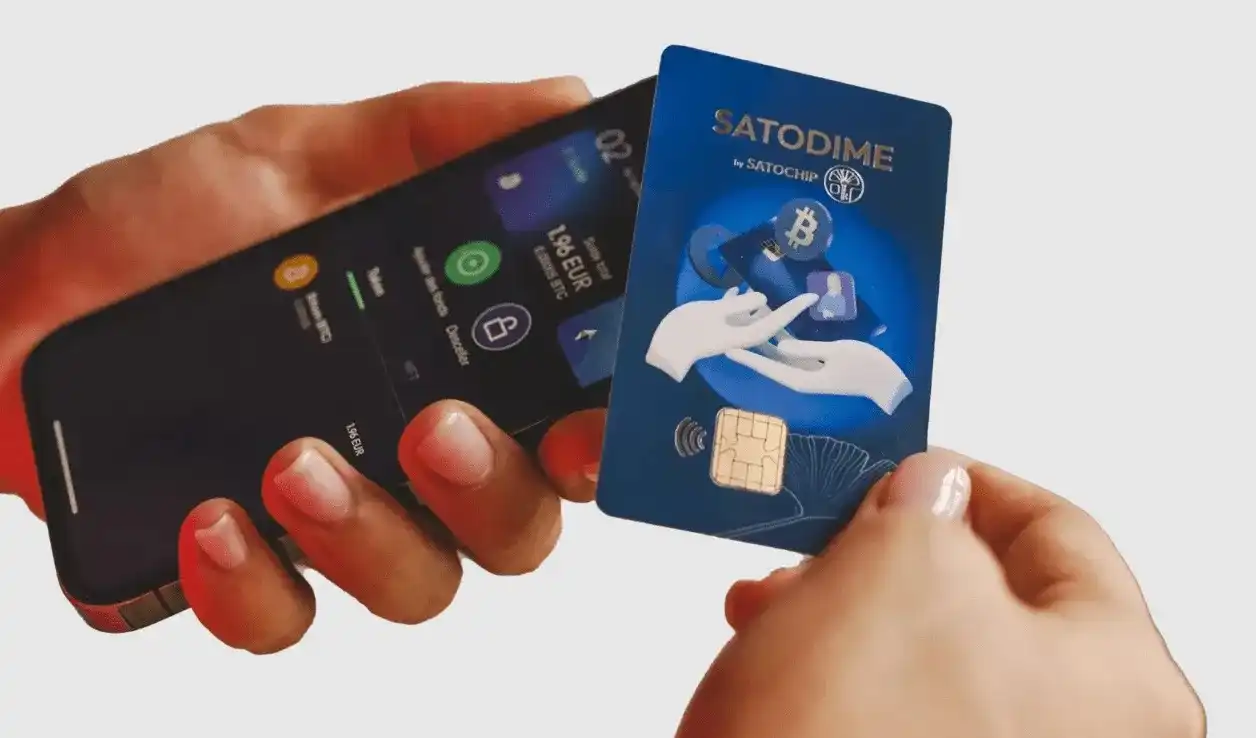
Building on the concept of Opendimes, Belgian hardware wallet manufacturer Satochip launched the more user-friendly, open-source product Satodime. It resembles a bank card in shape, with core functions similar to Opendimes. It can generate Bitcoin public-private key pairs, and some versions also support transaction signing. Users can interact with the device via a mobile app using Near Field Communication (NFC) functionality. The product also comes in forms such as rings and physical coins, with the same chip and functions inside.

In bulk purchases, the hardware unit price of Satodime can be as low as 13 euros, making it more affordable than Opendimes and bringing it a step closer to the standard of everyday cash, though the gap remains significant. Satodime is essentially a high-security hardware wallet, not a cash vehicle intended for daily circulation. The inherently high cost of these high-performance microchips also makes it difficult for the product price to fall below the $10 threshold for now.

The Cost Dilemma: The Underlying Limit Hard to Surpass

What level does the hardware cost need to be reduced to for physical Bitcoin to have commercial popularization value?

According to data from the Federal Reserve, the production cost of a U.S. dollar banknote ranges between 4.1 cents and 11.3 cents. The lower the denomination, the higher the unit production cost, and even a $1 bill can incur a 4.1% manufacturing loss.

Based on this calculation, the hardware cost of a physical Bitcoin carrying 20,000 satoshis (approximately $16 at the current price) must be controlled within $1. However, currently, the vast majority of chips capable of running Bitcoin encryption algorithms cannot meet this cost requirement. Nevertheless, the NTAG X DNA chip launched by NXP has shown the industry a possibility.

This chip uses a thin sticker antenna design, is only a few millimeters thick, and can run various encryption programs like Elliptic Curve Digital Signature Algorithm (ECDSA) and Elliptic Curve Cryptography (ECC), supporting key generation, transaction signing, and information encryption. However, it does not have the Bitcoin-specific secp256k1 encryption curve built-in and cannot natively run Bitcoin-related programs.

Even so, when the 2025 model NTAG chip is in sufficient supply, its unit price is about $3, proving that there is significant room for price reduction in encryption chips.

Unfortunately, the foldable paper money form used in daily life can damage delicate chips. The Coinkite team personally verified this issue during their research and development of Bitcoin bearer asset hardware.
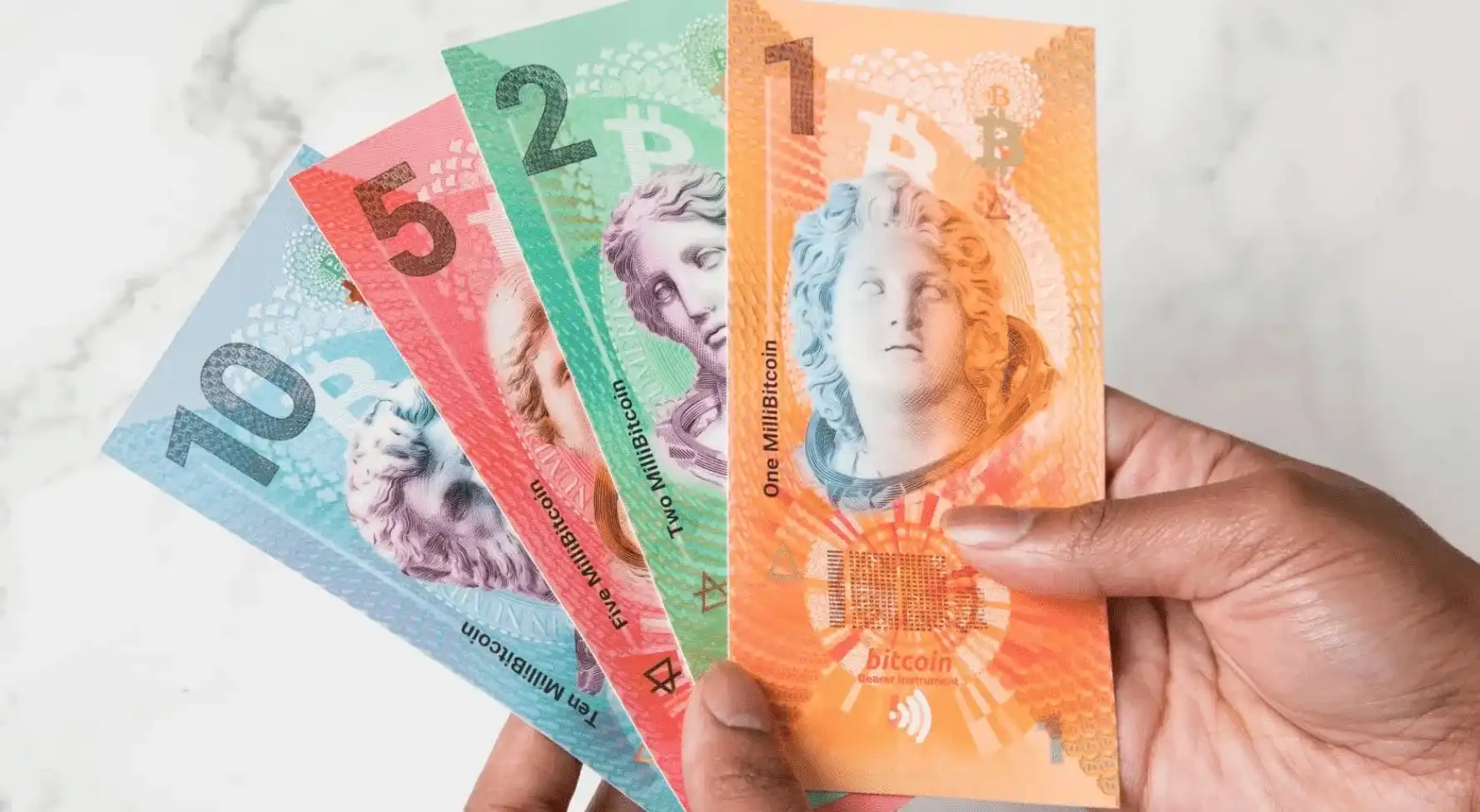
The product created by OfflineCash is currently the solution that looks most like traditional banknotes. This Bitcoin-denominated note is equipped with an NTAG series NFC chip. The chip stores a key generated by the user, while the company retains a second key on its server, forming a 2-of-2 multisignature wallet. The server-side key has a time lock, and after it expires, the multisignature wallet converts into a single-signature wallet, allowing the user to extract the assets. This scheme attempts to avoid the trust risk of traditional minting but ultimately creates a new problem of decentralized minting. However, it cannot be denied that its banknote appearance is highly aesthetic and has collectible value.

Developing an NTAG chip that natively supports Bitcoin algorithms requires an initial investment of millions of dollars. If the R&D team lacks expertise in the cryptography field, vulnerabilities are highly likely to occur when adapting to Bitcoin encryption programs. Simultaneously, such chips must be completely open-source to ensure there are no backdoor programs.

As a bearer asset, physical Bitcoin faces another fundamental problem: even if a low-cost, banknote-like hardware carrier is created, since Bitcoin is inherently a digital asset, users must connect to the internet to verify whether the device contains real assets.

If one chooses to trust the issuing institution and recognize the exchange value of the banknote's face, the verification problem might be solved, but this would deviate from Bitcoin's design初衷 of self-custody and trustless cash. Of course, this model might be able to operate in regions with favorable regulatory environments.

In summary, products like OfflineCash, which combine security chips and banknote forms, though conceptually appealing, still have a long way to go before large-scale adoption. Moreover, at present, such products are somewhat "over-engineered"—there is currently no Bitcoin change system in the market; after spending, one would still receive fiat change. Perhaps in a future fully Bitcoinized era, it could truly realize its value.

Within the foreseeable scope, Coinkite believes the card form is a superior solution to banknotes, which is also why the company launched Tapsigner.

Tapsigner
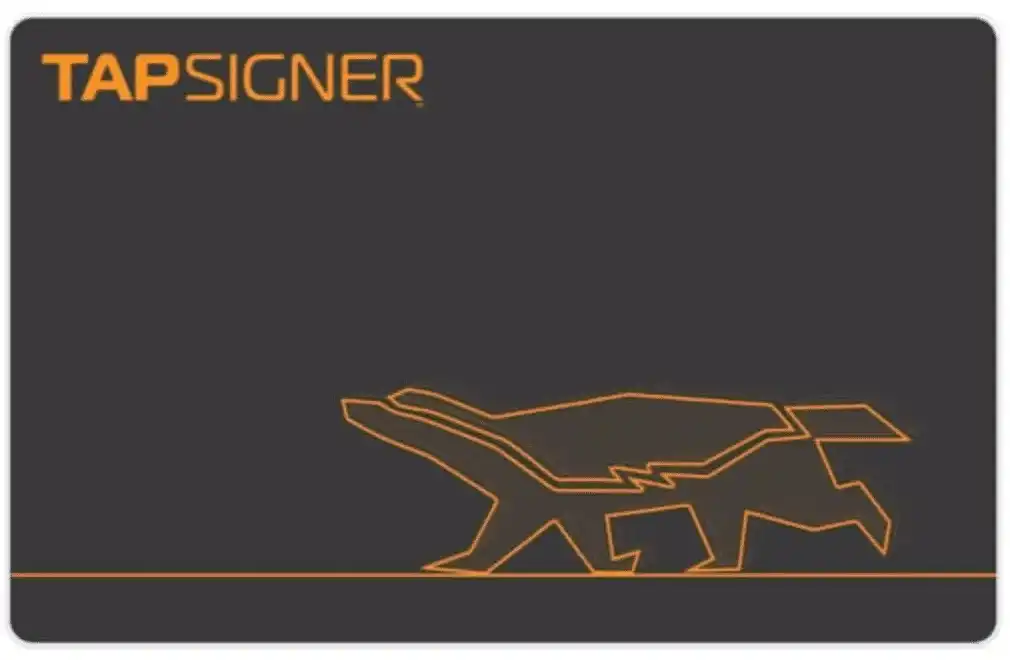
Tapsigner is equipped with Coinkite's self-developed Bitcoin NFC chip, which performs comparably to the NXP NTAG X DNA, has stronger functionality, and is relatively more expensive. The product adopts the familiar shape of a debit card, has a built-in security chip, supports NFC tap-to-pay, and offers multiple design options.

The chip has a complete Bitcoin wallet function built-in, runs the secp256k1 encryption program, can generate and securely store private keys, can complete transaction signing internally, and then the paired mobile device broadcasts the transaction information. The mobile end can also provide transaction information verification for the user, serving as a security aid.

Tapsigner can be used as a bearer asset carrier but is more suitable as a rechargeable hardware wallet. Like a regular bank card, it can make directed payments of fixed amounts of Bitcoin, perfectly solving the change problem while being compatible with mainstream tap-to-pay functionality.

This product costs around $20. Its emergence shifts the focus of Bitcoin payment development back to offline retail adoption and ecological integration with mainstream corporate finance and payment software, a process actively promoted by platforms like Cashapp and Square.

Связанные с этим вопросы

QWhat are the core advantages of Bitcoin's digital nature according to the article?

AAccording to the article, Bitcoin's digital nature enables self-custody due to its programmability, making theft and confiscation significantly more difficult. Its digital form also allows for near-instantaneous global transfer and settlement of value within minutes.

QWhat was the key security challenge addressed by Casascius Coins, and what was its solution?

AThe key security challenge was private key custody. Casascius Coins' solution involved generating the private key offline, printing it, and physically attaching it to the coin under a tamper-evident hologram. This model relied on trust in the creator, Mike Caldwell, who maintained transparency and a good reputation.

QHow did Opendimes fundamentally improve upon earlier physical Bitcoin models regarding the 'trust' issue?

AOpendimes improved the 'trust' issue by removing the need to trust a centralized mint. The device itself contains a chip that generates the private key internally using user-provided entropy, and the key is never exposed. The only way to spend the funds is to physically destroy the device, which permanently reveals the private key and leaves visible damage.

QWhat is identified as a major fundamental obstacle to creating a cost-effective, mass-market physical Bitcoin like a banknote?

AA major obstacle is the high hardware cost. For a physical Bitcoin to be viable for everyday, low-value transactions, its hardware cost needs to be under $1. However, the specialized chips capable of running Bitcoin's cryptographic algorithms (like secp256k1) currently cost significantly more, making them unsuitable for low-denomination, disposable cash-like use.

QWhat is the stated purpose of the Tapsigner product, and how does it differ from earlier physical Bitcoin concepts like Opendimes?

ATapsigner is designed as a reusable hardware wallet for facilitating Bitcoin payments, particularly in offline retail settings. Unlike Opendimes, which is a single-use bearer instrument, Tapsigner functions more like a reloadable debit card, allowing for repeated top-ups and fixed-amount payments, and it integrates with NFC 'tap-to-pay' systems for easier merchant adoption.

Похожее

Bitroot Public Chain Invited to Attend Tencent Cloud Singapore AI Conference, Discussing the Future Alongside Solana

On May 19, Bitroot, an emerging Layer 1 blockchain, participated in the Tencent Cloud AI Summit in Singapore alongside key industry players like Solana Foundation. The event explored the intersection of AI infrastructure, enterprise applications, AI Agents, and Web3. Bitroot's invitation, despite being pre-mainnet, highlights industry interest in its focus on high-performance, AI-native architecture tailored for future AI Agent execution and verifiable on-chain automation. Bitroot CEO Juan Jose emphasized that AI competition is shifting from model performance to data, real-world application scenarios, and trust infrastructure. He argued that for AI Agents to evolve from assistants to autonomous executors managing transactions and assets, they require low-latency, low-cost, and high-throughput blockchain environments. Bitroot aims to address this through its EVM-compatible design, optimistic parallel execution, and a consensus mechanism targeting high scalability. Currently in its Testnet 5.0 phase, Bitroot reports metrics like over 50,000 peak TPS and sub-0.3 second average block time. Its narrative positions it within a growing landscape where next-generation Layer 1s like Monad and Aptos also compete on performance, while Bitroot differentiates by integrating AI computational capabilities natively across its stack. The summit underscored that the fusion of AI and Web3 is moving from concept to infrastructure competition, where networks balancing performance, security, and verifiability will be crucial for enabling scalable AI-driven applications.

marsbit8 мин. назад

Bitroot Public Chain Invited to Attend Tencent Cloud Singapore AI Conference, Discussing the Future Alongside Solana

marsbit8 мин. назад

Hedge Fund Q1 Interpretation: Everyone Is Selling Software, Buying Chips

Hedge Funds and Mutual Funds Aligned in Q1: Dumping Software, Buying Chips A clear consensus emerged among major U.S. hedge funds and mutual funds in Q1: they were simultaneously selling software stocks and pouring capital into the semiconductor sector. This aggressive rotation pushed semiconductor exposure in hedge fund long portfolios to a record high. Hedge funds delivered a 7% return year-to-date, while only 30% of large-cap active mutual funds outperformed their benchmarks. The average short interest for S&P 500 constituents rose to 3% of market cap, the highest since 2011. Within technology, the structural shift was stark. Hedge funds' semiconductor weighting hit an all-time high, while software fell to its lowest since 2019. Excluding Microsoft, mutual funds' relative overexposure to semis vs. software was the largest since 2012. Microsoft was among the most net-sold stocks by both groups. Hedge funds net purchased semiconductor names like LRCX and AMAT. Strategies diverged on leverage and cash. Hedge funds increased their net exposure to near a one-year high after an initial cut. Mutual funds raised their cash allocation, though it remains historically low at 1.4%. Sector alignment was high in Industrials (both overweight) but divergent in Tech: hedge funds increased their Tech net tilt by a record 853 basis points, while mutual funds reduced theirs. Clear splits also appeared in Financials and Consumer Discretionary. Four stocks appeared on both Goldman's hedge fund VIP and mutual fund overweight lists: BA, MA, MRVL, and V. This "shared favorites" basket has returned 10% YTD, outperforming the equal-weight S&P 500. Notably, all "Magnificent Seven" stocks are on the hedge fund VIP list but are uniformly underweighted by mutual funds.

marsbit18 мин. назад

Hedge Fund Q1 Interpretation: Everyone Is Selling Software, Buying Chips

marsbit18 мин. назад

Samsung Relies on Technology Cycles, SK Hynix on HBM, How Did Micron Win a Trillion-Dollar Market Cap?

Micron Technology, the third-largest memory chip maker alongside Samsung and SK Hynix, recently saw its market cap surpass $1 trillion. Founded in 1978 in Boise, Idaho, Micron survived brutal industry cycles while American peers and Japan's memory sector faltered. Its survival is attributed to a dual strategy: leveraging political and legal avenues for critical breathing room, coupled with relentless manufacturing cost control. Historically, Micron sought U.S. government intervention three times. In 1985, it filed an anti-dumping complaint against Japanese firms, leading to the U.S.-Japan Semiconductor Agreement. Ironically, this created an opening for Samsung, which later became its toughest competitor. In 2002, Micron turned "whistleblower" in a DRAM price-fixing investigation, escaping penalties while rivals were fined. In 2017, it sued China's Fujian Jinhua, contributing to its placement on a U.S. entity list, stifling a nascent competitor. However, a major strategic misstep occurred in 2013 with the acquisition of bankrupt Japanese firm Elpida. Integrating Elpida's mobile-DRAM-focused technology diverted resources, causing Micron to miss the critical early decade of development for High Bandwidth Memory (HBM)—the high-performance memory essential for AI chips like NVIDIA GPUs. By the time AI demand exploded in 2022, SK Hynix, which launched the first HBM in 2013, held about 85% of the HBM3 market, leaving Micron with roughly 3%. Micron now faces a triple squeeze. In the high-end HBM market, it lags significantly behind SK Hynix and Samsung. In the mid-to-low end DRAM market, it faces aggressive price competition from China's CXMT. Furthermore, a 2023 Chinese cybersecurity ban on its products slashed its revenue from China, a once-core market, from over 10% to just 7.1% by FY2025, causing it to exit China's data center server business. Beneath its political maneuvering lies Micron's core strength: exceptional manufacturing efficiency and cost control. Decades of engineering have yielded DRAM chips with a smaller cell area than rivals, meaning more chips per wafer and lower unit costs. This efficiency, not subsidies, has allowed it to withstand price wars. While political leverage bought time, Micron is now paying a "time debt" in the HBM race. It is racing to ramp up HBM3E production and develop HBM4, but catching up to competitors who started a decade earlier is a monumental challenge. Its future hinges on whether its expertise in cost control and political strategy can compensate for the lost time in a technology race where early-mover advantage is decisive.

链捕手1 ч. назад

Samsung Relies on Technology Cycles, SK Hynix on HBM, How Did Micron Win a Trillion-Dollar Market Cap?

链捕手1 ч. назад

Торговля

Спот
Фьючерсы

Популярные статьи

Тест по Bitcoin Биткоина

HTX Learn: Изучите Bitcoin halving и Заработаете Токены USDT

3.0k просмотров всегоОпубликовано 2024.04.16Обновлено 2024.04.16

Тест по Bitcoin  Биткоина

Что такое $BITCOIN

ЦИФРОВОЕ ЗОЛОТО ($BITCOIN): Комплексный анализ Введение в ЦИФРОВОЕ ЗОЛОТО ($BITCOIN) ЦИФРОВОЕ ЗОЛОТО ($BITCOIN) — это проект на основе блокчейна, работающий в сети Solana, который стремится объединить характеристики традиционных драгоценных металлов с инновациями децентрализованных технологий. Хотя он носит имя Биткойн, часто называемого “цифровым золотом” из-за его восприятия как средства хранения ценности, ЦИФРОВОЕ ЗОЛОТО является отдельным токеном, предназначенным для создания уникальной экосистемы в ландшафте Web3. Его цель — позиционировать себя как жизнеспособный альтернативный цифровой актив, хотя детали его применения и функциональности все еще развиваются. Что такое ЦИФРОВОЕ ЗОЛОТО ($BITCOIN)? ЦИФРОВОЕ ЗОЛОТО ($BITCOIN) — это токен криптовалюты, специально разработанный для использования в блокчейне Solana. В отличие от Биткойна, который выполняет широко признанную роль хранения ценности, этот токен, похоже, сосредоточен на более широких приложениях и характеристиках. Примечательные аспекты включают: Инфраструктура блокчейна: Токен построен на блокчейне Solana, известном своей способностью обрабатывать высокоскоростные и недорогие транзакции. Динамика предложения: ЦИФРОВОЕ ЗОЛОТО имеет максимальное предложение, ограниченное 100 квадриллионами токенов (100P $BITCOIN), хотя детали о его обращающемся предложении в настоящее время не раскрыты. Утилита: Хотя точные функциональные возможности не описаны, есть указания на то, что токен может быть использован для различных приложений, потенциально связанных с децентрализованными приложениями (dApps) или стратегиями токенизации активов. Кто создатель ЦИФРОВОГО ЗОЛОТА ($BITCOIN)? На данный момент личность создателей и команды разработчиков, стоящих за ЦИФРОВЫМ ЗОЛОТОМ ($BITCOIN), остается неизвестной. Эта ситуация типична для многих инновационных проектов в области блокчейна, особенно тех, которые связаны с децентрализованными финансами и феноменом мем-криптовалют. Хотя такая анонимность может способствовать культуре, ориентированной на сообщество, она усиливает опасения по поводу управления и ответственности. Кто инвесторы ЦИФРОВОГО ЗОЛОТА ($BITCOIN)? Доступная информация указывает на то, что у ЦИФРОВОГО ЗОЛОТА ($BITCOIN) нет известных институциональных спонсоров или значительных венчурных капиталовложений. Проект, похоже, функционирует по модели пирингового взаимодействия, сосредоточенной на поддержке и принятии сообществом, а не на традиционных путях финансирования. Его активность и ликвидность в основном сосредоточены на децентрализованных биржах (DEX), таких как PumpSwap, а не на устоявшихся централизованных торговых платформах, что еще больше подчеркивает его подход, ориентированный на grassroots. Как работает ЦИФРОВОЕ ЗОЛОТО ($BITCOIN) Операционные механизмы ЦИФРОВОГО ЗОЛОТА ($BITCOIN) можно подробно описать на основе его дизайна блокчейна и характеристик сети: Механизм консенсуса: Используя уникальный механизм доказательства истории (PoH) Solana в сочетании с моделью доказательства доли (PoS), проект обеспечивает эффективную валидацию транзакций, что способствует высокой производительности сети. Токеномика: Хотя конкретные дефляционные механизмы не были подробно описаны, большое максимальное предложение токенов подразумевает, что оно может быть предназначено для микротранзакций или нишевых случаев использования, которые еще предстоит определить. Интероперабельность: Существует потенциал для интеграции с более широкой экосистемой Solana, включая различные платформы децентрализованных финансов (DeFi). Однако детали относительно конкретных интеграций остаются неуточненными. Хронология ключевых событий Вот хронология, которая подчеркивает значимые вехи, касающиеся ЦИФРОВОГО ЗОЛОТА ($BITCOIN): 2023: Первоначальное развертывание токена происходит в блокчейне Solana, отмеченное его адресом контракта. 2024: ЦИФРОВОЕ ЗОЛОТО приобретает видимость, когда оно становится доступным для торговли на децентрализованных биржах, таких как PumpSwap, позволяя пользователям обменивать его на SOL. 2025: Проект наблюдает спорадическую торговую активность и потенциальный интерес к инициативам, возглавляемым сообществом, хотя на данный момент не зафиксировано никаких значительных партнерств или технических достижений. Критический анализ Сильные стороны Масштабируемость: Основная инфраструктура Solana поддерживает высокие объемы транзакций, что может повысить полезность $BITCOIN в различных сценариях транзакций. Доступность: Потенциально низкая цена торговли за токен может привлечь розничных инвесторов, способствуя более широкому участию благодаря возможностям дробного владения. Риски Отсутствие прозрачности: Отсутствие публично известных спонсоров, разработчиков или процесса аудита может вызвать скептицизм относительно устойчивости и надежности проекта. Волатильность рынка: Торговая активность сильно зависит от спекулятивного поведения, что может привести к значительной волатильности цен и неопределенности для инвесторов. Заключение ЦИФРОВОЕ ЗОЛОТО ($BITCOIN) является интригующим, но неоднозначным проектом в быстро развивающейся экосистеме Solana. Хотя он пытается использовать нарратив “цифрового золота”, его отход от установленной роли Биткойна как средства хранения ценности подчеркивает необходимость более четкого различения его предполагаемой утилиты и структуры управления. Будущее принятие и усвоение, вероятно, будут зависеть от решения текущей непрозрачности и более четкого определения его операционных и экономических стратегий. Примечание: Этот отчет охватывает синтезированную информацию, доступную на октябрь 2023 года, и с тех пор могут произойти события.

99 просмотров всегоОпубликовано 2025.05.13Обновлено 2025.05.13

Что такое $BITCOIN

Fractal Bitcoin: масштабирование Биткоина с помощью рекурсивной системы

Fractal Bitcoin — масштабное Layer-1-решнение, созданное на базе кода Биткоина, позволяющего достигать бесконечного масштабирования с помощью рекурсивного подхода.

2.3k просмотров всегоОпубликовано 2025.06.30Обновлено 2025.06.30

Fractal Bitcoin: масштабирование Биткоина с помощью рекурсивной системы

Обсуждения

Добро пожаловать в Сообщество HTX. Здесь вы сможете быть в курсе последних новостей о развитии платформы и получить доступ к профессиональной аналитической информации о рынке. Мнения пользователей о цене на BTC (BTC) представлены ниже.

活动图片