Bitcoin entered the weekend under heavy selling pressure, decisively losing the $80,000 support and sliding to the $74,000 area for the first time since April 2025. The move has intensified concerns that the market is no longer in a corrective pause but is instead transitioning into a broader bearish phase. Price weakness has coincided with fading demand signals, particularly from US-based investors, a dynamic now standing out clearly in on-chain data.
A recent CryptoQuant report highlights a structural shift when comparing the February–April 2025 period with market conditions from November 2025 to today. During the first half of 2025, the Coinbase Premium Index frequently dipped into negative territory, but only briefly. Discounts appeared, were absorbed relatively quickly, and did not persist. That behavior was consistent with tactical selling into strength, rather than a sustained absence of buyers.
The current environment looks materially different. Negative Coinbase Premium readings have become deeper and more persistent, suggesting that US spot demand is no longer stepping in to absorb downside moves. Even after significant price adjustments, discounts remain unresolved, pointing to buyers staying on the sidelines. As Bitcoin trades at levels not seen in nearly a year, this weakening spot demand raises the risk that further downside could unfold before a durable base is formed.
The report explains that the current behavior of the Coinbase Premium marks a clear departure from earlier phases of this cycle. Negative prints are no longer brief or episodic. Instead, they are deeper and persist for extended periods, with only short-lived and shallow recoveries. This pattern goes beyond simple selling pressure. It reflects a sustained absence of US spot demand, even as prices move lower.
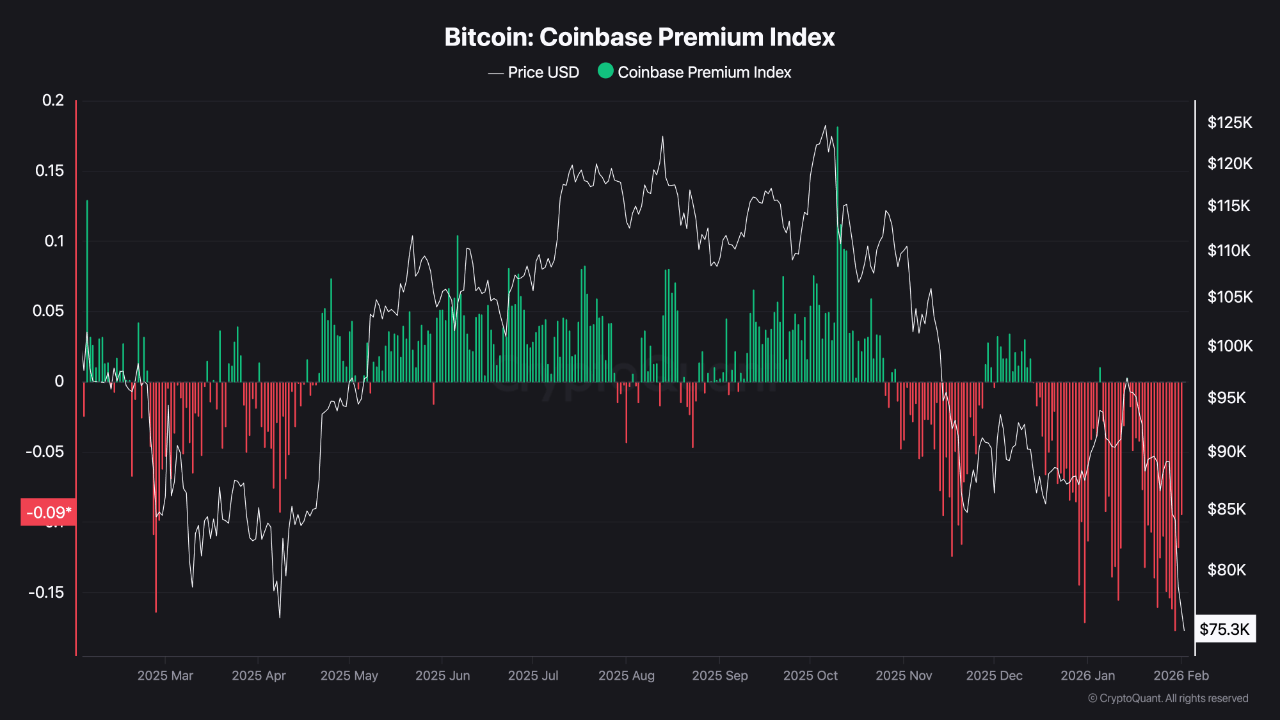
Short-term discounts can emerge for many reasons, including macro shocks, liquidation events, or temporary risk aversion. However, when the premium remains negative after the price has already adjusted, it typically signals that buyers are not stepping in. In other words, the market is not finding support from US-based spot participants who have historically played a stabilizing role during drawdowns.
In practice, this shift is visible in several ways. Downside moves are not being absorbed by spot inflows on US venues. Rebounds occur, but they lack confirmation from spot demand and fade quickly. As a result, price action becomes increasingly driven by derivatives, leverage, and short-term positioning rather than sustained capital allocation.
Compared with spring 2025, US spot demand is now weaker both in magnitude and persistence. Until the Coinbase Premium turns positive and holds for a sustained period, upside momentum remains structurally fragile, leaving Bitcoin vulnerable to further downside pressure.