2026-04-22 Среда

Новостной центр - Страница 389

Получайте криптоновости и тенденции рынка в режиме реального времени с помощью Новостного центра HTX.

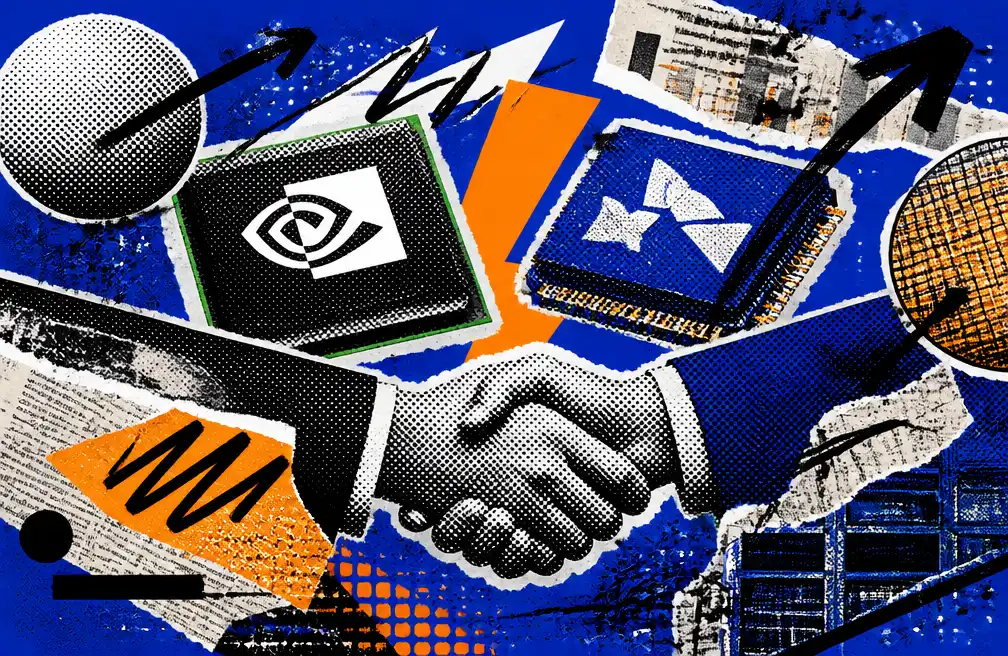
BlackRock and Citadel Are Aggressively 'Sweeping Goods': What Fundamental Changes Have Occurred in the Logic of TradFi Entering DeFi?

Traditional finance (TradFi) giants like BlackRock, Citadel Securities, and Apollo Global Management are now directly purchasing DeFi governance tokens (UNI, ZRO, MORPHO), signaling a strategic shift beyond mere equity investments or pilot programs. This move is primarily about securing access to and aligning with the infrastructure they plan to use for tokenizing and distributing their products on-chain, rather than making broad portfolio bets on DeFi assets. Key drivers include improved custody/operational infrastructure and greater regulatory clarity, such as the upcoming repeal of SAB 121 and potential market structure legislation like the CLARITY Act. While this represents a structural change in institutional engagement, the token price impact has been muted due to weak market conditions and a lack of direct value capture mechanisms for most tokens. For governance tokens to function more like strategic equity, clearer value accrual (e.g., fee switches), reduced VC selling pressure, and enhanced regulatory certainty are needed. Concerns about governance centralisation exist, but increased professional participation could improve oversight. More TradFi firms, particularly those building tokenized products (e.g., Fidelity, Franklin Templeton), are expected to follow, focusing on blue-chip protocols in stablecoins, RWAs, and trading infrastructure.

marsbit02/24 10:45

BlackRock and Citadel Are Aggressively 'Sweeping Goods': What Fundamental Changes Have Occurred in the Logic of TradFi Entering DeFi?

marsbit02/24 10:45

Two Paths, One Destination

Coinbase and Robinhood, despite recent earnings misses, are undergoing significant transformations that diverge from simplistic narratives tied to crypto performance. Both are systematically diversifying their revenue streams to reduce cyclical dependency. Coinbase’s subscription and service revenue reached $2.8B in 2025, 5.5x its 2021 peak. It now holds 12% of global crypto assets and is expanding into derivatives (via the Deribit acquisition), prediction markets, and institutional services, partnering with major banks and asset managers like BlackRock. Its long-term goal is to become a foundational settlement layer for on-chain finance. Robinhood’s growth is highlighted by a 27% YoY increase in ARPU to $191, driven largely by its prediction markets—its fastest-growing product line, generating $300M in annualized revenue. Other key drivers include options trading and subscription services. The company is also expanding into banking and private market access through Robinhood Ventures, aiming to capture a share of generational wealth transfer. Though they started from opposite ends—Coinbase in crypto, Robinhood in traditional equities—both are converging toward the same vision: a financial super-app for retail users. They are now competing directly in emerging areas like prediction markets, tokenization, and private market access, with the goal of deepening user financial integration and becoming indispensable platforms.

marsbit02/24 10:36

Two Paths, One Destination

marsbit02/24 10:36

I Finally Understand Why Musk Is Convinced We Live in a 'Simulated World'

The author, an investor and entrepreneur, describes their initial skepticism towards Elon Musk's simulation theory—the idea that the probability we live in base reality is only one in a billion. Their perspective shifted after two personal experiences with seemingly inexplicable accuracy in predictions. First, a fortune-teller using traditional Chinese astrology consistently and accurately predicted investment outcomes and obstacles over more than a dozen instances. Second, a close friend, a highly educated Tarot card reader, provided remarkably precise and consistent readings across different methods. The friend explained that Tarot practice is like having "database access permissions" to a vast informational field—a metaphor that resonated deeply with the author. This led the author to reexamine the world through a programmer’s lens. They note several “coincidences” that align with the simulation hypothesis: - **Junk DNA**: The 98% of non-coding DNA resembles legacy code or commented-out functions in software. - **The Great Flood Myths**: Shared global flood narratives and the sharp drop in human lifespans afterward mirror a system reset or version update. - **Cosmic Limits**: The Big Bang resembles a system boot-up, the speed of light a CPU frequency limit, and déjà vu a caching error. The author concludes that viewing reality as a simulation makes these phenomena coherent. Rather than leading to nihilism, this perspective is liberating: although one’s “character settings” may be predetermined, the subjective experience of love, joy, and achievement remains real. The goal is to live fully within one’s own version, striving to reach one’s potential. The essay ends on an optimistic note: with tools like Web3 and AI, humanity may be transitioning from passive “players” to active “advanced players” capable of exploring and even altering the rules of the simulated world. The emphasis is not on proving the theory but on engaging meaningfully within the system.

marsbit02/24 10:28

I Finally Understand Why Musk Is Convinced We Live in a 'Simulated World'

marsbit02/24 10:28

活动图片