To Counter Quantum Threat, Ethereum Abandons Poseidon and Switches to Traditional Hashes

marsbitОпубликовано 2026-08-14Обновлено 2026-08-14

Введение

On August 13th, Ethereum researcher Justin Drake announced a strategic pivot in the face of the quantum computing threat: the Ethereum Foundation will abandon the SNARK-friendly hash function Poseidon at the L1 level in favor of traditional hash functions like SHA2 or BLAKE2. This decision, informed by eight years of research, represents a major shift in Ethereum's post-quantum cryptography roadmap. Poseidon, introduced in 2019, has been favored for zkRollups and zkVMs due to its efficiency within SNARK circuits. However, its shorter cryptographic history and analysis timeline became liabilities when post-quantum security became a critical requirement. The change is enabled by breakthroughs in SNARK design, particularly the adoption of "binary field" arithmetic. This allows traditional hash functions (which rely heavily on bitwise operations) to be verified efficiently in SNARKs, with recent benchmarks achieving millions of hashes per second on a laptop. Another key driver is the accelerating timeline of the quantum threat. Reports warn that "Cryptographically Relevant Quantum Computers" (CRQCs) could break current public-key cryptography (like ECDSA) as early as the 2030s, risking trillions in on-chain assets. The enhanced cryptanalysis capabilities of AI have also weakened some post-quantum candidates, pushing Ethereum towards hash-based schemes, deemed more quantum-resistant. Ethereum's post-quantum deployment plan aims for a production-ready leanVM by 2027, followed b...

Author: ChandlerZ, Foresight News

On August 13, Ethereum researcher Justin Drake announced on X that the Ethereum Foundation has decided to abandon the SNARK-friendly hash algorithm Poseidon at the L1 layer in favor of traditional hash functions like SHA2 or BLAKE2.

This decision is the culmination of eight years of research, tens of millions of dollars in investment, and a significant revision to the post-quantum cryptography roadmap.

Since its introduction in 2019, Poseidon has been regarded as an ideal hashing solution for applications like zkRollups and zkVMs. Its structure made it cheaper and more efficient within SNARK circuits compared to traditional binary-operation-based hash functions. However, when post-quantum security became a hard requirement for Ethereum, Poseidon's limitations began to surface.

Justin Drake stated that this shift is thanks to a breakthrough in SNARK design, specifically an "binary field" arithmetic approach that enables traditional hash functions to perform comparably to previously SNARK-optimized designs like Poseidon within SNARK circuits. A single laptop can now verify approximately 1 million traditional hash invocations per second.

The article notes that Poseidon has been a mainstream SNARK-friendly hash scheme since 2019, providing security for applications like zkRollups and zkVMs. Drake indicated that plans show a production-ready leanVM is expected to launch in 2027, with deployment across the consensus, data, and execution layers slated for 2028. The Ethereum Foundation's post-quantum team is also accelerating research related to binary fields.

Why Now?

The main barrier preventing traditional hashes from being used in SNARKs has long been computational language differences. SHA2, BLAKE2s, and Keccak heavily use Boolean operations like XOR and bit shifts. Traditional SNARKs typically handle arithmetic over large prime fields, and simulating each bit operation incurs high constraint costs. Poseidon was designed directly around prime field arithmetic, achieving higher proving speeds with fewer constraints at the cost of a shorter algorithmic history requiring ongoing cryptanalysis.

Binary fields switch the underlying mathematics to the smallest prime field containing only 0 and 1, using binary extension fields to handle larger data. Bit operations can thus be directly incorporated into the proof system. SNARKs are now adapting to traditional hashes, shifting the technical focus from designing SNARK-friendly hashes to designing hash-friendly SNARKs.

The Binius proposal by Jim Posen and Benjamin Diamond in 2023 demonstrated a path using binary tower field SNARKs. The Flock paper by Benedikt Bünz, Ron Rothblum, and William Wang was uploaded to arXiv on July 29, 2026, reporting benchmarks of 82,000 BLAKE3 compressions, 42,000 SHA-256 compressions, and 30,000 Keccak permutations proven per second on a single M4 Max core, with 10-core BLAKE3 throughput exceeding 660,000 operations per second.

Drake noted that laptops can now prove about 1 million traditional hash invocations per second, at a cost roughly 100 times that of native CPU Boolean computation. SNARK.fast reportedly reached 1.8 million BLAKE3 operations per second on an M3 Max just days ago.

leanVM in 2027, Three-Layer Deployment in 2028

Another key reason for abandoning Poseidon is the accelerating timeline for post-quantum security. Project Eleven's "The Quantum Threat to Blockchains - 2026 Report" warns that the rapid development of quantum computers poses a serious threat to blockchain security. Once a "Cryptographically Relevant Quantum Computer" (CRQC) emerges, Shor's algorithm could quickly break asymmetric encryption like ECDSA (used by Bitcoin and most public chains) and RSA. Q-Day (the day of quantum decryption) is estimated to potentially arrive between 2030 and 2033, putting trillions of dollars in on-chain assets at risk.

Because blockchain public keys are static long-term and cannot be rolled back, migration is extremely difficult. The report recommends immediately initiating Post-Quantum Cryptography (PQC) migration, including quantum-resistant signature schemes based on lattices and hashes, and transitioning gradually via hybrid schemes to prevent a full-scale quantum threat outbreak.
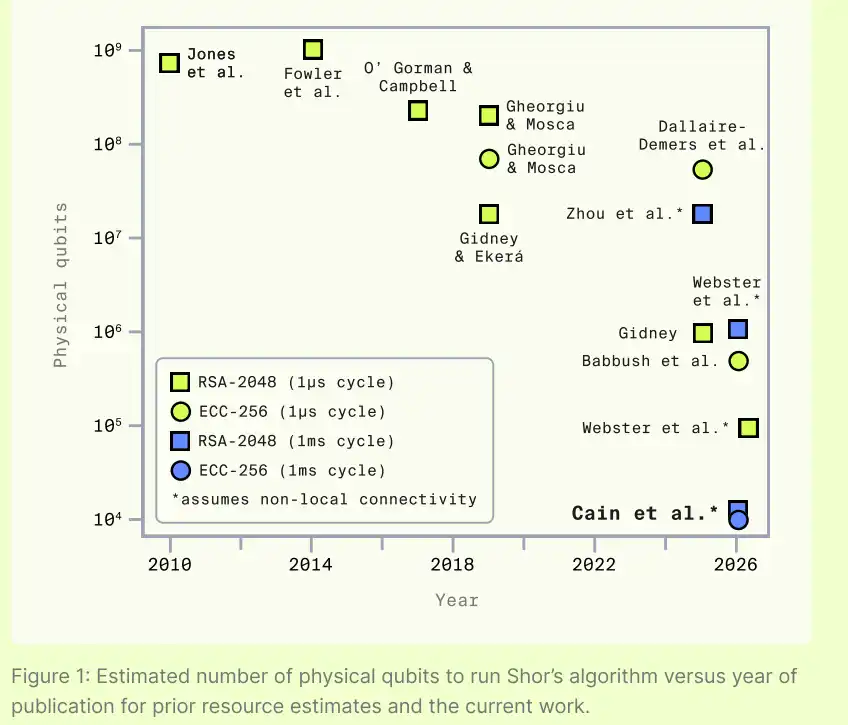
Justin Drake warned that AI's enhanced capabilities in cryptanalysis have already impacted lattice-based scheme HAWK and isogeny-based scheme SQIsign. This has forced the Ethereum Foundation to place its bet on hash-based schemes, which are considered more resilient against quantum attacks.

Previously, Ethereum published its post-quantum roadmap, including deploying a production-ready leanVM in 2027 and completing deployment across the consensus, execution, and data availability layers in 2028. leanVM is a minimal zero-knowledge virtual machine designed for post-quantum signature aggregation and is seen as a core component of the overall strategy.

In March 2026, the Ethereum Foundation launched pq.ethereum.org as a post-quantum security resource hub. Over 10 client teams have begun running weekly post-quantum interoperability devnets. The Foundation also established the $1 million Poseidon Prize and an equal-sized Proximity Prize to advance post-quantum cryptography research. Vitalik Buterin has repeatedly emphasized that post-quantum security is a necessary condition for Ethereum's "walkaway test"—Ethereum cannot "ossify" until it achieves quantum safety.

The hash function switch does not alter the overall structure of Ethereum's post-quantum roadmap. The BLS signatures currently used by validators rely on elliptic curves. The future scheme will still be based on hash signatures like leanXMSS, with leanVM then compressing a large number of signatures into one small proof per block. A previous comparison on Ethereum's official page showed that a leanXMSS signature is about 3000 bytes, while a BLS signature is only 96 bytes. The data compression target for leanVM is approximately 250x.

SHA2 or BLAKE2s have longer histories of public analysis, allowing the EF to reduce the time spent waiting for Poseidon parameters to undergo years of cryptanalysis. Drake's strawmap points to a production-ready leanVM in 2027 and deployment across the consensus, data, and execution layers in 2028.

Competitive Race, Solana Chooses Falcon

Ethereum is not the only major public chain preparing for the post-quantum era. The Solana Foundation released its post-quantum security roadmap in April 2026. Its core developer teams, Anza and Jump Crypto's Firedancer, independently reached the same conclusion, selecting the same post-quantum signature scheme: Falcon.

Falcon is one of the NIST-standardized post-quantum signature schemes. Its signatures are compact, making it suitable for high-throughput blockchain environments like Solana.

After independent research, the two major validator client development teams, Anza and Firedancer, both selected the post-quantum digital signature scheme Falcon and have publicly shared initial implementation code on GitHub. The current roadmap has three phases: continuous evaluation of Falcon and alternatives; adopting post-quantum schemes for new wallets once the quantum threat materializes; and finally, migrating existing wallets en masse. Additionally, Blueshift's Solana Winternitz Vault has been running in the ecosystem for over two years and was cited earlier this year in a Google Quantum AI whitepaper as a leading industry case study.

The Solana Foundation stated that a material threat from quantum computing is still years away, so immediate migration is not necessary. However, research, infrastructure, and ecosystem coordination are ready, allowing for a rapid launch when the time comes, with minimal expected impact on network performance.

Starknet is currently the closest point of comparison to the EF's new direction. StarkWare's roadmap, announced on June 30, outlines a three-phase process. The first phase will replace the Pedersen hash algorithm with BLAKE2 for state commitments, contract addresses, and network configuration, while also introducing post-quantum consensus signatures like Falcon-512. The second phase focuses on migration tools for traditional contracts. The third phase addresses external dependencies still tied to Ethereum, including bridge system calls and blob data availability, and depends on Ethereum's own migration path.

Compared to other public chains, Ethereum has chosen a path of "establishing standards first, then modifying code." Abandoning Poseidon for SHA2/BLAKE2 is a choice for more mature and widely validated cryptographic primitives in the post-quantum era.


Трендовые криптовалюты

Связанные с этим вопросы

QWhat was the main reason for Ethereum's decision to abandon the Poseidon hash algorithm at the L1 layer?

AThe main reason was to meet the mandatory requirement for post-quantum security. While Poseidon was efficient for SNARK circuits, its limitations and the need for stronger defenses against future quantum threats led to the shift. Recent breakthroughs in SNARK design using 'binary fields' now allow traditional hash functions like SHA2 or BLAKE2 to perform nearly as efficiently as Poseidon in SNARK circuits, making them a more mature and cryptographically analyzed choice for the post-quantum era.

QWhat is the significance of 'binary fields' in relation to SNARK design mentioned in the article?

ABinary fields shift the underlying mathematics of SNARKs to a field consisting only of 0s and 1s (or use binary extension fields). This allows bit-level operations (like XOR and shifts, common in traditional hash functions) to be processed directly by the proof system. This breakthrough enables SNARKs to efficiently verify traditional hash functions, changing the technical focus from designing SNARK-friendly hashes to designing hash-friendly SNARKs.

QAccording to the article, what are the key timeline milestones in Ethereum's post-quantum migration roadmap?

AThe key milestones are the planned launch of a production-ready leanVM in 2027, followed by the deployment across the consensus layer, data availability layer, and execution layer in 2028. leanVM is a minimal zero-knowledge virtual machine designed for post-quantum signature aggregation, which is a core component of the strategy.

QWhich post-quantum signature scheme has Solana's development community selected, and what was a key factor in this choice?

ASolana's core developer teams (Anza and Jump Crypto's Firedancer) independently selected the Falcon signature scheme. A key factor in this choice is that Falcon is a NIST-standardized post-quantum signature scheme known for its compact signatures, making it suitable for high-throughput blockchain environments like Solana.

QHow does Starknet's post-quantum migration roadmap compare to Ethereum's new direction?

AStarknet's roadmap aligns closely with Ethereum's new direction. Its first stage involves replacing the Pedersen hash algorithm with BLAKE2 for various functions and introducing a post-quantum consensus signature like Falcon-512. Subsequent stages focus on migration tools for traditional contracts and resolving external dependencies tied to Ethereum. The final stage's progress depends on Ethereum's own migration path, indicating a coordinated approach within the broader ecosystem.

Похожее

Аналитики QCP Capital объяснили, почему биткоин застрял у $63 000

Аналитики QCP Capital отмечают, что биткоин застрял в диапазоне около $63 000, несмотря на благоприятную макростатистику США (замедление инфляции и слабый рынок труда). На цену давят несколько кросс-рыночных факторов: геополитические риски (переговоры по Ормузскому проливу), высокие цены на нефть, неопределенность глобальной ликвидности и слабая реакция на макроданные. Рынок демонстрирует устойчивость, поглощая негатив, но восходящего импульса нет. Регуляторная повестка в США развивается, а корпоративные казначейства (на примере Strategy) теперь могут выступать как покупателями, так и продавцами биткоина, делая потоки средств менее предсказуемыми. Историческая сезонная слабость августа-сентября служит контекстом, но не определяющим фактором. Ключевыми событиями ближайших недель станут данные по PCE (26 августа), симпозиум в Джексон-Хоуле и заседание ФРС в сентябре, которые могут проверить прочность текущего торгового диапазона.

cryptonews.ru20 мин. назад

Аналитики QCP Capital объяснили, почему биткоин застрял у $63 000

cryptonews.ru20 мин. назад

Эксперт-аналитик анализирует текущие действия крупных игроков на рынке биткоина

Известный аналитик Бенджамин Коуэн в своем видео анализирует поведение крупных игроков (китов) на рынке биткоина на основе данных блокчейна. Он отмечает, что всплески активности китов не являются прямыми сигналами бычьего или медвежьего рынка и часто следуют за резкими ценовыми колебаниями. В настоящее время наблюдается значительное затишье в крупных транзакциях, аналогичное периоду августа 2018 года. Исторически активность китов достигала пика во время бычьих рынков (2017, 2021 гг.). Также Коуэн обращает внимание на перераспределение биткоинов: доля кошельков с 1000-10 000 BTC снизилась с ~30% до ~20%, а доля кошельков с 100-1000 BTC выросла с 20% до 25-26%. Аналитик полагает, что активность в блокчейне может вскоре возобновиться, и за движением крупных игроков стоит внимательно следить для понимания будущей рыночной динамики.

cryptonews.ru46 мин. назад

Эксперт-аналитик анализирует текущие действия крупных игроков на рынке биткоина

cryptonews.ru46 мин. назад

DeepSeek намеренно сделал неудобного агента?

Глубокий сдвиг стратегии DeepSeek: от доступности моделей к созданию экосистемы До недавнего времени DeepSeek была известна своей стратегией: создавать мощные модели ИИ (V3, R1) и делать их максимально доступными, снижая цены. Однако последние шаги компании указывают на смену курса. Во-первых, модель V4 Pro стала дороже. Во-вторых, был представлен фреймворк для создания агентов DeepSeek Harness. Вместе эти события показывают, что фокус смещается с количества вызовов модели на то, *где* эти вызовы происходят. Суть Harness — в разборе концепции агента на модули. Вместо создания готового продукта, как это делают Claude Code или другие, DeepSeek открывает «среду выполнения»: модель, инструменты, навыки (Skills) и рабочие процессы становятся взаимозаменяемыми компонентами. Это позволяет агентам на лету адаптироваться, создавая недостающие функции прямо в процессе работы — концепция, реализуемая через ядро Cordis. Ключевой момент: Harness не привязывает пользователя к моделям DeepSeek. Можно подключить модель конкурента. Это говорит о том, что настоящая цель — не продажа конкретной модели, а создание и контроль стандартной среды выполнения (runtime) для агентов, аналогично роли операционной системы. Таким образом, появляется новая экосистема: Harness как платформа привлекает разработчиков, которые создают разнообразных агентов. Эти агенты, в свою очередь, генерируют спрос на вычислительные ресурсы и модели, включая DeepSeek. Рост цены V4 Pro отражает переход модели к роли «двигателя», приносящего доход в рамках этой экосистемы. Текущая «сложность» и ориентированность на разработчиков в Harness — не недостаток, а осознанный выбор. Как и в истории Windows или Android, успех платформы определяется сначала её строителями. Будущее агентов может измениться: из готовых продуктов они могут превратиться в динамические системы, способные к саморазвитию, и DeepSeek Harness предлагает основу для этого будущего.

marsbit55 мин. назад

DeepSeek намеренно сделал неудобного агента?

marsbit55 мин. назад

Обзор рынка Metrics Ventures: Разговоры дешевы

Июльское заявление председателя ФРС Уорша оказало значительное влияние на рынки, однако долларовые проблемы уже выходят за рамки компетенции одного главы ФРС. На рынках наблюдается раскол: акции, после частичного снижения левериджа, демонстрируют уверенность, в то время как облигации и валюта выражают недоверие. Золото и серебро достигли дна, сигнализируя о консенсусе центральных банков относительно конца эпохи "вербальных интервенций" и неизбежных структурных сдвигов. В III-IV кварталах сохраняется оптимизм в отношении ресурсов с ограниченным предложением в глобальных цепях поставок, таких как медь и электроэнергия, а также золота, которое учитывает тенденцию к снижению доверия к валютам. Ожидается, что криптовалюты не покажут значительного роста до тех пор, пока не будет учтено влияние избыточной ликвидности и замедления темпов роста ИИ. На графиках: консолидация золота выглядит здоровой, бычий тренд на китайских активах (например, STAR 50) остается в силе, а цены на медь достигли новых максимумов. Акции сырьевых компаний, особенно в юаневом сегменте, завершили фазу консолидации и сейчас предлагают привлекательную оценку с "опционом" на рост цен на металлы. В свете замедления роста ИИ этим активам стоит уделить внимание. Макроэкономический контекст определяется скоординированными интервенциями США и Японии на валютном рынке и использованием инструментов, подобных FIMA, для обхода традиционных механизмов ФРС. Эта динамика укрепляет долгосрочный инвестиционный тезис в пользу сырьевых товаров.

marsbit3 ч. назад

Обзор рынка Metrics Ventures: Разговоры дешевы

marsbit3 ч. назад

Раскрытие зарплаты стажеров AI-гигантов: у Anthropic более 5000 юаней в день, Kimi только в четвертом эшелоне

**Раскрыта дневная ставка стажеров в ведущих ИИ-компаниях: Anthropic платит более 5000 юаней, а Kimi оказалась в четвертом эшелоне** В 2026 году медианная зарплата стажера в Китае составляет 5000 юаней в месяц. Однако в ведущих мировых ИИ-компаниях ситуация иная: идет ожесточенная борьба за таланты. **Абсолютные лидеры (дневная ставка >5000 юаней):** * **OpenAI Residency:** ~5625 юаней в день (12+ тыс. юаней в месяц). Программа для будущих исследователей. * **Anthropic AI Safety Fellows:** ~5198 юаней в день. Плюс $15 000 в месяц на вычислительные ресурсы. **Ведущие американские компании:** * **Meta:** ~3780 юаней/день. * **Google:** ~3400 юаней/день. * **NVIDIA (США):** ~2106 юаней/день (для PhD может быть выше). * **OpenAI (нетехнические роли):** ~1944 юаней/день. **Ведущие китайские компании (спецпрограммы для элиты):** * **ByteDance Top Seed:** 2000 юаней/день (исследовательская программа для магистров и PhD). * **Xiaomi (программы для ведущих стажеров):** 500-1100 юаней/день. **Стандартный рынок ("Четвертый эшелон"):** Большинство стажеров в известных китайских ИИ-компаниях получают в следующих диапазонах: * **DeepSeek:** 500-1000 юаней/день. * **ByteDance (обычный стажер):** 500 юаней/день. * **MiniMax:** 350-600+ юаней/день (широкое распространение опционов). * **Alibaba (Qwen):** 350-550 юаней/день. * **NVIDIA (Китай):** 400-800 юаней/день. * **Kimi (Moonshot AI):** 400-450 юаней/день (для технических ролей). Предлагает опционы. * **Xiaomi (обычный стажер):** 300-400 юаней/день. * **Zhipu AI:** 200-300 юаней/день (самая низкая cash-зарплата, но самая высокая доля сотрудников с долей в компании). **Ключевые выводы:** 1. **Колоссальный разрыв в зарплатах:** Разница между топовыми и обычными стажерами может достигать 25 раз. 2. **Разрыв между США и Китаем** в оплате труда остается значительным (в 6-8 раз для обычных ролей). 3. **Китайские компании догоняют** по оплате элитных талантов через специальные программы (например, ByteDance Top Seed). 4. **Огромная роль опционов:** Во многих китайских стартапах (Zhipu, MiniMax, Kimi) опционы являются ключевой частью компенсационного пакета, потенциально перевешивая cash-зарплату.

Odaily星球日报3 ч. назад

Раскрытие зарплаты стажеров AI-гигантов: у Anthropic более 5000 юаней в день, Kimi только в четвертом эшелоне

Odaily星球日报3 ч. назад

Торговля

Спот

Популярные статьи

Manyu: восходящая мем-звезда на Ethereum, готовая открыть новую эру культуры Shiba

Manyu - это мемтокен на Ethereum, который приносит децентрализованную культурную и развлекательную ценность через вирусное влияние в соцсетях и вовлечённость сообщества.

2.1k просмотров всегоОпубликовано 2025.11.27Обновлено 2025.11.27

Manyu: восходящая мем-звезда на Ethereum, готовая открыть новую эру культуры Shiba

Неделя обучения по популярным токенам 14: Glamsterdam — самое ожидаемое обновление Ethereum в 2026 году

Ordinals/Runes по-прежнему стимулируют доходы от комиссий за блоки и активность разработчиков, рассматриваются как отправная точка «нативной эмиссии активов» в сети.

1.7k просмотров всегоОпубликовано 2026.04.29Обновлено 2026.04.29

Неделя обучения по популярным токенам 14: Glamsterdam — самое ожидаемое обновление Ethereum в 2026 году

Обсуждения

Добро пожаловать в Сообщество HTX. Здесь вы сможете быть в курсе последних новостей о развитии платформы и получить доступ к профессиональной аналитической информации о рынке. Мнения пользователей о цене на ETH (ETH) представлены ниже.

活动图片