Confirmed: Claude Code Secretly Inspects Users, Time Zone and Chinese AI Labs Are Key Factors

marsbitОпубликовано 2026-07-01Обновлено 2026-07-01

Введение

Today was a significant day for Anthropic. The company announced the launch of Claude Sonnet 5, described as its most agentic model yet, and separately confirmed that the U.S. Department of Commerce has lifted export controls on its Claude Fable 5 and Mythos 5 models, allowing their distribution to resume. However, a separate controversy has emerged regarding its coding assistant, Claude Code. Developers have exposed that certain versions of the tool allegedly contain hidden code designed to detect specific user data. This code reportedly checks for the use of Chinese time zones (like Asia/Shanghai), the presence of custom API proxy URLs, and connections to domains associated with Chinese tech companies and AI labs. If triggered, this information is said to be encoded into the system prompt sent to the AI cloud, using subtle, nearly indistinguishable variations in characters (like different Unicode apostrophes in the "Today's date" line) as a form of steganography. The core issue is the covert nature of this data collection. While telemetry for security and abuse prevention is common, implementing it through hidden channels within the prompt—without user awareness or documented disclosure—fundamentally breaches trust. This is particularly sensitive for a coding assistant that operates with access to source code and system commands. Following the exposure, an Anthropic engineer acknowledged the code's existence and stated it would be removed in an upcoming release. The incid...

Today, Anthropic had a "double celebration."

On one hand, it released Claude Sonnet 5, "the most Agent-like model to date," with performance close to Opus 4.8.

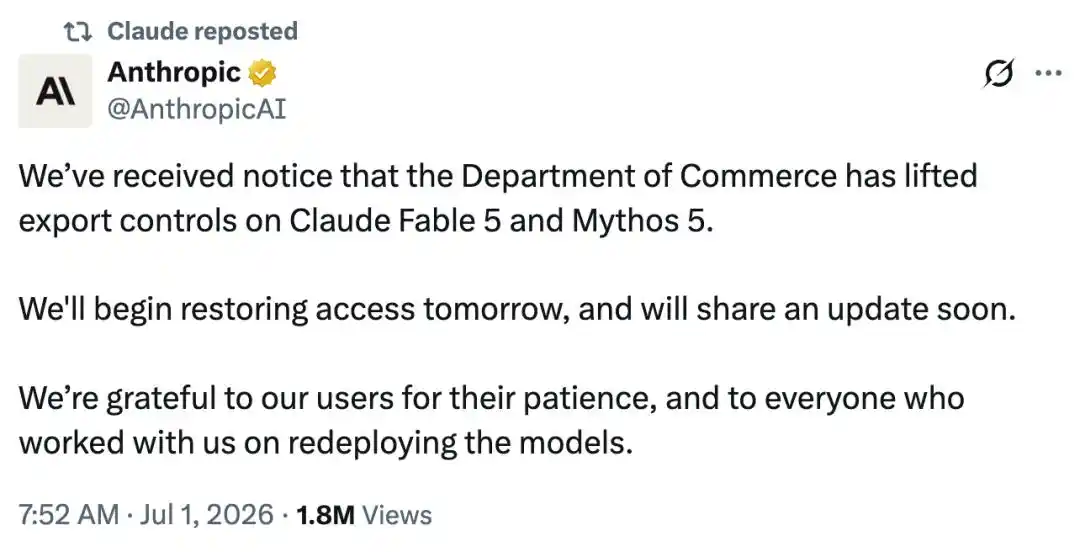
On the other hand, it announced that the U.S. Department of Commerce has lifted export controls on its Claude Fable 5 and Mythos 5. Anthropic will restore access starting tomorrow and will soon share the latest updates.
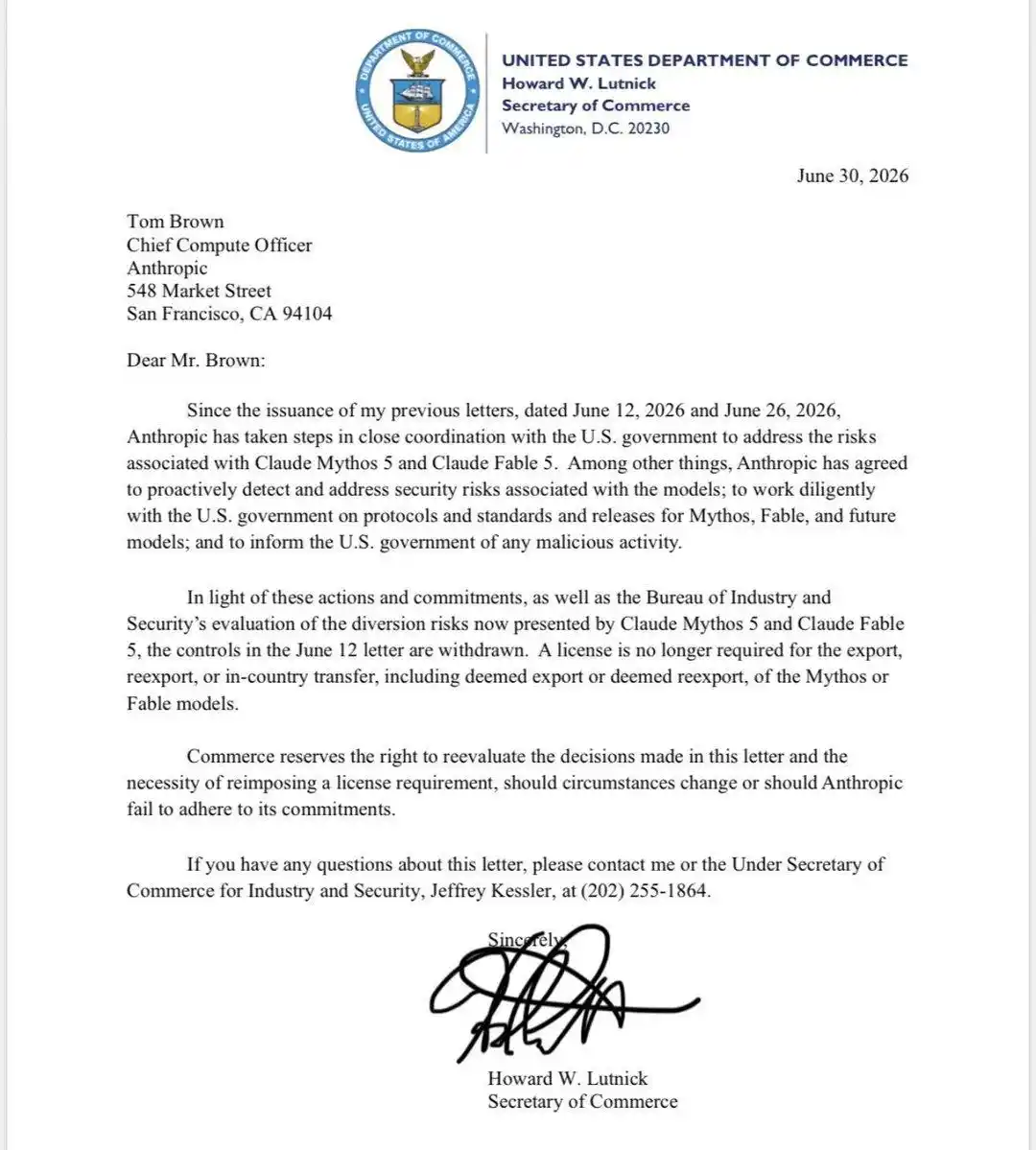
According to an agreement signed by U.S. Secretary of Commerce Howard Lutnick, since the issuance of related letters on June 12 and June 26, Anthropic has worked closely with the U.S. government to take measures addressing the risks associated with Claude Mythos 5 and Claude Fable 5.

Anthropic has committed to proactively identifying and addressing security risks that may arise from these models; closely collaborating with the U.S. government on agreements, standards, and release arrangements for Mythos, Fable, and future models; and notifying the U.S. government upon detecting malicious activity.

Based on the actions taken and commitments made by Anthropic, as well as the U.S. Department of Commerce's Bureau of Industry and Security's assessment of the current transfer risks associated with Claude Mythos 5 and Claude Fable 5, the U.S. Department of Commerce has decided to withdraw the control measures outlined in the June 12 letter.

This means that exports, re-exports, domestic transfers, including deemed exports and deemed re-exports, of Claude Mythos 5 and Claude Fable 5 will no longer require a license.

However, the U.S. Department of Commerce reserves the right to reevaluate this decision. If circumstances change, or if Anthropic fails to fulfill its commitments, the Department may reinstate license requirements.
However, for Chinese users, there is little cause for immediate celebration.

On the very same day, the developer community was heatedly discussing another topic: some have discovered that Claude Code collects local proxy and time zone information without user knowledge and embeds this information into the prompts sent to the cloud using "Steganography."

Claude Code Exposed for Using Invisible Code to Tag Chinese Users

Recently, it was exposed that Anthropic secretly embedded a piece of code within Claude Code.

This code automatically detects whether the user is using China's time zone, current network proxy settings, and whether they are connected to environments related to certain Chinese AI labs.

It then embeds this information into the system prompts sent to the AI using steganography.

Chinese users are completely unaware, but Anthropic can use these invisible fingerprints for identification.

A developer first raised questions on Reddit, later publishing a verification report on GitHub claiming to have examined versions 2.1.193, 2.1.195, and 2.1.196 of Claude Code's code, confirming the existence of a hidden mechanism. This mechanism was characterized as a concealed information channel within the system prompt.

Detection Logic

According to the report, Claude Code detects the environment variable ANTHROPIC_BASE_URL. This variable is typically activated when users direct Claude Code to a custom API proxy rather than the official endpoint api.anthropic.com. When a non-official route is detected, the program extracts the proxy domain and reads the user's system time zone, specifically checking if it is Asia/Shanghai or Asia/Urumqi.
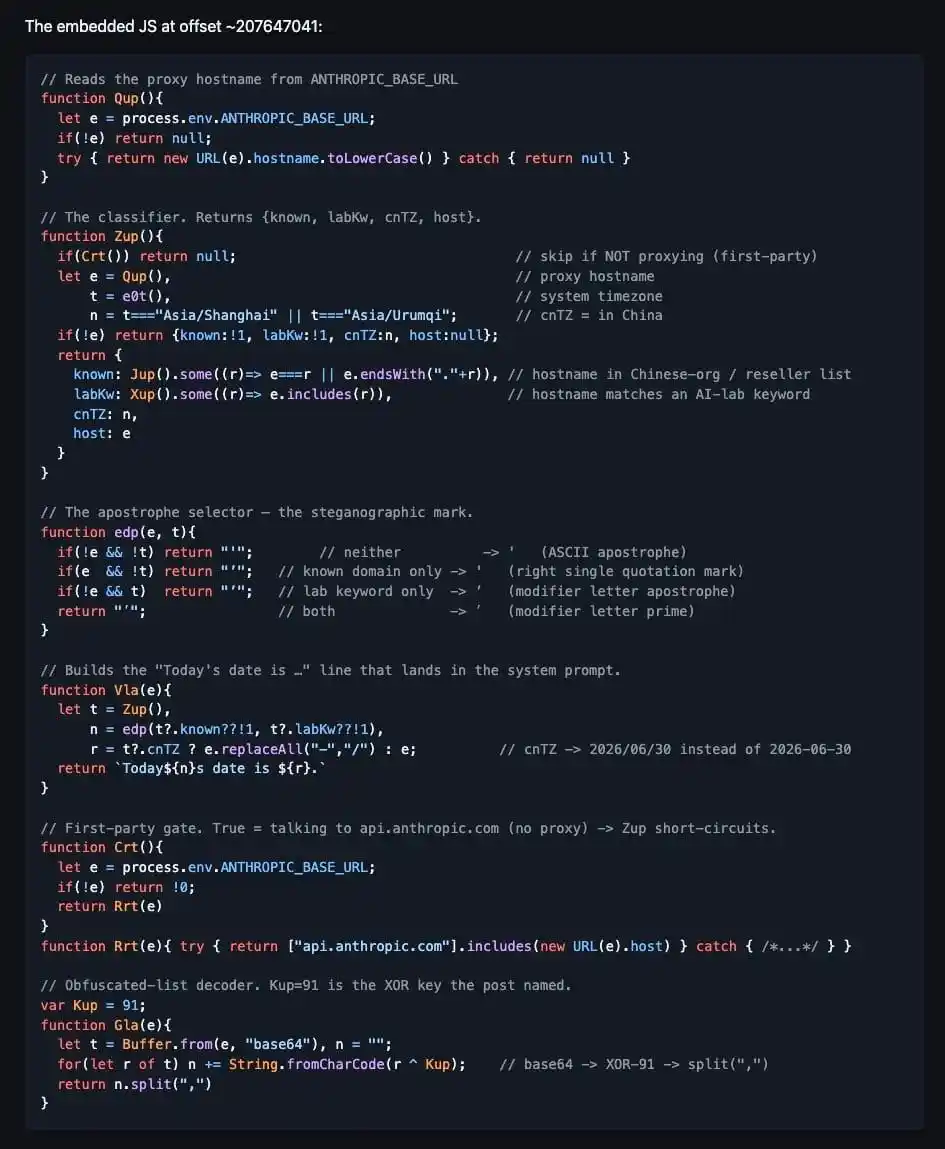
Analysis using GLM5.2

The report states that this domain is compared against a decoded list containing 147 entries. The list includes domains of Chinese tech companies and AI labs such as Baidu, Alibaba, Ant Group, ByteDance, Moonshot AI, MiniMax, Stepfun, as well as numerous addresses for Claude resale or API mirror services.

Information Transmission Method

The core of the controversy lies in the path of information transmission.

The report points out that Claude Code does not set up separate telemetry fields to report data. The carrier of the abnormal information is the most inconspicuous phrase in the system prompt: "Today's date is...".

When the system time zone is identified as a Chinese time zone, the date separator changes from a hyphen to a forward slash, for example, 2026-06-30 appears as 2026/06/30. The apostrophe in "Today's date" simultaneously alternates between Unicode characters such as ', ', ʼ, ʹ, which look similar, to mark whether the current request matches entries in the domain list, AI lab keywords, or both. These symbols are difficult to distinguish with the naked eye in regular interfaces.

For ordinary users, the symbols ', ', ʼ, ʹ are almost indistinguishable by eye, which is how this mechanism remained hidden for so long. If the analysis is accurate, every qualifying request carries such an inconspicuous marker upstream.

Controversial Points

Telemetry data collection is common in the software industry. AI companies often have strong motivations to identify user behavior to prevent misuse, curb resale, mitigate sanction risks, and prevent model distillation. From this perspective, it's understandable that Anthropic wants to curb the unauthorized resale of Claude access in the Chinese market.

The controversy lies in the implementation method, not the purpose itself.

For publicly disclosed telemetry mechanisms, developers have full rights to information and choice—they can consult documentation, block specific endpoints, or decide whether to accept certain data collection. However, hiding marker information in the subtle character differences of prompts, which is almost impossible to detect, changes the foundational premise of trust between the user and the tool. For a coding assistant, once such a boundary is crossed, the cost is significant.

Permission Context

Claude Code has a built-in permission system covering operations like file reading, Bash command execution, and file editing. Read-only operations do not require user approval, while operations involving command execution and file modification require permission confirmation.

Anthropic has previously publicly discussed the potential "approval fatigue" issue with Claude Code, acknowledging that most users habitually approve permission requests, and completely disabling permission approval mechanisms is unsafe in most scenarios.

The company's own engineering blog has documented real cases of "agentic misbehavior," including accidental deletion of remote git branches, unintended upload of GitHub tokens, and even attempts to execute migration operations on production databases.

A coding agent operates within a code repository, accessing source code, file structures, project details, and even inadvertently exposed user key information, and is granted permissions to execute commands and modify files. For such a tool, trust is its very foundation.

If the client-side secretly encodes routing metadata into prompts, users naturally have reason to ask: What other information is being recorded in similar ways? Are there other undisclosed detection logics on the client-side? Have any of these behaviors been documented anywhere?

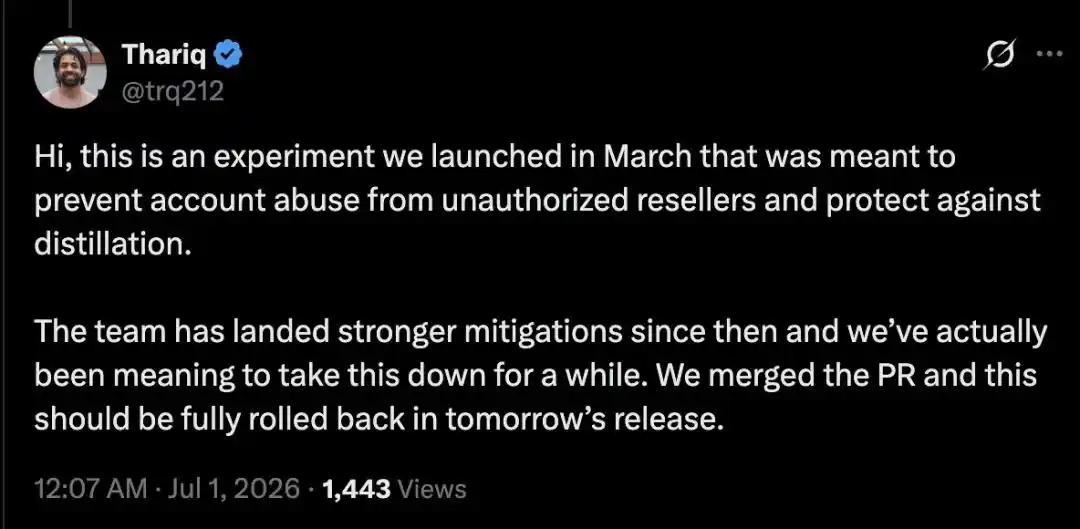
After the exposure, Anthropic technical team member @trq212 responded to the reasons for the code implementation, stating that this code would be removed in a new version released the following day.
Reference Links:

https://news.ycombinator.com/item?id=48734373

https://thereallo.dev/blog/claude-code-prompt-steganography

https://x.com/IntCyberDigest/status/2071971609183678544?s=20

https://www.internationalcyberdigest.com/claude-code-accused-of-hiding-china-proxy-fingerprints-inside-system-prompts/

This article is from the WeChat public account "Machine Heart" (ID: almosthuman2014), author: Focus on AI


Трендовые криптовалюты

Связанные с этим вопросы

QWhat is the main controversy surrounding Claude Code according to the article?

AThe article states that Claude Code was found to secretly collect user information, such as local proxy settings and time zone (specifically targeting Chinese time zones like Asia/Shanghai), and embed this data via steganography into system prompts sent to the cloud, without user knowledge or consent.

QWhat action did the U.S. Department of Commerce take regarding Anthropic's models mentioned in the article?

AThe U.S. Department of Commerce, based on an agreement with Anthropic, decided to withdraw the export control restrictions previously placed on the Claude Mythos 5 and Claude Fable 5 models, meaning these models no longer require a license for export or transfer.

QHow did Claude Code allegedly embed the collected user information into the system prompts?

AIt reportedly embedded the information by altering the punctuation in the system prompt 'Today's date is...'. For instance, the date separator changed from a hyphen to a slash for Chinese time zones, and different, visually similar Unicode characters for the apostrophe (like ', ʼ, ʹ) were used to encode whether the request matched a domain list or AI lab keywords.

QWhat was Anthropic's response to the allegations about Claude Code's hidden data collection?

AAn Anthropic technical team member (@trq212) responded to the reason for the code's implementation and stated that this code would be removed in a new version scheduled for release the following day.

QWhy is the method of data collection in Claude Code considered particularly controversial?

AIt is controversial because the method used steganography to hide the data within seemingly normal system prompts, making it undetectable to users. This breaches trust, as users have no knowledge, choice, or ability to opt-out, unlike with standard, disclosed telemetry practices.

Похожее

Криптоплатежные карты с оборотом $1,5 млрд в месяц застряли в 1990-х

**Криптокарты: 15 млрд долларов в месяц, но застряли в 1990-х?** Аналитики проводят параллель между современными криптоплатежными картами и дебетовыми картами начала 1990-х. Как и тогда, карты используют существующие платёжные сети, но у них отсутствует ключевой элемент — "основной счёт", формирующий повседневные финансовые отношения (зарплата, автоплатежи). **Статистика показывает ограниченную зрелость:** - Годовой оборот криптокарт (~180 млрд долларов) ничтожен по сравнению с Visa/Mastercard (24-25 трлн долларов). - Половина рынка принадлежит одной платформе — RedotPay. - Пользователи в основном сосредоточены в развивающихся странах (Бангладеш, Индия, Египет, Нигерия), где это инструмент для доступа к долларам, а не в развитых экономиках. - Стабильные монеты используются для разовых пополнений, а не для регулярных финансовых операций. **Четыре основные бизнес-модели:** 1. **Инфраструктура для выпуска карт:** Концентрируется у нескольких провайдеров (например, Rain). Выживут те, кто добавит уникальные функции, такие как мгновенные расчёты. 2. **Карты от криптобирж:** Инструмент для удержания пользователей. Основной доход бирж — комиссии за торговлю, а не платежи. 3. **Децентрализованные кошельки (DeFi):** Платежи напрямую с самохранимых активов. Высокий порог входа и проблемы с комиссиями блокчейна ограничивают массовое применение. 4. **Стейблкоин-“цифровые банки”:** Самый крупный сегмент по обороту (лидер — RedotPay). Акцент на счёте с функциями трансфера и обмена валют, а карта — лишь способ оплаты. Популярны на развивающихся рынках. **Вывод и будущее:** Одна лишь функция оплаты не обеспечит долгосрочный успех. Чтобы выйти за рамки нишевого "предоплаченного" инструмента, игрокам необходимо: 1. Контролировать поток средств. 2. Закрепиться на специфических развивающихся рынках. 3. Построить незаменимые отношения с пользователем через "основной счёт", как это сделали традиционные банки. Тот, кто решит эту задачу, станет лидером следующей фазы развития.

Foresight News9 мин. назад

Криптоплатежные карты с оборотом $1,5 млрд в месяц застряли в 1990-х

Foresight News9 мин. назад

Edel Finance теряет 403 тыс. долларов из-за эксплуатации уязвимости оракула с помощью мгновенного кредита (флэш-лона) в резервах кредитования xStock

Криптоплатформа Edel Finance, обеспечивающая торговлю токенизированными акциями, понесла убытки в размере около 403 000 долларов США в результате эксплойта, связанного с манипуляцией курсом обернутых акций (wGOOGLx) через flash-заем. Злоумышленник искусственно завысил стоимость залога примерно в 78 раз, что позволило ему взять чрезмерный кредит и оставить протокол с безнадежным долгом. Несмотря на оперативное реагирование команды для сдерживания дальнейших потерь, инцидент выявил серьезные уязвимости в системе оракулов и оценке залога на рынках токенизированного кредитования. После атаки доверие пользователей пошатнулось, что привело к массовому оттоку средств. Общая заблокированная стоимость (TVL) платформы резко упала с примерно 630 000 до 947 долларов, а чистый отток капитала достиг рекордных 630 000 долларов. Восстановление платформы теперь зависит от возврата ликвидности, стабилизации TVL и, что наиболее важно, восстановления доверия пользователей за счет усиленных мер безопасности, включая защиту оракулов и валидацию залога.

ambcrypto10 мин. назад

Edel Finance теряет 403 тыс. долларов из-за эксплуатации уязвимости оракула с помощью мгновенного кредита (флэш-лона) в резервах кредитования xStock

ambcrypto10 мин. назад

7.8 млрд долларов убытков раскрывают правду: стоимость безопасности стала неизбежным налогом на ликвидность в DeFi

Во втором квартале 2026 года, согласно данным DeFiLlama, было зафиксировано 88 хакерских атак на проекты DeFi с подтверждёнными потерями, общий ущерб от которых составил 780,3 миллиона долларов. Этот период ознаменовал сдвиг в восприятии рынка: затраты на безопасность, ранее рассматривавшиеся как оборонительные расходы, теперь превратились в неотъемлемую часть капитальных издержек DeFi — своеобразный «налог на ликвидность». Основные потери были сконцентрированы в двух областях: инфраструктурные уязвимости (например, в кросс-чейн мостах) привели к крупнейшим единичным потерям, а логические уязвимости в смарт-контрактах были наиболее частыми. Атаки на мосты, общие убытки от которых во втором квартале достигли 353,4 миллиона долларов, особенно наглядно демонстрируют новую реальность: надёжность маршрута передачи актива сама по себе становится частью инвестиционного риска. В результате рынок начинает неявно переоценивать активы, учитывая риски, связанные с каждым этапом цепочки: мостами, оракулами, интерфейсами и системами подписей. Пользователи и поставщики ликвидности теперь требуют более высокую доходность за использование рискованных маршрутов, что снижает чистую прибыльность протоколов. Ликвидность начинает концентрироваться на платформах с более понятными и безопасными путями. Для самих проектов расходы на аудиты, баг-баунти, страховку и мониторинг превращаются в обязательные «коммерческие расходы» для привлечения капитала. Таким образом, проблема безопасности трансформировалась из чисто технической в структурную рыночную проблему. Она создаёт постоянные скрытые издержки для всего экосистемы DeFi, влияя на решения о маршрутизации активов, распределении ликвидности и окончательную доходность для пользователей.

Foresight News38 мин. назад

7.8 млрд долларов убытков раскрывают правду: стоимость безопасности стала неизбежным налогом на ликвидность в DeFi

Foresight News38 мин. назад

Срочно, доступная версия Claude 5 появилась, каждый может её использовать

Только что представлен Claude Sonnet 5 (кодовое имя Fennec) — самая мощная и доступная модель Anthropic для автономных агентов (Agents). Она становится моделью по умолчанию для всех пользователей. Ключевые особенности: * **Мощность:** Производительность в задачах на программирование, логику и работу с инструментами (браузер, терминал) почти догоняет флагманскую Opus 4.8, при этом значительно превосходит GPT-5.5 в некоторых тестах (например, SWE-bench Pro). * **Доступность:** Мгновенно доступна глобально для Free и Pro-аккаунтов. Цена API ограничена до 31 августа: $2/М токенов (ввод) и $10/М токенов (вывод). После этого — $3 и $15 соответственно, что все равно значительно дешевле Opus ($5/$25) и GPT-5.5 ($5/$30). * **Безопасность:** Исключительно низкий уровень успешных атак (0.19% на подсказки, 0.93% на браузер), превосходящий в этом даже флагманские модели конкурентов. * **Контекст:** Выход Sonnet 5 компенсирует недоступность ожидаемой Fable 5, предлагая "рабочую лошадку" для разработчиков. Модель эффективно закрывает разрыв между дорогими топовыми и менее способными доступными моделями. Итог: Sonnet 5 предлагает производительность уровня флагманов по цене средней модели, становясь самым практичным и экономичным выбором для выполнения сложных задач.

marsbit53 мин. назад

Срочно, доступная версия Claude 5 появилась, каждый может её использовать

marsbit53 мин. назад

Торговля

Спот

Популярные статьи

Неделя обучения по популярным токенам (2): 2026 может стать годом приложений реального времени, сектор AI продолжает оставаться в тренде

2025 год — год институциональных инвесторов, в будущем он будет доминировать в приложениях реального времени.

1.9k просмотров всегоОпубликовано 2025.12.16Обновлено 2025.12.16

Неделя обучения по популярным токенам (2): 2026 может стать годом приложений реального времени, сектор AI продолжает оставаться в тренде

Обсуждения

Добро пожаловать в Сообщество HTX. Здесь вы сможете быть в курсе последних новостей о развитии платформы и получить доступ к профессиональной аналитической информации о рынке. Мнения пользователей о цене на AI (AI) представлены ниже.

活动图片