Lao Huang: Prompt is Dead, the Entire AI Community is Frenziedly Chasing Loops

marsbitОпубликовано 2026-06-29Обновлено 2026-06-29

Введение

The article "Prompt is Dead: The AI Industry is Obsessively Chasing Loops" discusses a major shift in AI development, where "Loop Engineering" is replacing traditional prompt engineering. Industry leaders like NVIDIA's Jensen Huang, Andrew Ng, and engineers from Anthropic and OpenAI argue that manually crafting prompts is becoming obsolete. Instead, the new focus is on designing autonomous, self-improving AI systems (loops) that can operate 24/7. A loop system typically involves five key phases: Discovery (finding tasks), Handoff (assigning to agents), Validation (critical independent review), Persistence (saving progress), and Scheduling (automated operation). The core idea is to move humans from being the operational "engine" to being the system "architects" who design the loop, define goals, and set up verification mechanisms. A major challenge and necessity is implementing robust, independent validation to prevent AI from uncritically approving its own work. The trend is seen as part of a move towards "inference-time compute," where allocating computational budget effectively becomes a key engineering skill. While loops can produce higher-quality outputs, they are more expensive and time-consuming than simple prompting. The article warns of risks like "verification debt," "comprehension corrosion," and "cognitive surrender," where engineers might stop understanding the code their systems generate. Ultimately, the article concludes that in an era of automated loops, huma...

Recently, what's the hottest word in Silicon Valley?

Loop.

Open up X, and the entire internet is flooded with discussions about Loop Engineering.

A group of Silicon Valley big shots are abandoning prompts one after another, turning towards autonomous loops!

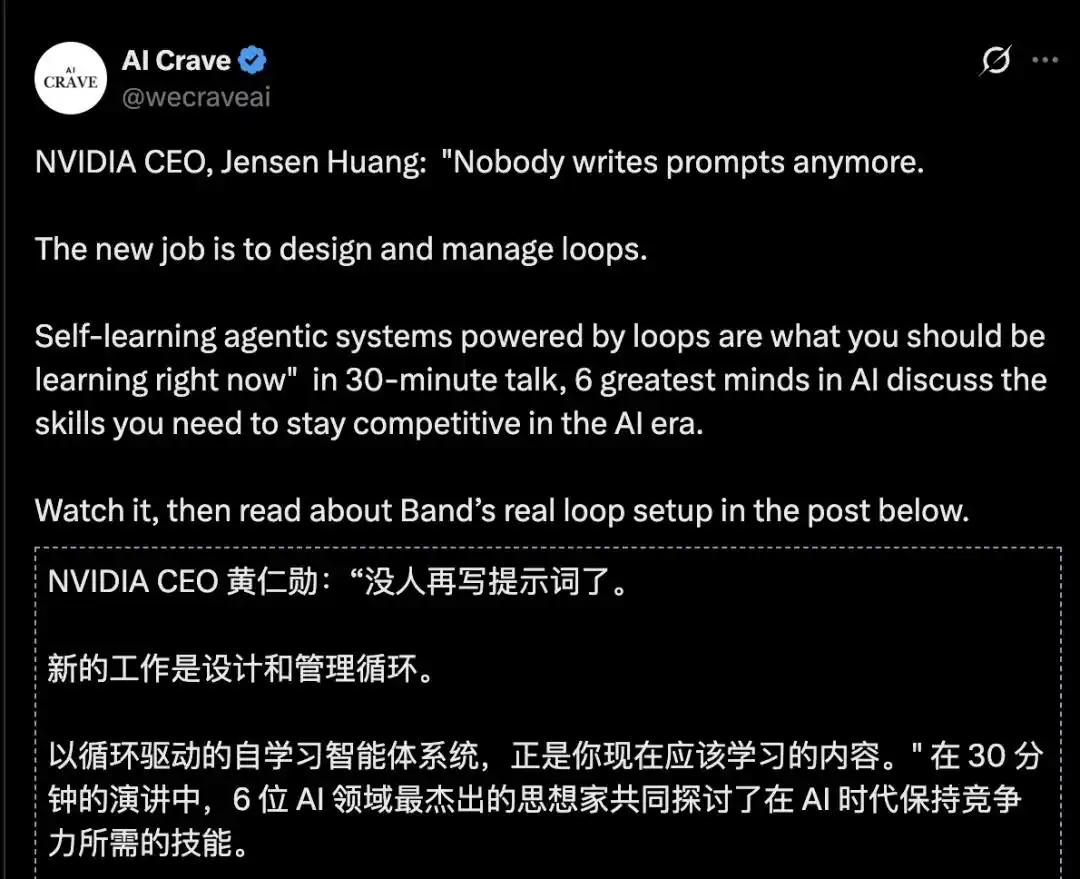
Jensen Huang has outlined the new focus for the next phase (and a new way to burn tokens):

Nobody writes prompts anymore. The new job is to write and handle loops.
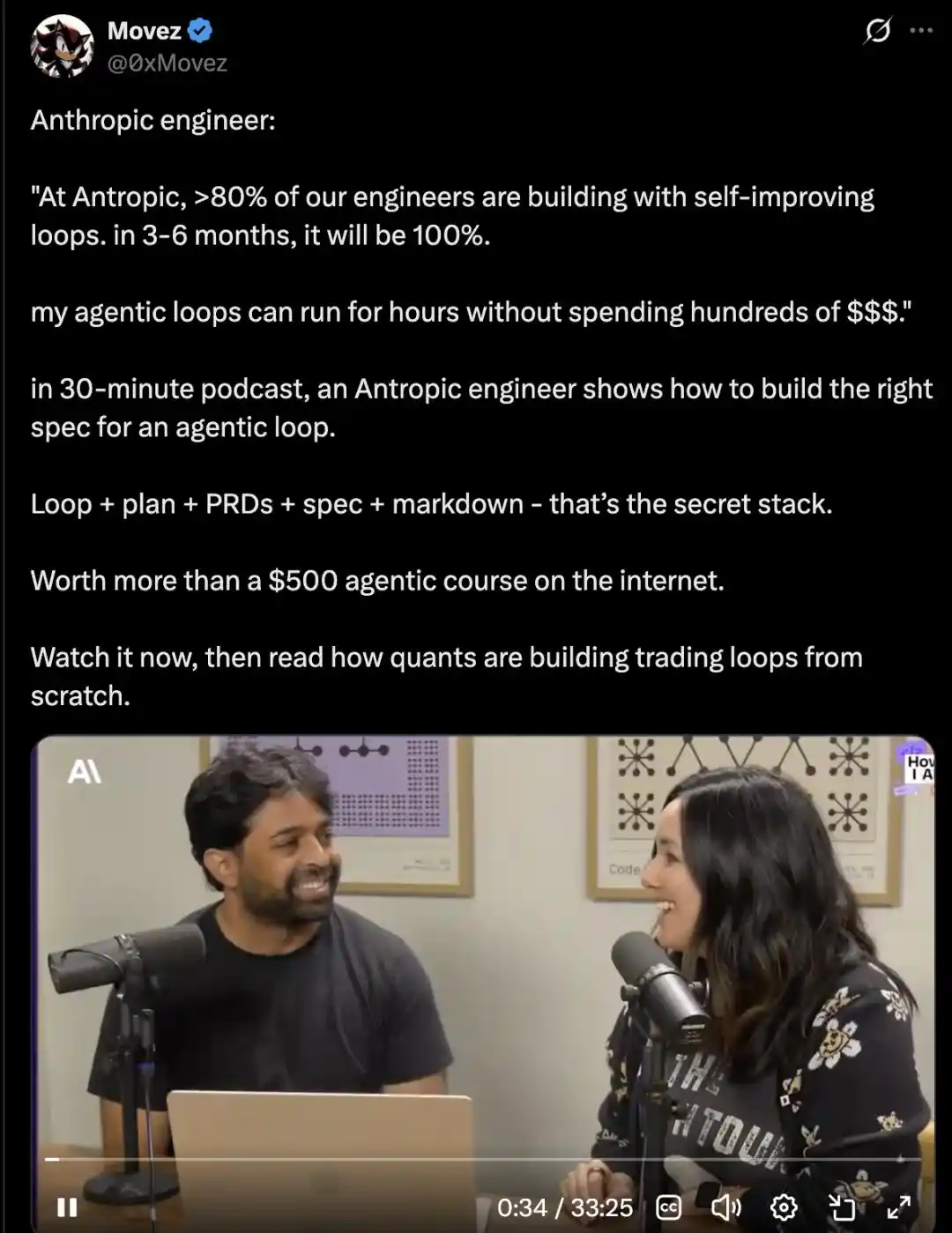
Recently, an Anthropic engineer revealed:

Over 80% of engineers at Anthropic are already using self-improving loops, and it will reach 100% in 3-6 months.
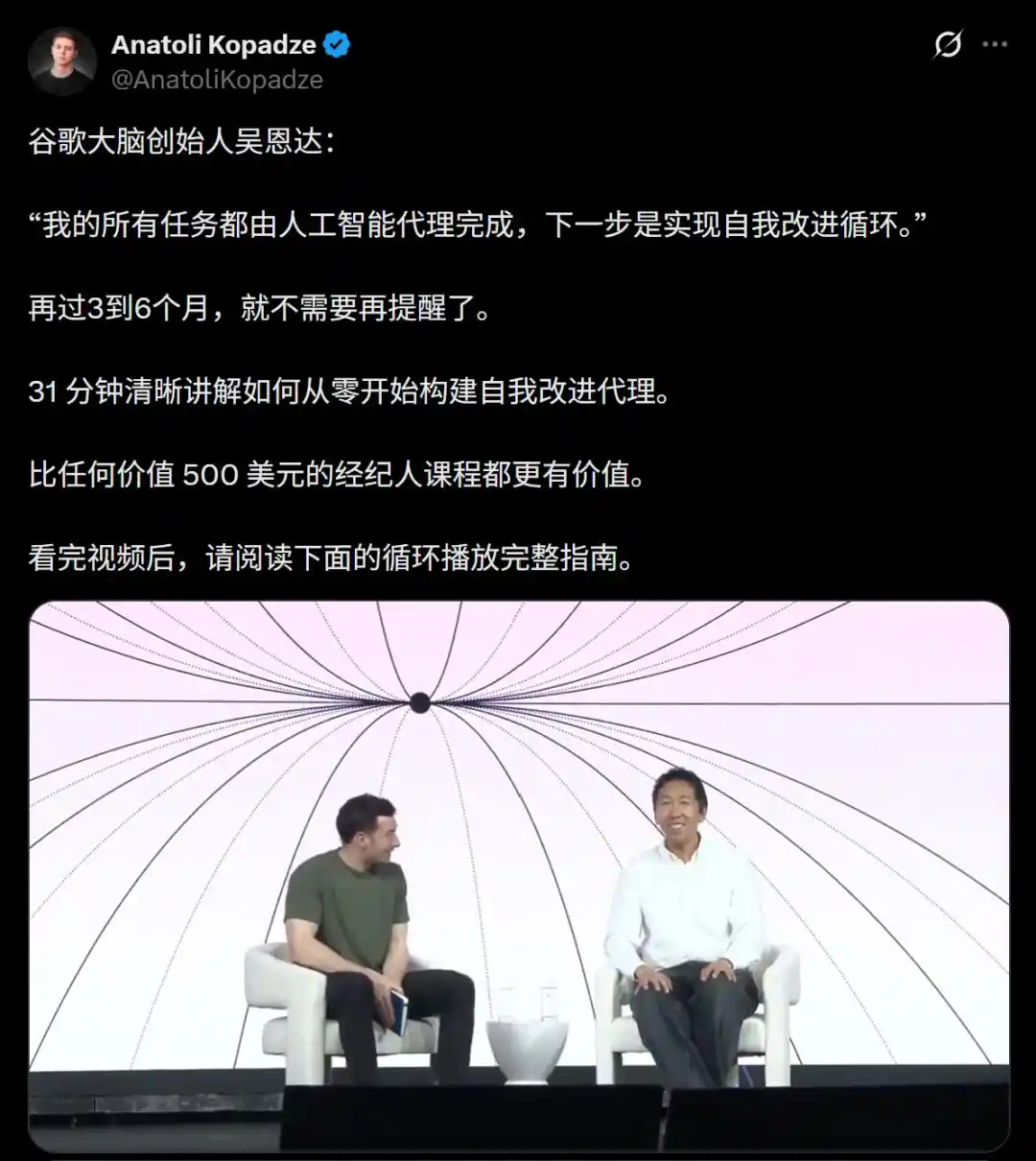
Andrew Ng asserts: In 3 to 6 months, prompts will die! Loops replacing prompts is a foregone conclusion.
Earlier, when explaining his AutoResearch project, Karpathy discussed AI agents' closed loops (generation → execution → evaluation → improve), advocating for partially removing humans from the loop.
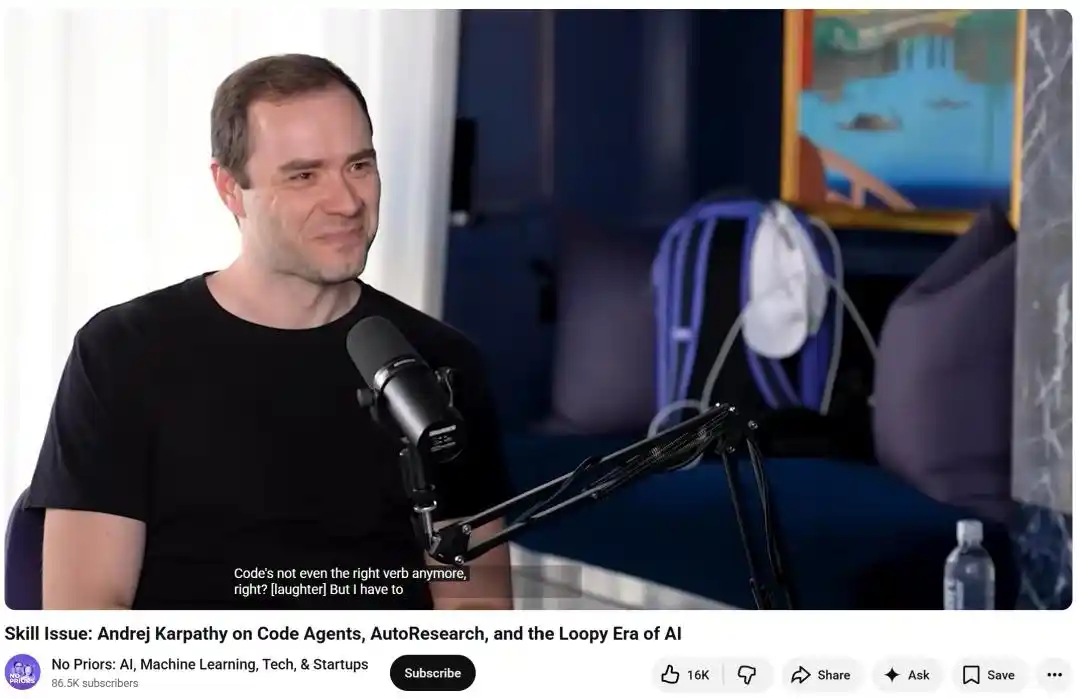
In March, Karpathy gave an in-depth interview about AutoResearch / the Karpathy Loop.

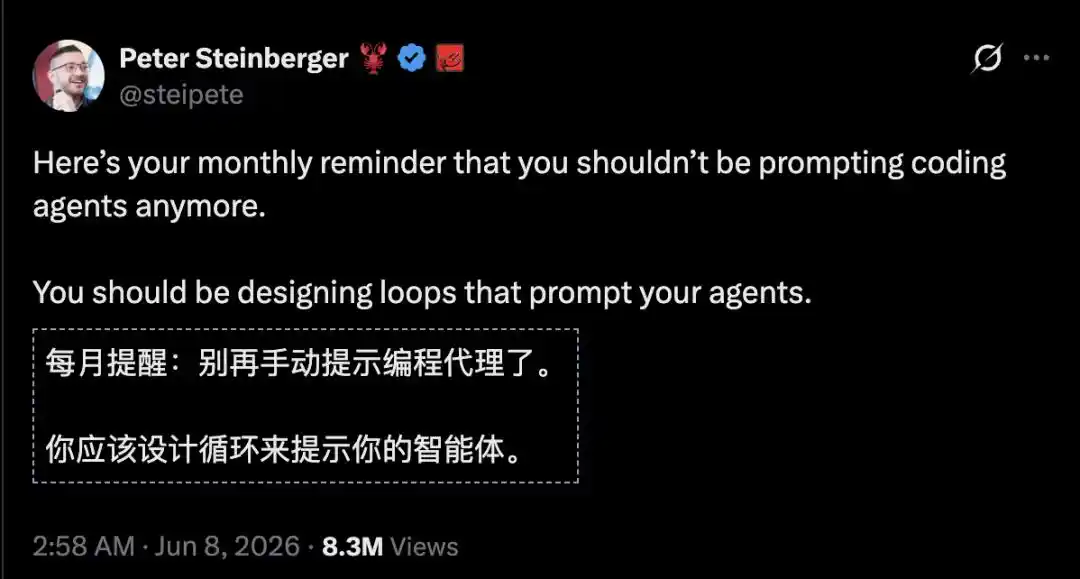
OpenClaw's creator, Peter Steinberger, stated bluntly: A monthly reminder, stop manually writing prompts, designing loops is the way.
Claude Code's creator, Boris Cherny, boldly declared: Loop cycling is the future!

Two years ago, we were manually writing code. Then we started transitioning to having agents write code.

Now, we are moving towards a stage where agents prompt other agents, and the latter generates the code.

The step from source code to agents was big, but the significance and impact of introducing a loop mechanism is no less than the previous step.
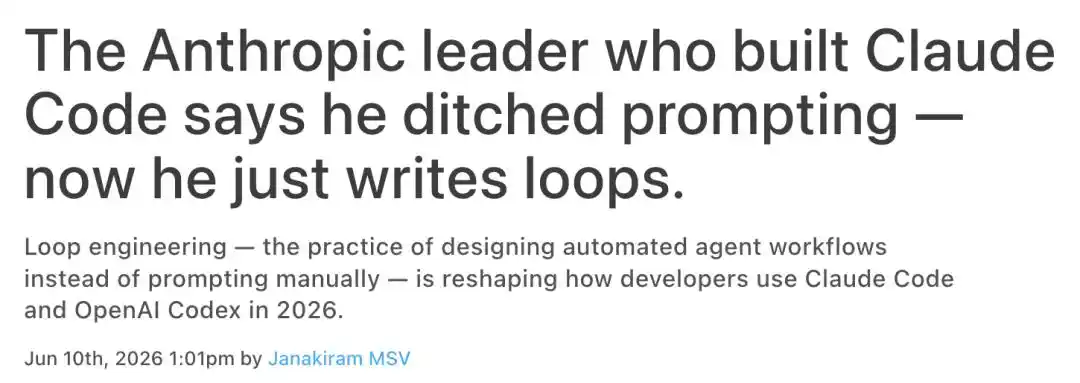
Who would have thought, after two years of prompt engineering being hot, top AI engineers have moved on.

Why are Silicon Valley big shots so bullish on Loops?

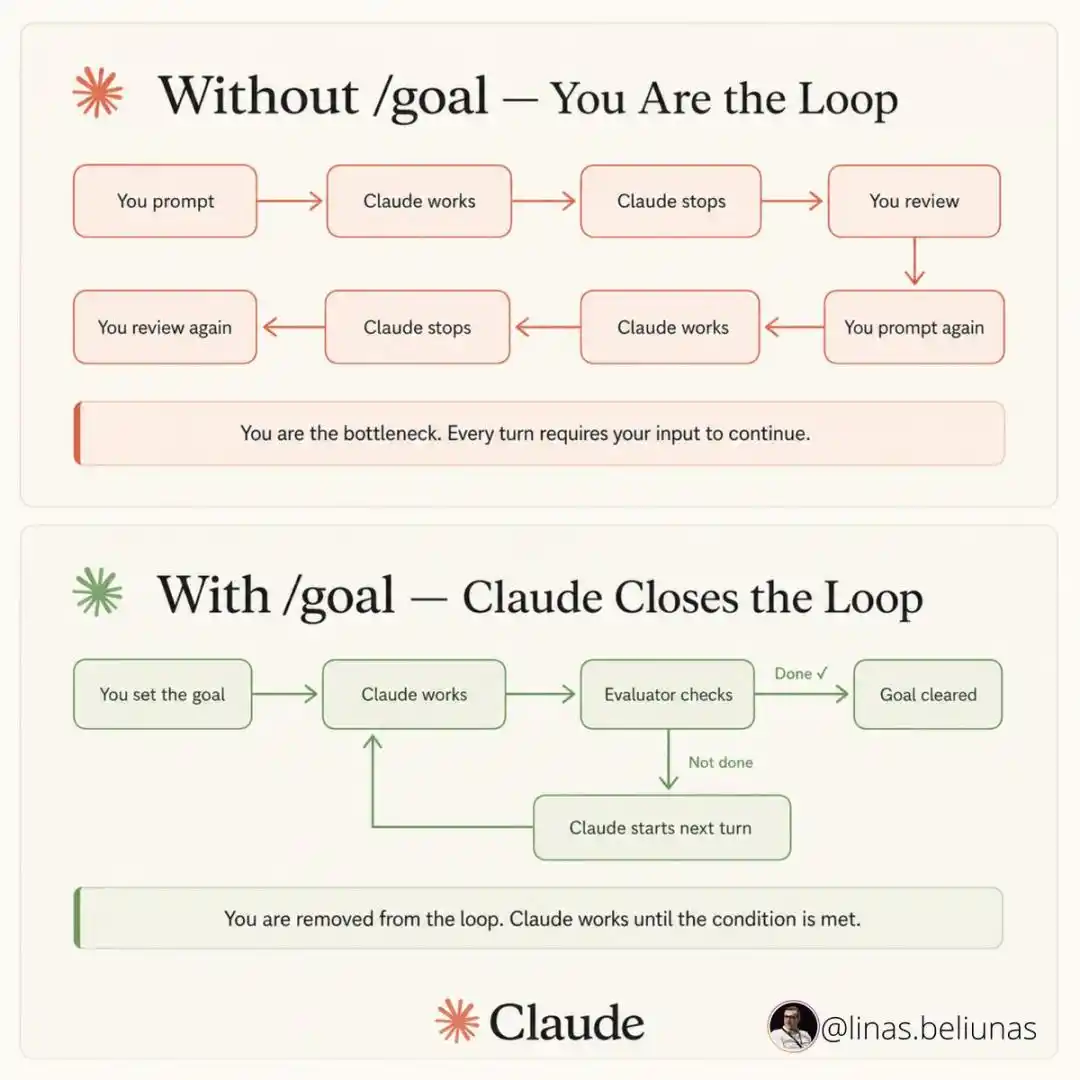
The essence of traditional prompting is: Humans *are* the loop itself.

You write a prompt → Agent outputs → You review → You write the next prompt → Repeat.

Each step relies on human attention, contextual memory, and decision-making bandwidth. The amount of tokens and task complexity one person can effectively drive in a day is limited.

The essence of Loop Engineering is: The system becomes the loop itself.

Therefore, loop engineering is more important than prompt engineering.
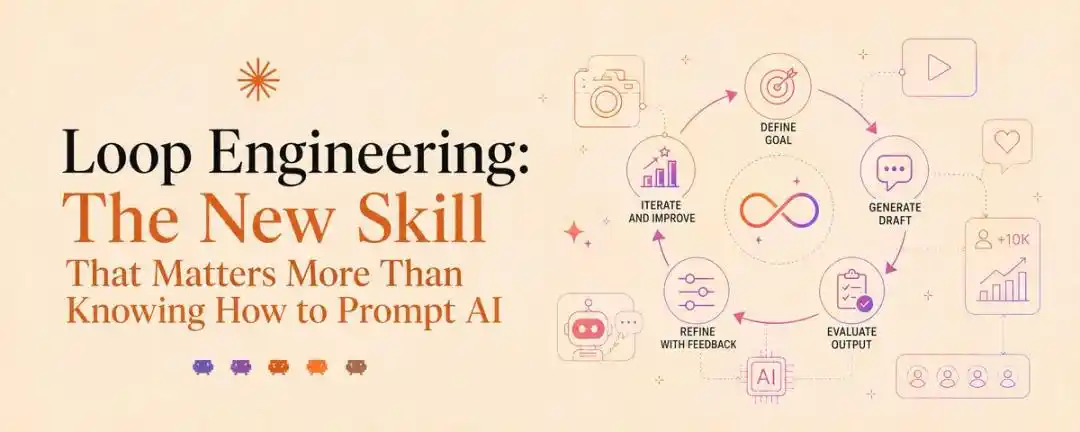
Humans only do high-value design once:

1. Define goals and stop conditions

2. Build verification mechanisms (most critical)

3. Establish persistent memory (markdown / external state)

4. Configure discovery and scheduling

Afterwards, the AI loop system can autonomously discover tasks → execute → verify → persist → discover again, running 24/7, with humans only intervening when necessary.
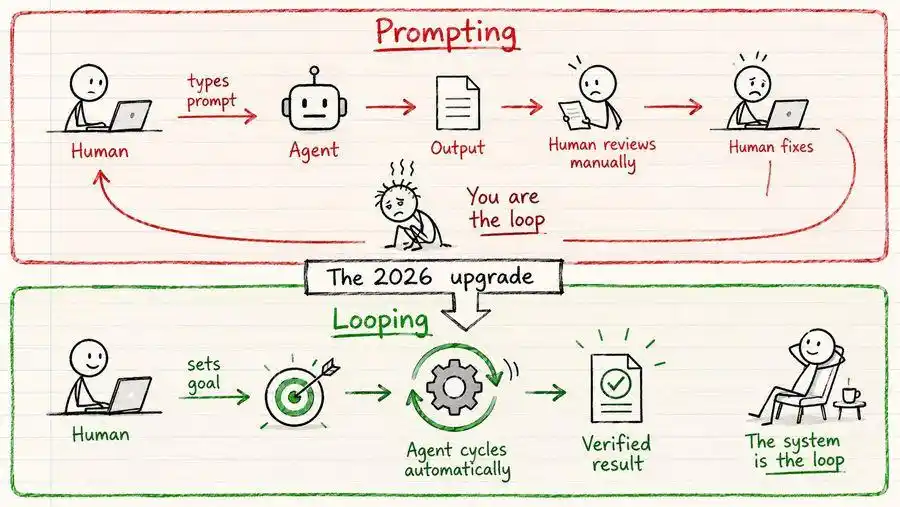
This is why Silicon Valley big shots are all bullish on Loops.

Their judgment is based on this: Once loops mature, the cost-effectiveness of manual prompting will directly collapse!

Loop Engineering 11-page White Paper, Spreading Like Wildfire Online

So, what exactly is the loop process?

In recent days, a white paper on Loop Engineering has started spreading like wildfire on X.
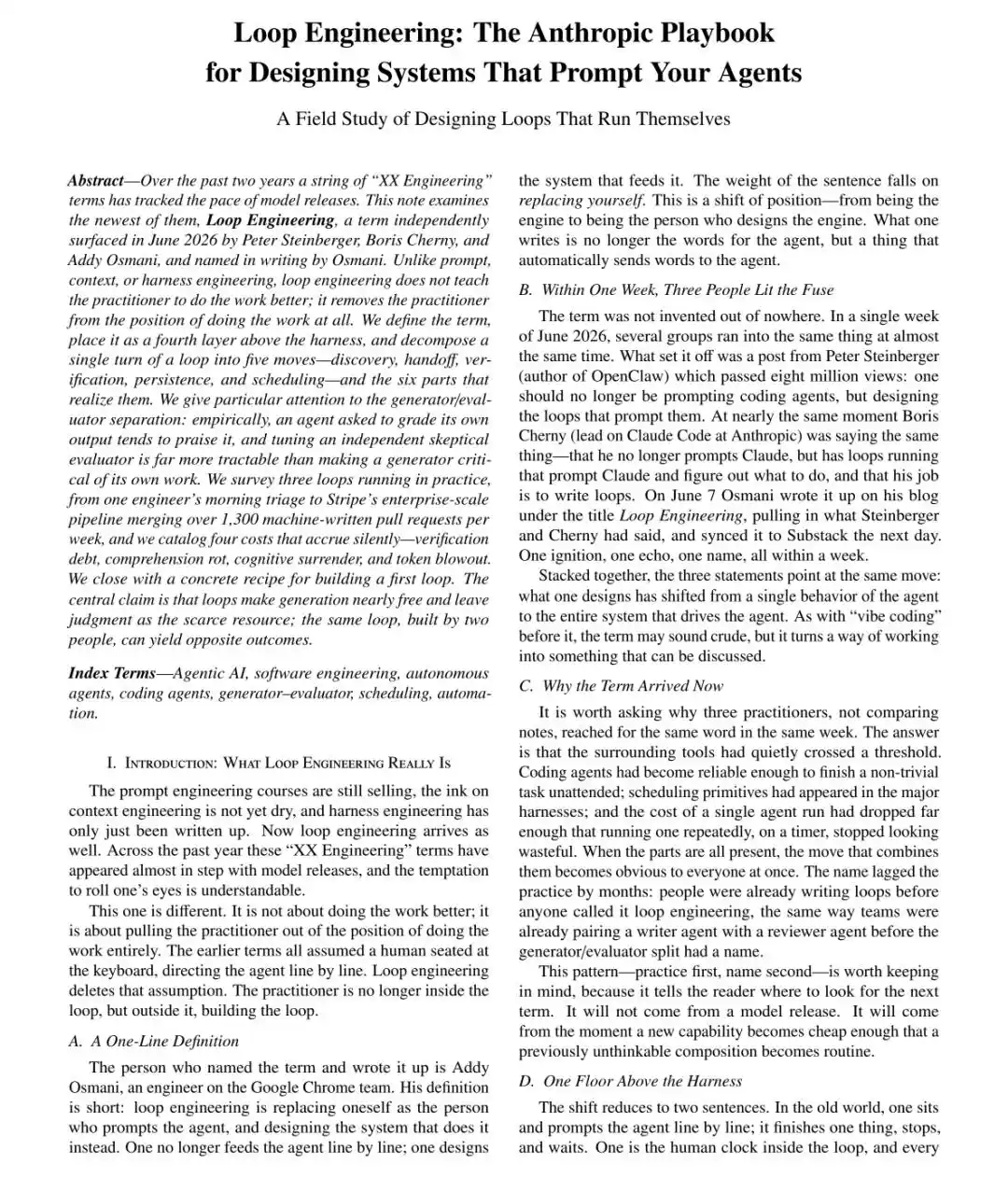
https://drive.google.com/file/d/1qzKI4DKnyHRpXK1J3ATPqwaqLc0iNu-M/view

This 11-page PDF is essentially a popular summary / field guide, compiling relevant public discussions and practical experience.

The core ideas within originate from the public statements of Peter Steinberger, Boris Cherny, and Addy Osmani.

What is Loop Engineering?

Loop Engineering, named by Google Chrome engineer Addy Osmani in June 2026.
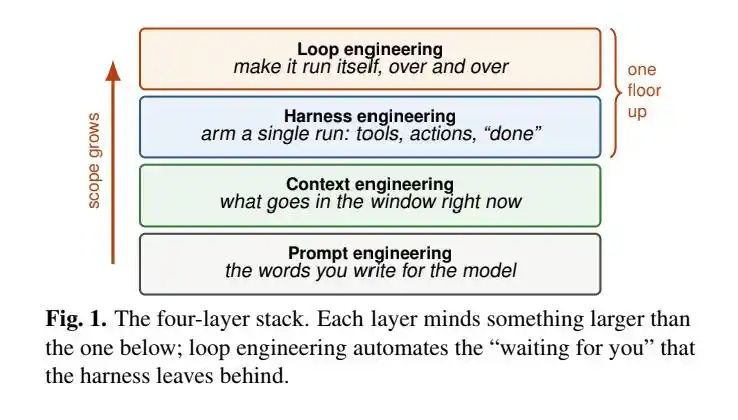
It is the fourth layer above prompt engineering, context engineering, and toolchain engineering: the first three layers assume you sit at the keyboard directing the AI line by line; Loop Engineering aims to move you from that position, completely liberating you from the work.

From now on, you are no longer the engine driving the AI, but the architect designing that engine.

The system will automatically wake up at set times, spawn child agents to work, and feed the output back to itself as input for the next round.

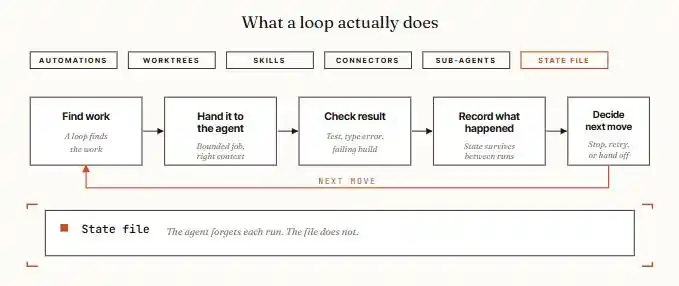
The article breaks down a complete Loop into five key actions:

Discovery: The AI uses a solidified skill library to find valuable work on its own, such as reading the latest CI failure logs or unresolved issues.

Handoff: Open independent sandboxes for each task, allowing multiple agents to work in parallel without interference.

Verification: This is the most crucial step. Letting the code-writing AI score itself, it will blindly praise itself. Therefore, a completely independent, default-skeptical "evaluator" agent must be introduced to find faults.

Persist: The AI's memory cannot just stay in a context window that can be cleared anytime. Its state and progress must be solidified to disk so it can continue the next day.

Schedule: Use automation scripts to let the system run autonomously and periodically, closing the entire loop.
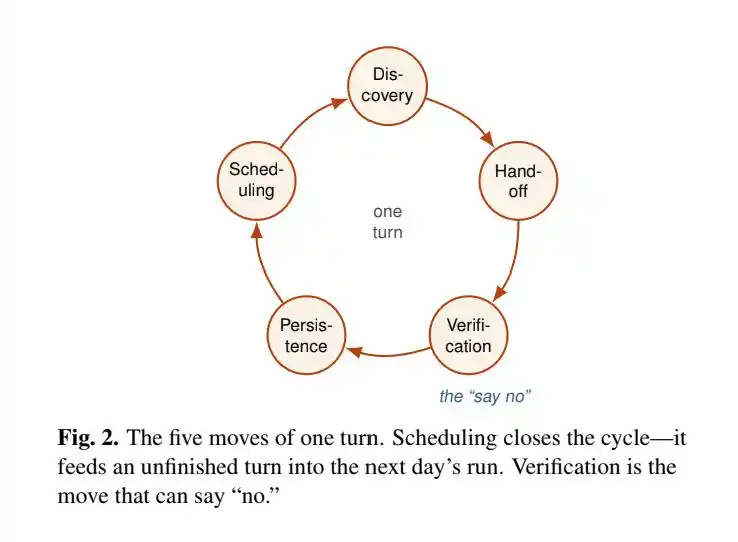
Among these, the hardest and most likely to be lazily skipped is verification.

Having the AI score itself, it will almost always praise itself because its mind contains a self-persuasion chain. The solution is to introduce an independent evaluation Agent that assumes the code is bad by default.
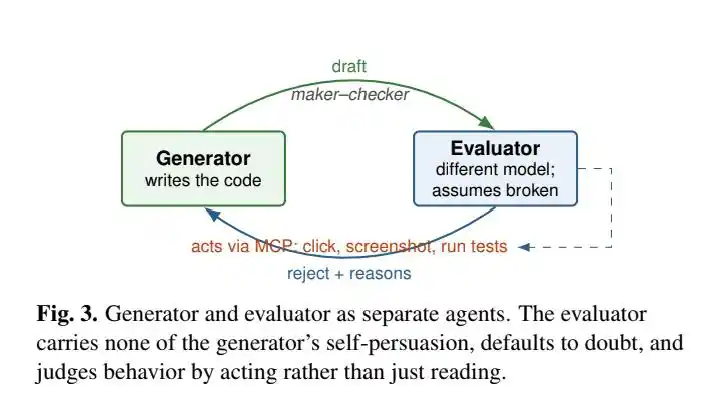
However, the system running fully automatically doesn't mean you can rest easy. The author warns: When the loop runs wild late at night, it may quietly accumulate four hidden costs.

Verification Debt: Minor errors not validated are quietly merged into the repository.

Understanding Decay: The AI writes code too fast, causing human understanding of the codebase to seriously fall behind.

Cognitive Surrender: Humans become too lazy to review, accepting AI results wholesale.

Token Runaway: The AI retries all night in an infinite loop, burning through the budget.
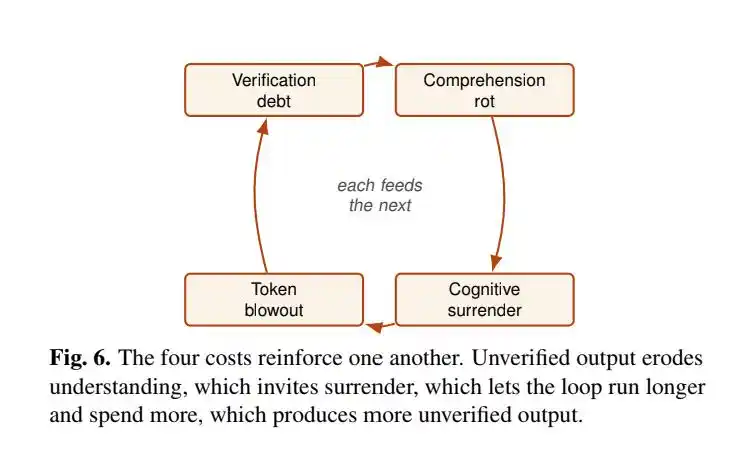
The same Loop, built by two different people, may yield completely opposite results. Bring judgment into it, and it amplifies judgment; bring laziness into it, and it amplifies laziness.

In short, this report reveals a profound industry change: Loop engineering makes code generation almost free, while human judgment becomes the only scarce resource!

Also spreading wildly online simultaneously is a 14-step practical handbook issued by Codez, already with millions of shares.
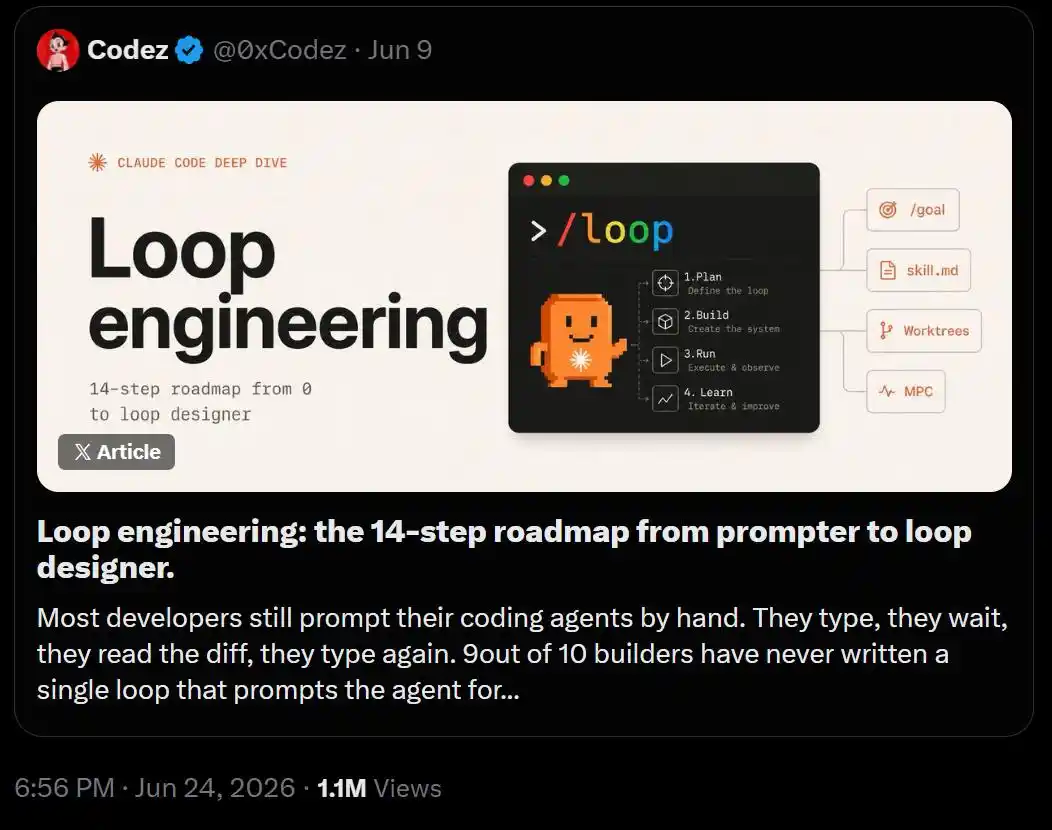
The general idea of the article is as follows: Prompts are outdated, the leverage point has moved up one layer—from "words written for the AI to see" to "designing a system that automatically feeds the AI."

This transformation can be broken down into 14 steps, 3 stages—

First, determine if you really need a loop (Is the task repetitive? Can verification be automated? Can the budget handle it?), then learn the five components (scheduler, isolated working directory, skill files, external connectors, independent evaluation sub-agent), and finally build a minimal viable loop.

The most crucial point among them is: Separate the agent that writes code from the agent that reviews code. The same model acting as both athlete and referee will always give itself full marks.

A loop without objective verification gates is just "two optimists nodding at each other." The better the loop runs, the easier it is for engineers to stop truly understanding the code.
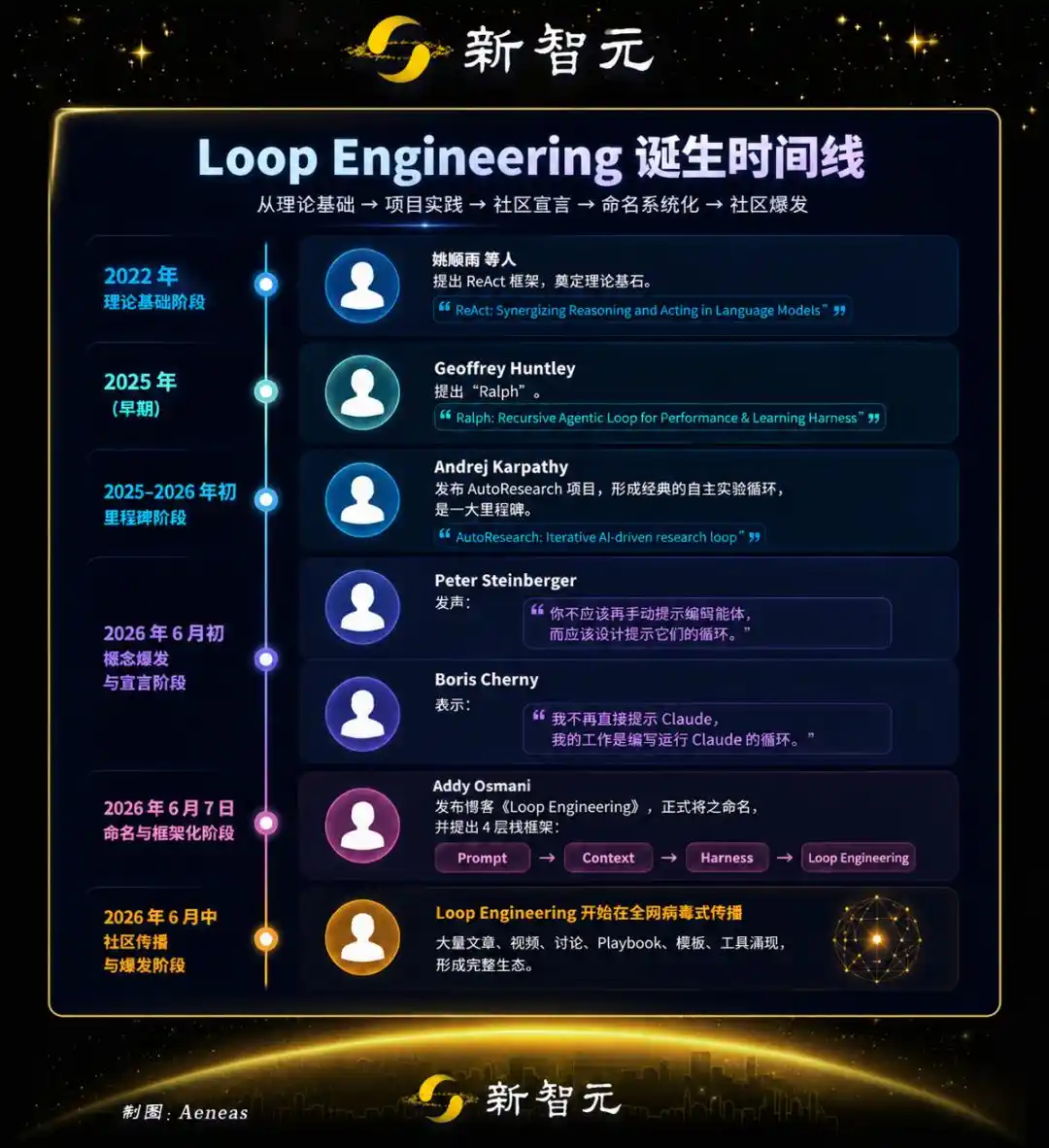
Loop Engineering Birth Timeline

If we were to outline a timeline for loop engineering, it would roughly be as follows.

Early Foundation Stage

2022: Shunyu Yao and others propose the ReAct framework, laying the theoretical cornerstone.

2025: Geoffrey Huntley proposes "Ralph."

2025–Early 2026: Andrej Karpathy releases the AutoResearch project, forming the classic autonomous experiment loop, a major milestone.

Concept Explosion and Naming Stage

Early June 2026, Peter Steinberger speaks out: You shouldn't manually prompt coding agents anymore, you should design loops that prompt them.

Boris Cherny states: I no longer prompt Claude directly, my job is to write loops that run Claude.

June 7, 2026: Addy Osmani publishes the blog post "Loop Engineering," formally naming it, providing a 4-layer stack framework: Prompt → Context → Harness → Loop Engineering.

Subsequently, throughout June, Loop Engineering begins spreading virally across the entire internet.
Claude's "Infinite Loop," Automated Agents Take Over Everything

In an internal podcast, an Anthropic engineer revealed a spine-chilling detail:

When you click run and let Claude execute for 8 hours, you are essentially making a $500 compute power gamble.

If you're still struggling over how to write prompts, you've already lost.

In Anthropic's logic, engineers are evolving into "compute power allocators."

Your core job is no longer writing logic, but deciding where each cent of compute power is invested.

As OpenAI researcher Noam Brown pointed out earlier this month, contemporary models can solve almost any problem if you're willing to throw enough compute power at it.
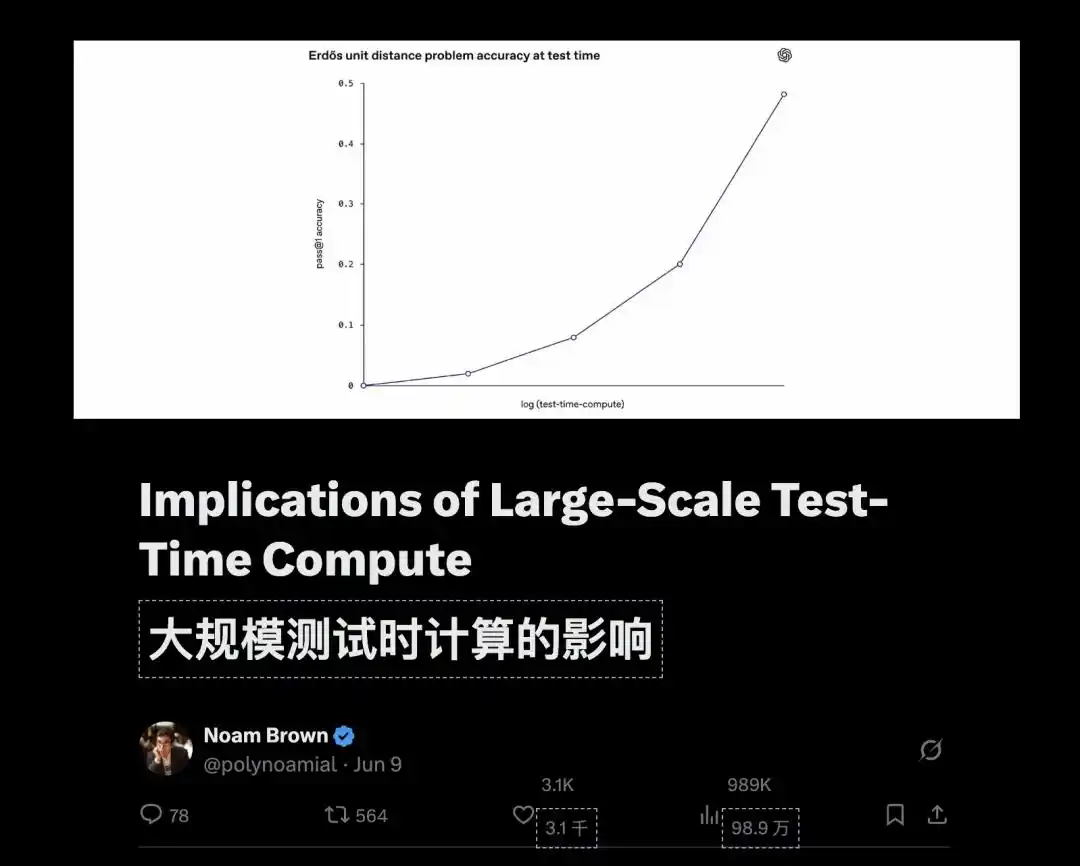
Loop engineering is part of the big trend of "compute at test time."

Interestingly, the idea of having agents work in loops has actually had prototypes for a while.
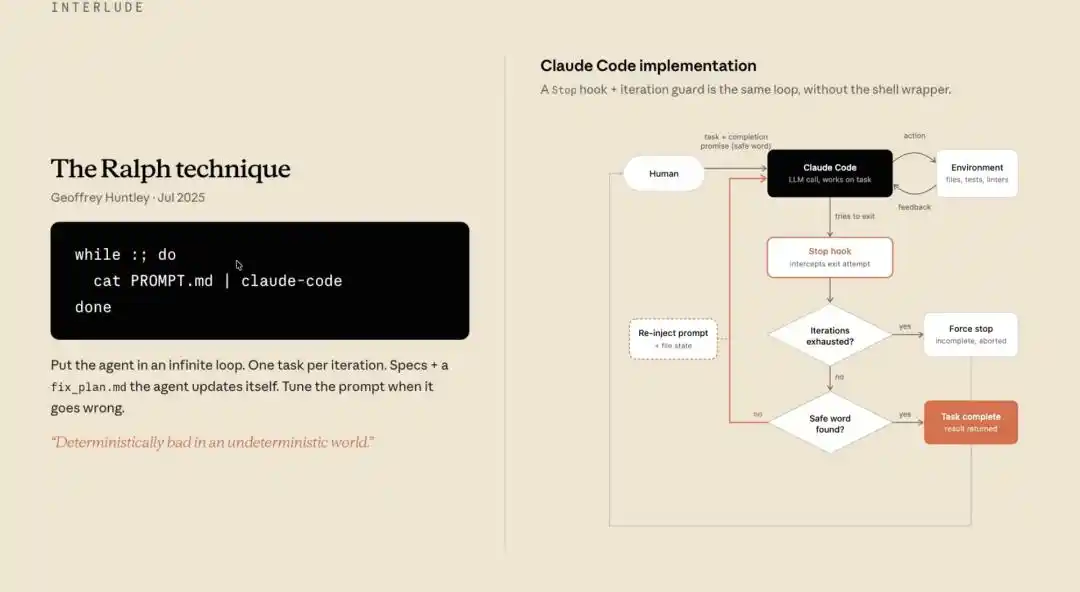
At least since last summer, Australian sheep farmer Geoffrey Huntley mentioned a similar approach in his blog, calling it the "Ralph loop."
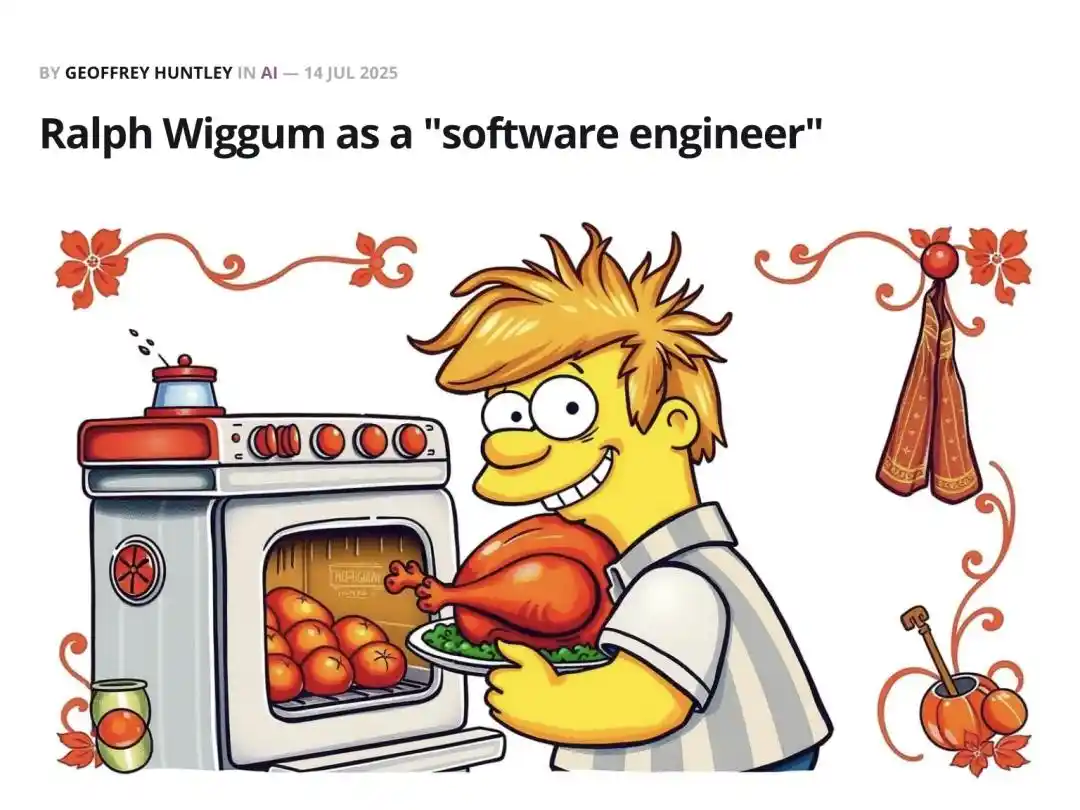
A year ago, if you wanted to implement a loop, you had to write a bunch of bash scripts and then maintain that code forever, it belonged only to you.

Now, these components are built directly into the products.

You no longer argue about whether to use Codex or Claude Code, but directly design loops that work regardless of which tool you're in.

Former Google engineering and developer relations lead Addy Osmani pointed out that loop engineering requires all the parts that these AI tools already possess.

He also asserts that loop engineering may lead to "cognitive surrender" among engineers:

When the loop runs by itself, you easily stop thinking and just passively accept everything it feeds back.

This is exactly what software engineer Armin Ronacher is worried about.
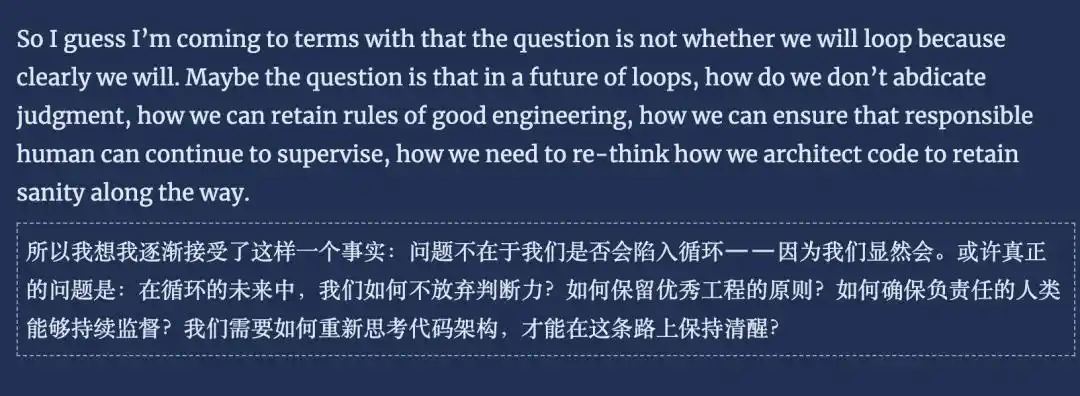
This is also exactly what is said in the Orange Book, Addy Osmani encourages people to design loops with judgment:

Designing loops, if done with judgment, is the cure; if done to avoid thinking, it is the catalyst—the same action, completely opposite results.

The Loop Endures, Engineering Lives

At the AI Engineer Summit in April, an Anthropic engineer said they tasked Claude with developing a retro mini-game app, using two methods: one using only minimalist prompts, the other using agent loops.

The comparison was stark: The minimalist prompt version took 20 minutes and cost $9; the loop method took 6 hours and cost $200.

But the quality of the app from the latter was far superior.

The former game wouldn't run, the app was crude; the loop version was much richer, containing many features the game designer wanted.

The loop won't pity those who give up thinking. It will only use its speed to turn your ignorance into code debt faster.

And those willing to maintain a clumsy understanding, continuously define rules, and take responsibility for the final results, will gain greater leverage in this paradigm shift than ever before.

Build the loop. Stay the engineer.

Prompt is dead, Loop is running.

And you are still the one who decides its meaning.

References:

https://x.com/DataScienceDojo/status/2069873216152092975

https://x.com/0xCodez/status/2064374643729773029

https://x.com/akshay_pachaar/status/2069769689560187027

This article is from the WeChat public account "新智元" (New Zhiyuan), author: ASI启示录

Трендовые криптовалюты

Связанные с этим вопросы

QWhat is the core difference between traditional prompt engineering and the emerging Loop Engineering, as discussed in the article?

AThe core difference lies in the role of the human. In traditional prompt engineering, the human acts as the loop itself: manually writing prompts, reviewing outputs, and making decisions for each iteration. In Loop Engineering, the system itself becomes the autonomous loop. Humans design the system once by defining goals, validation mechanisms, and memory, after which the AI system can run 24/7, autonomously discovering, executing, validating, and persisting tasks.

QAccording to the 'Loop Engineering' whitepaper, what are the five key actions that constitute a complete autonomous loop?

AAccording to the whitepaper, a complete autonomous loop consists of five key actions: 1) Discovery: The AI uses a fixed skills library to find valuable work. 2) Handoff: Tasks are passed to independent sandboxes for parallel, isolated execution by agents. 3) Validation: An independent, skeptical 'evaluator' agent checks the work, as a single agent scoring its own work is unreliable. 4) Persistence: The system's state and progress are saved to disk to survive beyond the context window. 5) Scheduling: Automated scripts run the system periodically to close the loop.

QWhy does the article emphasize that a separate 'evaluator' agent is crucial in a loop, especially for coding tasks?

AThe article emphasizes a separate evaluator agent because an AI agent tasked with both writing and evaluating its own code is inherently biased and will almost always praise its own work. It lacks the ability for objective, critical assessment. A dedicated, independent evaluator agent operates with a default skeptical stance, assuming the code is flawed, which is essential for catching errors and ensuring quality before results are persisted.

QWhat are the potential 'hidden costs' or risks associated with fully autonomous AI loops running unattended, as warned in the article?

AThe article warns of four main hidden costs or risks: 1) Validation Debt: Subtle, unvalidated errors are quietly merged into the codebase. 2) Comprehension Rot: Humans lose understanding of the codebase as AI writes code too quickly. 3) Cognitive Surrender: Humans stop reviewing and passively accept all AI outputs. 4) Token Runaway: The AI gets stuck in retry loops overnight, burning through the compute budget.

QBased on the timeline in the article, who formally named 'Loop Engineering' and what is the four-layer stack framework they proposed?

ALoop Engineering was formally named by Google Chrome engineer Addy Osmani in a blog post published on June 7, 2026. He proposed a four-layer stack framework consisting of: 1) Prompt Engineering, 2) Context Engineering, 3) Harness/Toolchain Engineering, and 4) Loop Engineering. This framework positions Loop Engineering as the highest layer, aiming to remove the human from direct, line-by-line interaction with the AI.

Похожее

Кит поставил $70 млн на восстановление Биткоина и Solana – Сможет ли опасение роста ставок ФРС всё испортить?

Крупный инвестор («кит») увеличил длинные позиции на биткойн и Solana на сумму свыше 70 миллионов долларов 2 июля. Эта ставка была сделана после выхода слабого отчета по занятости в США, что породило надежды на смягчение денежно-кредитной политики ФРС и вызвало восстановление на рынках. На момент написания статьи нереализованная прибыль по этим позициям составляла около 9,2 млн долларов. Однако опасения относительно дальнейших действий ФРС сохраняются. Вероятность повышения ставки снизилась, но рынок по-прежнему ожидает, что процентная ставка останется без изменений. Предстоящие минуты заседания ФОМК могут спровоцировать волатильность. Более того, короткая позиция инвестора против Hyperliquid (HYPE) уже приносит убытки. В то время как «умные деньги» активно скупают Solana по текущим ценам, в биткойне растет объем коротких позиций. Для устойчивого восстановления BTC необходимо преодолеть ключевые уровни сопротивления в районе 62,3 и 65 тысяч долларов. Дальнейшая динамика будет сильно зависеть от настроений ФРС.

ambcrypto10 мин. назад

Кит поставил $70 млн на восстановление Биткоина и Solana – Сможет ли опасение роста ставок ФРС всё испортить?

ambcrypto10 мин. назад

77 кровавых загадок: Как «гаечный ключ за 5 долларов» разбивает миф о приватности французских криптомагнатов

"Эти события серьезны, и ваши опасения обоснованы", - заявил министр внутренних дел Франции Лоран Нуньес. По данным за первое полугодие 2026 года, во Франции зафиксировано 77 случаев похищения, незаконного лишения свободы, вымогательства или их попыток, связанных с криптовалютами. Это на 71% больше, чем за весь 2025 год (45 случаев), что означает одно насильственное преступление каждые 2,3 дня. Атаки типа "гаечный ключ", когда злоумышленники применяют физическое насилие для получения доступа к криптоактивам, становятся реальностью. Резонансные случаи включают похищение сооснователя Ledger в 2025 году и попытку похищения семьи CEO Paymium. Преступления носят структурированный характер, совершаются организованными группами, иногда с участием несовершеннолетних. Франция стала одной из главных точек атак из-за высокой концентрации криптокомпаний, "культуры хвастовства" в сообществе и возможных утечек данных. Подобная волна насилия наблюдается и в других странах Европы. В ответ власти запустили трехсторонний план: усиление обмена разведданными, углубление сотрудничества с отраслевой ассоциацией Adan и улучшение межведомственной и международной координации. Уже задержано около 200 человек. Эксперты призывают владельцев криптоактивов соблюдать осторожность: не раскрывать информацию о holdings в соцсетях, использовать аппаратные кошельки и многофакторную аутентификацию. Ключевой вызов для индустрии — переход от культуры публичности к большей конфиденциальности для обеспечения физической безопасности.

marsbit28 мин. назад

77 кровавых загадок: Как «гаечный ключ за 5 долларов» разбивает миф о приватности французских криптомагнатов

marsbit28 мин. назад

OpenAI и Anthropic планируют «собственные чипы»: помимо затрат, более важна контроль над вычислительной мощностью

Согласно информации от The Information, компания Anthropic ведет переговоры с Samsung о разработке собственных специализированных чипов для ИИ, следуя по стопам OpenAI, которая уже работает над аналогичным проектом с Broadcom и TSMC. Это отражает общую тенденцию среди крупных компаний, разрабатывающих большие языковые модели, к переходу от чисто алгоритмической конкуренции к созданию комплексных программно-аппаратных решений. Основная цель самостоятельной разработки чипов — не только снижение затрат на вычисления, но и, что более важно, получение контроля над критически важными вычислительными ресурсами. В условиях растущего спроса на мощности для обучения и запуска моделей (как, например, у Claude от Anthropic) зависимость от внешних поставщиков, таких как NVIDIA, создает операционные риски. Собственные чипы позволят компаниям оптимизировать аппаратное обеспечение под специфическую архитектуру их моделей, что может значительно повысить эффективность, скорость и экономичность выполнения задач, особенно при выводе результатов (инференсе). Эксперты подчеркивают, что ключевым преимуществом является синергия между программным обеспечением модели и аппаратным обеспечением чипа. Поскольку архитектуры моделей OpenAI и Anthropic различаются (например, по плотности), универсальные чипы не являются оптимальным решением. Тем не менее, быстро заменить поставщиков, таких как NVIDIA, с ее устоявшейся экосистемой CUDA, будет сложно. Скорее, собственные чипы станут дополнительным вариантом для определенных рабочих нагрузок, создавая долгосрочный баланс и переговорные возможности. Таким образом, движение OpenAI и Anthropic в сторону собственных чипов сигнализирует о начале более широкой отраслевой гонки за "вычислительный суверенитет", к которой уже присоединились Google, Amazon, Meta и Microsoft. Для Samsung же контракт с Anthropic станет важным шагом в укреплении позиций на рынке передовых полупроводников.

marsbit34 мин. назад

OpenAI и Anthropic планируют «собственные чипы»: помимо затрат, более важна контроль над вычислительной мощностью

marsbit34 мин. назад

На рынке криптовалют сгущаются «медвежьи» тучи: истекли опционы на Bitcoin и Ethereum на сумму 2,13 млрд долларов

На рынке криптовалют 3 июля наступил ключевой момент, когда истек срок действия опционов на биткоин и эфир на общую сумму 2,13 миллиарда долларов. Истекло 31 000 опционов на биткоин (номинальная стоимость ~1,9 млрд долларов) с коэффициентом пут/колл 0,70 и точкой максимальной боли в 61 000 долларов. Одновременно истекло 135 000 опционов на эфир (~230 млн долларов) с коэффициентом пут/колл 1,29 и максимальной болью на уровне 1 650 долларов. Высокий коэффициент пут/колл для эфира (1,29) указывает на преобладание опционов на продажу (пут), что свидетельствует об осторожных настроениях инвесторов и хеджировании против падения. Позиции сконцентрированы вокруг ключевых уровней гамма-экспозиции: 60 000 долларов для биткоина и 1 700 долларов для эфира. Хотя биткоин сумел вернуться выше психологически важной отметки в 60 000 долларов, общий рыночный настрой остается смешанным. Аналитики обсуждают, является ли недавнее восстановление началом устойчивого роста или частью более широкого нисходящего тренда. На рынок также влияют макротренды, включая интерес к рынку акций, связанных с искусственным интеллектом, и токенизированным американским акциям. Данные об истечении опционов показывают, что трейдеры сохраняют осторожность в начале третьего квартала, готовясь к повышенной волатильности, а не к решительному бычьему прорыву. На момент публикации BTC торгуется около 61 932 долларов, а ETH — в районе 1 738 долларов.

TheNewsCrypto1 ч. назад

На рынке криптовалют сгущаются «медвежьи» тучи: истекли опционы на Bitcoin и Ethereum на сумму 2,13 млрд долларов

TheNewsCrypto1 ч. назад

Торговля

Спот

Популярные статьи

Неделя обучения по популярным токенам (2): 2026 может стать годом приложений реального времени, сектор AI продолжает оставаться в тренде

2025 год — год институциональных инвесторов, в будущем он будет доминировать в приложениях реального времени.

1.9k просмотров всегоОпубликовано 2025.12.16Обновлено 2025.12.16

Неделя обучения по популярным токенам (2): 2026 может стать годом приложений реального времени, сектор AI продолжает оставаться в тренде

Обсуждения

Добро пожаловать в Сообщество HTX. Здесь вы сможете быть в курсе последних новостей о развитии платформы и получить доступ к профессиональной аналитической информации о рынке. Мнения пользователей о цене на AI (AI) представлены ниже.

活动图片