Mihoyo's Next Protagonist Is Her, Who Plays the Piano

marsbitОпубликовано 2026-06-25Обновлено 2026-06-25

Введение

Mihoyo, widely recognized for its hit game Genshin Impact, has long harbored a grander ambition: creating a virtual world where one billion people would want to live. While its character design is unparalleled, the company recognizes a fundamental limitation—these beloved virtual characters are not truly "alive." Their dialogue and actions are pre-scripted. This drive for authentic "living" characters has guided Mihoyo's strategic investments in cutting-edge fields like brain-computer interfaces, AI (including an early investment in MiniMax), and nuclear fusion. Following the release of ChatGPT in late 2022, co-founder Cai Haoyu stepped down from management to lead a new overseas AI venture, Anuttacon, focused on creating AI-driven virtual beings. Mihoyo's path has involved experimentation and iteration. Anuttacon's early project, *Whisper of the Stars*, showcased real-time AI conversation but revealed limitations in underlying language models. The team subsequently focused its resources on developing a sophisticated "emotional" large language model, distinct from purely utilitarian AI. Co-founder Liu Wei (Dawei) announced plans to invest up to 100 billion RMB in this AI pursuit. The first tangible product of this vision is *BSide: Olivia Lin*, a free Steam application featuring a piano-playing virtual companion. Unlike typical AI chatbots demanding constant interaction, Olivia Lin operates on a slower, more deliberate rhythm—responding to letters, playing user-submitted m...

By Sleepy

Most people know Mihoyo because of Genshin Impact.

A second-generation open-world game that topped the application charts in many countries worldwide in its first year. Third-party data shows its mobile revenue has exceeded sixty billion dollars.

Before it was the Honkai series; after it came Honkai: Star Rail and Zenless Zone Zero. Mihoyo has long been one of China's highest-grossing game companies overseas.

Mihoyo's three founders started from Dormitory D32 at Shanghai Jiao Tong University's Minhang campus, pooling 100,000 yuan in interest-free loans, eating Lanzhou ramen and Shaxian snacks downstairs, and writing their first lines of code in a 50-square-meter office.

Fifteen years later, the company is still not listed, has only ever received 1 million yuan in angel investment, and is valued at hundreds of billions of RMB.

This is the Mihoyo most people know. A gaming company, the really successful kind.

Those Invisible Things

What you might not know is that this company is also investing, and in directions you probably wouldn't expect.

In 2021, they invested in brain-computer interfaces, co-establishing a brain disease lab with Ruijin Hospital. The same year, they invested in MiniMax, an AI company few had heard of at the time, which later became one of China's 'Six Giants' in large language models and went public on the Hong Kong Stock Exchange in 2026. They have also invested in controlled nuclear fusion.

Brain-computer, fusion, large models — these words feel a bit mismatched, even a bit cringey, when placed next to anime games.
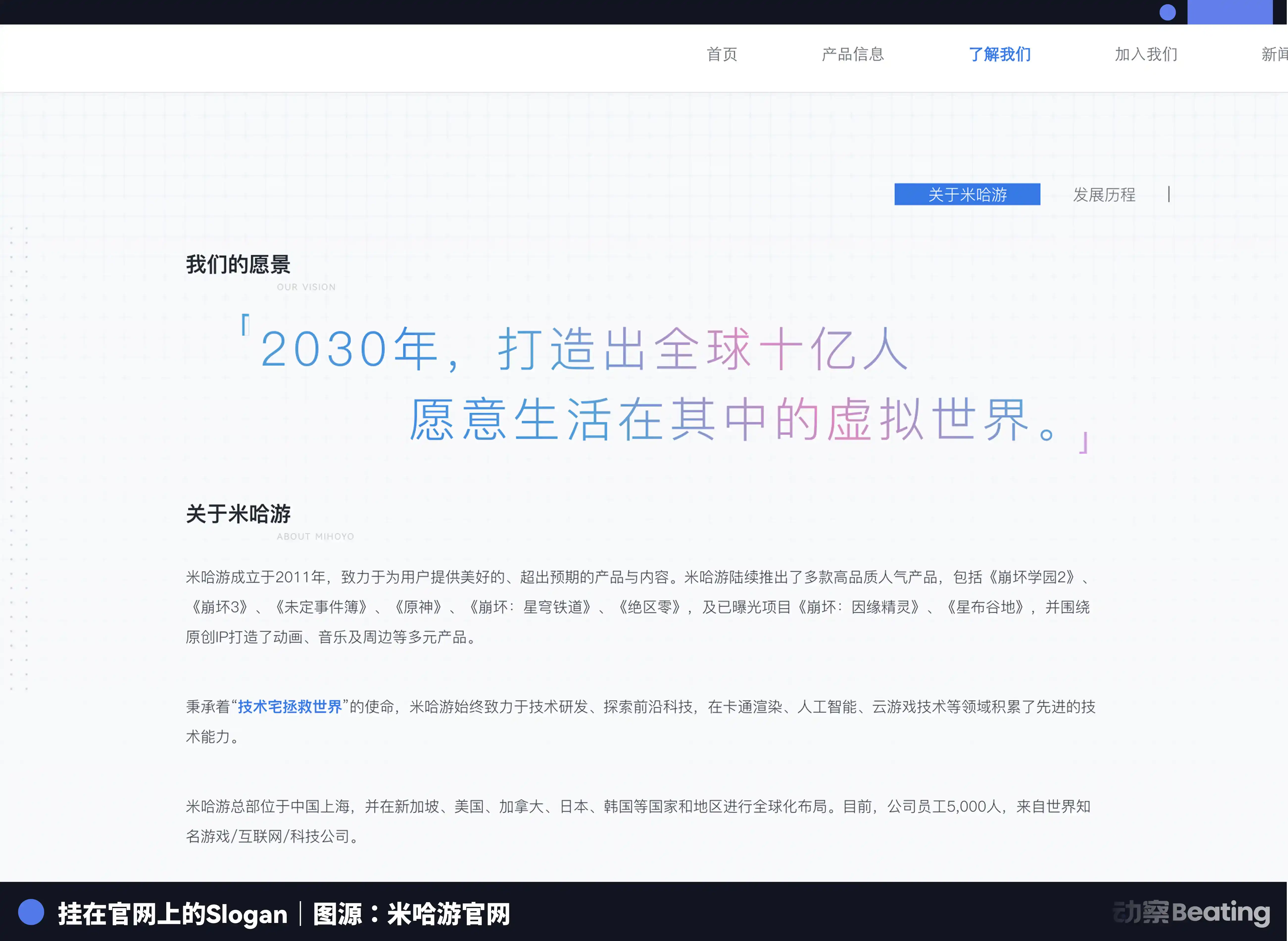
Mihoyo's homepage still features a line: 'By 2030, create a virtual world that one billion people are willing to inhabit.'

This line has been up for years. Most see it as a slogan, glance at it, and scroll past. But if you take it seriously, all those investments make perfect sense. To build a virtual world one billion people want to live in, visuals aren't enough, story isn't enough, characters aren't enough.

The people in that world have to be 'alive'.

Mihoyo's character design capability has few rivals across the industry. Characters in Genshin Impact have led global players to spend money, create fan art, write fan fiction, and argue over their fates on social media. Someone cried online for three days over the 'death' of a virtual character. These characters are loved, treated seriously, regarded as real in some sense.

But they aren't human. Every line of dialogue is pre-written, every smile is painstakingly animated frame-by-frame, every 'personality' is a set of preset parameters. You fall in love with them, but they don't know. You feel real emotions on this side of the screen, but nothing happens on the other side.

This is a problem all virtual characters face. The better you make them, the more players believe. The more players believe, the quicker the disappointment comes. The anime game industry has made money off this one-way affection for over a decade, and no one saw a problem. Players know the characters aren't real, but knowing is knowing, spending is spending, feeling is feeling.

Except, the person creating the characters, if they truly care, will eventually feel this isn't right.

Six Days

On November 24, 2022, Mihoyo's internal project codenamed Project SH was halted. This project later became City of Rain, but at the time it lacked direction. According to industry reports, co-founder Cai Haoyu tried taking the team overseas to brainstorm, struggled for a while, didn't find a way forward, and pulled back.

Six days later, on November 30, 2022, OpenAI released ChatGPT.

Cai Haoyu graduated from the Computer Science department of Shanghai Jiao Tong University. His master's research was deeply related to intelligent human-computer interaction and brain-computer interfaces. According to people close to him, after returning from his trip, he decided to focus on AI.

He had taken a long detour, from AI to anime games, scaling the company to a value of hundreds of billions with Genshin Impact, then turning back to where he started.

In September 2023, Cai Haoyu stepped down from all management positions at Mihoyo, moving to the overseas AI project Anuttacon. On LinkedIn, his new title is AI Soulcaster.

Another founder, Liu Wei (Da Weige), later explained at Shanghai Jiao Tong University why they let Cai Haoyu go. He said Mihoyo had grown to six or seven thousand people, organizational inertia was too heavy, unsuitable for starting AI from scratch. So the three founders discussed it and split one off. Liu Wei stayed to manage the large company of six or seven thousand, Cai Haoyu took dozens of people to work on cutting-edge technological breakthroughs.

Two-pronged approach.

Hitting Walls and Turning Corners

According to industry reports, Cai Haoyu led forty people overseas, initially wanting to pursue three lines simultaneously: making AI that could talk, act, and see the world. But dividing resources three ways left each strand insufficient.
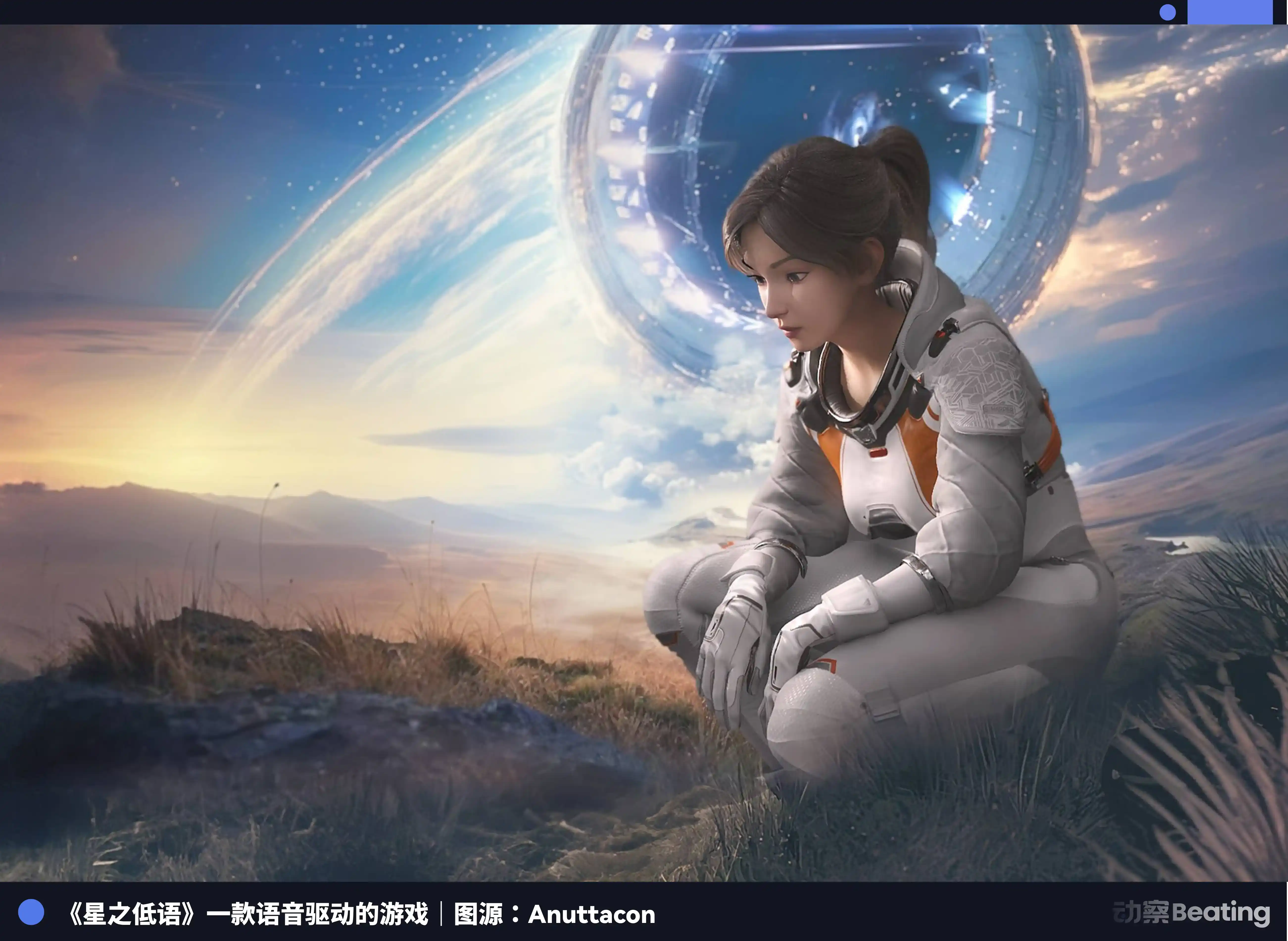
In August 2025, they released their first product on Steam: Whisper of the Stars, an AI-driven interactive game. You converse in real-time with a virtual girl named Stella, helping her survive on an alien planet. No script, no preset options, the AI generates every word she says in real-time. Priced under 30 yuan, it received 'Very Positive' overall reviews on Steam after launch.

But one review said it felt more like a tech demo than a game. Another commented that Stella was oddly relaxed during a wilderness survival scenario; you frantically plan her escape route, and she asks if you've ever felt lost in life. She repeats questions you've already answered, as if suffering from intermittent amnesia.

The reasons for these problems were an underlying language model that wasn't smart enough. The character's performance could be good, the voice realistic, but the character's 'brain' couldn't keep up.

Reportedly, since late last year, Anuttacon cut the other two lines, concentrating almost all resources on language models and agents, with core R&D largely moving back to China.

Then there's Liu Wei's side.

In May 2026, he told a room of PhD students in Beijing that they planned to invest up to 100 billion yuan in AI over the next three years. If it didn't work out, so be it, consider it a grand fireworks display.

When he said this, Mihoyo had already conducted many internal AI experiments. According to insiders, a colleague once set up dozens of AI agents collaborating for a project, burning through 2 million RMB in compute overnight. The company didn't stop it, using this tuition fee to improve their internal platform.

Besides the 100-billion figure, Liu Wei immediately said something else. He said they weren't aiming to build a general-purpose large model; they wanted to build 'a large language model with emotion'. Not just intelligent, but capable of understanding human emotional needs.

You chat with an AI, it gives correct answers, you find it useful, but you don't feel there's a person on the other side. 'Having emotion' requires things that can't be written into benchmark leaderboards, and that's precisely the craft Mihoyo has honed over fifteen years.

They might understand better than any other AI company on Earth how to make a non-existent person feel vitally important to a user.

A Girl Who Plays the Piano

On June 18th, just before the Dragon Boat Festival holiday, Mihoyo opened a pre-release page for an application called BSide: Olivia Lin on Steam.

Note, it's an 'application', not a 'game'. Its classification tag on Steam is Application, not Game.

The protagonist is Li Lin, a Shanghai girl majoring in piano and minoring in psychology. You can listen to her play, upload melodies you've written for her to perform, write her letters (she'll reply), and set her as a dynamic desktop wallpaper. That's it. Free, no gacha, almost none of the familiar trappings of an anime game.

The first dish served after the hundred-billion AI gamble is a piano-playing desktop wallpaper.

Its logic runs completely counter to those AI companion products. Li Lin is not an AI girlfriend. Companies making AI companions, from Replika to Character.AI, operate on a core logic of increasing interaction frequency, always online, responding in seconds, the more chatting the better.

But the more you chat, the more flaws the AI reveals.

Li Lin is not on-call. She replies to your letters after a while, plays melodies you upload, and sits quietly on your desktop if you put her there. This rhythm is almost pre-digital. Letters are inherently delayed, playing music requires no extra dialogue, and quiet presence on the desktop is also a form of companionship.

Ironically, the more realistic the companionship, the lower the AI requirements become. Face-to-face chat is hardest because dialogue is infinite, unpredictable, every reply could expose its non-human nature. Reducing interaction frequency uses product design to compensate for technical gaps. When AI can't yet support a 24/7 'living person', first make an existence you only open occasionally, but feels real every time you do.

In 2020, Mihoyo made a small tool called 'Artificial Desktop', placing their virtual idol Lumi on users' screens. You click, she moves, like a coin-operated merry-go-round. Six years later, Li Lin can play the tunes you write, read your letters, reply with measured phrasing.

Mihoyo calls this path 'sense of being alive'. They've walked it for six years, slowly, but the direction hasn't changed.

In 2010, while a grad student at Jiao Tong University, Cai Haoyu and two others wrote a 2.5D game engine in Flash called Misato. That was Mihoyo's first line of code. Sixteen years later, he's building engines again, only this time the engine isn't for rendering visuals, but for bringing virtual characters to life.

Language model is the brain, letting the character know what to say. Performance model is the body, making the character look alive. Agent framework is memory and personality, letting the character remember experiences and maintain a coherent self. Layer them together, and you have a complete system for turning virtual characters from marionettes into autonomous beings.
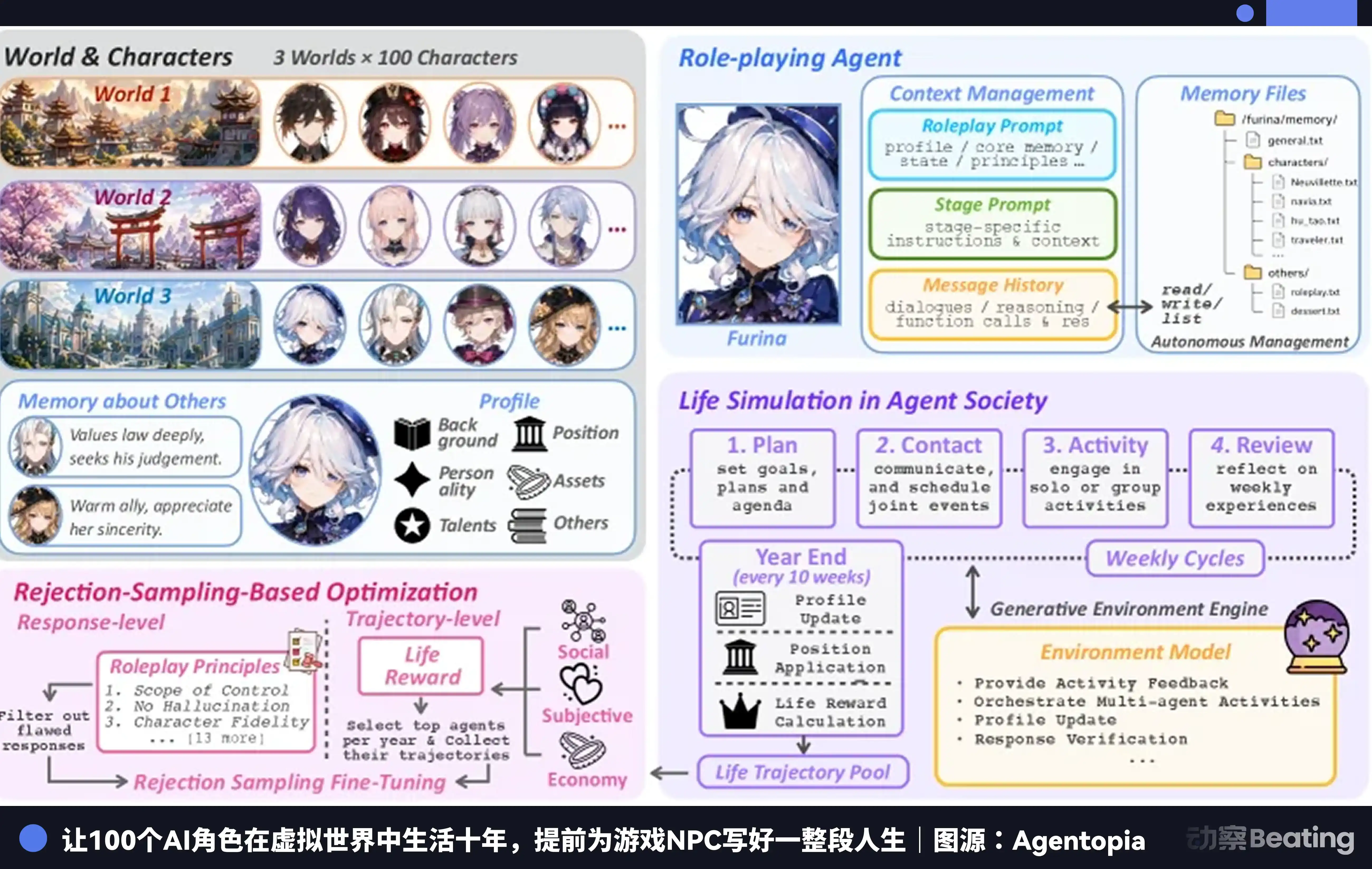
In early June this year, researchers from Fudan University and others published an Agentopia paper, placing one hundred AI characters into three fictional worlds, letting them live autonomously, simulating ten years. The hundred characters each had personalities, memories, social relationships; they quarreled, reconciled, changed opinions of each other over small incidents. The entire experiment consumed 13.7 billion tokens.

One hundred virtual people, in a virtual world, lived ten virtual years.

This system currently has no public benchmark scores, Anuttacon's foundational model is still in closed-door training, with no third-party verification. The only product they've shown the outside world is a girl quietly sitting on your desktop, playing the piano.

Hatsune Miku

Few remember how the name miHoYo came about.

HoYo comes from the first letters of Cai Haoyu and another founder Luo Yuhao's names. The letter o is because they felt big tech companies like Facebook, Google had an o in their names, hoping for a bit of that tech aura.

And mi, from Hatsune Miku. The mi from Hatsune Miku.

Hatsune Miku is a virtual singer. No consciousness, no emotion, no autonomy; technically just a set of vocal synthesis parameters. But thousands of people worldwide write songs for her, draw her, attend her hologram concerts.
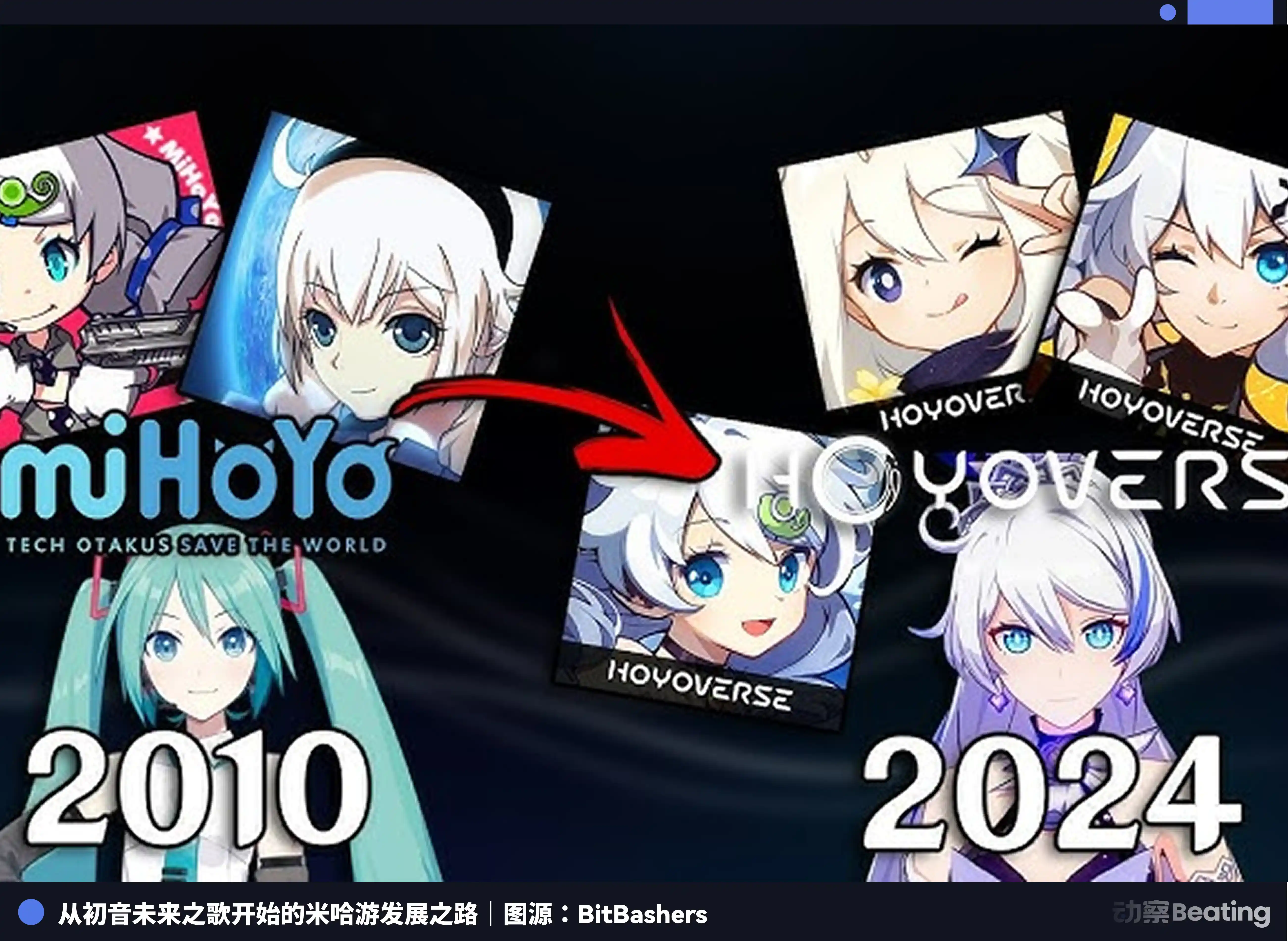
Three young men from a Jiao Tong dormitory named their company after a virtual idol. That was 2012, they had only 100,000 yuan in their pockets. Fourteen years later, this company named after a virtual idol is putting up one hundred billion yuan to solve a problem that was, in fact, written into the company name from day one.

Hatsune Miku has been loved for nearly twenty years. People worldwide have written hundreds of thousands of songs for her, waved glow sticks at a beam of holographic light at concerts, cried, shouted her name. But she doesn't know. She never has.

What if, one day, she did?

Трендовые криптовалюты

Связанные с этим вопросы

QWhat is the core concept behind the character 'Lin Li' in the context of the article?

AThe core concept behind the character 'Lin Li' is to achieve 'living person feel' through limited, purposeful interaction. She is an AI-driven 'application', not a game, designed for low-frequency engagement like exchanging letters, playing uploaded melodies, and being a dynamic desktop wallpaper. This design uses product constraints to mask current AI limitations, creating a sense of authentic presence without demanding constant, flawless conversation like a 24/7 AI companion.

QAccording to the article, how did the release of ChatGPT influence MiHoYo's strategic direction?

AThe release of ChatGPT in November 2022, shortly after the pause of a major internal project (Project SH), reportedly prompted co-founder Cai Haoyu to decisively shift the company's strategic focus towards AI. This led to him stepping down from day-to-day management to lead a new overseas AI research unit, Anuttacon, focusing on foundational technologies to create 'living' virtual characters, while the main company under Liu Wei continued to invest heavily in developing an 'emotional large language model'.

QWhat is the significance of the name 'miHoYo' as explained in the article, and how does it relate to their long-term vision?

AThe name 'miHoYo' originates from 'mi' in Hatsune Miku, the virtual singer, and 'HoYo' from the founders' names. This signifies the company's founding inspiration from virtual idols. Their long-term vision, 'to build a virtual world where 1 billion people are willing to live in by 2030,' connects back to this inspiration. Their billion-dollar AI investment aims to solve the core problem hinted at by their name: creating virtual beings with autonomy and emotional depth, moving beyond scripted characters to entities that can truly 'know' they are loved.

QWhat major technical challenges did MiHoYo's AI project face according to the article?

AInitially, the AI project (Anuttacon) tried to develop three capabilities simultaneously: language/speech, performance/acting, and visual perception. This led to resource dilution and insufficient progress on each front. Their first public product, 'Whisper of the Stars,' received praise but also criticism that it felt like a tech demo, revealing core issues with the underlying language model, such as repetitive questions and a lack of contextual awareness. This prompted a strategic pivot to concentrate resources almost entirely on improving the language model and AI agent framework.

QHow does the article describe MiHoYo's approach to AI investment and experimentation?

AThe article describes MiHoYo's approach as bold, long-term, and tolerant of high-cost experimentation. They have invested in frontier technologies like brain-computer interfaces, AI (MiniMax), and nuclear fusion, aligning with their 'virtual world' vision. Internally, they allowed costly AI experiments, such as one that burned through 2 million RMB in computing power overnight for a multi-agent simulation, treating it as valuable tuition. Publicly, co-founder Liu Wei announced a plan to invest up to 100 billion RMB over three years, accepting the risk of failure, indicating a 'moon-shot' mindset focused on achieving a breakthrough in emotional AI.

Похожее

Грант Кардон увеличил свои холдинги биткоина до 2700 BTC – Почему сейчас?

Кардона Кэпитал, компания Гранта Кардона, увеличила свои биткоин-холдинги до примерно 2700 BTC (стоимостью около $159 млн), купив актив по средней цене $59 000 на фоне падения рынка. Эта покупка контрастирует с действиями крупнейшего корпоративного держателя, MicroStrategy, который впервые утвердил план продажи до $1,25 млрд биткоинов и уже начал распродажу. Направление задают и спотовые биткоин-ETF США, зафиксировавшие в июне рекордный отток средств примерно в $4,06 млрд. Несмотря на массовую продажу и слабые настроения, технический анализ указывает на возможное дно цены биткоина. На недельном графике цена достигла нижней полосы Боллинджера (зеленая линия), которая неоднократно выступала в качестве поддержки и предшествовала восстановлению.

ambcrypto15 мин. назад

Грант Кардон увеличил свои холдинги биткоина до 2700 BTC – Почему сейчас?

ambcrypto15 мин. назад

Чем останется биткойн в эпоху ИИ?

Недавнее падение биткойна ниже 60 000 долларов вновь поднимает вопрос о его ценности в эпоху ИИ. Автор рассматривает ИИ и биткойн как две стороны одной медали. ИИ радикально снизил стоимость создания контента (текстов, изображений, видео) почти до нуля, что привело к потоку информации, где подлинное и сфабрикованное становится все труднее отличить. В результате истинную ценность приобретает не сам контент, а возможность его **верификации** — подтверждения подлинности фактов, активов, записей. Здесь и проявляется суть биткойна. Его часто критикуют за огромное энергопотребление, которое, в отличие от ИИ, кажется непродуктивным. Однако автор предлагает другую точку зрения: если ИИ сжигает энергию для **создания** (генерирования контента и возможностей), то биткойн сжигает её для **верификации**. Его децентрализованная сеть, основанная на криптографии и консенсусе, создает неизменяемый и самостоятельно проверяемый реестр транзакций. Энергия тратится на то, чтобы сделать подделку истории или мошенническую транзакцию астрономически дорогой и практически невозможной без захвата всей сети. Проводя историческую параллель, автор сравнивает ИИ с печатным станком Гутенберга, который резко удешевил распространение знаний, а биткойн/блокчейн — с двойной бухгалтерией, которая снизила затраты на доверие в коммерции. Таким образом, ИИ и блокчейн не конкурируют, а дополняют друг друга в новой цифровой реальности: один отвечает за безграничное **создание**, другой — за надежное **доказательство** и проверку. Биткойн, в этой логике, — это не просто машина для создания монет, а «машина для создания верифицируемости». В мире, где ИИ может сгенерировать что угодно, конечной ценностью может стать не количество контента, а наличие независимо проверяемых фактов и активов. Будущее биткойна остается неопределенным, но его основная функция — обеспечение доверия без доверия — приобретает новую актуальность в эпоху повсеместных глубоких подделок.

marsbit20 мин. назад

Чем останется биткойн в эпоху ИИ?

marsbit20 мин. назад

В эпоху ИИ, что остаётся у биткоина?

Автор: Sevclub, Seven Research В эпоху искусственного интеллекта, когда генерация текстов, изображений и видео стала дешёвой и быстрой, подлинность информации становится всё более сомнительной. ИИ снижает стоимость производства контента почти до нуля, что приводит к переизбытку и смешению правды и лжи. В этих условиях ключевой ценностью становится возможность верификации — подтверждения истинности. В этом контексте можно по-новому взглянуть на Биткоин, который часто критикуют за высокое энергопотребление. Его суть не в вере, а в криптографической проверке. Биткоин тратит энергию не на вычисления, как ИИ, а на обеспечение "неизменяемости", повышая стоимость фальсификации истории транзакций. Это делает его своего рода машиной по производству "верифицируемости". Проводя параллель с эпохой Возрождения, можно сказать, что ИИ — это новая "печатная пресса", радикально снижающая стоимость создания. Тогда как блокчейн (и Биткоин как его первое воплощение) может стать аналогом "двойной бухгалтерии", снижающим стоимость проверки и установления доверия в цифровом мире. Они не конкурируют, а дополняют друг друга: ИИ генерирует, блокчейн доказывает и верифицирует. Таким образом, в эпоху, когда ИИ может создать что угодно, истинным дефицитом становится не сам контент, а возможность независимой проверки фактов. Биткоин представляет собой попытку создать основу для такой верифицируемости цифровых активов и записей.

链捕手29 мин. назад

В эпоху ИИ, что остаётся у биткоина?

链捕手29 мин. назад

Маркировка Cardano как "призрачной цепи" опровергнута? Почему 34 dApps ADA не раскрывают полной картины

Термин «ghost chain» («цепь-призрак») относится к блокчейну с минимальной активностью и развитием. Хотя Cardano (ADA) обвиняют в этом из-за малого количества dApps (34 против 442 у Solana и 1564 у Ethereum) и значительно более низких показателей транзакций и пользователей, статья объясняет это архитектурными особенностями. Cardano использует модель EUTXO и механизмы батчинга (объединения транзакций), которые повышают детерминизм и безопасность, но при этом статистика «недооценивает» реальную активность в сети. При этом разработка на Cardano остается интенсивной. Автор приходит к выводу, что, несмотря на разрыв в метриках с другими ведущими блокчейнами (Ethereum, Solana, Tron), лишь одно это не является достаточным основанием для ярлыка «ghost chain», так как Cardano занимает свою нишу, делая акцент на научно обоснованный подход, безопасность и соответствие требованиям институциональных клиентов.

ambcrypto1 ч. назад

Маркировка Cardano как "призрачной цепи" опровергнута? Почему 34 dApps ADA не раскрывают полной картины

ambcrypto1 ч. назад

Запас Ethereum у Bitmine достиг $9,8 млрд: «Лучшие годы для криптовалют еще впереди»

Криптокомпания Bitmine Immersion Technologies увеличила свои запасы Ethereum (ETH) на 27 084 монеты за последнюю неделю. Теперь в её казне находится 5 700 040 ETH, что составляет 4,7% от общего предложения Ethereum и оценивается примерно в 9,01 млрд долларов по цене 1569 долларов за монету. Это произошло на фоне падения цены ETH и оттока средств из ETF-фондов Ethereum в июне. Несмотря на слабые рыночные условия и критику в адрес аналогичной стратегии накопления биткоинов компанией MicroStrategy, Bitmine продолжает агрессивно покупать ETH. Председатель Bitmine Том Ли считает, что текущая волатильность отчасти связана с «оконной отделкой» перед концом квартала, и выражает уверенность в будущем крипторынка. Компания подчеркивает свою устойчивость, отмечая ежегодный доход от стейкинга в размере около 211 млн долларов, наличие 555 млн долларов денежных средств и ликвидных ценных бумаг, а также включение в индекс Russell 1000. Ли заявил, что лучшие годы для криптовалют ещё впереди, и ожидает, что токенизация и прогресс в области искусственного интеллекта подстегнут спрос на блокчейн и децентрализованные криптоактивы.

ambcrypto2 ч. назад

Запас Ethereum у Bitmine достиг $9,8 млрд: «Лучшие годы для криптовалют еще впереди»

ambcrypto2 ч. назад

Торговля

Спот

Популярные статьи

Как купить PEOPLE

Добро пожаловать на HTX.com! Мы сделали приобретение ConstitutionDAO (PEOPLE) простым и удобным. Следуйте нашему пошаговому руководству и отправляйтесь в свое крипто-путешествие.Шаг 1: Создайте аккаунт на HTXИспользуйте свой адрес электронной почты или номер телефона, чтобы зарегистрироваться и бесплатно создать аккаунт на HTX. Пройдите удобную регистрацию и откройте для себя весь функционал.Создать аккаунтШаг 2: Перейдите в Купить криптовалюту и выберите свой способ оплатыКредитная/Дебетовая Карта: Используйте свою карту Visa или Mastercard для мгновенной покупки ConstitutionDAO (PEOPLE).Баланс: Используйте средства с баланса вашего аккаунта HTX для простой торговли.Третьи Лица: Мы добавили популярные способы оплаты, такие как Google Pay и Apple Pay, для повышения удобства.P2P: Торгуйте напрямую с другими пользователями на HTX.Внебиржевая Торговля (OTC): Мы предлагаем индивидуальные услуги и конкурентоспособные обменные курсы для трейдеров.Шаг 3: Хранение ConstitutionDAO (PEOPLE)После приобретения вами ConstitutionDAO (PEOPLE) храните их в своем аккаунте на HTX. В качестве альтернативы вы можете отправить их куда-либо с помощью перевода в блокчейне или использовать для торговли с другими криптовалютами.Шаг 4: Торговля ConstitutionDAO (PEOPLE)С легкостью торгуйте ConstitutionDAO (PEOPLE) на спотовом рынке HTX. Просто зайдите в свой аккаунт, выберите торговую пару, совершайте сделки и следите за ними в режиме реального времени. Мы предлагаем удобный интерфейс как для начинающих, так и для опытных трейдеров.

804 просмотров всегоОпубликовано 2024.04.12Обновлено 2026.06.02

Как купить PEOPLE

Обсуждения

Добро пожаловать в Сообщество HTX. Здесь вы сможете быть в курсе последних новостей о развитии платформы и получить доступ к профессиональной аналитической информации о рынке. Мнения пользователей о цене на PEOPLE (PEOPLE) представлены ниже.

活动图片