After the Passage of the GENIUS Act and the CLARITY Act, What Is the Correct Architecture for On-Chain Yield?

Foresight NewsОпубликовано 2026-06-11Обновлено 2026-06-11

Введение

The article discusses the evolution of on-chain credit, distinguishing three markets: overcollateralized crypto lending, unsecured lending (largely unsuccessful), and asset-backed credit (ABC). ABC, backed by identifiable real-world collateral with legal recourse, is identified as the fastest-growing category and the only one credibly addressing adverse selection—the core problem in credit where the riskiest borrowers self-select. Current growth in on-chain Real World Assets (RWAs), particularly tokenized private credit funds (e.g., Maple Finance, Centrifuge), is substantial but often merely "wraps" existing fund structures, inheriting their risks rather than solving adverse selection at the protocol level. The regulatory landscape is a key driver, with the US GENIUS Act (prohibiting stablecoin issuers from paying yield) and the proposed CLARITY Act (closing loopholes on indirect yield) set to redefine permissible yield-bearing products. This makes vaults (like ERC-4626) the critical architecture—they become the primary compliant vehicle for delivering yield, functioning as issuance, disclosure, distribution, and recovery mechanisms. The author's thesis is that the correct post-GENIUS/CLARITY architecture involves building ABC solutions where credit assessment, structure, and recovery are encoded directly into the smart contract vault layer, moving beyond mere tokenized fund wrappers to solve adverse selection fundamentally and ensure regulatory compliance.


Author: @BirchHill_io

Compiled by: AididiaoJP, Foresight News


"Asset-backed credit is the only category of on-chain credit that can solve the adverse selection problem. Tokenized fund wrappers cannot do this. Birch Hill's theory for solving this at the vault level."


Three Markets, Not One


When discussing on-chain credit, it's essential to separate the three things people often refer to by the same name.


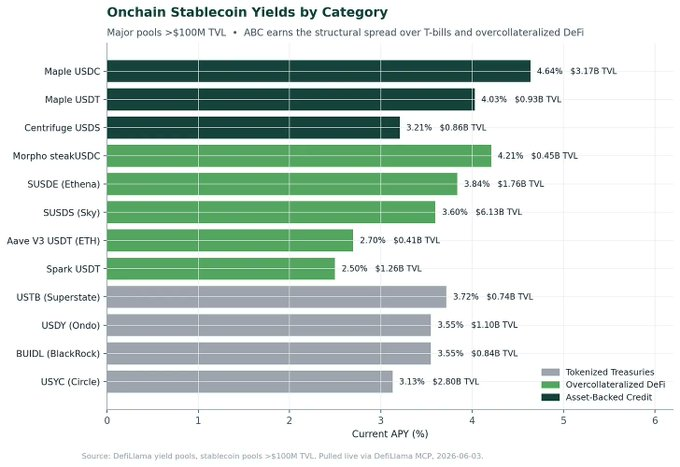
The first is overcollateralized crypto lending. Aave, Morpho, Compound, Spark. Borrowers post $1.50 of ETH as collateral to borrow $1 of stablecoin. The liquidation mechanism is automated. The collateral is highly liquid 24/7. This category has matured into one of the most reliable yield primitives in DeFi, with current stablecoin supply rates ranging from 3.5% to 7%. It works, but it also cannot scale beyond crypto-native collateral risk.


The second is unsecured lending. This has been the holy grail of DeFi since 2017 but has consistently failed in its permissive form because the protocol layer cannot answer the three questions any credit business must answer: who is the borrower, how to price their default, and what happens when they don't repay. The history of this category so far is a graveyard.


The third is asset-backed credit. Loans secured by real, identifiable collateral, with off-chain legal claims, third-party appraisals, and recovery rights. This is currently the fastest-growing category and the only one with a credible answer to the adverse selection problem that has plagued on-chain credit.


The label "asset-backed credit" has been growing on-chain, primarily in wrapped forms. Most of the current on-chain presence is tokenized fund shares: a fund holds the loans, and tokens represent shares of the fund. The fund's structure determines whether the adverse selection problem is truly solved. In most cases, the protocol layer merely passes through the risks built into the fund sponsor.


Asset-backed credit is the fastest-growing category of on-chain credit, but its current mode of growth—via tokenized fund wrappers—does not actually solve the problem. Fund wrappers inherit the sponsor's structure. What we are implementing is solving the problem at the smart contract layer: appraisal, structuring, and recovery are coded into the vault itself, not inherited from an off-chain fund manager.


Where Growth Actually Is


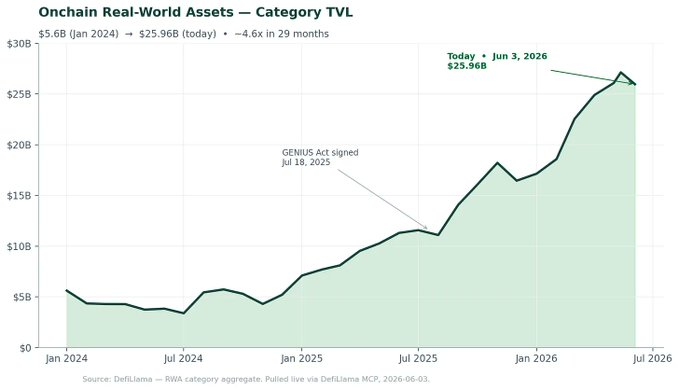
The on-chain real-world asset (RWA) category has grown from $5.6 billion at the start of 2024 to $259.6 billion as of June 3, 2026. This represents approximately a 4.6x expansion in 29 months, concentrated almost entirely in the last 12 months. The pullback after the May peak is minor relative to the overall trajectory and consistent with normal category volatility.


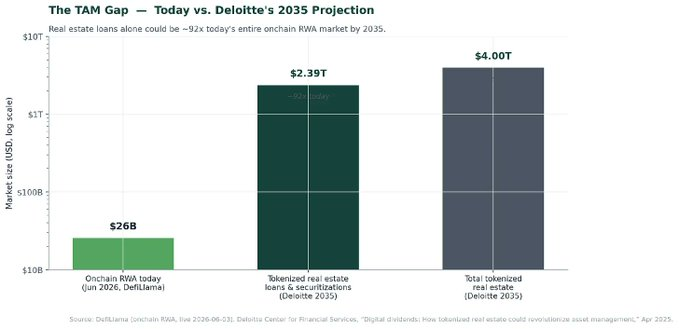
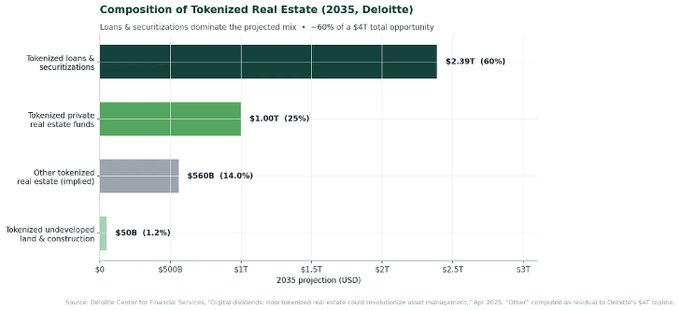
It's worth contextualizing this growth. Even with a 4.6x expansion in 29 months, the entire on-chain RWA market today remains negligible compared to the size the market believes the category can reach. Deloitte's April 2025 forecast shows tokenized real estate alone reaching $4 trillion by 2035, with tokenized loans and securitization being the largest subsegment at $2.39 trillion.


The composition is more important than the headline. The first wave was tokenized US Treasuries: BlackRock's BUIDL, Franklin Templeton's BENJI, Ondo, Superstate, and now JPMorgan's MONY and BNY Mellon's competing products. These are essentially money market funds with a blockchain wrapper. They proved institutions can and will custody on-chain, but they didn't solve credit; they just ported existing products.


The second wave we're currently in is tokenized private credit. On-chain private credit is up about 180% year-over-year and is now the largest non-stablecoin RWA segment. Maple Finance has $3.17 billion in its USDC lending vault and approximately $926 million in its USDT vault, totaling about $4.1 billion in stablecoin deposits. Centrifuge has surpassed $1.38 billion in TVL. New entrants keep emerging, including Centrifuge's USDS vault with approximately $865 million.


These are credit funds with an on-chain conduit. Borrowers are KYC'd, loans have off-chain legal documents, third-party appraisal is done by humans with credit committees, and recovery proceeds in court like any other private credit fund. Blockchain contributes distribution, transparency of the wrapper, and increasingly, a regulatory containment layer.


Stablecoins are the demand side, and they're growing even faster.
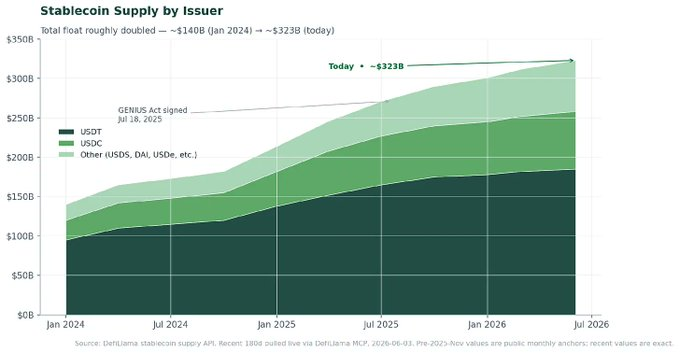


Total stablecoin supply has reached approximately $323 billion today. USDT is about $190 billion. USDC is about $73 billion. Other yield-bearing and crypto-backed stablecoins (USDS, DAI, USDe, etc.) add another roughly $65 billion. The overall pool of on-chain dollars seeking compliant yield, by our estimation, far exceeds $250 billion and is growing at a high single-digit percentage monthly. The question is no longer whether there's on-chain capital that wants yield, but what that capital is permitted to do.


What Asset-Backed Credit Actually Is, and Why It Works


When we say asset-backed credit, we mean something specific. A loan is asset-backed when (a) the borrower pledges identifiable real-world collateral, (b) the lender has a perfected security interest in that collateral, (c) recovery does not require the borrower's cooperation, and (d) loan-to-value ratios, tenor structure, and recovery waterfalls are documented in legal papers and remain valid upon default. This is ordinary in traditional private credit. In on-chain credit, it's the single feature that separates a working structure from a failed one.


The types of collateral that work in asset-backed credit have three properties: they are identifiable (not commingled), have an active secondary market for liquidation, and the lien process is well-understood in the borrower's jurisdiction. Examples include: trade receivables, equipment financing, real estate-backed bridge loans, invoice factoring, structured consumer finance. Things that don't work (or only work at much wider spreads) include: future cash flows from an operating business without a specific asset pledge, intangible intellectual property, illiquid private equity stakes. The discipline is collateral first, borrower second.


Real estate-backed lending deserves specific focus as it's projected to be the largest segment of the entire tokenization opportunity. Deloitte's breakdown is unequivocal on this point: by 2035, tokenized loans and securitization are expected to dominate the tokenized real estate portfolio, roughly three times the size of tokenized private real estate funds and far exceeding the tokenized equity of undeveloped or under-construction projects.


The spread is earned by the work done before deployment. Every loan goes through credit appraisal, pricing default probability, loss given default, and the recovery process. Every loan has covenants, reporting obligations, and documentation of trigger events. Every pool has a curator or appraisal partner with skin in the game, both reputationally and financially. Every vault has a clear waterfall: who gets paid first upon asset liquidation, what triggers a pool freeze, how losses are allocated. The mechanism does the work; marketing does none of it.


This is also why the spread persists. While tokenized T-bills cluster around ~3.5% and overcollateralized DeFi clusters between 2.5% and 4.2%, well-structured ABC pools consistently sit in the 4-5% range with multi-billion-dollar capacity. This premium is compensation for the credit work experts must perform. The protocol layer doesn't do this work; it's built to enable external experts to curate it.


The Adverse Selection Problem, and Why Most On-Chain Credit Hasn't Solved It


Anyone who has worked in private credit knows that who self-selects into your offering tells you almost everything. The cheapest capital flows to the strongest borrowers. The credit you end up with is the credit rejected by everyone earlier in the stack. This is the adverse selection problem, and it's the only one that truly matters in private credit.


On-chain credit, in its permissive form, historically inverted the solution to this problem. Early protocols offered capital to anonymous wallets willing to pay the highest rates. No identity. No recourse. No appraisal layer beyond pool statistics. The stress period of 2022 made the consequences clear: pools marketing themselves as "institutional-grade" found their borrowers were correlated, undisclosed, and in some cases, insolvent. Recovery on defaulted loans was effectively zero because loans were unsecured and jurisdictions unclear.


The working version—permissioned pools with KYC, off-chain documentation, dedicated curators, and a real appraisal layer—is now the dominant structure of the on-chain credit market that survived. Market leaders on-chain have converged on essentially the same answer: credit work happens off-chain, the pool encodes the outcome. This is a marked improvement over permissive unsecured lending. But it's not the end of the design space.


Here is a key point the market hasn't internalized yet: when asset-backed credit sits inside a fund wrapper, and the fund decides underwriting, recovery, and waterfalls, the adverse selection problem moves one level up. If the fund manager has misaligned incentives, levered exposure, or insufficient appraisal, then the on-chain vault is just a more transparent way to deliver bad risk.


The Regulatory Inflection: GENIUS, CLARITY, and the Yield Question


If market structure is reason one for what we're building now, US regulation is reason two, and over the last twelve months, it has shifted in ways most operators are still catching up to.


The GENIUS Act, the first federal stablecoin framework, was signed into law on July 18, 2025. It establishes a federal regime for payment stablecoin issuers, requires 1:1 reserves, and most importantly for our thesis, it prohibits stablecoin issuers from paying interest or yield to holders in any form. The OCC published proposed implementing rulemaking on February 25, 2026. The statutory deadline for final rules is July 18, 2026. The full operational regime is expected to be in place no later than January 2027.


The GENIUS Act left a loophole: it prohibited issuers from paying yield but didn't fully address yield paid on stablecoin balances by exchanges or affiliated platforms. The Digital Asset Market CLARITY Act, advancing in the Senate and passed in the House, closes that gap. The latest draft prohibits offering yield on stablecoin balances, directly or indirectly. The White House's April 2026 paper, "The Impact of a Stablecoin Yield Ban on Bank Lending," makes the policy logic clear: Washington wants stablecoins to be payment rails, not deposit replacements, and wants yield to flow through clearly defined investment products, not through the stablecoin itself.


This is the regulatory window most of the market is mispricing. The set of products that can legally offer yield on on-chain dollars is being explicitly narrowed. The set of structures that will survive (registered funds, properly disclosed lending vaults, tokenized credit products) is being implicitly elevated. The next twelve months will be a sorting event.


The Vault Is the Architecture That Matters


If stablecoin issuers can't pay yield, and exchanges can't pay yield on stablecoin balances, then the only legal way to convert on-chain dollars into income is through a discrete, identifiable investment product. On-chain, that product is the vault. ERC-4626 and its successors have become the de facto standard for tokenized yield-bearing positions, and the vault is now the chassis for almost all compliant on-chain credit products in the US market.


In traditional asset-backed lending, the wrapper is incidental. You raise LP commitments, draw into a fund, deploy into loans, distribute.


On-chain, the vault does far more work than its TradFi counterpart. The vault is simultaneously an issuance mechanism (it mints shares representing claims on underlying loans), a disclosure mechanism (its accounting is publicly verifiable), a distribution mechanism (anyone with a wallet can interact with permission), a recovery mechanism (waterfalls and trigger events are coded), and increasingly, a regulatory containment vessel (permissions can enforce KYC, accredited investor thresholds, and jurisdiction restrictions in ways a stablecoin cannot). When yield is banned at the stablecoin layer, the vault layer becomes where compliant, regulated, transparent yield is delivered.


This is why we believe the design of an on-chain vault—its permissions, its accounting, its disclosure standards, its compliance posture, and most importantly, how it encodes credit work—will become the most important architectural choice in this market over the next eighteen months. In traditional ABC, you can have a mediocre fund wrapper and excellent credit work and still produce a great product. On-chain, in a post-GENIUS/CLARITY world, a poorly designed vault becomes a regulatory liability. A vault that's just tokenized fund equity merely relocates the adverse selection problem rather than solving it.


Where We Stand


We are focused on asset-backed credit because it's the only category of on-chain credit with a structurally defensible answer to adverse selection, and the data is unequivocal about demand.


We are US-facing with a compliance-first posture because we believe the post-GENIUS, post-CLARITY US regulatory framework will set the standard for how on-chain yield is delivered globally. The cost of retrofitting compliance onto non-compliant structures far exceeds the cost of designing it in from day one.


We treat the vault layer as a first-order design problem, not a packaging exercise, because we believe the architecture is where regulatory, technical, and operational complexity will compound over the next eighteen months. We are not interested in being another tokenized fund equity. We are interested in encoding appraisal, structuring, and recovery into the vault itself at the protocol layer in ways the current generation of products does not.


The Next Twelve Months


By July 2026, the OCC's final GENIUS Act rules will be in place. By the end of 2026, the CLARITY Act framework will likely be enacted or close to enactment. By January 2027, the full payment stablecoin regime will be operational. Sometime in that window, a generation of yield products designed for the pre-2025 regulatory environment will need to be sunset, and a generation designed for the post-CLARITY environment will need to be ready.


The on-chain capital base already exists. The stablecoin float has reached ~$323 billion. On-chain credit demand is growing at triple-digit rates. The regulatory framework is being finalized and, with appropriate caveats, is moving in a direction favorable to well-structured, compliant, US-based, vault-based asset-backed credit.


Трендовые криптовалюты

Связанные с этим вопросы

QWhat are the three distinct categories of credit on-chain mentioned in the article?

AThe three categories are: 1) Overcollateralized crypto-native lending (e.g., Aave, Compound), 2) Unsecured/covenant-lite lending (largely failed in DeFi history), and 3) Asset-backed credit, which is the fastest-growing category and the only one with a credible answer to the adverse selection problem.

QWhy does the article claim that asset-backed credit is the only on-chain credit category that structurally solves the adverse selection problem?

AAsset-backed credit solves adverse selection because loans are secured by identifiable real-world collateral (e.g., trade receivables, real estate) with perfected security interests, established legal recourse, and defined recovery waterfalls. This structure disciplines underwriting and ensures lenders have a claim on specific assets, unlike unsecured lending or fund wrappers that may inherit the fund manager's risk selection issues.

QHow have the GENIUS Act and the proposed CLARITY Act changed the landscape for delivering yield on-chain in the US?

AThe GENIUS Act prohibits stablecoin issuers from paying interest or yield directly to holders. The proposed CLARITY Act aims to close loopholes by banning exchanges or affiliated platforms from offering yield on stablecoin balances indirectly. This regulatory shift forces yield generation to move to discrete, identifiable investment products, making the vault (like an ERC-4626 vault) the primary compliant vehicle for delivering on-chain yield.

QWhat key architectural role does the on-chain vault play in the post-GENIUS/CLARITY regulatory environment?

AIn the post-GENIUS/CLARITY world, the vault is not just a wrapper but the primary architecture for compliant yield. It acts as the issuance mechanism, disclosure layer (with publicly verifiable accounting), distribution channel, recovery mechanism (with encoded waterfalls), and a regulatory containment vessel (enforcing KYC, investor accreditation, and jurisdiction rules). Its design is critical for compliance and solving credit risk at the protocol level.

QAccording to the article, what is the main limitation of the current 'fund wrapper' model for on-chain asset-backed credit?

AThe main limitation is that the 'fund wrapper' model merely tokenizes a fund's equity shares, inheriting the fund's underlying structure and risks. It does not solve the adverse selection problem at the protocol level but instead pushes it up one level to the fund manager. If the fund manager has misaligned incentives, poor underwriting, or leverage issues, the on-chain vault simply delivers that risk transparently without addressing its root cause.

Похожее

Охотник сам становится добычей: самый прибыльный MEV-бот был взломан

**Взлом высокодоходного MEV-бота Jaredfromsubway.eth: убыток составил $7.5 млн** Знаменитый и печально известный MEV-бот Jaredfromsubway.eth, один из самых активных и прибыльных на сети Ethereum, стал жертвой сложной цепной атаки, потеряв более 7.5 миллионов долларов. Атака, произошедшая в субботу, не была традиционным фишингом или эксплуатацией уязвимости смарт-контракта. Вместо этого злоумышленники применили целенаправленную «контр-MEV-атаку с помощью ловушки» (counter-MEV honeypot attack). В течение нескольких недель атакующие развернули 66 поддельных контрактов токенов и фальшивых пулов ликвидности, искусно замаскированных под популярные активы, такие как WETH, USDC и USDT. Они создали иллюзию прибыльных арбитражных возможностей. Автоматизированная система бота, обнаружив эти «возможности», выполнила транзакции, в процессе чего предоставила разрешения (approve) контролируемым атакующими вспомогательным контрактам. Не отозвав эти разрешения вовремя, бот оставил свои средства уязвимыми. В итоге атакующие в одной транзакции воспользовались «бэкдором» и вывели ETH, USDC и USDT с адреса бота. Jaredfromsubway.eth был ключевым исполнителем «сэндвич-атак» (Sandwich Attack) в Ethereum, систематически извлекая прибыль из мемпула. По некоторым данным, он был связан с примерно 70% таких атак в сети за последний год и заработал десятки миллионов долларов. Этот инцидент демонстрирует, что даже самые изощренные цепочки атак в криптопространстве теперь сами могут стать мишенью для еще более сложных стратегий. После взлома в X появился фейковый аккаунт, выдав себя за команду бота, что побудило экспертов призвать пользователей к бдительности.

Odaily星球日报39 мин. назад

Охотник сам становится добычей: самый прибыльный MEV-бот был взломан

Odaily星球日报39 мин. назад

Платежная реальность Латинской Америки совсем не такая, как вы думаете

Автор провела почти месяц в Латинской Америке, проведя более 500 часов полевых исследований и пообщавшись с более чем 100 местными пользователями, разработчиками и регуляторами. Ее выводы противоречат распространенным представлениям. 1. Основной объем операций с криптокартами приходится на состоятельных клиентов, которые получают зарплату в долларах или USDT и конвертируют их в местную валюту через Pix, а не на розничные покупки. 2. QR-платежи доминируют в большинстве развивающихся стран (Бразилия, Китай, Индия и др.), тогда как рынки США и Европы все еще ориентированы на карты. Pix в Бразилии обрабатывает больше транзакций, чем кредитные и дебетовые карты вместе взятые. 3. Ключевая нерешенная проблема — отсутствие международной совместимости между системами мгновенных платежей (Pix, UPI, CoDi и др.), что затрудняет платежи иностранцев. 4. Конкуренция смещается от привлечения клиентов к контролю над расчетной инфраструктурой; ведущие компании приобретают банки для ускорения расчетов и снижения затрат. 5. Латиноамериканский рынок крайне неоднороден: Бразилия, Мексика, Аргентина и другие страны имеют разные валютные режимы и модели поведения пользователей. 6. Маржа на конвертацию стабильных монет стремительно сокращается, приближаясь к нулю. Будущие победители создадут ценность поверх дешевых конвертационных услуг. 7. Новые платежные компании должны с самого начала создавать узнаваемый международный бренд и кросс-граничную технологическую платформу. 8. Бразилия и Мексика — перенасыщенные рынки. Перспективными являются менее конкурентные коридоры, такие как "забытая пятерка" стран (Доминикана, Гватемала, Гондурас, Никарагуа, Сальвадор) или маршруты Колумбия-Европа. 9. Маркетинг должен быть точно сегментирован. Например, в Бразилии минимум 5 различных групп пользователей с уникальными денежными потоками и потребностями. 10. Регуляторы Латинской Америки (Бразилия, Мексика, Колумбия) часто опережают США в создании четких рамок для криптовалют и цифровых платежей, стремясь не запрещать, а сделать их безопаснее. Главный вывод: победа в платежной сфере Латинской Америки зависит не от копирования западных моделей, а от понимания локальных реалий, адаптации к доминированию QR-платежей и построения инфраструктуры для международной совместимости.

marsbit43 мин. назад

Платежная реальность Латинской Америки совсем не такая, как вы думаете

marsbit43 мин. назад

Делать музыку в медвежьем рынке: выживающий эксперимент биткоин-группы

В условиях медвежьего рынка криптовалют группа Orange Pill Jam продолжает записывать музыку, сосредоточенную на темах финансового суверенитета, приватности и критики современных систем. Их стиль варьируется от гипси-регги до афро-латинских и хип-хоп ритмов. Несмотря на скромное присутствие на YouTube и Spotify, группа находит отклик в определённых кругах, стремясь создавать музыку, доступную как понимающим, так и не знакомым с биткоином. История началась с импровизированного выступления на конференции Plan B Forum в Лугано в 2022 году. Вокалистка Mermaid, вдохновлённая подкастом Макса Кейзера, написала песню "Dollar Apocalypse". Это событие привело к формированию коллектива с продюсером и мультиинструменталистом Michi, который отвечает за аранжировки и ритм, и менеджером Martino. В песнях, таких как "Cypherpunks' Manifesto" и "Fire of Freedom", группа исследует идеи приватности, опасности "бесплатных" продуктов и личной свободы, находя вдохновение в принятии биткоина Сальвадором. Отношение группы к искусственному интеллекту в музыке философское: они видят в нём инструмент для рутинных задач, но не для подлинного творчества, которое рождается из человеческого намерения и инстинкта. Практические вызовы включают монетизацию по модели copyleft с добровольными взносами в биткоинах, сложности с продвижением в эпоху алгоритмов и поиск подходящих концертных площадок. Их проект представляет собой эксперимент по сохранению человеческого, не поддающегося оптимизации творческого процесса — в медвежьем рынке и эпоху ИИ именно такая аутентичность становится самой ценной валютой.

marsbit53 мин. назад

Делать музыку в медвежьем рынке: выживающий эксперимент биткоин-группы

marsbit53 мин. назад

Платежная система Латинской Америки совсем не такая, как вы думаете

**Состояние платежей в Латинской Америке сильно отличается от ожиданий.** Автор провел почти месяц в регионе, проведя более 500 часов полевых исследований и опросив более 100 местных пользователей и экспертов. Вот ключевые выводы, опровергающие распространенные представления: 1. **Криптокаты:** Основной объем транзакций генерируют не розничные покупки, а состоятельные клиенты (например, профессионалы, получающие зарплату в USDT и конвертирующие ее через Pix в местную валюту). 2. **Доминирование QR-кодов:** QR-платежи (Pix в Бразилии, Mercado Pago в Аргентине и др.) стремительно становятся доминирующим методом оплаты в регионе, обгоняя карточные платежи. Карточные системы теряют relevance. 3. **Ключевая нерешенная проблема — международная интероперабельность:** Национальные системы мгновенных платежей (как Pix) не связаны между странами. Для иностранцев нет простого способа платить локальными QR-кодами — это огромная неиспользованная возможность. 4. **Битва за расчеты, а не за клиентов:** Ведущие платежные компании стремятся получить банковские лицензии, чтобы контролировать расчеты и снижать затраты на AML-проверки, а не просто подключаться к сторонним PSP. 5. **Латинская Америка — не единый рынок:** Бразилия, Аргентина, Мексика и другие страны имеют радикально разные экономические условия, валютные режимы и поведение пользователей. Нельзя использовать универсальный подход. 6. **Конкуренция в сфере стабильных монет сводит маржу к нулю:** Обмен USD/USDT становится товаром с почти нулевой прибылью. Победят те, кто построит дополнительные сервисы (кошельки, карты) поверх этого. 7. **Новое направление — кросс-бордерная экспансия с самого начала:** Успешные компании будущего должны строить узнаваемый международный бренд и технологический стек, способный масштабироваться на несколько стран, а не углубляться в один коридор. 8. **Бразилия и Мексика — "красный океан".** Большие возможности лежат в менее конкурентных странах, таких как "Забытая пятерка" (Доминикана, Гватемала, Гондурас, Никарагуа, Сальвадор), где объемы переводов высоки, а конкуренция минимальна. 9. **Точечный маркетинг:** В каждой стране есть 5-6 четких сегментов пользователей (туристы, экспаты, цифровые кочевники, местная молодежь и т.д.) с разными потоками денег и потребностями. Маркетинг должен быть гипер-таргетированным. 10. **Регуляторная среда опережает США:** Страны Латинской Америки (Бразилия, Мексика, Колумбия) внедряют четкие правила для криптоактивов и платежных инноваций быстрее и прагматичнее, чем регуляторы США. Ожидание "регуляторной ясности" в регионе ошибочно — она уже есть. Главный урок: будущее платежей в регионе определяют не карты, а локальные системы мгновенных QR-платежей. Ключевые возможности лежат в их соединении между странами и в создании сервисов для конкретных, а не усредненных сегментов пользователей.

链捕手56 мин. назад

Платежная система Латинской Америки совсем не такая, как вы думаете

链捕手56 мин. назад

Утечка талантов ИИ в Google: стресс-тест или начало «заката»?

Три ведущих специалиста по ИИ покинули Google: Ноам Шазер (соавтор архитектуры Transformer) перешел в OpenAI, Джон Джампер (соавтор AlphaFold) — в Anthropic, а Даниэль Де Фрейтас (сооснователь Character.AI) также ушел. Эти потери затрагивают ключевые направления ИИ: трансформеры, диалоговые системы и научные приложения. Однако автор считает, что это не «некролог» для Google, а скорее стресс-тест. Google остается одним из крупнейших центров ИИ-талантов, и его конкуренты активно переманивают оттуда специалистов перед своими IPO. В отличие от OpenAI и Anthropic, которые сосредоточены на моделях, Google обладает полным стеком: инфраструктура (TPU, облако), модели (Gemini, AlphaFold), продукты (Поиск, YouTube, Android) и миллиарды пользователей. Его сила — в интеграции ИИ в уже существующие сервисы, а не только в соревновании моделей. Кроме того, Google является стратегическим инвестором и инфраструктурным партнером для Anthropic, получая выгоду даже от успехов конкурентов. Хотя Google сталкивается с дилеммой инноватора, замедляясь из-за масштаба основного бизнеса (Поиск), компания показывает способность адаптироваться, как видно на примере сделки по возвращению команды Character.AI. Итог: уход талантов — серьезный сигнал, но Google, с его ресурсами, дистрибуцией и долгосрочной стратегией, остается ключевым игроком в многолетней гонке ИИ.

marsbit58 мин. назад

Утечка талантов ИИ в Google: стресс-тест или начало «заката»?

marsbit58 мин. назад

Торговля

Спот
Фьючерсы

Популярные статьи

Как купить GENIUS

Добро пожаловать на HTX.com! Мы сделали приобретение Genius (GENIUS) простым и удобным. Следуйте нашему пошаговому руководству и отправляйтесь в свое крипто-путешествие.Шаг 1: Создайте аккаунт на HTXИспользуйте свой адрес электронной почты или номер телефона, чтобы зарегистрироваться и бесплатно создать аккаунт на HTX. Пройдите удобную регистрацию и откройте для себя весь функционал.Создать аккаунтШаг 2: Перейдите в Купить криптовалюту и выберите свой способ оплатыКредитная/Дебетовая Карта: Используйте свою карту Visa или Mastercard для мгновенной покупки Genius (GENIUS).Баланс: Используйте средства с баланса вашего аккаунта HTX для простой торговли.Третьи Лица: Мы добавили популярные способы оплаты, такие как Google Pay и Apple Pay, для повышения удобства.P2P: Торгуйте напрямую с другими пользователями на HTX.Внебиржевая Торговля (OTC): Мы предлагаем индивидуальные услуги и конкурентоспособные обменные курсы для трейдеров.Шаг 3: Хранение Genius (GENIUS)После приобретения вами Genius (GENIUS) храните их в своем аккаунте на HTX. В качестве альтернативы вы можете отправить их куда-либо с помощью перевода в блокчейне или использовать для торговли с другими криптовалютами.Шаг 4: Торговля Genius (GENIUS)С легкостью торгуйте Genius (GENIUS) на спотовом рынке HTX. Просто зайдите в свой аккаунт, выберите торговую пару, совершайте сделки и следите за ними в режиме реального времени. Мы предлагаем удобный интерфейс как для начинающих, так и для опытных трейдеров.

395 просмотров всегоОпубликовано 2026.04.29Обновлено 2026.06.02

Как купить GENIUS

Обсуждения

Добро пожаловать в Сообщество HTX. Здесь вы сможете быть в курсе последних новостей о развитии платформы и получить доступ к профессиональной аналитической информации о рынке. Мнения пользователей о цене на GENIUS (GENIUS) представлены ниже.

活动图片