A $300 Used Mining Rig Mined a $230,000 Bitcoin Block

marsbitОпубликовано 2026-06-02Обновлено 2026-06-02

Введение

A $300 used desktop Bitcoin miner, the Avalon Nano 3S, defied astronomical odds—roughly 1 in 149 million—by solo mining a block worth approximately $232,000 in May 2026. This occurred amidst a mining landscape dominated by industrial-scale operations with exahash-level computing power, where the tiny miner's share of the global network hash rate was a minuscule 0.00000067%. The miner achieved this not by connecting directly to the Bitcoin network, but through a solo mining pool service like Braiins Solo, which handles technical logistics while allowing individual miners to claim the full block reward if their machine succeeds. The event highlights the extreme lottery-like nature of solo mining today, where the expected return for most participants is deeply negative. However, it also demonstrates that Bitcoin's original Proof-of-Work design principle—where any participant, regardless of size, has a non-zero chance to validate a block and earn the reward—remains technically intact. This preserves a symbolic, though highly improbable, "back door" for individual miners in an era otherwise defined by centralized industrial mining power.

Author: Hashrate Insights

A $300 desktop mining rig, quiet enough to sit directly on a desk.

But on the afternoon of May 30, it suddenly mined a Bitcoin block worth $230,000.

The odds were 1 in 149 million, on par with winning the lottery jackpot.

Yet, when major mining pools dominate the hashrate, this exception precisely proves that Satoshi Nakamoto's design is still alive.

I. A Hand Warmer That Mined $230,000

At 4:27 PM Eastern Time on May 30, 2026, Bitcoin block height 951,771 was mined by an unknown address.

The block reward was 3.1404 Bitcoin, worth approximately $232,000 at the time.

The machine that mined it was a Canaan Avalon Nano 3S, with a hashrate of 6.68 TH/s, power consumption of 140 watts, and a retail price of $250 to $300.

It's so small it can fit in a desk drawer, and its noise level is similar to a desktop computer.

Many people buy it for fun, turning it on in winter to both mine a bit of coin and warm their hands, earning it the nickname "Bitcoin hand warmer" in the industry.

But the winning miner didn't actually have just one machine.

He had a "small fleet": 2 Avalon Mini 3s plus 12 Avalon Nano 3S units, with a total hashrate of about 147 TH/s.

Based on this total hashrate, the expected winning cycle for his entire fleet should have been 127 years.

Who could have imagined winning now, and the winner being that most unremarkable single machine with 6.68 TH/s?

That single machine, accounting for only about 4.5% of the fleet's total hashrate, carried away 100% of the reward.

It's like someone holding a handful of lottery tickets, and the winning one turns out to be the one they casually gave to someone on the street.

But how can a little toy on a desk outperform industrial mining farms?

II. Facing an Aircraft Carrier

First, it must be clarified that this event made the news precisely because it's almost impossible to happen.

Because Bitcoin mining in 2026 is long past the era of "playable with a single computer."

The hashrate battlefield today consists of warehouses, hydropower stations, and massive mining farms sprawling across the deserts of Texas.

Industrial-grade mining rigs start at 200 TH/s per unit, and a large mining farm can easily stack 100 EH/s (EH is one million times TH).

The total network hashrate is currently about 1,000 EH/s.

That $300 small machine accounted for only about 0.00000067% of the total network hashrate.

In contrast, publicly listed companies directly dwarf it, with Bitdeer's self-mining hashrate around 65.5 EH/s and MARA Holdings around 72.2 EH/s.

For example, a MARA data center is equivalent to about 10.8 million Nano 3S units running simultaneously.

Comparing a retail miner to these giants isn't like an ant versus an elephant; it's an ant versus an aircraft carrier.

So why do some people still mine solo (not pooling, mining alone)?

"If you join a large pool to split rewards, your tiny hashrate might earn less in a day than the electricity cost," an industry insider said. "So you might as well gamble: either go to zero or get rich overnight."

It's not that they don't want to earn steadily; it's that the door to steady earnings has long been closed.

But since the probability of a solo miner finding a block is so incredibly low, who left a path for retail miners to still sit at the table?

III. A Backdoor Left for Retail Miners

There's a point many people get wrong that needs clarification here.

This lucky winner wasn't truly "connecting a single machine directly to the Bitcoin network"; he used Braiins Solo, a mining pool specifically serving solo miners.

Traditional mining pools are like "crowdfunding": everyone contributes their hashrate, and when a block is found, the reward is split according to contribution.

Solo pools are like "custody": the pool handles connecting you to the network and technical details, but if your machine happens to solve the block, the entire reward goes to you, with the pool taking only a small service fee.

In essence, solo pools set up a ring for retail miners, giving you the qualification to stand in the same arena as the giants. Even though your punch is the size of their fingernail.

Platforms like CKPool, Braiins Solo, and Public Pool are, to some extent, the last "civilian passage" in the Bitcoin world.

However, over the past year, solo miners have mined approximately 22 blocks, with a total reward of about 69.24 Bitcoin. On average, that's less than 2 blocks per month.

So scarce that every win floods Reddit and Twitter.

Therefore, some industry insiders have a cold view of this passage.

Solo mining is essentially buying a lottery ticket, meaning the vast majority of people will end up with nothing.

So, is this backdoor left for retail miners safeguarding decentralization, or is it creating an illusion of "everyone has a chance"?

IV. How Much of Satoshi's Original Vision Remains

In 2008, Satoshi Nakamoto wrote a sentence in the Bitcoin whitepaper: "One CPU one vote."

The idea was that this system should give every ordinary participant a voice.

Seventeen years later, "one CPU one vote" has become "one EH/s one vote."

An ordinary player's CPU can't even afford the admission ticket.

But now, this $300 machine's win precisely proves that Satoshi's design isn't dead.

Bitcoin's Proof of Work mechanism, in simple terms, means whoever calculates the answer that meets the rules first gets the reward.

It doesn't recognize identity, capital, or scale; it only recognizes the result.

Whether you're a multi-million-dollar mining farm or a single small machine in some geek's bedroom, the rules are impartial.

If your answer hits the target first, the $230,000 is yours.

Yet, looking at the probability, buying a $300 machine for solo mining results in a negative expected return, and a significantly negative one at that.

The winner is merely at the most extreme tail end of the probability distribution, a point almost invisible.

▌▌▌▌▌▌▌▌▌▌

If a million people imitated him, 999,999 would lose their investment.

But the existence of that 0.0001% is precisely the most fascinating aspect of the Bitcoin system.

It doesn't promise returns to ordinary people, but it also doesn't shut ordinary people out.

The door is still open. It's just that behind the door lies a cliff, and also the starry sky.

Связанные с этим вопросы

QWhat is the central paradox highlighted by the story of the $300 mining rig?

AThe story highlights the paradox between the extreme centralization of modern Bitcoin mining, dominated by industrial-scale operations, and the core design principle of Satoshi Nakamoto's Proof of Work, which theoretically still gives even the smallest miner a non-zero chance to win a block reward.

QHow did the solo miner with the small $300 machine actually connect to the Bitcoin network to have a chance at mining a block?

AThe miner did not connect directly to the Bitcoin network. He used a solo mining pool service, specifically Braiins Solo. This service handles the technical complexities of connecting to the network, but if the miner's own machine successfully solves a block, the full reward (minus a small fee) goes entirely to that individual miner, unlike traditional pooled mining where rewards are shared.

QAccording to the article, what is the primary economic reality for most individuals who try solo Bitcoin mining with small rigs?

AFor the vast majority of individuals, solo mining with small, low-hashrate rigs is economically irrational. The expected return is negative and a significant loss, akin to buying a lottery ticket with extremely long odds. The article states that if a million people imitated the lucky miner, 99.9999% of them would lose their investment.

QWhat key shift in Bitcoin's consensus mechanism does the article describe, from Satoshi Nakamoto's original vision to the present day?

AThe article describes a shift from Satoshi Nakamoto's original principle of 'one CPU one vote' to the current reality of 'one Exahash (EH/s) one vote.' This means influence and reward probability are now overwhelmingly concentrated in the hands of those with massive, industrial-scale computing power (hashrate), rather than distributed among average participants with standard CPUs.

QWhat symbolic role does the 'solo mining pool' play in the contemporary Bitcoin ecosystem, as suggested by the article?

ASolo mining pools like Braiins Solo are portrayed as a symbolic 'backdoor' or the last 'commoner's path' for individual enthusiasts. They technically allow anyone to participate directly in block discovery, thereby preserving a token link to Bitcoin's decentralized ideals. However, the article questions whether they truly safeguard decentralization or merely create an illusion of opportunity, given the vanishingly low odds of success.

Похожее

TechFlow Intelligence Bureau: Chip Stocks Lose Trillions in a Single Day, Bitcoin Falls Below $60,000, US-Iran Conflict Escalates

**Daily Tech & Markets Roundup: AI Advances, Market Turmoil, and Geopolitical Tensions** **AI / LLMs**: Anthropic's internal report on AI self-improvement sparked serious discussions about Recursive Self-Improvement (RSI). Meanwhile, debate continues on AI coding tools after Claude was accused of introducing bugs into the rsync codebase. In positive news, DeepSeek V4 Flash impressed in local deployment tests, and GitHub Copilot now supports custom endpoints for local models. A surprising research turn suggests removing chain-of-thought prompting can sometimes improve LLM performance. **Crypto / Web3**: Bitcoin plunged below $60,000, with its RSI hitting levels last seen during the COVID-19 crash, driven by strong U.S. jobs data reviving interest rate hike fears. Discussions highlight Ethereum DeFi's continued lack of a smooth consumer payment layer. **Chips / Hardware**: Chip stocks suffered a massive sell-off, with the Philadelphia Semiconductor Index posting its worst single-day drop in six years, erasing over a trillion dollars in value. Marvell, Micron, AMD, and Intel were among the biggest losers. **Tech Companies**: A leaked Microsoft document revealing goals to make Copilot "addictive" drew criticism. LinkedIn founder Reid Hoffman left Microsoft's board to focus full-time on his AI agent startup, Manus. Google was revealed to be paying SpaceX $920 million monthly for AI training compute. **Markets & Macro**: A blowout U.S. jobs report (172k vs. 80k expected) crushed hopes for near-term rate cuts, sending Treasury yields soaring and triggering a broad market sell-off. CEOs from Kraft, McDonald's, and Whirlpool simultaneously warned U.S. consumers are exhausting their savings. **Geopolitics**: U.S.-Iran tensions escalated with missile/drone interceptions and U.S. strikes on Iranian radar sites, keeping the critical Strait of Hormuz largely closed since late February and posing ongoing oil supply risks. **The Bottom Line**: The strong jobs data acted as a single trigger for correlated sell-offs across equities, crypto, and chips. Underlying the volatility is a stark contradiction between robust employment data and warnings of consumer weakness, alongside geopolitical risks that could reignite inflation, leaving markets to price in a fraught macro outlook with no clear "soft landing" path.

marsbit8 мин. назад

TechFlow Intelligence Bureau: Chip Stocks Lose Trillions in a Single Day, Bitcoin Falls Below $60,000, US-Iran Conflict Escalates

marsbit8 мин. назад

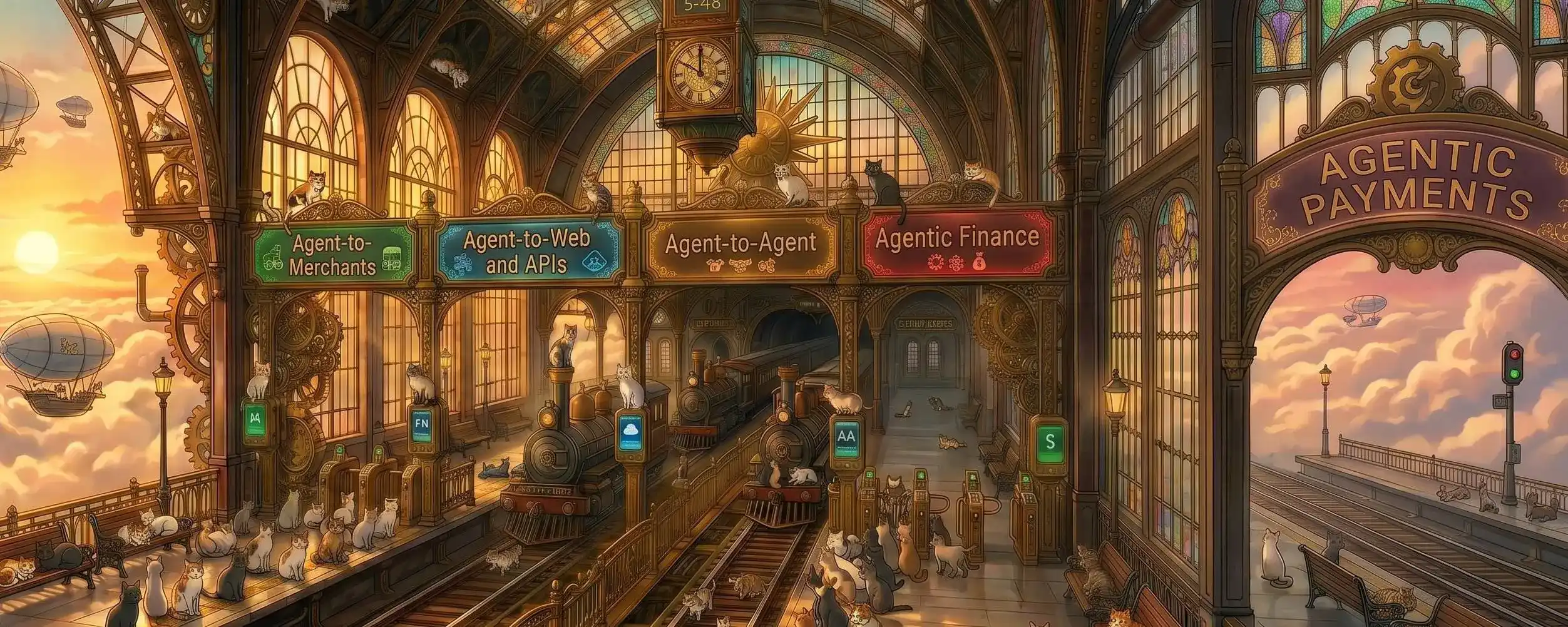
It Took Me a Year to See the Bitter Truth About Agent Payments

After a year building infrastructure for the Agent economy, engaging with major players like Stripe, Visa, and Coinbase, the author shares a sobering analysis of the current state of Agent payments. The core finding is a stark lack of genuine, immediate demand across most envisioned use cases. The article breaks down four key market segments: 1. **Agent-to-Merchant (Consumer Shopping):** For most product categories (e.g., clothing, electronics), conversational AI shopping is a step backwards from visual e-commerce interfaces. While agents excel at understanding needs, they can't replace side-by-side product comparison. Real merchant interest is defensive "Agent Engine Optimization," not driven by current customer demand. Potential exists for high-frequency, low-decision purchases (like food delivery) or navigating complex store UIs, but these require massive B2C distribution channels dominated by giants like Amazon. 2. **Agent-to-API (Developer Services):** Developers already have subscriptions and billing relationships for APIs (compute, data). Prepaid balances solve micro-payment issues for low transaction volumes. A deeper structural problem is that major SaaS vendors' business models rely on enterprise contracts, resisting granular pay-per-call pricing. While protocols like MPP and x402 serve the long tail of niche services, this market is small and developers are historically low-willingness-to-pay. 3. **Agent-to-Agent:** This remains largely theoretical with minimal transaction volume. While it represents a long-term bet on a fundamentally new transaction infrastructure (sub-second, micro-penny to million-dollar, multi-party settlements), it does not constitute a present market. 4. **Agent-to-Finance:** This is the only category with existing, paying demand. Integrating AI into financial workflows (trading, portfolio management) is a natural evolution and enables new capabilities like autonomous rebalancing. However, competition favors established, regulated institutions. The "real problem" is not moving money between agents, but the broader challenge of **coordination**—orchestrating work between agents and humans, verifying outcomes, and settling results. Payment is just one component of settlement, which is itself part of coordination. Companies that solve the coordination layer will subsume payment, not the other way around. While well-funded incumbents build defensively for a long-term future, startups must find where the market is today—which, for the author's team, lies outside these four categories in an area of real, growing, and underserved activity.

marsbit51 мин. назад

It Took Me a Year to See the Bitter Truth About Agent Payments

marsbit51 мин. назад

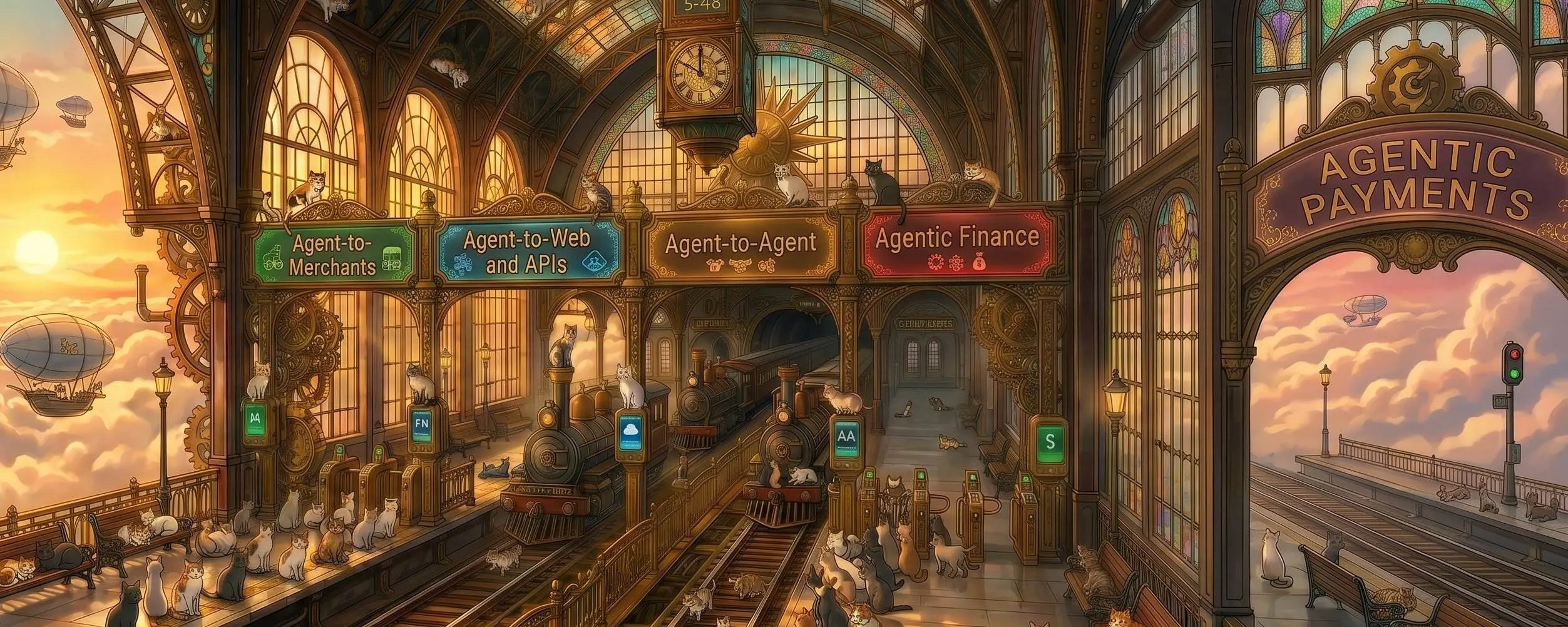
It Took Me a Year to See the Hard Truth About Agent Payments

**Title: It Took Me a Year to See the Hard Truth About Agent Payments** Over the past year, I've worked on infrastructure for the Agent economy, engaging with major players like Stripe, Visa, Coinbase, and numerous startups. The findings reveal a stark reality: genuine, widespread demand for Agent-based payments does not yet exist. **Key Observations:** * **Agent-to-Merchant (Shopping):** The user experience for AI shopping often falls short, especially for visual product discovery. While AI excels at understanding needs, conversational interfaces can't yet replace browsing and comparing multiple products visually. Current merchant interest is largely defensive ("Agent Engine Optimization") for a future that hasn't arrived. High-frequency, low-friction purchases (like food delivery) are potential fits, but lack open APIs and face high AI inference costs. Simpler, more affordable, or cross-language interactions for complex UIs are a niche opportunity but require massive consumer distribution to scale. * **Agent-to-API (Developer Tools):** Developer payment needs for APIs (computing, data, models) are already met through subscriptions and prepaid credits. The core challenge is not payment friction but supplier economics: most large SaaS providers prefer enterprise contracts over micropayments for API calls. Protocols like MPP and x402 suit the long-tail of smaller services but cater to a developer market historically reluctant to pay for these tools. Major infrastructure needs at the top of the stack are already being addressed. * **Agent-to-Agent (Machine Commerce):** This is a long-term vision with almost no current transaction volume. While a future with high-speed, high-frequency, multi-party machine-to-machine transactions would require novel infrastructure, it remains theoretical. The market is not here yet. * **Agent-to-Finance:** This is the only category with clear, present demand. Financial professionals and DeFi users already pay for tools, and AI augmentation is a natural evolution. Autonomous AI agents can enable entirely new financial strategies. However, competition is fierce from established, regulated incumbents who can more easily layer AI onto their existing products. **The Core Insight:** Companies, especially giants with long time horizons, are building defensively for a potential future of mass machine commerce. For them, early investment is a low-cost hedge. For startups, the current market reality is different. The primary challenge isn't just moving money between agents (payments). The larger, unsolved problem is **orchestration** – coordinating work between agents and humans, verifying outcomes, and then settling. Payment is just a part of settlement, which is just a part of orchestration. Companies that solve the orchestration problem will subsume payments, not the other way around. After a year of building, we see the real, growing, and underserved market opportunity lies in this broader domain of orchestration.

链捕手1 ч. назад

It Took Me a Year to See the Hard Truth About Agent Payments

链捕手1 ч. назад

Claude Opus 4.8 Finds a $4.5 Billion Bug: The AI Era is Mass-Producing Hackers

A researcher discovered a critical "infinite mint" vulnerability in the Zcash cryptocurrency's Orchard protocol using Claude Opus 4.8, leading to a swift fix but also a 50% market drop, erasing billions in value. This incident highlights a new era where powerful, accessible AI models are dramatically lowering the barrier to finding software vulnerabilities. Previously, the security community feared specialized models like Claude Mythos Preview, capable of finding decades-old zero-day exploits. The Zcash case, however, involved a publicly available, general-purpose model. This shift makes advanced security auditing—and attack capabilities—accessible to far more people, not just experts. The mass democratization of vulnerability discovery brings a dual challenge: a flood of low-quality, AI-generated false reports that overwhelm maintainers, and the real, rapid uncovering of deep, dangerous bugs. Open-source projects, often understaffed and unfunded, are particularly vulnerable to this "attention DDoS." The article cites examples like curl shutting down its bug bounty program due to the unsustainable workload. Our perceived digital safety has often been luck, relying on the high cost and effort required to find deeply hidden flaws in complex systems, as seen with historical vulnerabilities like Heartbleed or Baron Samedit. AI changes this cost structure, effectively "mass-producing flashlights" to illuminate every corner of our codebase. While large companies operate extensive security chains involving external white-hat hackers and massive defensive operations, the global cybersecurity workforce faces a severe shortage, especially of experienced personnel capable of analyzing complex threats and coordinating fixes. The core dilemma emerges: AI makes *finding* bugs cheap and scalable, but *fixing* them remains a slow, expensive, and human-intensive process. The article concludes that AI won't destroy the internet but acts as a bright light, revealing that our digital existence is not inherently secure but is precariously maintained by ongoing human effort. The true cost in the AI era may not be discovery, but whether there will be enough people left willing and able to do the hard work of repair.

marsbit1 ч. назад

Claude Opus 4.8 Finds a $4.5 Billion Bug: The AI Era is Mass-Producing Hackers

marsbit1 ч. назад

Торговля

Спот
Фьючерсы

Популярные статьи

Тест по Bitcoin Биткоина

HTX Learn: Изучите Bitcoin halving и Заработаете Токены USDT

3.1k просмотров всегоОпубликовано 2024.04.16Обновлено 2024.04.16

Тест по Bitcoin  Биткоина

Что такое $BITCOIN

ЦИФРОВОЕ ЗОЛОТО ($BITCOIN): Комплексный анализ Введение в ЦИФРОВОЕ ЗОЛОТО ($BITCOIN) ЦИФРОВОЕ ЗОЛОТО ($BITCOIN) — это проект на основе блокчейна, работающий в сети Solana, который стремится объединить характеристики традиционных драгоценных металлов с инновациями децентрализованных технологий. Хотя он носит имя Биткойн, часто называемого “цифровым золотом” из-за его восприятия как средства хранения ценности, ЦИФРОВОЕ ЗОЛОТО является отдельным токеном, предназначенным для создания уникальной экосистемы в ландшафте Web3. Его цель — позиционировать себя как жизнеспособный альтернативный цифровой актив, хотя детали его применения и функциональности все еще развиваются. Что такое ЦИФРОВОЕ ЗОЛОТО ($BITCOIN)? ЦИФРОВОЕ ЗОЛОТО ($BITCOIN) — это токен криптовалюты, специально разработанный для использования в блокчейне Solana. В отличие от Биткойна, который выполняет широко признанную роль хранения ценности, этот токен, похоже, сосредоточен на более широких приложениях и характеристиках. Примечательные аспекты включают: Инфраструктура блокчейна: Токен построен на блокчейне Solana, известном своей способностью обрабатывать высокоскоростные и недорогие транзакции. Динамика предложения: ЦИФРОВОЕ ЗОЛОТО имеет максимальное предложение, ограниченное 100 квадриллионами токенов (100P $BITCOIN), хотя детали о его обращающемся предложении в настоящее время не раскрыты. Утилита: Хотя точные функциональные возможности не описаны, есть указания на то, что токен может быть использован для различных приложений, потенциально связанных с децентрализованными приложениями (dApps) или стратегиями токенизации активов. Кто создатель ЦИФРОВОГО ЗОЛОТА ($BITCOIN)? На данный момент личность создателей и команды разработчиков, стоящих за ЦИФРОВЫМ ЗОЛОТОМ ($BITCOIN), остается неизвестной. Эта ситуация типична для многих инновационных проектов в области блокчейна, особенно тех, которые связаны с децентрализованными финансами и феноменом мем-криптовалют. Хотя такая анонимность может способствовать культуре, ориентированной на сообщество, она усиливает опасения по поводу управления и ответственности. Кто инвесторы ЦИФРОВОГО ЗОЛОТА ($BITCOIN)? Доступная информация указывает на то, что у ЦИФРОВОГО ЗОЛОТА ($BITCOIN) нет известных институциональных спонсоров или значительных венчурных капиталовложений. Проект, похоже, функционирует по модели пирингового взаимодействия, сосредоточенной на поддержке и принятии сообществом, а не на традиционных путях финансирования. Его активность и ликвидность в основном сосредоточены на децентрализованных биржах (DEX), таких как PumpSwap, а не на устоявшихся централизованных торговых платформах, что еще больше подчеркивает его подход, ориентированный на grassroots. Как работает ЦИФРОВОЕ ЗОЛОТО ($BITCOIN) Операционные механизмы ЦИФРОВОГО ЗОЛОТА ($BITCOIN) можно подробно описать на основе его дизайна блокчейна и характеристик сети: Механизм консенсуса: Используя уникальный механизм доказательства истории (PoH) Solana в сочетании с моделью доказательства доли (PoS), проект обеспечивает эффективную валидацию транзакций, что способствует высокой производительности сети. Токеномика: Хотя конкретные дефляционные механизмы не были подробно описаны, большое максимальное предложение токенов подразумевает, что оно может быть предназначено для микротранзакций или нишевых случаев использования, которые еще предстоит определить. Интероперабельность: Существует потенциал для интеграции с более широкой экосистемой Solana, включая различные платформы децентрализованных финансов (DeFi). Однако детали относительно конкретных интеграций остаются неуточненными. Хронология ключевых событий Вот хронология, которая подчеркивает значимые вехи, касающиеся ЦИФРОВОГО ЗОЛОТА ($BITCOIN): 2023: Первоначальное развертывание токена происходит в блокчейне Solana, отмеченное его адресом контракта. 2024: ЦИФРОВОЕ ЗОЛОТО приобретает видимость, когда оно становится доступным для торговли на децентрализованных биржах, таких как PumpSwap, позволяя пользователям обменивать его на SOL. 2025: Проект наблюдает спорадическую торговую активность и потенциальный интерес к инициативам, возглавляемым сообществом, хотя на данный момент не зафиксировано никаких значительных партнерств или технических достижений. Критический анализ Сильные стороны Масштабируемость: Основная инфраструктура Solana поддерживает высокие объемы транзакций, что может повысить полезность $BITCOIN в различных сценариях транзакций. Доступность: Потенциально низкая цена торговли за токен может привлечь розничных инвесторов, способствуя более широкому участию благодаря возможностям дробного владения. Риски Отсутствие прозрачности: Отсутствие публично известных спонсоров, разработчиков или процесса аудита может вызвать скептицизм относительно устойчивости и надежности проекта. Волатильность рынка: Торговая активность сильно зависит от спекулятивного поведения, что может привести к значительной волатильности цен и неопределенности для инвесторов. Заключение ЦИФРОВОЕ ЗОЛОТО ($BITCOIN) является интригующим, но неоднозначным проектом в быстро развивающейся экосистеме Solana. Хотя он пытается использовать нарратив “цифрового золота”, его отход от установленной роли Биткойна как средства хранения ценности подчеркивает необходимость более четкого различения его предполагаемой утилиты и структуры управления. Будущее принятие и усвоение, вероятно, будут зависеть от решения текущей непрозрачности и более четкого определения его операционных и экономических стратегий. Примечание: Этот отчет охватывает синтезированную информацию, доступную на октябрь 2023 года, и с тех пор могут произойти события.

99 просмотров всегоОпубликовано 2025.05.13Обновлено 2025.05.13

Что такое $BITCOIN

Fractal Bitcoin: масштабирование Биткоина с помощью рекурсивной системы

Fractal Bitcoin — масштабное Layer-1-решнение, созданное на базе кода Биткоина, позволяющего достигать бесконечного масштабирования с помощью рекурсивного подхода.

2.3k просмотров всегоОпубликовано 2025.06.30Обновлено 2025.06.30

Fractal Bitcoin: масштабирование Биткоина с помощью рекурсивной системы

Обсуждения

Добро пожаловать в Сообщество HTX. Здесь вы сможете быть в курсе последних новостей о развитии платформы и получить доступ к профессиональной аналитической информации о рынке. Мнения пользователей о цене на BTC (BTC) представлены ниже.

活动图片