Bitcoin Cash: Evaluando si el BCH, 'bajo presión', verá pronto una reversión importante de precio

ambcryptoОпубликовано 2026-03-31Обновлено 2026-03-31

Введение

Resumen del artículo sobre Bitcoin Cash (BCH): La mayoría de las altcoins, incluido Bitcoin Cash (BCH), se han estado consolidando debido a la falta de participación de grandes inversores en medio de tensiones geopolíticas. Los vendedores han dominado el mercado de BCH, haciendo que el precio cayera por debajo de las EMAs clave y debilitando la estructura general del mercado. Los indicadores apuntan a un mayor riesgo a la baja, con el RSI Estocástico de BCH cayendo bruscamente en el gráfico diario, acercándose a territorio de sobreventa pero sin estabilizarse por completo. La dinámica de liquidez también ha añadido presión, con aproximadamente $63K en liquidez absorbida en las últimas 24 horas, lo que a menudo allana el camino para más caídas. El interés institucional ha disminuido, con una caída de $29 millones en el Interés Abierto, lo que sugiere una reducción de la confianza entre los traders apalancados y el desmantelamiento de posiciones en lugar de nuevas entradas. A pesar del escenario bajista, hay una señal potencialmente positiva: las Tasas de Financiación se mantienen por debajo del 0%, lo que podría indicar que el mercado se acerca a un fondo local. Una línea de tendencia descendente justo debajo del precio actual actúa como un nivel clave. Si los compradores intervienen en esa zona, BCH podría estabilizarse; de lo contrario, es probable que continúe la tendencia a la baja antes de cualquier recuperación significativa.

La mayoría de los altcoins se han estado consolidando, ya que los grandes inversores en criptomonedas se mantienen alejados del mercado debido a las tensiones geopolíticas en curso. Bitcoin Cash (BCH) no es una excepción, ya que el altcoin ha estado bajo una fuerte presión en las sesiones recientes.

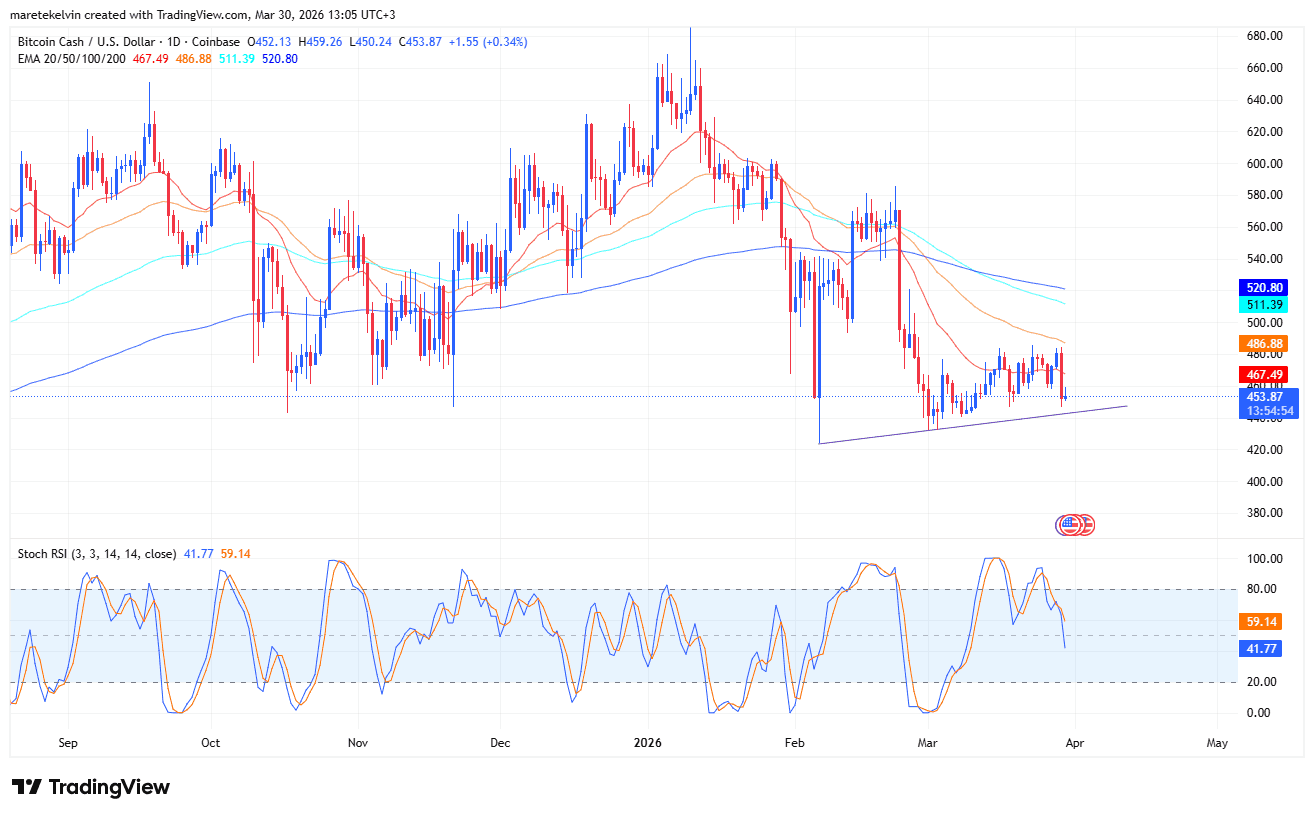
En todo el mercado de BCH, los vendedores han continuado dominando. De hecho, al momento de escribir, el precio había caído por debajo de las EMAs clave, debilitando la estructura general del mercado.

El impulso favorece la baja por ahora
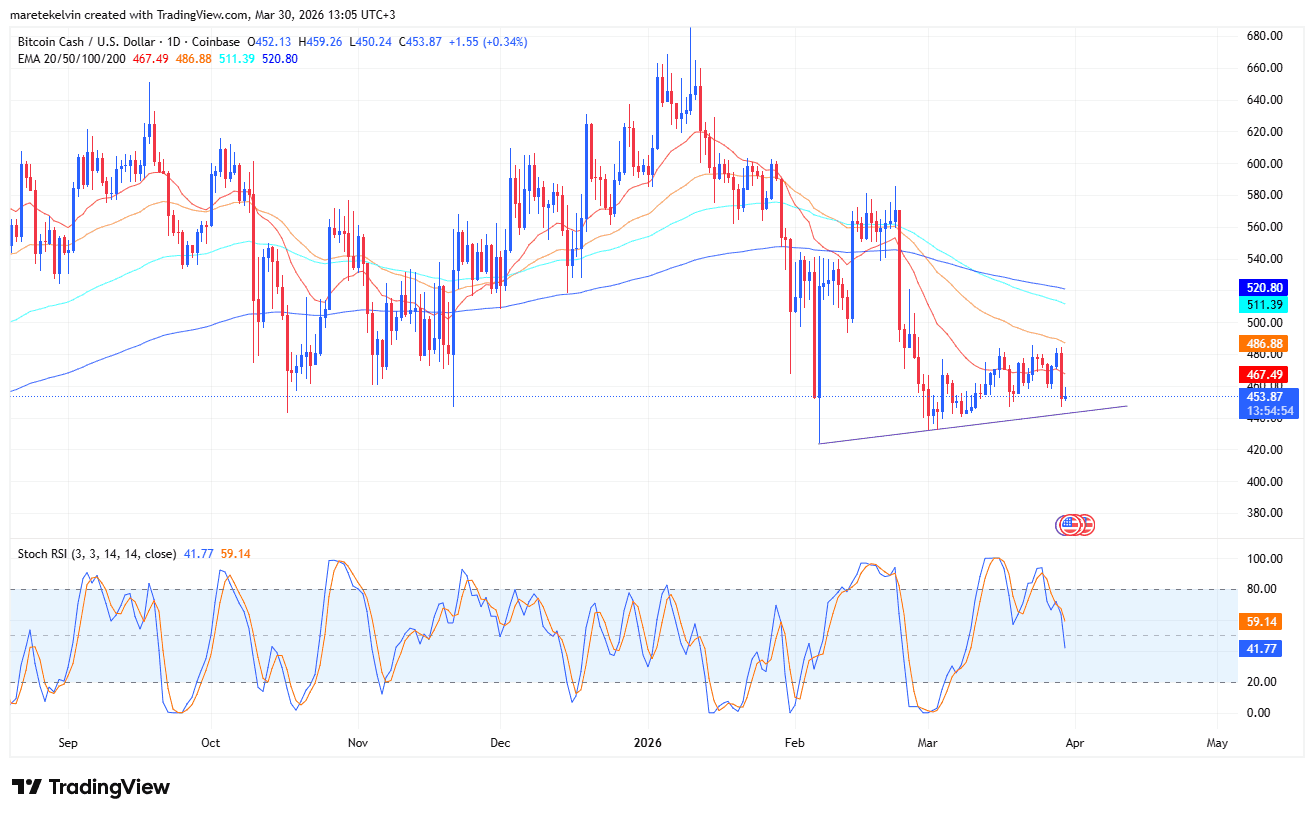
Fuente: TradingView

Los indicadores también apuntaban a un mayor riesgo a la baja. Especialmente con el RSI Estocástico de BCH cayendo bruscamente en el gráfico diario.

Aquí, debe notarse que, aunque parecía estar acercándose al territorio de sobreventa, el altcoin aún no se ha estabilizado completamente. Eso es importante ya que podría significar que es posible que el mercado no haya terminado de corregir.

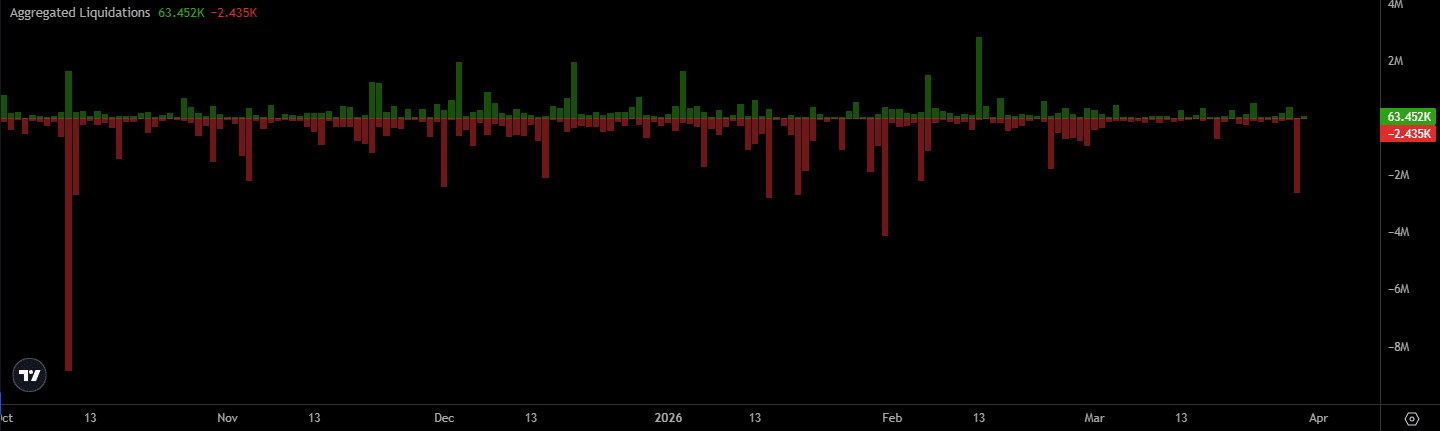
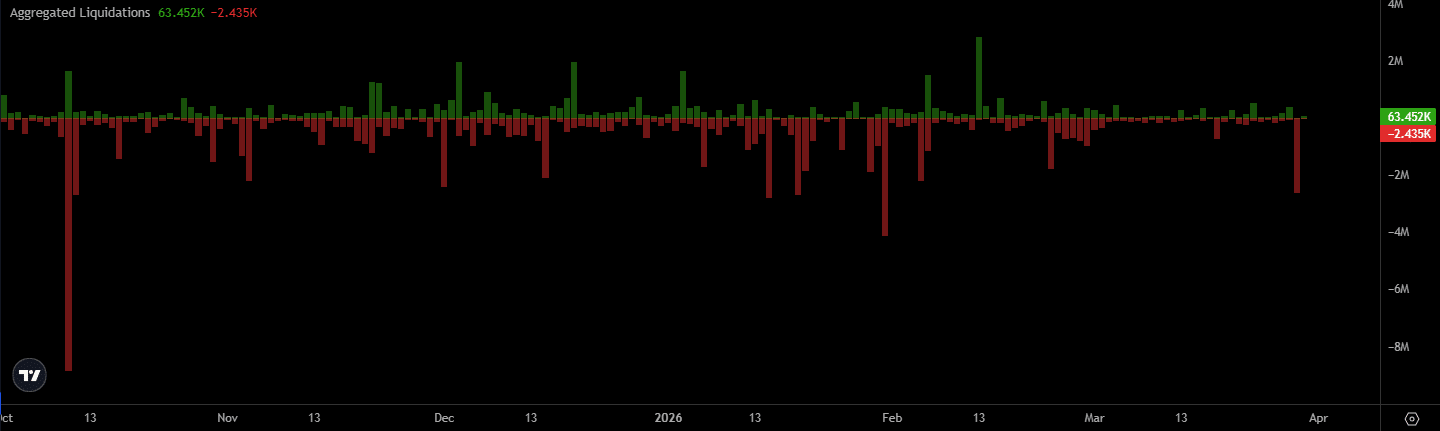
Al mismo tiempo, la dinámica de liquidez ha estado agregando más presión. Por ejemplo, se han barrido alrededor de $63K en liquidez en las últimas 24 horas.

Este tipo de actividad a menudo despeja el camino para una mayor caída antes de que regrese la estabilidad.
Fuente: Coinalyze

Una caída en el interés institucional

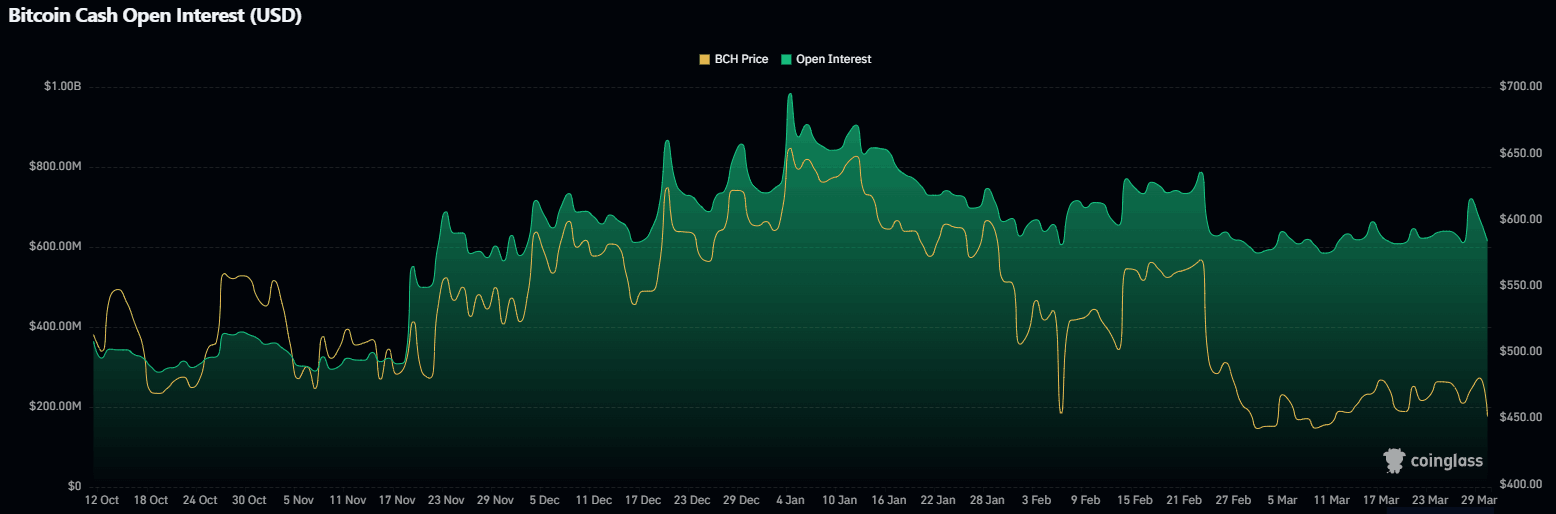
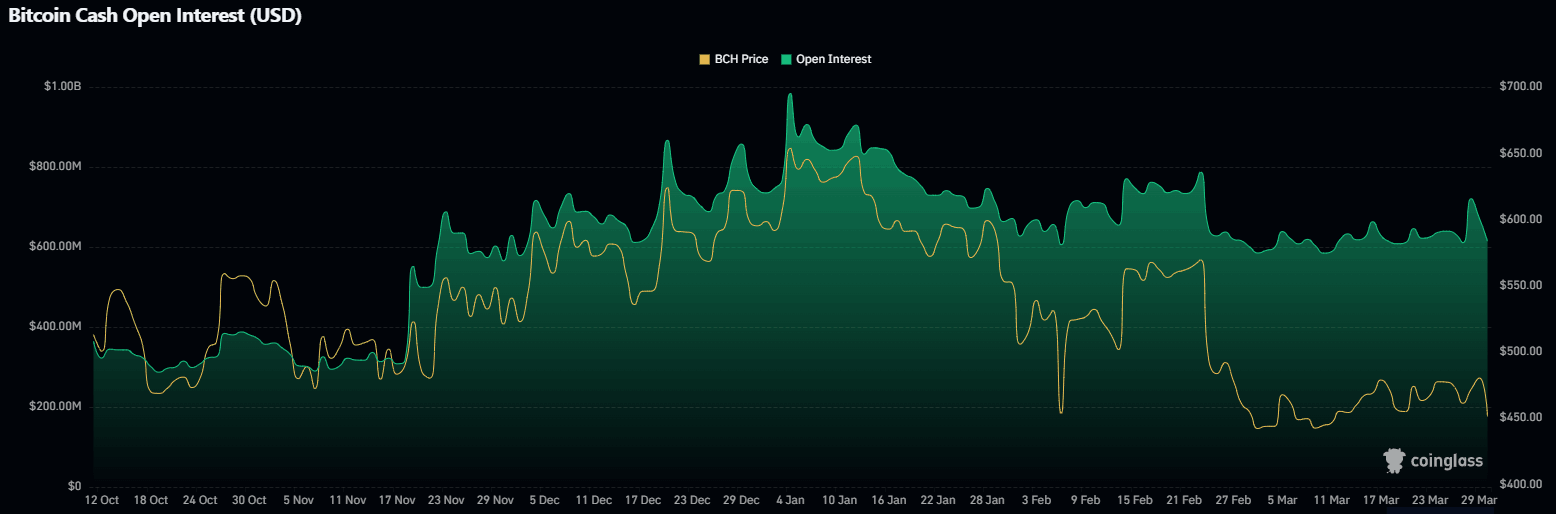
También ha habido una caída visible en la participación institucional. El Interés Abierto disminuyó aproximadamente $29 millones durante el período antes mencionado.

Esto puede ser una señal de una confianza reducida entre los traders apalancados.

Cuando el Interés Abierto cae junto con el precio, generalmente alude a la liquidación de posiciones, en lugar de nuevas entradas. Episodios como estos a menudo debilitan aún más el impulso alcista.
Fuente: Coinglass

¿Se avecina un posible punto de inflexión?

A pesar de la configuración bajista, sin embargo, una señal parecía estar a favor de los holders a largo plazo y los alcistas.

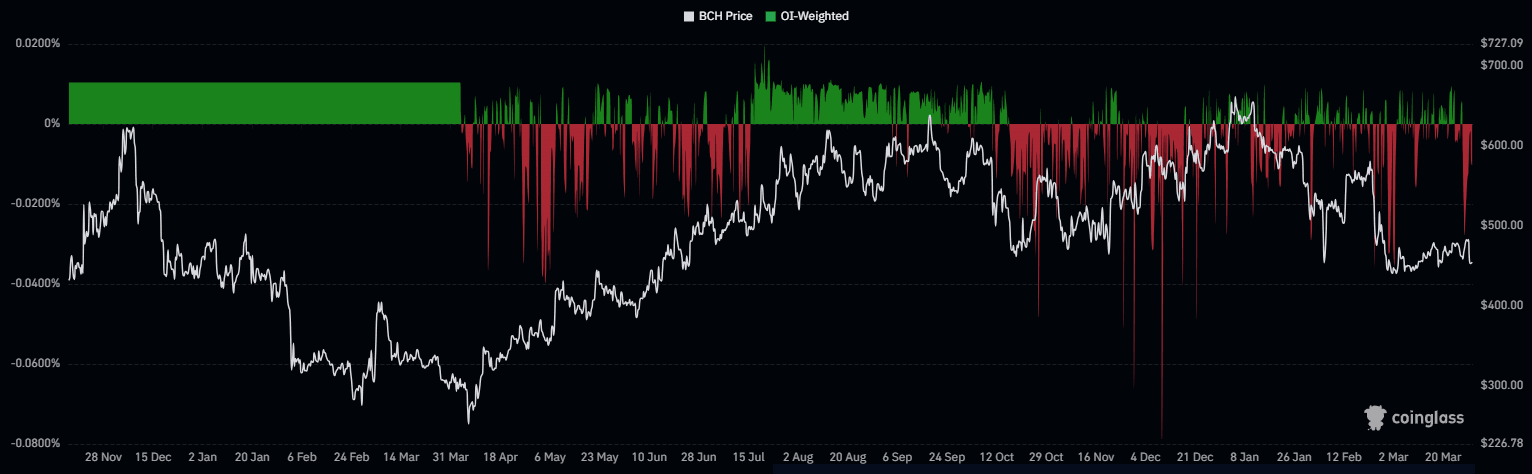
Al momento de la publicación, las Tasas de Financiamiento del altcoin aún se mantenían por debajo del 0%, una señal de que los vendedores podrían estar dispuestos a pagar más para mantener sus posiciones cortas.

Este cambio podría significar que el mercado podría estar acercándose a un fondo local. De hecho, una línea de tendencia descendente justo debajo del precio al momento de la publicación parecía estar actuando como un nivel clave.

Si los compradores intervienen en esa zona, BCH podría estabilizarse en los gráficos una vez más.
Fuente: Coinglass

¿Qué le depara el futuro a BCH?

Por ahora, los osos mantienen el control. Al momento de la publicación, el impulso, los barridos de liquidez y la disminución del Interés Abierto parecían inclinarse a su favor.

Sin embargo, es posible que el mercado se esté acercando pronto a un área crítica.

Si la línea de tendencia se mantiene y los compradores regresan, BCH podría intentar una recuperación. Si no, es probable que haya más caídas antes de cualquier rebote significativo.


Resumen Final

  • BCH cayó por debajo de las EMAs clave a medida que la presión de venta ganó dominio en todo el mercado.

  • La caída del Interés Abierto y los barridos de liquidez sugirieron un riesgo sostenido a la baja, a pesar de algunos indicadores positivos.


Связанные с этим вопросы

Q¿Por qué Bitcoin Cash (BCH) está bajo presión en el mercado actual?

ALa mayoría de las altcoins, incluido Bitcoin Cash, se han estado consolidando debido a que los grandes inversores de criptomonedas se mantienen alejados del mercado por las tensiones geopolíticas en curso. Los vendedores han dominado el mercado de BCH, haciendo que el precio cayera por debajo de las EMAs clave, lo que debilita la estructura general del mercado.

Q¿Qué indicadores técnicos sugieren un mayor riesgo a la baja para BCH?

AEl Stochastic RSI de BCH cayó bruscamente en el gráfico diario, acercándose al territorio de sobreventa pero sin estabilizarse por completo. Esto, junto con el barrido de liquidez de aproximadamente $63K en 24 horas, indica que es posible que el mercado no haya terminado de corregirse y allana el camino para más caídas.

Q¿Cómo ha cambiado el interés institucional en BCH según el artículo?

AHa habido una caída visible en la participación institucional. El Interés Abierto (Open Interest) disminuyó en aproximadamente $29 millones, lo que es una señal de confianza reducida entre los operadores con apalancamiento y sugiere que se están cerrando posiciones en lugar de abrirse nuevas.

Q¿Qué señal podría indicar que BCH se acerca a un punto de inflexión o fondo local?

AA pesar del escenario bajista, las Tasas de Financiamiento (Funding Rates) de BCH se mantenían por debajo del 0% al cierre de la edición. Esto significa que los vendedores (bajistas) están dispuestos a pagar más para mantener sus posiciones cortas, lo que a menudo puede ser una señal de que el mercado se acerca a un fondo local. Además, una línea de tendencia bajista justo debajo del precio actual podría actuar como un nivel clave de soporte.

Q¿Cuál es la perspectiva a corto plazo para el precio de BCH según el análisis presentado?

AA corto plazo, los osos (vendedores) mantienen el control, con el impulso, los barridos de liquidez y la disminución del Interés Abierto a su favor. Sin embargo, el mercado se está acercando a un área crítica. Si la línea de tendencia bajista actúa como soporte y regresan los compradores, BCH podría intentar una recuperación. De lo contrario, es probable que se produzcan más caídas antes de cualquier rebote significativo.

Похожее

Cursor, Why Boarded Musk's Starship?

SpaceX announced its acquisition of AI programming startup Cursor's parent company, Anysphere, for $60 billion in an all-stock deal, just days after its record-breaking IPO. The move sent SpaceX's stock soaring, briefly making it the most valuable U.S. company. Cursor, founded in 2022 by MIT graduate Michael Truell and his classmates, is a popular AI coding assistant that allows developers to switch between models from OpenAI, Anthropic, and others. It saw explosive revenue growth, reaching a $4 billion annualized run rate in early 2026. However, its market share was eroded by the launch of competitor Claude Code from its key AI supplier, Anthropic. This dependence prompted Cursor to develop its own AI model, Composer, in early 2026. To scale Composer, Cursor needed immense computing power. In April 2026, it struck a deal with SpaceX, granting the latter an option to acquire it post-IPO. SpaceX exercised this option, offering Cursor access to its Colossus supercomputer, powered by hundreds of thousands of top-tier Nvidia AI chips. For SpaceX, the acquisition is a strategic move to bolster its AI capabilities, particularly for its xAI division, and advance its broader ambition of building orbital, solar-powered data centers. While the deal surprised some employees and investors given Truell's earlier stance on independence, it represents a high-stakes partnership. SpaceX CEO Elon Musk has projected the company could reach $1 trillion in revenue by 2030. For Truell, joining forces with SpaceX is a monumental gamble on an unprecedented scale in the race for AI dominance.

链捕手3 мин. назад

Cursor, Why Boarded Musk's Starship?

链捕手3 мин. назад

The More It Rises, the More Dangerous? The Systemic Risks Behind SpaceX's Soaring Valuation

Summary: The article raises concerns about the systemic risks posed by SpaceX's skyrocketing valuation, arguing that modern market mechanics, rather than fundamentals, are driving its price discovery. Following SpaceX's market capitalization surpassing $3 trillion in after-hours trading, the author contends that the market is no longer functioning properly. The core issue is not SpaceX's business prospects but the unhealthy market structure surrounding it. With limited float and the imminent launch of options trading, the stage is set for a potential "gamma squeeze"—a feedback loop where market makers hedging call options are forced to buy shares, pushing the price higher and attracting more speculative momentum traders. This mechanism, seen previously with Tesla and meme stocks, can decouple valuation from financial reality. The danger escalates as extreme valuations force passive funds, ETFs, pensions, and major indices to hold the stock. If SpaceX grows large enough—hypothetically reaching $5 or even $10 trillion—its performance would increasingly dictate broader market indices, embedding systemic risk. The author warns that when price appreciation itself becomes the primary bullish thesis, the market transforms from a capital allocation mechanism into a self-reinforcing speculative machine, endangering the retirement savings of ordinary investors tied to passive strategies. The piece questions whether such a system can still perform its fundamental role of price discovery.

marsbit7 мин. назад

The More It Rises, the More Dangerous? The Systemic Risks Behind SpaceX's Soaring Valuation

marsbit7 мин. назад

How Much of the Subscription Fee You Pay to Claude Can Optical Module Companies Get?

How much of your $20 Claude Pro subscription actually goes to AI model companies like Anthropic? A viral breakdown image highlights the fundamental valuation challenge for AI applications versus traditional SaaS. Unlike SaaS with high software margins, AI subscriptions face variable "inference costs": every user query consumes GPU time, power, and cloud resources. This creates a tension between fixed subscription fees and usage-driven expenses. While the specific dollar splits are illustrative, the core question is whether AI revenue can achieve SaaS-like margins as usage scales. Currently, infrastructure providers (cloud platforms, GPU makers like Nvidia, HBM suppliers, power/data centers) capture more certain revenue from growing AI usage. Their financials reflect pricing power and faster earnings validation. The bullish case hinges on efficiency improvements: model optimization, caching, smaller models, and custom chips could lower per-token costs over time. The key debate is whether cost declines can outpace increases in user workload complexity and volume. Ultimately, for AI companies to command high SaaS-like valuations, they must demonstrate not just user growth but also improving gross margins after accounting for inference costs. Investors will scrutinize not just subscriber numbers, but usage patterns, enterprise pricing tiers, and real efficiency gains.

marsbit17 мин. назад

How Much of the Subscription Fee You Pay to Claude Can Optical Module Companies Get?

marsbit17 мин. назад

OpenAI's Hyperliquid Pre-IPO Pricing Venture: Why Did It Last Only Half a Year?

The article discusses the rise and fall of Pre-IPO pricing markets on the Hyperliquid blockchain. Trade.xyz, an anonymous team, successfully built the largest pre-market for SpaceX (SPCX) by launching a contract with a clear anchor: the eventual Nasdaq listing price. This provided inherent price stability and validation. In contrast, Ventuals, a team backed by Paradigm, failed despite holding exclusive contracts for highly sought-after companies like OpenAI and Anthropic. Its key mistake was its pricing mechanism. For companies with no near-term IPO date, Ventuals' oracle relied partly on opaque private market transactions and, critically, partly on its own contract's moving average price. This created a self-referential feedback loop where prices were artificially propped up and detached from genuine supply and demand, leading to illiquid markets. Ventuals shut down after nine months, settling positions at final prices of $1,341.80 for OpenAI and $1,618.90 for Anthropic. Ironically, some employees and late-stage investors of these very companies reportedly used these flawed Ventuals prices for valuation reference, highlighting the acute demand for any price signal in illiquid private markets. The article concludes that while demand for pre-IPO trading is real and growing, with players like Coinbase now entering the space, the fundamental challenge remains: without a public listing to provide a definitive price anchor, these markets struggle to establish truly accurate and liquid pricing. The need for a transparent, self-correcting market is the critical lesson from Ventuals' failure.

marsbit33 мин. назад

OpenAI's Hyperliquid Pre-IPO Pricing Venture: Why Did It Last Only Half a Year?

marsbit33 мин. назад

Торговля

Спот
Фьючерсы

Популярные статьи

Как купить BCH

Добро пожаловать на HTX.com! Мы сделали приобретение Bitcoin Cash (BCH) простым и удобным. Следуйте нашему пошаговому руководству и отправляйтесь в свое крипто-путешествие.Шаг 1: Создайте аккаунт на HTXИспользуйте свой адрес электронной почты или номер телефона, чтобы зарегистрироваться и бесплатно создать аккаунт на HTX. Пройдите удобную регистрацию и откройте для себя весь функционал.Создать аккаунтШаг 2: Перейдите в Купить криптовалюту и выберите свой способ оплатыКредитная/Дебетовая Карта: Используйте свою карту Visa или Mastercard для мгновенной покупки Bitcoin Cash (BCH).Баланс: Используйте средства с баланса вашего аккаунта HTX для простой торговли.Третьи Лица: Мы добавили популярные способы оплаты, такие как Google Pay и Apple Pay, для повышения удобства.P2P: Торгуйте напрямую с другими пользователями на HTX.Внебиржевая Торговля (OTC): Мы предлагаем индивидуальные услуги и конкурентоспособные обменные курсы для трейдеров.Шаг 3: Хранение Bitcoin Cash (BCH)После приобретения вами Bitcoin Cash (BCH) храните их в своем аккаунте на HTX. В качестве альтернативы вы можете отправить их куда-либо с помощью перевода в блокчейне или использовать для торговли с другими криптовалютами.Шаг 4: Торговля Bitcoin Cash (BCH)С легкостью торгуйте Bitcoin Cash (BCH) на спотовом рынке HTX. Просто зайдите в свой аккаунт, выберите торговую пару, совершайте сделки и следите за ними в режиме реального времени. Мы предлагаем удобный интерфейс как для начинающих, так и для опытных трейдеров.

1.0k просмотров всегоОпубликовано 2024.03.29Обновлено 2026.06.02

Как купить BCH

Обсуждения

Добро пожаловать в Сообщество HTX. Здесь вы сможете быть в курсе последних новостей о развитии платформы и получить доступ к профессиональной аналитической информации о рынке. Мнения пользователей о цене на BCH (BCH) представлены ниже.

活动图片