Solana AI token Ava hit by launch sniping tied to deployer: Bubblemaps

cointelegraphОпубликовано 2025-12-19Обновлено 2025-12-19

Введение

Blockchain analytics firm Bubblemaps reported that 23 wallets linked to the deployer of the Solana-based AI token Ava accumulated around 40% of the token’s supply at launch, indicating potential insider coordination. These wallets, funded via Binance and Bitget in a short timeframe, showed no prior blockchain activity before purchasing AVA. The activity, described as "sniping," involved coordinated buying at launch, leading to significant supply concentration—a red flag for potential market manipulation like rug pulls. Since its November 2024 launch, AVA’s price has fallen 79%, and it is down 96% from its January 2025 all-time high of $0.33.

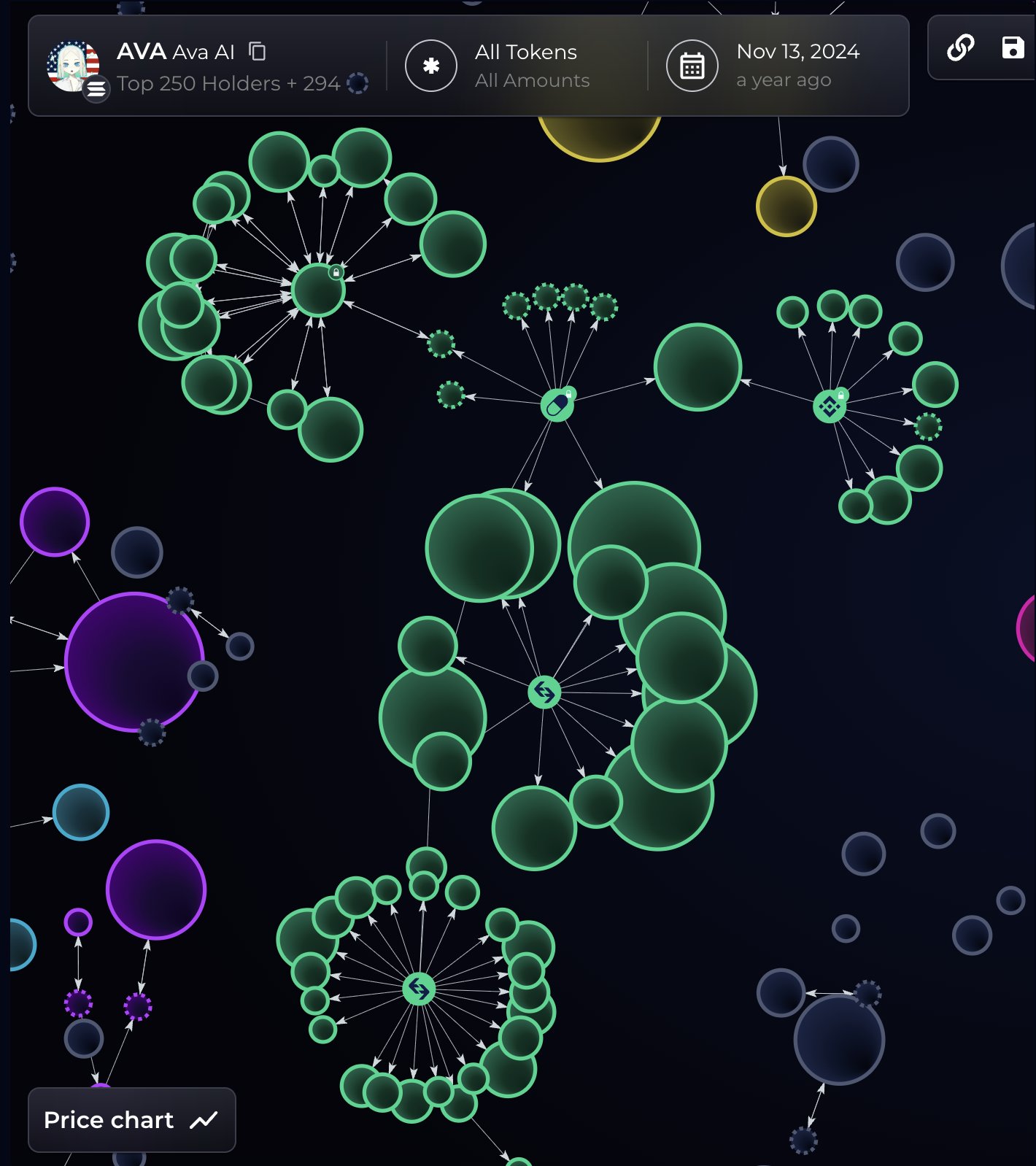
Blockchain analytics firm Bubblemaps said a cluster of 23 wallets linked to the deployer of the Solana-based AI token Ava accumulated around 40% of the token’s supply at launch, raising new questions about insider coordination around the project’s debut.

The sybil wallet cluster related to the deployer shared similar patterns, including being funded in a tight time window through Bitget and Binance, receiving similar amounts of Solana (SOL) and having no blockchain activity before buying up the Ava AI (AVA) token supply at launch, Bubblemaps claimed in a Thursday X post.

“Connected to these snipers are other wallets that also bought $AVA early. Similar funding sources, sizes, and timing strongly suggest coordination across these clusters,” they said.

In crypto slang, sniping refers to employing crypto trading bots to automatically purchase new token supply as soon as the tokens become publicly available, aiming to buy at lower prices before the general public.

While the token was launched on memecoin launch platform Pump.fun, aiming for a decentralized, community-driven debut, the wallet cluster’s activity suggests acquisitions that led to a single entity holding 40% of the token’s supply.
Source: Bubblemaps

Related: Crypto nears its ‘Netscape moment’ as industry approaches inflection point

A large token supply concentrated across a few wallets can help investors detect scams such as rug pulls, where insiders remove liquidity or stage a mass sell-off, resulting in a steep price collapse that leaves investors with worthless tokens.

The coordinated activity was uncovered through Bubblemaps’ Time Travel feature, a forensic-grade analytics tool launched in May that enables Web3 users to reconstruct the historical distribution of tokens, aiming to detect early insider activity.

Related: Bubblemaps challenges PEPE’s fair launch, alleges 30% of genesis supply bundled

AVA AI token falls 96% from all-time high

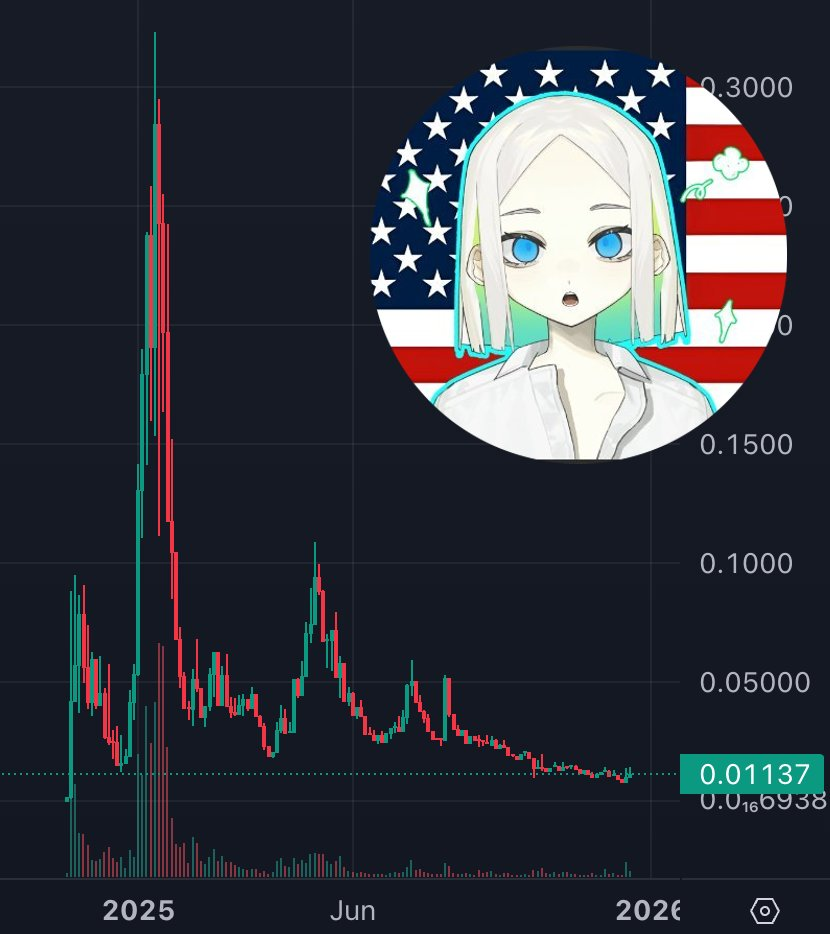
The coordinated buying activity was revealed over a year after the AVA token’s launch on Nov. 13, 2024. The token reached a fully diluted valuation (FDV) of $300 million by January 2025, making it a popular autonomous AI agent utility token native to Solana.

The AVA token is down over 79% since launch and over 96% from its all-time high of $0.33 breached on Jan. 15, 2025, CoinGecko data shows.
Source: Bubblemaps

Ava, also known as “the HOLO AI intern,” was the first AI agent built on the decentralized AI launchpad Holoworld AI. The platform allows users to create, play, or raise funds for agentic AI applications.

Holoworld claims to have over 1 million users and 700,000 AI “creations” to date.

Cointelegraph has approached Holoworld for comment on the sybil wallet cluster’s activity during the token launch.

Magazine: Memecoin degeneracy is funding groundbreaking anti-aging research

Связанные с этим вопросы

QWhat did blockchain analytics firm Bubblemaps discover about the Solana-based AI token Ava's launch?

ABubblemaps discovered that a cluster of 23 wallets linked to the token's deployer accumulated around 40% of the token's supply at launch, indicating potential insider coordination.

QWhat are the common patterns identified in the sybil wallet cluster related to the AVA token deployer?

AThe wallets were funded in a tight time window through Bitget and Binance, received similar amounts of Solana (SOL), and had no prior blockchain activity before buying the AVA tokens.

QWhat is 'sniping' in the context of crypto token launches?

ASniping refers to using crypto trading bots to automatically purchase a new token supply as soon as it becomes available, aiming to buy at lower prices before the general public.

QHow much has the AVA token fallen from its all-time high, according to CoinGecko data?

AThe AVA token is down over 96% from its all-time high of $0.33, which was reached on January 15, 2025.

QWhat is the potential risk associated with a large token supply being concentrated in a few wallets?

AIt can indicate potential scams like rug pulls, where insiders remove liquidity or stage a mass sell-off, causing a steep price collapse and leaving investors with worthless tokens.

Похожее

Uncovering the Truth About Agent Commerce, Payments, and Infrastructure

Decoding Agent Commerce, Payments, and Infrastructure: The Reality Over the past year, I've been building infrastructure for the Agent economy, engaging with major players like Stripe, Visa, Coinbase, Google, and dozens of startups. A clear conclusion emerges: true, large-scale demand does not yet exist. Startups face structural challenges. Data points illustrate this gap. Stripe's Agent commerce platform has over 1,000 merchants but only single-digit transacting agents. Visa's Agent payment token requires 9-month KYC and a $250M revenue threshold, accessible only to giants like Amazon. On-chain analysis reveals actual daily Agent transaction volume is around $17k, half of which are test transactions. The article analyzes four potential markets: **1. Agent-to-Merchant (A2M):** Current AI shopping UX is often inferior to traditional e-commerce for visual, comparison-heavy purchases (clothing, electronics). Chat interfaces are a step back. Real merchant interest is defensive "Agent Engine Optimization," fearing future obsolescence, not current demand. Potential exists in high-frequency, low-decision purchases (e.g., food delivery) or simplifying terrible UX (complex checkouts, non-native shoppers), but these require massive consumer distribution channels dominated by giants like DoorDash and Amazon. **2. Agent-to-API (A2A):** Developers already have subscriptions and billing for core APIs (compute, data). The argument for micro-payments via crypto for sub-dollar API calls is addressed by pre-paid balances today. The deeper issue is supplier resistance; major SaaS firms rely on enterprise contracts, not fractional cent pricing. Opportunity lies in the long tail of niche services, but this is a smaller market catering to developers, a historically low-paying group. **3. Agent-to-Agent (A2A):** This remains a theoretical long-term vision with near-zero current transaction volume. It involves unique challenges: discovery, trust, negotiation, dispute resolution. When it materializes, it will require a fundamentally new settlement infrastructure for high-speed, variable-value, multi-party transactions. It's a real long-term bet, but not the current market. **4. Agent-to-Finance (A2F):** This is the only category with existing, paying demand. Integrating AI into financial workflows (trading, portfolio management) is a natural evolution and enables new capabilities like autonomous rebalancing. However, competition favors incumbents with regulatory licenses, compliance infrastructure, and existing client relationships. **The Real Issue:** Why is infrastructure still being built? Incumbents can afford long-term bets, and payment companies see every problem as a nail for their payment hammer. However, payment is just one piece. The core challenge is *coordination*—orchestrating work between Agents and humans, verifying outcomes, and settling results. Payment is part of settlement, which is part of coordination. Companies that solve the coordination problem will subsume payments, not the other way around. Startups lack the infinite runway of giants and must find today's real market, which, after a year of exploration, lies outside these four categories—in an area with real, growing, and underserved activity.

marsbit20 мин. назад

Uncovering the Truth About Agent Commerce, Payments, and Infrastructure

marsbit20 мин. назад

Kalshi, MTS, and a16z's Ambition

The article "Kalshi, MTS, and a16z's Ambition" explores prediction markets as a focal point of excitement in 2025 for investors, crypto enthusiasts, and media. It traces their intellectual lineage from Friedrich Hayek's ideas on dispersed knowledge and market coordination to Robin Hanson's Logarithmic Market Scoring Rule (LMSR), which incentivizes truthful information sharing. The piece argues that a16z's significant investment in prediction market platform Kalshi (valued at $220B) transcends mere financial speculation. a16z frames prediction markets as a new form of "media" that provides "presence"—a way for individuals to actively engage with and influence world events through financial stakes, countering postmodern detachment. By wagering on outcomes, users become "super observers," and the market's aggregated probabilities gain authoritative power to define event truth and importance. The article uses media company MTS ("Monitoring The Situation") as a case study of a16z's "new media" strategy: rapidly producing high-intensity, multi-format content to "take over the timeline." However, prediction markets like Kalshi are presented as the ultimate piece in this media empire. Their real-money, crowd-sourced probabilities possess a unique "reality distortion field" and perceived objectivity, potentially swaying public opinion and granting a private company unprecedented interpretive power over reality. Ultimately, Kalshi's immense valuation is attributed not just to its exchange model, but to its role as a foundational component in a16z's envisioned new media landscape, where prediction markets define narrative and truth.

链捕手21 мин. назад

Kalshi, MTS, and a16z's Ambition

链捕手21 мин. назад

Торговля

Спот
Фьючерсы

Популярные статьи

Неделя обучения по популярным токенам (2): 2026 может стать годом приложений реального времени, сектор AI продолжает оставаться в тренде

2025 год — год институциональных инвесторов, в будущем он будет доминировать в приложениях реального времени.

1.8k просмотров всегоОпубликовано 2025.12.16Обновлено 2025.12.16

Неделя обучения по популярным токенам (2): 2026 может стать годом приложений реального времени, сектор AI продолжает оставаться в тренде

Обсуждения

Добро пожаловать в Сообщество HTX. Здесь вы сможете быть в курсе последних новостей о развитии платформы и получить доступ к профессиональной аналитической информации о рынке. Мнения пользователей о цене на AI (AI) представлены ниже.

活动图片















