Análisis del Mercado del 18 de Diciembre: ¿Por qué cayó hoy? Recomendaciones de operación para BTC, ETH, BNB, SOL, ACT, HMSTR, SOMI, TOWNS y otras altcoins

金色财经Опубликовано 2025-12-18Обновлено 2025-12-18

Введение

Resumen del mercado de Cripto (18 Dic): El mercado cayó un 1.37% en 24h, con una pérdida semanal del 7.2%. Causas clave: preocupación macro ante datos de inflación de EE.UU., salida de fondos de ETFs de Bitcoin ($2.3B en diciembre) y liquidaciones por apalancamiento ($142M en BTC). Bitcoin ($86,836; -0.08%) prueba soporte en $87,000. Si se mantiene, podría rebotar hacia $88,000-$90,300; si no, buscaría soportes en $85,220-$82,170. Ethereum ($2,838; -3.65%) observa $2,860: arriba de eso, objetivo $2,980; abajo, soportes en $2,790-$2,720. Otras monedas como BNB, SOL también muestran presión similar. Capitalización total: ~$3.01T. Sentimiento: Miedo Extremo (18/100). Monedas destacadas: ACT (+25%), HMSTR (+23%) suben; SOMI (-19%), TOWNS (-17%) bajan.

En las últimas 24 horas, el mercado de criptomonedas cayó un 1.37%, con una caída acumulada del 7.2% esta semana. Los principales factores que contribuyeron a esta caída incluyen: la preocupación por la macroeconomía antes de la publicación de los datos de inflación de EE.UU., la salida de fondos de los ETF de Bitcoin y la presión en el mercado de derivados.

1. Preocupaciones macroeconómicas—La publicación del Índice de Precios al Consumidor (IPC) (18 de diciembre) aumentó la posibilidad de que la Fed implemente una política monetaria más restrictiva; la correlación de 7 días entre Bitcoin y el índice Nasdaq es de +0.89.

2. Salida de fondos institucionales—Los ETF de Bitcoin spot tuvieron una salida neta de $2.3 mil millones este mes.

3. Liquidaciones por apalancamiento—El interés abierto disminuyó un 0.89%, mientras que las liquidaciones de Bitcoin en 24 horas aumentaron un 152%, totalizando $142 millones.

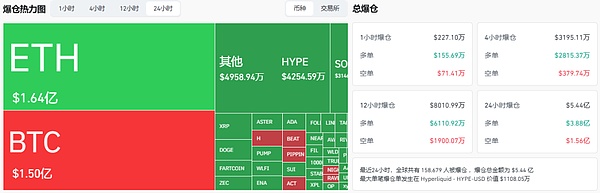
? Alerta de liquidaciones:

En 24 horas, 158,687 personas fueron liquidadas en toda la red, por un total de $544 millones, donde los largos sufrieron una masacre ($388 millones) y los cortos tampoco se salvaron ($156 millones).
? Rendimiento de las monedas principales:

1. Bitcoin (BTC): Precio alrededor de 86836, cayó 0.08% en 24 horas

Hoy hay que vigilar el nivel clave de 87000. Si logra mantenerse por encima, podría haber un rebote a nivel de 4 horas, con resistencias superiores alrededor de 88000, 89080 y 90300.

Si no se mantiene por encima, el rebote en marcos de tiempo pequeños será débil y podría continuar explorando soportes hacia abajo, prestando atención a los niveles de 85220, 83830 y 82170.

2. Ethereum (ETH): Precio alrededor de 2838, cayó 3.65% en 24 horas

Hoy el punto de observación es 2860. Si se mantiene, hay oportunidad de rebote en marcos de 1-2 horas, con resistencias superiores alrededor de 2900, 2945 y 2980.

Si no se mantiene, la fuerza del rebote será insuficiente y podría probar soportes hacia abajo alrededor de 2790, 2761 y 2720.

3. BNB: Precio alrededor de 834, cayó 4.01% en 24 horas

Hoy hay que prestar atención al nivel de 847. Si se mantiene, hay oportunidad de rebote en marcos de 1-2 horas, mirando hacia las resistencias superiores alrededor de 859, 876 y 892.

Si no logra mantenerse por encima, podría continuar debilitándose, con soportes inferiores en 833, 815 y 801.

4. SOL: Precio alrededor de 123, cayó 3.98% en 24 horas

Hoy hay que prestar atención a la línea de 124. Si se mantiene, existe la posibilidad de un rebote en ciclos cortos, con resistencias alrededor de 126, 130 y 134.

Si no se mantiene, la fuerza del rebote será limitada, y será necesario prestar atención a los soportes cercanos de 121, 117 y 112.

?️ Sentimiento del mercado:

Hoy, la capitalización total del mercado de criptomonedas es de aproximadamente $3.01 billones, con un volumen total de operaciones de 24 horas de alrededor de $1290 mil millones.

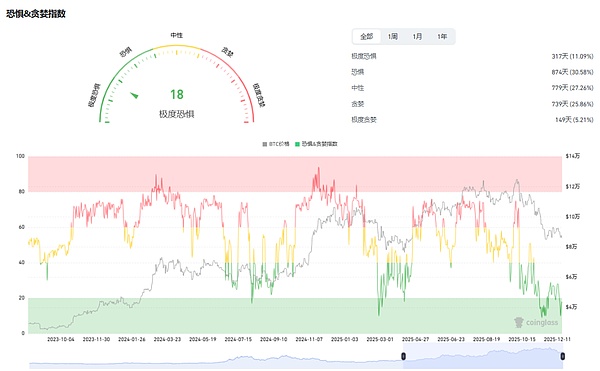
El sentimiento actual del mercado es de 18 (miedo extremo). Ahora el mercado está sesgado a la baja debido a las ventas de pánico y la inestabilidad macroeconómica. Sin embargo, los indicadores técnicos de sobreventa de Bitcoin, sumados al historial de un aumento del 660% entre 2022 y 2025 basado en señales RSI, sugieren un posible rebote. Además, la dominancia de Bitcoin es actualmente del 59.39%, con un aumento del 0.6% en 24 horas—si la dominancia supera el 60%, indica que el capital está fluyendo hacia Bitcoin como refugio seguro; si la dominancia comienza a bajar, podría ser una buena oportunidad para posicionarse en altcoins.
Ranking de ganancias y pérdidas de hoy?

? TOP 3 de ganancias:

1. ACT: Precio $0.0258, subió 25% en 24 horas

2. HMSTR: Precio $0.000244, subió 23% en 24 horas

3. BARD: Precio $0.8806, subió 14% en 24 horas

? TOP 3 de pérdidas:

1. SOMI: Precio $0.2617, cayó 19% en 24 horas

2. TOWNS: Precio $0.00554, cayó 17% en 24 horas

3. FORM: Precio $0.3415, cayó 16% en 24 horas

Rendimiento de otras monedas principales:

Dogecoin (DOGE): Precio $0.12490, cayó 4.74% en 24 horas

Tron (TRX): Precio $0.2773, cayó 1.11% en 24 horas

Cardano (ADA): Precio $0.3627, cayó 4.93% en 24 horas

Hyperliquid (HYPE): Precio $24.173, cayó 10.98% en 24 horas

Avalanche (AVAX): Precio $11.78, cayó 3.76% en 24 horas

Stellar (XLM): Precio $0.2091, cayó 4.26% en 24 horas

Sui (SUI): Precio $3956, cayó 5.94% en 24 horas

Chainlink (LINK): Precio $12.19, cayó 4.62% en 24 horas

Hedera (HBAR): Precio $0.10848, cayó 3.73% en 24 horas

Bitcoin Cash (BCH): Precio $530.9, cayó 2.75% en 24 horas

Shiba Inu (SHIB): Precio $0.00000746, cayó 4.48% en 24 horas

Litecoin (LTC): Precio $75.33, cayó 4.67% en 24 horas

Pepe Shiba Inu (PEPE): Precio $0.00000388, cayó 4.90% en 24 horas

Toncoin (TON): Precio $1.465, cayó 4.62% en 24 horas

Связанные с этим вопросы

Q¿Cuáles son los tres factores principales que causaron la caída del mercado de criptomonedas mencionados en el artículo?

ALos tres factores principales son: 1. Preocupaciones macroeconómicas antes de la publicación de los datos de inflación de EE.UU., 2. Salida de fondos de los ETF de Bitcoin, y 3. Presión en el mercado de derivados con liquidaciones de apalancamiento.

QSegún el análisis, ¿qué nivel clave debe mantener Bitcoin (BTC) para una posible recuperación en el marco temporal de 4 horas?

ABitcoin debe mantenerse por encima del nivel clave de 87,000 para una posible recuperación en el marco temporal de 4 horas, con resistencias superiores en 88,000, 89,080 y 90,300.

Q¿Cuál es el sentimiento actual del mercado de criptomonedas y qué indica el índice de miedo y codicia?

AEl sentimiento actual del mercado es de 'miedo extremo', con un índice de 18. Esto indica pánico por ventas y inestabilidad macroeconómica, pero los indicadores técnicos de sobreventa de Bitcoin sugieren una posible rebote.

Q¿Qué tres criptomonedas lideraron las mayores ganancias en 24 horas según el artículo?

ALas tres criptomonedas con mayores ganancias en 24 horas fueron: 1. ACT (subió un 25%), 2. HMSTR (subió un 23%), y 3. BARD (subió un 14%).

QSi la dominancia de Bitcoin supera el 60%, ¿qué podría significar esto para el análisis del mercado?

ASi la dominancia de Bitcoin supera el 60%, indicaría que el capital está fluyendo hacia Bitcoin como activo refugio. Si disminuye, podría ser una oportunidad para invertir en altcoins.

Похожее

Sharplink CEO: One Million Ethereum Developers, Who Can Compete?

Etherean Ecosystem: One Million Developers and a Formidable Moat The Ethereum network has surpassed a significant milestone: over one million unique lifetime developers, with approximately 232,000 active in the past year. This vast and growing talent pool is Ethereum's core advantage, far more critical than transient metrics like speed or transaction fees. The central question is not which blockchain is fastest, but where the best builders choose to build long-term. Ethereum's answer lies in a decade-long accumulation of infrastructure, standards, tools, liquidity, and collaborative culture that is exceptionally difficult to replicate. It has become the default operating system for programmable finance. This massive developer base is actively working on complex, high-risk challenges that deepen Ethereum's strategic moat: * **Glamsterdam Upgrade (2026):** Focused on core protocol scalability (ePBS, parallel execution) while preserving core values like credible neutrality. * **Synchronous Composability:** Aims to make numerous Rollups interoperate like a single chain, directly addressing fragmentation concerns. * **Quantum Resistance:** Ethereum leads mainstream ecosystems in coordinated preparation for post-quantum cryptography, with a targeted migration plan around 2029. This developer advantage is self-reinforcing, fueled by: * **Deep Composability:** Applications interact like interoperable financial Lego bricks via shared standards (e.g., EVM, Solidity). * **Credible Neutrality:** Secured by over 900,000 validators, making it trusted by major institutions. * **Modularity:** Rollups (Base, Arbitrium, etc.) expand, rather than fracture, the ecosystem into a tightly connected modular internet economy. * **Culture:** Attracts top-tier researchers and standard-setters who guide the entire industry. In essence, while other chains generate activity, Ethereum is consolidating as the trusted, long-term coordination layer for internet-native finance. Its future is being built now by the architects of the next-generation financial infrastructure.

Odaily星球日报20 мин. назад

Sharplink CEO: One Million Ethereum Developers, Who Can Compete?

Odaily星球日报20 мин. назад

Ethereum Reaches the Milestone of One Million Developers, Sharplink CEO Delves Deep into Ethereum's Future Possibilities

Ethereum Surpasses One Million Developers Milestone: A Look at Its Unshakeable Dominance and Future Joseph Chalom, CEO of Sharplink, reflects on his recent Asia trip where he engaged deeply with Ethereum developers and ecosystem leaders. The most striking takeaway was not just the industry's vibrancy, but the rigorous, long-term vision of local builders. This context brings to life a pivotal statistic: Ethereum has now surpassed one million cumulative developers (1,012,824), with approximately 232,000 remaining active in the past year—a talent pool unmatched by any other crypto ecosystem. The critical question isn't which blockchain is fastest, but where top developers choose to build long-term. Ethereum's answer is unequivocal. Its decade-long lead stems from a unique convergence of technology, institutional culture, economic systems, and composability, cementing its role as the foundational operating system for programmable finance. This massive developer base is tackling the industry's hardest problems, continuously strengthening Ethereum's moat. Key initiatives include: * **The Glamsterdam Upgrade (planned 2026):** Introducing ePBS and Block-level Access Lists for parallel execution and higher throughput while preserving core values like credible neutrality and fair MEV distribution. * **Synchronous Composability:** Projects are working to enable atomic transactions across dozens of Rollups, making them function as one unified chain and eliminating ecosystem fragmentation. * **Post-Quantum Security:** Ethereum is far ahead in preparing for quantum computing threats, with a dedicated foundation working group and testnets targeting a full migration by ~2029—a crucial factor for institutional adoption. Beyond developers, Ethereum's core network effects are its unparalleled composability and unified standards (like EVM and Solidity), which create a powerful flywheel: more developers → better tools → greater liquidity → more institutional participation. Its other decisive advantages include credible neutrality (over 900k validators), a secure modular architecture with interconnected Rollups, and a deeply entrenched culture shaped by top-tier researchers. Ultimately, there's a vast difference between generating short-term activity and becoming the trusted, long-term coordination layer for global native finance. Major institutions prioritize security, trust, and liquidity—areas where Ethereum holds dominant mindshare. The industry's trajectory shows resources consolidating around unified standards, deep liquidity, and developer consensus. After meeting the builders in Seoul and Hong Kong, Chalom is more convinced than ever: Ethereum's unshakeable future is being built right now.

Foresight News31 мин. назад

Ethereum Reaches the Milestone of One Million Developers, Sharplink CEO Delves Deep into Ethereum's Future Possibilities

Foresight News31 мин. назад

Saylor's Latest Long Read: Bitcoin is Not Money, It's Digital Capital, and Money is Built Upon It

Michael Saylor presents his "Digital Asset Stack" theory, positioning Bitcoin as the foundational layer of digital capital. He argues Bitcoin itself should remain unchanged—no staking, inflation, or protocol alterations. Instead, a five-layer financial architecture should be built atop it: Digital Capital (BTC), Digital Credit (e.g., yield instruments like STRC), Digital Currency (stable, yield-bearing instruments pegged to fiat), Digital Yield (leveraged/structured products), and Digital Equity (e.g., MSTR stock, absorbing residual volatility). Saylor asserts this stack transforms Bitcoin's high-volatility, high-energy capital into tailored products: stable currencies for payments/savings, yield instruments for income seekers, and equity for growth investors. This approach meets diverse needs—corporate treasuries, banks, retirees, emerging market users—without compromising Bitcoin's core properties (scarcity, decentralization). The "killer use case" is rebuilding global money, credit, and capital markets on Bitcoin, bridging the fiat world with a superior digital asset foundation. The system leverages traditional finance principles (risk layering, structured products) while using Bitcoin as the ultimate collateral. This expands Bitcoin's utility, drives adoption, and offers a better monetary experience: digital, yield-bearing, stable-value tools for everyday use.

marsbit44 мин. назад

Saylor's Latest Long Read: Bitcoin is Not Money, It's Digital Capital, and Money is Built Upon It

marsbit44 мин. назад

Can SK Hynix's Stock Double Again in This Rally?

The article discusses the highly optimistic price target of approximately $3,500 for SK Hynix stock, set by Aletheia Capital. This target is significantly above the consensus range of $2,000-$2,520 from major brokerages. The core debate is whether SK Hynix deserves a fundamental re-rating beyond its traditional cyclical discount, based on the long-term impact of AI-driven demand. The $3,500 target hinges on three key assumptions holding simultaneously until at least 2027: 1) Continued shortage and high pricing for HBM (High Bandwidth Memory), a critical component for AI chips; 2) Sustained high prices for standard DRAM, as HBM production consumes capacity and constrains general supply; and 3) Strong AI server demand generating substantial, above-expectation free cash flow. SK Hynix's leading ~58% market share in HBM and its early certification with key clients like Nvidia provide a competitive advantage, allowing it to capture significant supply chain premiums. The HBM shortage is seen not just as a niche growth driver but as a catalyst that amplifies profitability across the entire memory business by tightening overall DRAM supply. However, the article cautions that this target represents an optimistic "tail scenario." Key risks include potential supply increases from competitors (Samsung, Micron) by 2027, a possible slowdown in HBM price growth, and high capital expenditures that could erode the projected free cash flow. The divergence in analyst targets reflects the market's uncertainty over whether the current AI-driven boom will temporarily elevate earnings or permanently raise the memory industry's profit baseline.

marsbit47 мин. назад

Can SK Hynix's Stock Double Again in This Rally?

marsbit47 мин. назад

Торговля

Спот
Фьючерсы

Популярные статьи

Как купить TOWNS

Добро пожаловать на HTX.com! Мы сделали приобретение TOWNS (TOWNS) простым и удобным. Следуйте нашему пошаговому руководству и отправляйтесь в свое крипто-путешествие.Шаг 1: Создайте аккаунт на HTXИспользуйте свой адрес электронной почты или номер телефона, чтобы зарегистрироваться и бесплатно создать аккаунт на HTX. Пройдите удобную регистрацию и откройте для себя весь функционал.Создать аккаунтШаг 2: Перейдите в Купить криптовалюту и выберите свой способ оплатыКредитная/Дебетовая Карта: Используйте свою карту Visa или Mastercard для мгновенной покупки TOWNS (TOWNS).Баланс: Используйте средства с баланса вашего аккаунта HTX для простой торговли.Третьи Лица: Мы добавили популярные способы оплаты, такие как Google Pay и Apple Pay, для повышения удобства.P2P: Торгуйте напрямую с другими пользователями на HTX.Внебиржевая Торговля (OTC): Мы предлагаем индивидуальные услуги и конкурентоспособные обменные курсы для трейдеров.Шаг 3: Хранение TOWNS (TOWNS)После приобретения вами TOWNS (TOWNS) храните их в своем аккаунте на HTX. В качестве альтернативы вы можете отправить их куда-либо с помощью перевода в блокчейне или использовать для торговли с другими криптовалютами.Шаг 4: Торговля TOWNS (TOWNS)С легкостью торгуйте TOWNS (TOWNS) на спотовом рынке HTX. Просто зайдите в свой аккаунт, выберите торговую пару, совершайте сделки и следите за ними в режиме реального времени. Мы предлагаем удобный интерфейс как для начинающих, так и для опытных трейдеров.

409 просмотров всегоОпубликовано 2025.08.08Обновлено 2026.06.02

Как купить TOWNS

Обсуждения

Добро пожаловать в Сообщество HTX. Здесь вы сможете быть в курсе последних новостей о развитии платформы и получить доступ к профессиональной аналитической информации о рынке. Мнения пользователей о цене на TOWNS (TOWNS) представлены ниже.

活动图片