Ripple National Trust Bank Charter Filing Goes Public

TheCryptoTimesОпубликовано 2025-10-06Обновлено 2025-10-06

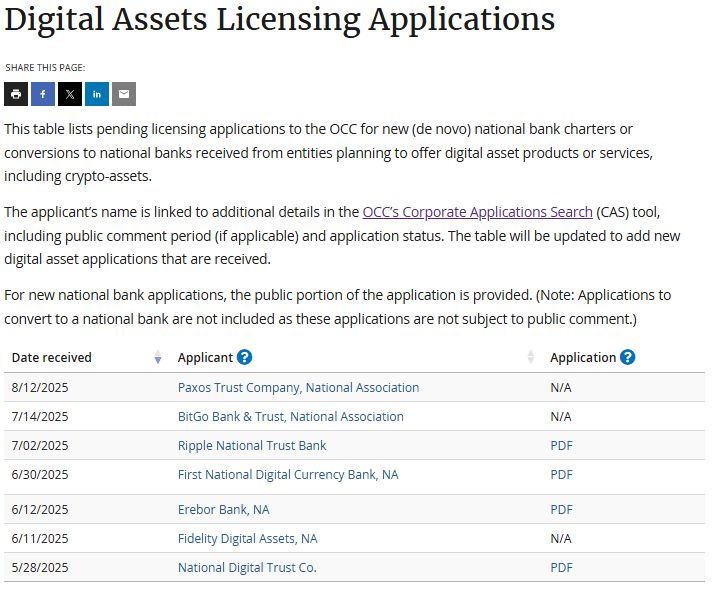
Ripple Labs’ application to establish a federally regulated trust bank has been made public by the Office of the Comptroller of the Currency (OCC).

The “Interagency Charter and Federal Deposit Insurance Application” document details Ripple’s plan to form the Ripple National Trust Bank under U.S. banking law. The filing was submitted under the National Bank Act, which governs the creation of national banks. 

Ripple Charter Filing Goes Public
Ripple Charter Filing Goes Public, Source: OCC

The application provides the information needed by the OCC and the Federal Deposit Insurance Corporation (FDIC), including business plans, financial projections, and operational information. Ripple must also post a public notice of the proposed bank in a local newspaper. Key sections of the filing, including the business plan, remain confidential.

Approval in October?

There is speculation that the Ripple filing could be approved this month. According to the Comptroller’s Licensing Manual, the OCC generally aims to decide a national bank charter application within 120 days of receipt, or sooner if the filing qualifies for expedited review. Ripple submitted its filing on July 2, 2025, so the approval decision could very likely come by October 2025.

The OCC also noted that it “does not approve applications that fail to provide the necessary information for the OCC to fully evaluate the proposal. The application is expected to stand on its own at the time of filing, with only general clarification from the organizing group concerning its members, the CEO, and/or the business plan.”

Industry observers, including Bill Morgan, have highlighted that October could be a busy month for the crypto sector. In addition to delays in spot XRP ETFs, Ripple’s charter application could be decided around the same time.

Who else is in the race?

In the race for federal recognition, several major crypto firms have moved to secure national trust charters from the OCC. 

Just a few days ago, Coinbase applied for a National Trust Company Charter to expand its regulated operations. Further, Circle, issuer of the USDC stablecoin, and Paxos, a blockchain and tokenization firm, also filed similar applications in recent months.

However, the filings from Coinbase, Circle, and Paxos are not yet available on the OCC’s public records, indicating that these applications are still under review or awaiting publication.

Also Read: Ripple Plans To Make XRP Ledger Go-To For Institutions


Mobile Only Image

Похожее

Seeking Alpha's Hot Article: Why Might the U.S. Stock Market Crash in June?

In a recent Seeking Alpha article, financial professor and analyst Damir Tokic argues that the US stock market may be poised for a significant crash in June 2026. The core thesis centers on a "mega-bubble" in equities, particularly within the technology sector, which has driven the S&P 500 to near-record valuations, with a Shiller P/E ratio exceeding 40—a level comparable to the 2000 dot-com bubble. Tokic identifies two primary catalysts for a potential collapse. First, he points to unsustainable market exuberance fueled by what he terms the "Trump Stimulus"—massive AI capital expenditure by tech giants, which he believes is politically driven and cannot last. Second, and more urgently, he highlights the escalating Iran war as a critical threat. The ongoing closure of the Strait of Hormuz has created a severe global energy supply crunch. Strategic petroleum reserves are projected to hit critically low operational levels by June, potentially causing oil prices to spike above $200 per barrel and triggering a severe, supply-driven inflationary shock. This scenario, Tokic warns, would force the Federal Reserve's hand. Despite currently maintaining a dovish bias, the Fed would likely be compelled to officially pivot to a hawkish stance at its June FOMC meeting to combat soaring inflation and bond yields. He contends that such a shift—or even a failure to act, which would destroy Fed credibility—could be the trigger that punctures the market bubble. The resulting downturn, he concludes, could rival the bear markets of 2000 and 2008, advising investors to prepare for a major correction.

marsbit4 мин. назад

Seeking Alpha's Hot Article: Why Might the U.S. Stock Market Crash in June?

marsbit4 мин. назад

AI PC Battle: Bet on the Toll Booth, Not the Camp

**Title:** The AI PC Battle: Don't Bet on Sides, Bet on the Tollbooth **Summary:** The AI PC competition is moving beyond simple "x86 vs. Arm" narratives. The core investment thesis should focus on identifying which players can sustain margins, cash flow, and pricing power throughout the upgrade cycle, rather than backing a particular architecture. The opportunity is analyzed in three layers: 1. **The Advanced Foundry Tollbooth:** TSMC is positioned to collect "tolls" regardless of which chip designer wins, due to its dominant ~70% share in advanced semiconductor manufacturing, which is essential for high-end AI PC chips. 2. **Compute & Platform Spillover:** AMD represents an offensive in the x86 CPU+GPU space, while NVIDIA leverages its GPU and CUDA software stack dominance. Both benefit from the demand for increased local AI compute. 3. **Architecture Diffusion & Turnaround Plays:** ARM and Intel offer potential for significant upside (elasticity), but investments here require stricter discipline due to higher execution risks and competitive challenges. The industry is transitioning from concept to shipment validation. While short-term forecasts for AI PC adoption have been revised down slightly due to tariffs and procurement delays, the long-term trend towards AI becoming a standard PC feature remains intact. The key driver for upgrade cycles will be whether compelling enterprise applications (e.g., privacy-sensitive computing, low-latency inference) emerge beyond consumer-focused features like meeting summarization. Investment strategy should prioritize companies with platform-level advantages and recurring revenue streams. TSMC offers high certainty as the foundational tollbooth. AMD presents a strong offensive play within the established ecosystem. ARM and Intel are higher-risk, higher-potential-reward turnaround bets. The report cautions against chasing short-term hype and emphasizes a disciplined, long-term approach focused on buying ecosystem strength and cash-flow certainty after market enthusiasm subsides. **Key Risks:** Underwhelming AI PC applications slowing upgrade cycles; slow improvement in Windows on Arm compatibility; macro/tariff impacts on PC demand; potential advanced node supply-demand mismatches affecting TSMC; high overall AI sector valuations making stocks vulnerable to a risk-off shift in markets.

marsbit18 мин. назад

AI PC Battle: Bet on the Toll Booth, Not the Camp

marsbit18 мин. назад

Ten-Thousand-Word Analysis: From $10 to $290, MRVL Wins the Entire AI Era by 'Not Making GPUs'

Marvell Technology's stock price surged from under $10 in 2016 to a record $290 in June 2026, fueled not by making GPUs, but by dominating AI infrastructure connectivity. This analysis argues the market misvalues MRVL as merely a smaller Broadcom in custom AI chips, overlooking its true, unique position. Marvell's core strength lies in enabling high-speed data flow for AI clusters through three interconnected businesses. First, it holds a commanding ~70% market share in high-speed optical DSPs (essential for data center light modules), a deep-moat business with accelerating growth. Second, its custom AI chip design business serves hyperscalers like AWS, Microsoft, and Google, with a significant revenue pipeline despite lower margins. Third, stable cash flows come from Ethernet switch chips and enterprise storage controllers. Together, they form a full-stack "AI data movement" platform. CEO Matt Murphy's transformative leadership since 2016, involving strategic divestments, key acquisitions (like Inphi for optical DSPs), and securing long-term agreements with major cloud providers, repositioned the company. A pivotal $2 billion strategic investment from NVIDIA in 2026 underscored Marvell's critical role in the AI ecosystem, particularly through collaborations like NVLink Fusion. While Marvell faces risks—including client concentration (losing the Amazon Trainium3 design), lower-margin business mix, competitive threats, insider selling, and complex supply chains—its fundamentals remain strong. The optical interconnect moat is widening with the acquisition of Celestial AI (photonics fabric), and financial metrics show accelerating revenue growth and operating leverage. With a PEG ratio suggesting undervaluation relative to its growth, the thesis is that the market undervalues Marvell's monopolistic position in AI "plumbing" while overemphasizing its competitive custom chip segment. The story transcends investing, symbolizing how in any complex system—from the internet to AI—the value of "connection" ultimately surpasses that of individual "nodes."

marsbit48 мин. назад

Ten-Thousand-Word Analysis: From $10 to $290, MRVL Wins the Entire AI Era by 'Not Making GPUs'

marsbit48 мин. назад

AI Relay Stations Spark Heated Debate on Zhihu: Behind Cheap Tokens, What Are Users Really Worried About?

A discussion on Zhihu about "AI relay stations" shifted the niche developer topic of "cheap tokens" into broader user awareness. Users moved beyond simply questioning the legitimacy of these services to focus on practical concerns: Where do cheap tokens truly come from? Is the model being accessed the real one? Can relay stations see prompts, code, and API keys? For occasional users, are the risks worth it? The core debate centered less on price and more on trust. A primary worry is model authenticity—the risk of "model swapping," where users paying for a premium model might be routed to a cheaper one, creating an information asymmetry. Others argued that cost comparisons matter; while cheaper than official pay-as-you-go APIs, relay stations may not be the lowest-cost option versus subscriptions, domestic models, or free tiers, making user needs assessment crucial. Speculation about token sources ranged from legitimate bulk discounts to gray-area methods like account sharing or exploiting regional pricing. This opacity makes risk assessment difficult for users. Data security emerged as a critical concern, especially for enterprise use. When processing sensitive information like code, contracts, or client data, the inability to verify a relay station's data handling, retention, or access policies poses significant compliance and confidentiality risks. The evolving consensus suggests relay stations can be used cautiously for low-sensitivity, disposable tasks (e.g., summarizing public info, simple translation). However, they should not be the default for sensitive, professional, or production workflows involving proprietary data, Agents, or automated systems. Recommendations include avoiding large prepayments, not relying on a single service, using test prompts to monitor quality, anonymizing data where possible, and keeping official channels as backups. Ultimately, the discussion framed tokens not just as a billing unit but as a measure of real cost encompassing price, model integrity, data security, and service stability. The popularity of relay stations highlights user demand for affordable access, but the debate underscores a key trade-off: the savings from cheap tokens may come at the price of trust, transparency, and control over one's data and AI experience.

marsbit1 ч. назад

AI Relay Stations Spark Heated Debate on Zhihu: Behind Cheap Tokens, What Are Users Really Worried About?

marsbit1 ч. назад

Торговля

Спот
Фьючерсы

Популярные статьи

Что такое $BANK

Банк ИИ: Революционный шаг в будущее банковского дела Введение В эпоху, отмеченную быстрыми темпами технологического прогресса, Банк ИИ находится на пересечении искусственного интеллекта (ИИ) и банковских услуг. Этот инновационный проект стремится переопределить финансовый ландшафт, повышая операционную эффективность, меры безопасности и качество обслуживания клиентов с помощью ИИ. Приступая к этому изучению Банка ИИ, мы углубимся в то, что включает в себя проект, его операционную динамику, его исторический контекст и значительные вехи. Что такое Банк ИИ? В своей основе Банк ИИ представляет собой преобразовательную инициативу, направленную на интеграцию искусственного интеллекта в различные банковские операции. Этот проект использует возможности ИИ для автоматизации процессов, улучшения протоколов управления рисками иEnhancing взаимодействия с клиентами через персонализированные услуги. Основные цели Банка ИИ включают: Автоматизация банковских функций: Используя технологии ИИ, Банк ИИ стремится автоматизировать рутинные задачи, снижая нагрузку на человеческие ресурсы и повышая эффективность. Улучшение управления рисками: Проект использует алгоритмы ИИ для прогнозирования и выявления рисков, тем самым укрепляя меры безопасности против мошенничества и других угроз. Персонализация банковских услуг: Банк ИИ сосредоточен на предложении индивидуально подобранных финансовых продуктов и услуг, анализируя данные и поведение клиентов. Улучшение клиентского опыта: Внедрение решений на базе ИИ, таких как чат-боты и виртуальные помощники, направлено на предоставление пользователям более человеческого взаимодействия, революционизируя способ, которым клиенты взаимодействуют с банками. С этими целями Банк ИИ позиционирует себя как ключевого игрока в сделании банковских услуг более эффективными, безопасными и ориентированными на пользователей. Кто создатель Банка ИИ? Детали, касающиеся создателя Банка ИИ, остаются неизвестными. Таким образом, ни одно конкретное лицо или организация не были идентифицированы в доступной информации. Анонимность, окружающая начало проекта, поднимает вопросы, но не умаляет его амбициозного видения и целей. Кто инвесторы Банка ИИ? Подобно создателю проекта, конкретная информация о инвесторах или поддерживающих организациях Банка ИИ не была раскрыта. Без этой информации трудно описать финансовую поддержку и институциональную поддержку, которая может продвигать проект вперед. Тем не менее, важность наличия прочной инвестиционной базы является ключевой для поддержания развития в такой инновационной сфере. Как работает Банк ИИ? Банк ИИ работает на нескольких инновационных фронтах, сосредотачиваясь на уникальных факторах, которые отличают его от традиционных банковских рамок. Ниже приведены ключевые операционные особенности: Автоматизация: Применяя алгоритмы машинного обучения, Банк ИИ автоматизирует различные ручные процессы внутри банков. Это приводит к снижению операционных затрат и позволяет работникам перераспределять свои усилия на более стратегические деятельности. Совершенное управление рисками: Интеграция ИИ в практики управления рисками обеспечивает банки инструментами для точного прогнозирования потенциальных угроз, таких как мошенничество, обеспечивая безопасность информации и активов клиентов. Индивидуализированные финансовые рекомендации: Путем непрерывного обучения на основе взаимодействия с клиентами, системы ИИ развивают тонкое понимание потребностей пользователей, позволяя им предлагать персонализированные советы по финансовым решениям. Улучшенные взаимодействия с клиентами: Используя чат-боты и виртуальных помощников на базе ИИ, Банк ИИ обеспечивает более увлекательный клиентский опыт, позволяя пользователям быстро получать ответы на свои запросы, тем самым сокращая время ожидания и повышая уровень удовлетворенности. Все вместе эти операционные особенности позиционируют Банк ИИ как пионера в банковском секторе, устанавливающего новые эталоны для предоставления услуг и операционного совершенства. Хронология Банка ИИ Понимание траектории Банка ИИ требует взгляда на его исторический контекст. Ниже представлена хронология, подчеркивающая важные вехи и события: Начало 2010-х: Концепция интеграции ИИ в банковские услуги начала привлекать внимание, когда банковские учреждения осознали потенциальные преимущества. 2018: Произошел заметный рост внедрения технологий ИИ, когда банки начали использовать инструменты ИИ, такие как чат-боты, для базового обслуживания клиентов и системы управления рисками для улучшения безопасности. 2023: Сложность ИИ продолжала развиваться, при этом генеративный ИИ был представлен для выполнения более сложных задач, таких как обработка документов и анализ инвестиций в реальном времени. Этот год стал значительным шагом вперед в возможностях, которые ИИ-технологии предоставили банкам. 2024-Настоящее состояние: На данный момент Банк ИИ находится на восходящей траектории, с продолжающимися исследованиями и разработками, которые расширяют возможности в банковских операциях. Продолжение изучения приложений ИИ намекает на захватывающие события, которые еще предстоят. Ключевые моменты о Банке ИИ Интеграция ИИ в банковское дело: Банк ИИ сосредоточен на принятии искусственного интеллекта для оптимизации банковских процессов и улучшения пользовательского опыта. Автоматизация и фокус на управлении рисками: Проект сильно акцентирует внимание на этих областях, стремясь сместить бремя рутинных задач, одновременно усиливая системы безопасности с помощью предсказательной аналитики. Персонализированные банковские решения: Используя данные клиентов, Банк ИИ предоставляет индивидуально подобранные банковские услуги, которые учитывают потребности отдельных пользователей. Обязанность по развитию: Банк ИИ остается приверженным постоянным исследовательским и развивающим усилиям, обеспечивая свою адаптируемость и постоянную актуальность по мере того, как технологии продолжают развиваться. Заключение В заключение, Банк ИИ является важным шагом вперед в банковской индустрии, использующим искусственный интеллект для изменения операционных парадигм, повышения безопасности и повышения удовлетворенности клиентов. Несмотря на пробелы в информации о создателе и инвесторах, четкие цели и функциональные механизмы Банка ИИ обеспечивают прочную основу для его постоянной эволюции. Поскольку технологии ИИ продолжают развиваться и сливаться с банковским сектором, Банк ИИ хорошо позиционирован, чтобы существенно повлиять на будущее финансовых услуг, улучшая наш подход к пониманию и взаимодействию с банковским делом.

148 просмотров всегоОпубликовано 2024.04.06Обновлено 2024.12.03
Что такое $BANK

Как купить BANK

Добро пожаловать на HTX.com! Мы сделали приобретение Lorenzo Protocol (BANK) простым и удобным. Следуйте нашему пошаговому руководству и отправляйтесь в свое крипто-путешествие.Шаг 1: Создайте аккаунт на HTXИспользуйте свой адрес электронной почты или номер телефона, чтобы зарегистрироваться и бесплатно создать аккаунт на HTX. Пройдите удобную регистрацию и откройте для себя весь функционал.Создать аккаунтШаг 2: Перейдите в Купить криптовалюту и выберите свой способ оплатыКредитная/Дебетовая Карта: Используйте свою карту Visa или Mastercard для мгновенной покупки Lorenzo Protocol (BANK).Баланс: Используйте средства с баланса вашего аккаунта HTX для простой торговли.Третьи Лица: Мы добавили популярные способы оплаты, такие как Google Pay и Apple Pay, для повышения удобства.P2P: Торгуйте напрямую с другими пользователями на HTX.Внебиржевая Торговля (OTC): Мы предлагаем индивидуальные услуги и конкурентоспособные обменные курсы для трейдеров.Шаг 3: Хранение Lorenzo Protocol (BANK)После приобретения вами Lorenzo Protocol (BANK) храните их в своем аккаунте на HTX. В качестве альтернативы вы можете отправить их куда-либо с помощью перевода в блокчейне или использовать для торговли с другими криптовалютами.Шаг 4: Торговля Lorenzo Protocol (BANK)С легкостью торгуйте Lorenzo Protocol (BANK) на спотовом рынке HTX. Просто зайдите в свой аккаунт, выберите торговую пару, совершайте сделки и следите за ними в режиме реального времени. Мы предлагаем удобный интерфейс как для начинающих, так и для опытных трейдеров.

994 просмотров всегоОпубликовано 2025.05.09Обновлено 2026.06.02

Как купить BANK

Обсуждения

Добро пожаловать в Сообщество HTX. Здесь вы сможете быть в курсе последних новостей о развитии платформы и получить доступ к профессиональной аналитической информации о рынке. Мнения пользователей о цене на BANK (BANK) представлены ниже.

活动图片















