Kaito 正在扼杀注意力

深潮Опубликовано 2025-09-08Обновлено 2025-09-09

当外在奖励取代内在动机时,创造力和真实的参与度会下降。

撰文:The Smart Ape

编译:AididiaoJP,Foresight News

我最近看到赫伯特·西蒙的一句话:「信息的丰富导致注意力的贫乏。」

这句话出自 1971 年,而随着时间的推移,它变得越来越真实。

通过 @KaitoAI ,注意力被转化为一种货币,内容的价值被衡量并转换为 Yaps,即心智份额。

但在这背后存在一个悖论:在试图聚焦和货币化注意力的过程中,我们实际上可能正在无节制地消耗注意力,也就是说注意力正在扼杀注意力。

背景

最近的研究显示,如今人们在屏幕前的平均注意力持续时间已降至约 50 秒,而在 2000 年代初,这一时间是 2 分钟。
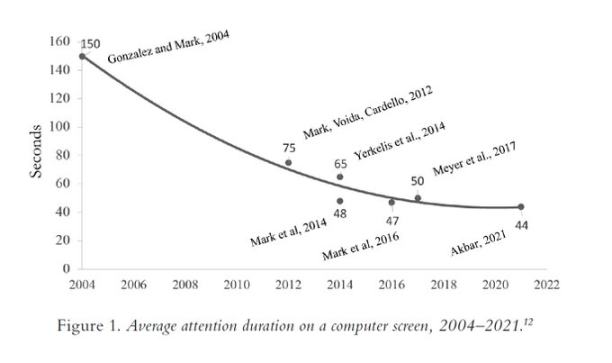
每次中断后,平均需要约 23 分钟才能重新进入深度专注状态。

这一数据表明,我们越是试图通过增加信息和信号来捕获注意力,就实际上越是在削弱它。

心理学家将这种现象称为「定向注意力疲劳」。这是大脑为了保持专注而不得不持续过滤干扰时所出现的疲惫感。

注意力的心理学

关于注意力,存在许多心理学研究和悖论。

查尔斯·古德哈特曾说过:「当一个指标成为目标时,它就不再是一个好指标。」
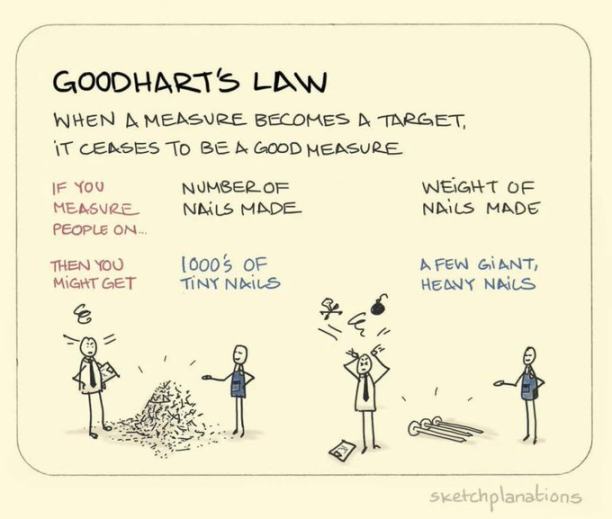
Kaito 的目标是通过衡量注意力来设立奖励机制。但一旦注意力本身成为目标,Kaito 的衡量就失去了意义。
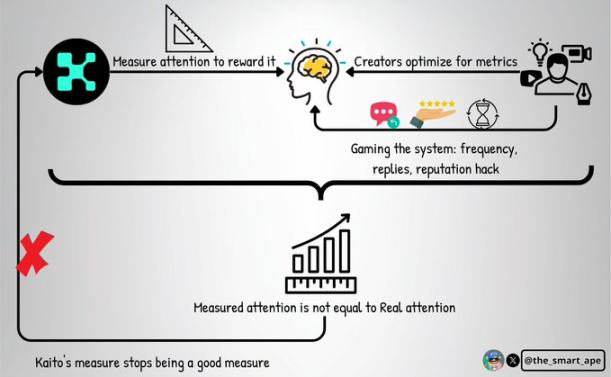
还有大量研究表明,当外在奖励取代内在动机时,创造力和真实的参与度会下降。在 Kaito 的案例中,奖励明显降低了真实性。

其独特之处在于,Kaito 的奖励系统具有高度成瘾性,很像赌场游戏。

它让创作者持续参与,但也导致疲劳和依赖,从而削弱了集体的注意力。

Kaito 的承诺

Kaito 对创作者具有成瘾性并不令人意外,它通过一种游戏化的体验分发可观的奖励。Kaito 已向超过 20 万个钱包分发了超过 1.1 亿美元(不包括其自身的空投)。
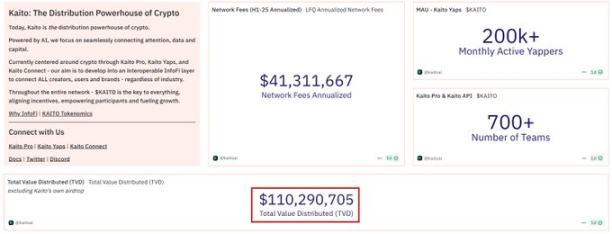
一些活动让个别创作者赚取了超过 20 万美元。

但恰恰是这种规模的激励在扼杀注意力。由于有如此多的资金和奖励,创作者被迫优化发帖频率、回复策略和互动战术,而不是培养深度思考习惯。

再加上 X 上的帖子生命周期只有约 80 分钟,之后互动量急剧下降。这带来了高频率发帖的额外压力。一些创作者仅为了获取心智份额,在一个月内就一个项目发布 200 多条帖子。

结果,读者被重复的内容轰炸,变得麻木,并失去兴趣,即使这些信息可能是有用的。

我认识很多人,最终在 Kaito 活动期间选择屏蔽项目名称,只是为了不让它们出现在自己的信息流中。

注意力的扼杀

Kaito 上的排行榜也无济于事,我自己就亲身体验过这一点。

当你排名靠前时,你会觉得自己必须保持住,因此你迫使自己进入一种疲惫的节奏以维持排名。这是一种心理作用:你已经想象着自己将获得的奖励。

这确实感觉像赌场。你永远不知道你会得到多少。有时很慷慨,有时令人失望,但总是让人上瘾。

它在 CT 中带来了很多快乐,但也带来了失望和沮丧。有一点是肯定的:几乎每个人都认真对待这个游戏。包括我自己!

这推动我们所有人去构建游戏策略、支持网络、互动优化等等。这不再关乎真实的注意力,而是关乎表演注意力以赢得游戏。

但我知道,这对读者来说是有代价的,内容流变得同质化和重复,因此原创性失去了价值。

Kaito 明白这一点

很明显,Kaito 理解所有这些,他们最近的更新证明了这一点。

但我认为他们可以做更多来减少「注意力扼杀」效应:

考虑实际阅读时间,

奖励论点的独特性,

鼓励引用来源的多样性,

通过发布延迟来惩罚垃圾信息。

我不知道他们是否已经做了这些,但他们也可以更重视那些能维持深度注意力的内容。

他们可以奖励更长篇、更综合的内容,而不仅仅是病毒式同质化片段。

问题不在于衡量,而在于长期保护注意力,而这要困难得多。

结论

如今,Kaito 以及更广泛的「可货币化注意力」叙事正处于顶峰。

但它也显示出明显的疲劳迹象。在这个生态系统中,没有什么能永远持续;可以肯定的是,这种叙事最终会逐渐消退。就像注意力本身一样,它是暂时的。

Kaito 真正的挑战是尽可能长时间地保持其活力,而这正是他们通过更新和开发试图做的事情。

但就像化石燃料一样,我们找到了一种货币化稀缺资源的方法,然而我们消耗它的速度可能快于我们补充它的速度。

需要明确的是,我自己也在 Kaito 上玩这个注意力游戏。即使我只选择少数我喜欢并感到乐观的项目,这个游戏对我仍然重要。

我追踪我在排行榜上的位置,检查我每天的 Yaps,监测我的帖子对心智份额的影响,等等。所以我有足够的资格来谈论它。

对创作者来说,这是一个心理要求高但有回报的游戏。但归根结底,无论我在 Kaito 上的结果如何,我都试图退后一步,提醒自己真正重要的是继续提供价值,无论指标怎么说。

Похожее

China's AI Fronts: From Yan'an to Midway

This article analyzes the competitive landscape of China's AI industry through a dual-front war analogy: the "Eastern Front" of business model competition and the "Western Front" of global strategic positioning. **The Eastern Front: The Scramble for Supply Lines and Monetization** The "Eastern Front" examines the contrasting strategies of three Chinese tech giants—Tencent, Alibaba, and ByteDance—in the face of AI's high marginal costs. Tencent integrates AI as a catalyst within its existing ecosystems (advertising, gaming, cloud) for monetization, prioritizing high-value scenarios over user growth. Alibaba bets on a full-stack, self-developed approach from chips to applications, aiming to control costs and ecosystem, though this requires immense patience and resources. ByteDance, with Doubao as its flagship, pursues a traditional traffic-driven, "super app" strategy but faces severe monetization challenges as its massive user base incurs unsustainable operational costs. The central challenge for all is building a reliable "supply line" (sustainable funding/profit) and achieving efficient monetization, moving beyond being mere "token factories." **The Western Front: "Preserving Land" vs. "Preserving People"** The "Western Front" frames a global strategic divergence. The U.S. model ("preserving land") focuses on closed-source, high-premium models (e.g., Anthropic) targeting lucrative enterprise markets. China's strategy ("preserving people") leverages open-source models (e.g., Alibaba's Qwen, DeepSeek) and extremely low pricing to attract global developers and capture long-tail markets, akin to a "surround the cities from the countryside" approach. The goal is to make Chinese models the default infrastructure, locking in future ecosystem value. However, the critical test is whether this open-source ecosystem can achieve a commercial闭环, converting developer adoption into tangible revenue (e.g., via cloud services), and bridging the monetization gap with Western models that charge for value, not just tokens. **Conclusion: The Long March from Factory to Brand** The article concludes that China's AI industry possesses technology, users, and scenarios but must integrate them to create and capture value. Its ultimate success depends on navigating both fronts: companies must establish sustainable monetization on the Eastern Front, while the industry's Western strategy must evolve from simply "preserving people" (developer adoption) to truly "preserving both people and land" — transforming open-source ecosystem dominance into commercial success and premium brand value. This journey from being a "token factory" to a "value highland" will require strategic patience and the ability to outlast competitors in a prolonged contest.

marsbit30 мин. назад

China's AI Fronts: From Yan'an to Midway

marsbit30 мин. назад

A History of Technological Evolution Powered by Electricity: Aluminum, Bitcoin, and AI

The journey from the Rockdale aluminum smelter in Texas to space-based data centers illustrates a core economic principle: whoever controls the cheapest electricity dictates the use of computing power. The evolution is clear. Old industrial sites with pre-existing, high-capacity power grids are being repurposed. In Rockdale, a former Alcoa plant now houses vast Bitcoin mining rigs, which are increasingly being replaced by AMD chips for AI training. The logic is purely financial: while smelting aluminum yields $0.17–0.27 per kWh and Bitcoin mining $0.05–0.11, AI inference on H100 GPUs generates $1.27–3.67 per kWh. Recent deals confirm the rush for power infrastructure. Riot Platforms leases space to AMD; TeraWulf bought an old Kentucky aluminum plant for its grid; NYDIG secured a New York site for its cheap hydropower to mine Bitcoin. As AI giants like Anthropic, Microsoft, Google, and Amazon aggressively expand, they now directly compete with crypto miners for the same industrial power resources, often outbidding them. This has led to a decline in Bitcoin's global hash rate and a wave of miner conversions to AI data centers. This "digital resource curse" extends globally. Gulf nations, long offering subsidized power to attract heavy industry like aluminum, are now pivoting to become AI and cloud computing hubs—exporting computational power instead of physical commodities. Similarly, Bhutan halted its sovereign Bitcoin mining to sell hydropower directly to India for a steadier return. The frontier is space. Projects like Starcloud plan orbital solar-powered data centers, leveraging constant sunlight and natural cooling, with Bitcoin mining as a secondary use for surplus power. Even consumer brands are transforming; Allbirds shifted from footwear to AI infrastructure, causing its stock to surge. Meanwhile, crypto projects like Bittensor, Render, and Akash propose a decentralized alternative, creating markets to aggregate distributed, idle computing resources from individual hardware. The underlying infrastructure—the power grid—remains constant. As profit margins shift, the facilities built upon it will continue to evolve, from aluminum to Bitcoin to AI and beyond, always chasing the highest yield per kilowatt-hour, whether in Texas, Abu Dhabi, or low Earth orbit.

marsbit40 мин. назад

A History of Technological Evolution Powered by Electricity: Aluminum, Bitcoin, and AI

marsbit40 мин. назад

Conquering is easy, governing is hard: Polymarket must bow to regulations to plant its flag globally

Polymarket, a decentralized prediction market platform, faces significant regulatory hurdles in its global expansion. Its "permissionless" model, which bypasses traditional identity and financial controls, has led to widespread crackdowns. India recently blocked the site, categorizing it as illegal online gambling under new 2025 laws. Brazil also banned it and similar platforms, though it simultaneously authorized a regulated, investor-only version on its national exchange. Across Europe, countries like France, Portugal, and the Netherlands are enforcing bans based on existing gambling and financial regulations. To enter key markets, Polymarket is adopting a pragmatic, compliant approach. In the U.S., it paid a $1.12 million fine, acquired a CFTC-licensed exchange, and now operates a regulated, KYC-mandatory platform for American users. It also secured a major investment from Intercontinental Exchange (ICE), which will distribute its prediction data to institutional investors. In Japan, where gambling laws are strict, Polymarket has begun a long-term lobbying effort, aiming for legalization by 2030 through building institutional partnerships and community presence. Despite these challenges, the prediction market industry is booming, with global volume projected to surge from $51 billion to potentially $1 trillion by 2030. Polymarket's core dilemma remains: adapting its decentralized, anonymous model to fit within sovereign regulatory frameworks focused on licensing, consumer protection, and anti-money laundering rules. Its survival in each market depends on navigating this complex political and legal landscape.

marsbit43 мин. назад

Conquering is easy, governing is hard: Polymarket must bow to regulations to plant its flag globally

marsbit43 мин. назад

It's Easier to Conquer than to Govern: Polymarket Must Bend to Every Rule to Plant Its Flag Globally

Polymarket, a decentralized prediction market platform, is facing significant regulatory hurdles as it expands globally, illustrating the tension between permissionless, crypto-native platforms and national legal frameworks. The platform, which allows users to bet on event outcomes, was recently blocked in India under new online gambling laws and faces similar outright bans in Brazil and Ukraine, the latter citing moral objections to wagering on active war events. In Europe, countries like France, the Netherlands, and the UK are restricting access by enforcing existing gambling and financial derivatives regulations, forcing Polymarket to geo-block users or operate in view-only modes. To navigate this complex landscape, Polymarket is adopting a market-by-market, compliant strategy. In the U.S., it paid a $1.4 million CFTC fine, acquired a licensed exchange (QCEX) for $112 million, and now operates a regulated U.S. entity with strict KYC, abandoning anonymity. It also secured a major investment from Intercontinental Exchange (ICE), which will distribute its prediction data to institutional investors. In Japan, a high-potential market, it has begun a long-term lobbying effort aiming for legalization by 2030, acknowledging the country's strict anti-gambling laws and slow regulatory processes. The article concludes that while the global prediction market is growing rapidly—projected to reach $2.4 trillion by 2030—Polymarket's core challenge is transforming its decentralized model to fit sovereign regulatory systems built on licensing, consumer protection, and anti-money laundering rules. Its survival depends on proving its legitimacy in each jurisdiction.

链捕手47 мин. назад

It's Easier to Conquer than to Govern: Polymarket Must Bend to Every Rule to Plant Its Flag Globally

链捕手47 мин. назад

Торговля

Спот
Фьючерсы

Популярные статьи

Как купить KAITO

Добро пожаловать на HTX.com! Мы сделали приобретение Kaito (KAITO) простым и удобным. Следуйте нашему пошаговому руководству и отправляйтесь в свое крипто-путешествие.Шаг 1: Создайте аккаунт на HTXИспользуйте свой адрес электронной почты или номер телефона, чтобы зарегистрироваться и бесплатно создать аккаунт на HTX. Пройдите удобную регистрацию и откройте для себя весь функционал.Создать аккаунтШаг 2: Перейдите в Купить криптовалюту и выберите свой способ оплатыКредитная/Дебетовая Карта: Используйте свою карту Visa или Mastercard для мгновенной покупки Kaito (KAITO).Баланс: Используйте средства с баланса вашего аккаунта HTX для простой торговли.Третьи Лица: Мы добавили популярные способы оплаты, такие как Google Pay и Apple Pay, для повышения удобства.P2P: Торгуйте напрямую с другими пользователями на HTX.Внебиржевая Торговля (OTC): Мы предлагаем индивидуальные услуги и конкурентоспособные обменные курсы для трейдеров.Шаг 3: Хранение Kaito (KAITO)После приобретения вами Kaito (KAITO) храните их в своем аккаунте на HTX. В качестве альтернативы вы можете отправить их куда-либо с помощью перевода в блокчейне или использовать для торговли с другими криптовалютами.Шаг 4: Торговля Kaito (KAITO)С легкостью торгуйте Kaito (KAITO) на спотовом рынке HTX. Просто зайдите в свой аккаунт, выберите торговую пару, совершайте сделки и следите за ними в режиме реального времени. Мы предлагаем удобный интерфейс как для начинающих, так и для опытных трейдеров.

266 просмотров всегоОпубликовано 2025.02.21Обновлено 2025.03.21

Как купить KAITO

Обсуждения

Добро пожаловать в Сообщество HTX. Здесь вы сможете быть в курсе последних новостей о развитии платформы и получить доступ к профессиональной аналитической информации о рынке. Мнения пользователей о цене на KAITO (KAITO) представлены ниже.

活动图片