30 Years After Being Crushed by AI, People Have Fallen Back in Love with Chess

marsbitОпубликовано 2026-08-17Обновлено 2026-08-17

Введение

On May 11, 1997, IBM's "Deep Blue" defeated chess champion Garry Kasparov, marking the first time a machine triumphed in a top-level intellectual game. The narrative of human defeat by AI seemed cemented when AlphaGo beat Lee Sedol in Go in 2016, a game once considered AI's final frontier. Yet, nearly 30 years after AI's dominance began, chess is experiencing unprecedented popularity. Chess.com boasts over 250 million registered users and 10 million daily active players. Its CEO, Erik Allebest, attributes this resurgence to several waves: the pandemic, the Netflix series *The Queen's Gambit*, and viral AI chess bots like "Mittens" on social media. Crucially, each surge left a permanently higher user base. The key insight is that AI liberated the game. When machines unequivocally became the best, the pressure to "win" as the ultimate human was removed. Chess returned to its core: the intrinsic joy of play—the thrill of a tactical combo, the tension of a time scramble, the curiosity of post-game analysis. AI, now serving as an always-available coach and anti-cheat tool, became infrastructure that enhanced rather than killed the experience. In contrast, Go, deeply rooted in East Asian elite culture and often pursued for mastery and status, suffered a "collapse of meaning" at the professional level after AlphaGo. Players began mimicking AI moves, erasing distinctive styles and narrative. While some Go players gained fame as online personalities, it didn't translate to widespre...

May 11, 1997, New York.

IBM's supercomputer "Deep Blue" defeated world chess champion Garry Kasparov 3.5 to 2.5 in a six-game match.

This was the first time humanity lost to a machine in the highest arena of intellectual games.

The final game of that match lasted only 19 moves. Kasparov made a rare mistake in a classic opening, and Deep Blue precisely seized the opportunity, swiftly pushing the position towards an irrecoverable state.

At the end, Kasparov abruptly stood up and left the chessboard, his face filled with shock and anger. He later publicly accused IBM of using human chess players behind the scenes, refusing to accept the result.

That day, the whole world was discussing the same question—In the face of machines, does human intelligence still have dignity?

Fast forward to March 2016, Seoul.

Google DeepMind's AlphaGo defeated Korean Go 9-dan Lee Sedol 4 to 1. This impact was greater than Deep Blue's because Go was seen as "the final bastion of human wisdom." The number of possible Go board positions far exceeds the total number of atoms in the universe. Experts had previously predicted AI would need at least another decade to defeat top human Go players. Lee Sedol's "divine move" in the fourth game, with a one-in-ten-thousand chance, briefly bewildered AlphaGo, securing humanity's only win.

Later, people realized, this might have been humanity's last victory over a Go AI.

May 2017, Wuzhen. AlphaGo swept the then world number one Ke Jie 3-0. During the second game's mid-game, Ke Jie slumped over the table. After the match, he said something that silenced everyone: "Last year, I thought its style was close to a human's, but today..."

"It plays like the god of Go."

That same year, DeepMind announced AlphaGo's retirement, shifting to more "useful" scientific research fields.

The war on the board was no longer worth fighting for the machine.

From Deep Blue to AlphaGo, these human-machine duels formed a clear and tragic narrative—Machines grew stronger, humans retreated step by step, and these ancient intellectual games seemed to be sentenced to death by AI.

But the real story was as surprising as a chess game.

In 2026, nearly 30 years after chess was crushed by AI, the world's largest chess platform, Chess.com, boasted 250 million registered users, over 10 million daily active users, and annual revenue exceeding 200 million US dollars.

Chess not only didn't die but was at the absolute peak of popularity in the game's thousands of years of history.

How could a game completely "solved" by machines attract more and more players?

Heaven-Sent Traffic

Chess.com's CEO, Erik Allebest, recently recounted the story of people falling back in love with chess on a podcast.

In 2005, he and a friend bought the chess.com domain for $56,000 at a bankruptcy auction. Almost every investor told him it was an "uninvestable niche hobby." His classmates at Stanford Business School also advised him to "do something serious."

No one believed chess could become a big business.

True to expectations, Erik failed to raise a single cent. Relying on savings from selling a previous company and a small loan from a friend's mom, the two started building the product. It launched in 2007, began charging membership fees 18 months later, and quickly turned profitable.

Chess.com's main business is very simple | Image source: Chess.com

For the next twenty years, Chess.com grew at a "hire as many people as we can afford" pace, never considering fundraising again.

Interestingly, three small events in the few years before this AI boom completely revitalized Erik's chess site.

The first wave was in 2020.

The COVID-19 pandemic locked everyone at home, and Netflix's hit series "The Queen's Gambit" premiered the same year. A story about a genius female chess player ignited global interest in chess, and Chess.com's registrations skyrocketed. But Allebest's initial reaction wasn't excitement; it was worry—"Will this be like buying treadmills or making sourdough during the pandemic, just a passing fad?"

The second wave was even more unexpected.

In 2023, chess exploded on short-video platforms. A large number of chess content creators emerged on TikTok and YouTube Shorts. Chess.com launched an AI bot called Mittens—an adorable-looking cartoon kitten with terrifying chess skills capable of crushing the vast majority of human players.
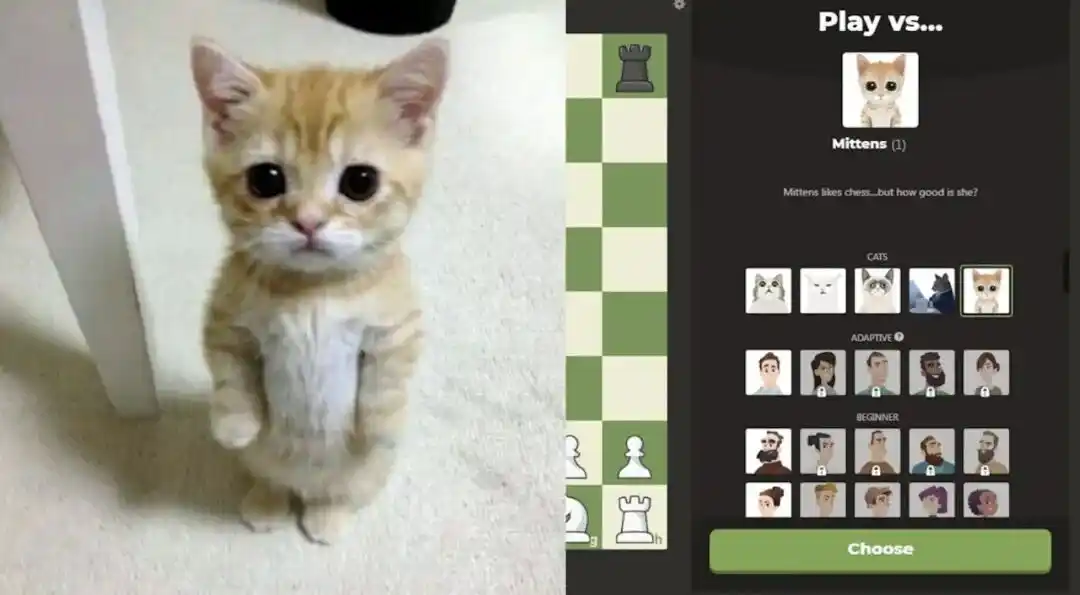
Chess.com's chess AI Mittens the cat is "cute and quiet" but a master at chess | Image source: Chess.com

This cat went viral on social media, with "I got beaten by a cat" becoming a global meme. The same year, a cheating scandal involving young player Hans Niemann made headlines in major news outlets, pushing chess into a broader public view.

A key phenomenon Allebest described was—after each wave receded, the user baseline was significantly higher than the previous one.

This wasn't a flash-in-the-pan traffic spike but step-like growth. The baseline after the 2020 surge, the baseline after the 2023 surge—each was higher than the last.

Why could the chess site retain people after each traffic explosion? Because chess isn't just something that was "recommended"; people discovered it was genuinely fun.

This leads to a more fundamental question.

Winning Isn't the Goal; Playing Is

In the podcast, Allebest said a widely quoted line—People want to acquire human skills, even if machines far surpass humans at that thing; people appreciate outstanding human artistry, even if machines can do it better.

This statement is good but can be taken a step further.

A machine's logic for playing chess is purely instrumental.

For Stockfish or any chess engine, every move is a means to an end—winning. It has no "experience." It doesn't feel excitement when conceiving a brilliant move mid-game, doesn't feel frustration when checkmated, doesn't have an "aha!" moment during post-game analysis.

Winning is just winning, merely a change in strings of numbers.

But humans playing chess is a completely different matter.

An amateur player spending 10 minutes on a blitz game on Chess.com doesn't care at all how Stockfish would rate their moves. They care about that little thrill of "I saw a tactical combination my opponent didn't," the heart-pounding tension during time pressure, the curiosity to analyze the game after a loss to figure out "which move was actually wrong."

These things are the entire meaning of the game itself, unrelated to winning or losing. Put more succinctly—the reward of the game is playing the game itself.

And the existence of AI precisely amplifies this purity.
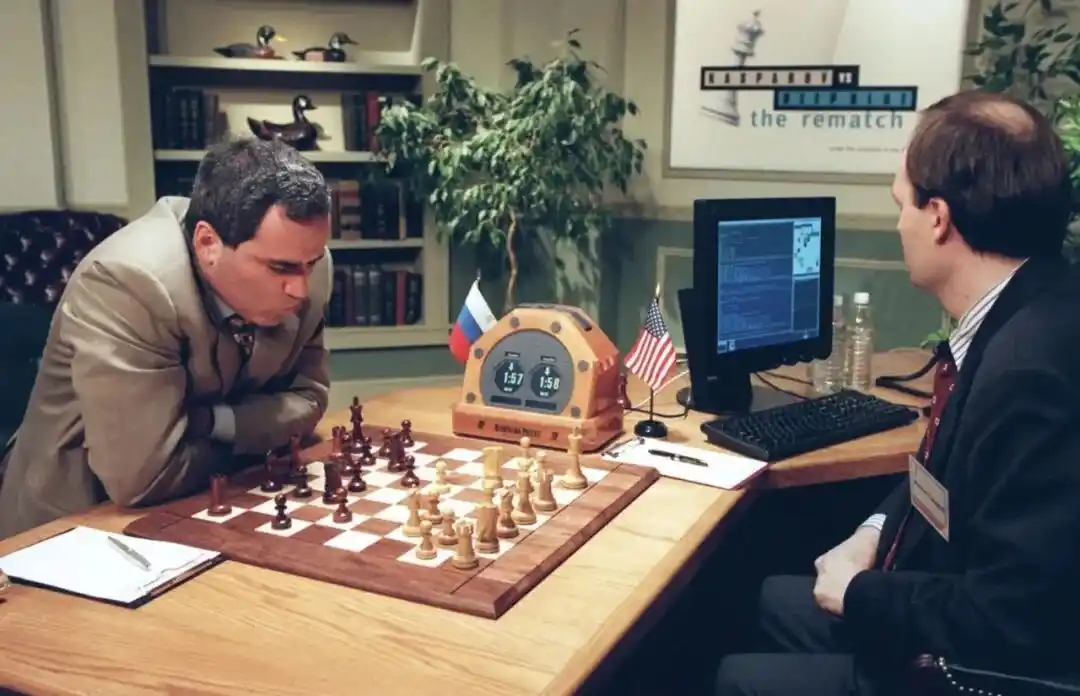
IBM's Deep Blue defeating chess master Kasparov over 30 years ago | Image source: Britannica

Before Deep Blue defeated Kasparov, the chess world was shrouded in a heroic narrative. Who was the world's best? Could humanity preserve its dignity? The chess championship matches between the US and USSR during the Cold War were even imbued with ideological weight.

The act of "winning" was overloaded with too much meaning.

But when AI completely ended the question of "who is the strongest," a strange liberation occurred.

Since humans can never beat machines, human vs. human matches are no longer about "competing for the strongest," but return to the game's most primitive state—I play a game with you simply for fun.

Once the anxiety about winning and losing is removed, the pure joy of the game is released.

Simultaneously, AI's role in the chess ecosystem is increasingly becoming like "infrastructure."

Chess.com is using AI as a "coach in your pocket"—analyzing your recent games, telling you which areas need improvement, and even allowing conversation with the AI coach. Previously, improving your game meant hiring a human coach; now, you have a teaching system ready on your phone. AI is also used for anti-cheating—analyzing move patterns to judge if a player is using engine assistance.

Even AI products like the Mittens Bot have themselves become "content" attracting new users.

AI didn't kill chess; it became a tool for more people to fall in love with chess.

Go: The Silent Mirror

Unfortunately, the same story has not repeated itself in the world of Go.

Three years after AlphaGo defeated Lee Sedol, Lee Sedol announced his retirement.

He said the paradigm shift brought by AI meant the end of Go's "art," and he could no longer find joy in it. The "joseki" (standard patterns) accumulated over two thousand years in Go, standard moves regarded as truth by generations of players, were proven by AI to be mere solidified biases. The "san-san invasion," once considered "rude" and forbidden to teach children, quickly became standard practice for professional players after AlphaGo used it without hesitation.

A deeper change occurred at the cultural level of professional Go.

Before AI, professional players had distinctive styles; fans could identify who was playing just by looking at the game record. Go was thus seen as an art. After AI, everyone is memorizing AI moves, competing to see who has a higher "AI agreement rate." The stories in Go commentary disappeared, replaced by win-rate graphs and agreement rate data.
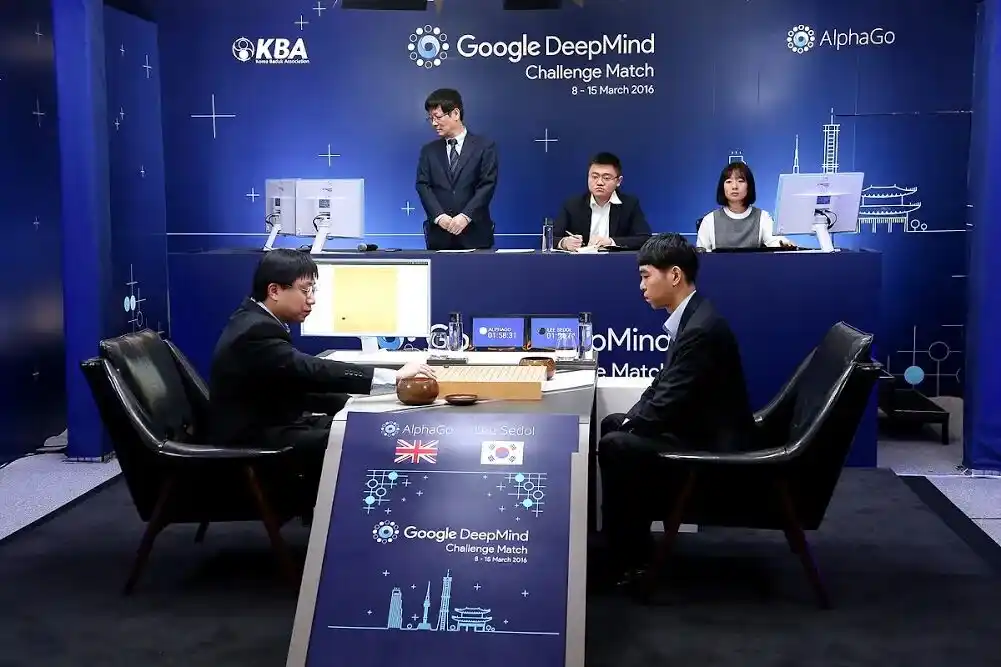
10 years ago, Google's AlphaGo defeated the then-top Korean player Lee Sedol, almost breaking Go's "backbone" | Image source: Google

Korean Go journalist Ahn Sung-moon said something poignant—"Heroic figures are no longer created; we only hear about who ranks in what position."

Similarly crushed by AI, chess is booming, while Go has experienced a "collapse of meaning" at the professional level.

The root cause isn't the difference in the games' complexity but in their community structures.

Chess in the Western world was already a popular game—old men playing in parks, school clubs, speed chess in pubs, with a base of hundreds of millions of amateur players who "just like playing." No matter how strong AI gets, it doesn't affect this group's motivation.

Go's positioning in East Asia is completely different. It's part of the "Four Arts" (qin, qi, shu, hua), an elite accomplishment and educational tool. Chinese children learning Go often follow the same logic as learning the piano—parent-driven, grading/ranking exams, with utilitarian purposes first.

When a game's users are primarily "there for the result," and AI destroys the meaning of that result, the game loses its support.

The popularity of Ke Jie and Zhan Ying on Bilibili did bring traffic to Go. But honestly, the audience is more watching the players' personal charm and "abstract" interactions than watching Go itself.

This is "the influencer-ization of players," not "the popularization of Go."

Tens of millions of games happen daily on Chess.com; that's real "people playing chess." The barrage frenzy in Go livestreams is closer to entertainment consumption.

This article isn't meant to praise chess and disparage Go, but to see some fundamental questions through Chess.com's success.

In an era where AI will crush more and more human skills, a question worth pondering repeatedly is—What is our motivation for doing something? Is it to win, or to play?

Those things where "the process itself is the reward"—chess, playing music, writing, painting, running, cooking—perhaps won't die out because AI is stronger. Instead, they might become purer once the pressure to "win" is lifted.

And those things we were only doing "for the result," AI will indeed take them away. In a sense, AI *should* take them away.

Chess's prosperity in the AI era tells us that humans won't stop doing something just because machines are better.

What truly determines whether something survives is never "who does it better," but "what humans are actually enjoying when they do it."

This article is from the WeChat public account "GeekPark" (ID: geekpark), author: Techno King, editor: Jing Yu


Трендовые криптовалюты

Связанные с этим вопросы

QAccording to the article, how did the chess platform Chess.com manage to thrive despite AI surpassing humans in chess?

AChess.com thrived by transforming AI into an infrastructure tool that enhances the user experience, such as offering an AI coach, anti-cheating analysis, and engaging AI bots like Mittens. Crucially, the article argues that once AI removed the pressure of 'winning' from human competition, players returned to enjoying the game for its intrinsic, playful rewards rather than the outcome.

QWhat key difference does the article highlight between the impact of AI on the international chess community and the Go community?

AThe article highlights that the international chess community, with a large base of amateur players who play for enjoyment, has grown in popularity. In contrast, the Go community, particularly in East Asia, was more focused on elite mastery, ranking, and artistic tradition. AI's dominance eroded the 'meaning' and artistic narratives in professional Go, leading to a crisis of purpose among top players, while chess's amateur base remained motivated by the fun of playing itself.

QWhat was the significance of the Netflix series 'The Queen's Gambit' and the Mittens AI bot for Chess.com's growth?

A'The Queen's Gambit' and the Mittens AI bot were pivotal events that provided massive, viral exposure for chess. The TV series sparked global interest during the COVID-19 lockdowns, while the Mittens bot, a cute but brutally strong AI cat, became a social media meme. Each event led to a surge in users, and importantly, each surge left Chess.com's user base at a permanently higher level than before.

QHow does the article describe the fundamental difference between how AI and humans approach a game like chess?

AThe article states that AI approaches chess with a purely instrumental, goal-oriented logic where every move is a means to the single end of winning. Humans, however, play for the experience itself—the excitement of a clever tactic, the tension of a time scramble, the curiosity in analysis after a loss. For humans, the reward is in the act of playing, not just the final result.

QWhat broader conclusion does the article draw about human activities in the age of AI from the story of chess's resurgence?

AThe article concludes that activities whose primary reward is the process itself—like playing games, making art, or cooking—will not die out because AI can do them 'better.' Instead, they may become more pure and enjoyable once the pressure to be the 'best' is removed. Activities pursued purely for an external result, however, are more likely to be taken over by AI, which the article suggests is a natural and acceptable progression.

Похожее

Южнокорейские инвесторы вернулись на рынок! Объём торгов побил рекорды, и этот альткоин достиг вершины!

Стимулированные стремительным ростом рынка криптовалют, в особенности биткоина, южнокорейские инвесторы вернулись к активной торговле. Крупнейшая биржа страны Upbit зафиксировала рекордный рост объема торгов на 273% до $1,84 млрд за сутки, достигнув максимума с середины марта. Наибольшим спросом пользуется XRP, который лидирует по объему торгов как на Upbit ($418,9 млн), так и на второй по величине бирже Bithumb, где общий объем торгов вырос на 132,9%. Аналитик Мин Чжон из Presto Research отмечает, что после медвежьего рынка 2025-2026 годов южнокорейские инвесторы были сфокусированы на акциях, но текущий рост биткоина возродил их интерес к криптовалютам. По его мнению, если восходящий тренд сохранится, приток капитала из Южной Кореи может значительно усилиться, так как местные инвесторы ориентированы на прибыль и могут активно поддерживать дальнейший рост рынка.

cryptonews.ru49 мин. назад

Южнокорейские инвесторы вернулись на рынок! Объём торгов побил рекорды, и этот альткоин достиг вершины!

cryptonews.ru49 мин. назад

Кошелек Bitcoin.com добавляет нативную поддержку TRON, предоставляя миллионам пользователей доступ к TRX и USDT-TRC20

«Bitcoin.com Wallet» — один из самых популярных криптокошельков в мире — теперь поддерживает сеть TRON нативно. С 21 августа 2026 года пользователи могут напрямую в приложении хранить, отправлять, обменивать и покупать TRX и USDT в формате TRC-20. Это позволяет им легко взаимодействовать с контрагентами, которые запрашивают платежи в USDT на сети TRON, без необходимости использовать мосты или отдельные кошельки. Как отмечает CEO Bitcoin.com Корбин Фрейзер, интеграция закрывает важный пробел, поскольку запросы на USDT в сети TRON стали чрезвычайно распространёнными. TRON является ведущей сетью для расчётов в стейблкоинах, с объёмом USDT более $90 млрд и ежедневным трансфером на $23 млрд. Основатель TRON Джастин Сан подчеркнул, что интеграция делает платежи в стейблкоинах быстрее и доступнее для миллионов пользователей Bitcoin.com Wallet. Функциональность TRON теперь встроена в iOS, Android и веб-версии кошелька, который уже используется для повседневных криптоопераций. Bitcoin.com Wallet — это некастодиальный мультичейн-кошелёк, предоставляющий доступ к Bitcoin, Bitcoin Cash и другим ведущим криптовалютам. TRON DAO — это управляемое сообществом децентрализованное автономное сообщество, развивающее блокчейн-инфраструктуру. На момент августа 2026 года в сети TRON зарегистрировано более 399 млн аккаунтов и проведено свыше 15 млрд транзакций.

cointelegraph59 мин. назад

Кошелек Bitcoin.com добавляет нативную поддержку TRON, предоставляя миллионам пользователей доступ к TRX и USDT-TRC20

cointelegraph59 мин. назад

Flowra запускает открытый аукцион ордеров для построения блоков в сети Solana

Экосистема Solana переживает серьёзные изменения в инфраструктуре. Компания Flowra запустила новую систему построения блоков для Solana под названием Open Orderflow Auction (OOA). Эта система предназначена для увеличения конкуренции в упорядочивании транзакций и передачи валидаторам большей доли стоимости, генерируемой MEV (максимальной извлекаемой стоимостью). В настоящее время значительная часть рынка упорядочивания транзакций и MEV в Solana остаётся сильно сконцентрированной, многие валидаторы полагаются на закрытые каналы. Новая система открытых аукционов позволяет зарегистрированным поисковикам (searchers) конкурировать за включение транзакций через открытый аукцион. По словам Flowra, такой подход может улучшить ценовое обнаружение и дать валидаторам больше возможностей для заработка на спросе на блок-пространство Solana. Предварительные тесты показали многообещающие результаты: на одном из валидаторов использование Flowra увеличило количество вычислительных единиц на блок на 20.6%, также были зафиксированы более высокие комиссии за блок по сравнению с аналогичным ПО для валидаторов. Кроме того, Flowra представила Programmable Block Policy, предоставляющую валидаторам больше контроля над включением транзакций в блоки, что полезно для соблюдения регуляторных требований. Компания также объявила о сотрудничестве с провайдером комплаенс-инфраструктуры Honeypot для внедрения проверок на санкции и риски на уровне построения блоков. Подход Flowra вдохновлён конкурентным рынком построения блоков в Ethereum. Компания считает, что высокая пропускная способность и низкая задержка Solana могут поддержать аналогичную модель. Система OOA уже доступна для валидаторов и поисковиков в экосистеме Solana, и ожидается её более широкое внедрение по мере роста участия.

TheNewsCrypto1 ч. назад

Flowra запускает открытый аукцион ордеров для построения блоков в сети Solana

TheNewsCrypto1 ч. назад

Besu раскрывает пять уязвимостей, выявленных CertiK и исправленных в последнем обновлении безопасности

Клиент Ethereum Besu раскрыл подробности пяти уязвимостей, обнаруженных компанией по безопасности блокчейна CertiK. Все они были устранены в версии 26.7.1, выпущенной 27 июля. Проблемы, имевшие уровень серьезности от незначительных до важных, были исправлены до публикации их технических деталей 14 августа. Besu настоятельно рекомендовал операторам нод обновиться. Уязвимости затрагивали обработку анонсов блоков, буферизацию предложений консенсуса, подписки WebSocket и создание фильтров JSON-RPC. При определенных конфигурациях они могли привести к исчерпанию памяти или потоков ноды, влияя на её доступность или обработку консенсуса. Выпуск 26.7.1 также представил новые контроли: настраиваемый максимум активных фильтров JSON-RPC с таймаутом и ограничение на активные подписки WebSocket. Уязвимости были выявлены в ходе независимого исследования CertiK с использованием методологии тестирования Chain Scan. Версия 26.7.1 остается актуальным патчем для этих проблем.

TheNewsCrypto1 ч. назад

Besu раскрывает пять уязвимостей, выявленных CertiK и исправленных в последнем обновлении безопасности

TheNewsCrypto1 ч. назад

Момент GPT-3 для роботов потрясает Кремниевую долину: 0 строк кода, мгновенное понимание при демонстрации, инвестиции Хуана Жэньсюня и Ли Фэйфэй

Компания Generalist AI представила роботизированную базовую модель GEN-1.5, демонстрирующую способность к контекстному обучению в физическом мире. После 8-месячного предварительного обучения на больших данных модель может выполнять новые задачи, увидев лишь одну короткую демонстрацию (3-12 секунд) без дополнительного программирования или тонкой настройки. В тестах на 10 задачах (открывание банок, застегивание молний и др.) одноразовая демонстрация обеспечила средний успех в 59%, а после 5 минут данных (50 демонстраций) — 83%. Ключевая особенность —涌现ление способностей: модель спонтанно адаптирует стратегии к новым инструментам (например, использует совок вместо щетки) и исправляет ошибки, хотя этому не обучалась явно. Исследователи сравнивают этот момент с выпуском GPT-3, отмечая появление «Scaling Law» для воплощенного ИИ: с ростом данных обобщающая способность модели увеличивается. Выпуск GEN-1.5 совпал с всплеском активности в отрасли: IPO компании Unitree, Всемирная робототехническая конференция и стартапы, привлекающие крупные инвестиции (Generalist AI получила $4 млрд при участии Дженсен Хуана и Фей-Фей Ли). Технология обещает резко снизить порог использования роботов, переводя обучение с месяцев программирования на секунды демонстрации, что может ускорить их внедрение в реальных сценариях.

marsbit1 ч. назад

Момент GPT-3 для роботов потрясает Кремниевую долину: 0 строк кода, мгновенное понимание при демонстрации, инвестиции Хуана Жэньсюня и Ли Фэйфэй

marsbit1 ч. назад

Торговля

Спот

Популярные статьи

Как купить PEOPLE

Добро пожаловать на HTX.com! Мы сделали приобретение ConstitutionDAO (PEOPLE) простым и удобным. Следуйте нашему пошаговому руководству и отправляйтесь в свое крипто-путешествие.Шаг 1: Создайте аккаунт на HTXИспользуйте свой адрес электронной почты или номер телефона, чтобы зарегистрироваться и бесплатно создать аккаунт на HTX. Пройдите удобную регистрацию и откройте для себя весь функционал.Создать аккаунтШаг 2: Перейдите в Купить криптовалюту и выберите свой способ оплатыКредитная/Дебетовая Карта: Используйте свою карту Visa или Mastercard для мгновенной покупки ConstitutionDAO (PEOPLE).Баланс: Используйте средства с баланса вашего аккаунта HTX для простой торговли.Третьи Лица: Мы добавили популярные способы оплаты, такие как Google Pay и Apple Pay, для повышения удобства.P2P: Торгуйте напрямую с другими пользователями на HTX.Внебиржевая Торговля (OTC): Мы предлагаем индивидуальные услуги и конкурентоспособные обменные курсы для трейдеров.Шаг 3: Хранение ConstitutionDAO (PEOPLE)После приобретения вами ConstitutionDAO (PEOPLE) храните их в своем аккаунте на HTX. В качестве альтернативы вы можете отправить их куда-либо с помощью перевода в блокчейне или использовать для торговли с другими криптовалютами.Шаг 4: Торговля ConstitutionDAO (PEOPLE)С легкостью торгуйте ConstitutionDAO (PEOPLE) на спотовом рынке HTX. Просто зайдите в свой аккаунт, выберите торговую пару, совершайте сделки и следите за ними в режиме реального времени. Мы предлагаем удобный интерфейс как для начинающих, так и для опытных трейдеров.

1.1k просмотров всегоОпубликовано 2024.04.12Обновлено 2026.06.02

Как купить PEOPLE

Обсуждения

Добро пожаловать в Сообщество HTX. Здесь вы сможете быть в курсе последних новостей о развитии платформы и получить доступ к профессиональной аналитической информации о рынке. Мнения пользователей о цене на PEOPLE (PEOPLE) представлены ниже.

活动图片