火币HTX“火伴1+1”对话交易大神:穿越牛熊的策略与思维

深潮TechFlowОпубликовано 2025-07-28Обновлено 2025-07-29

Введение

找到适合自己的操作节奏。


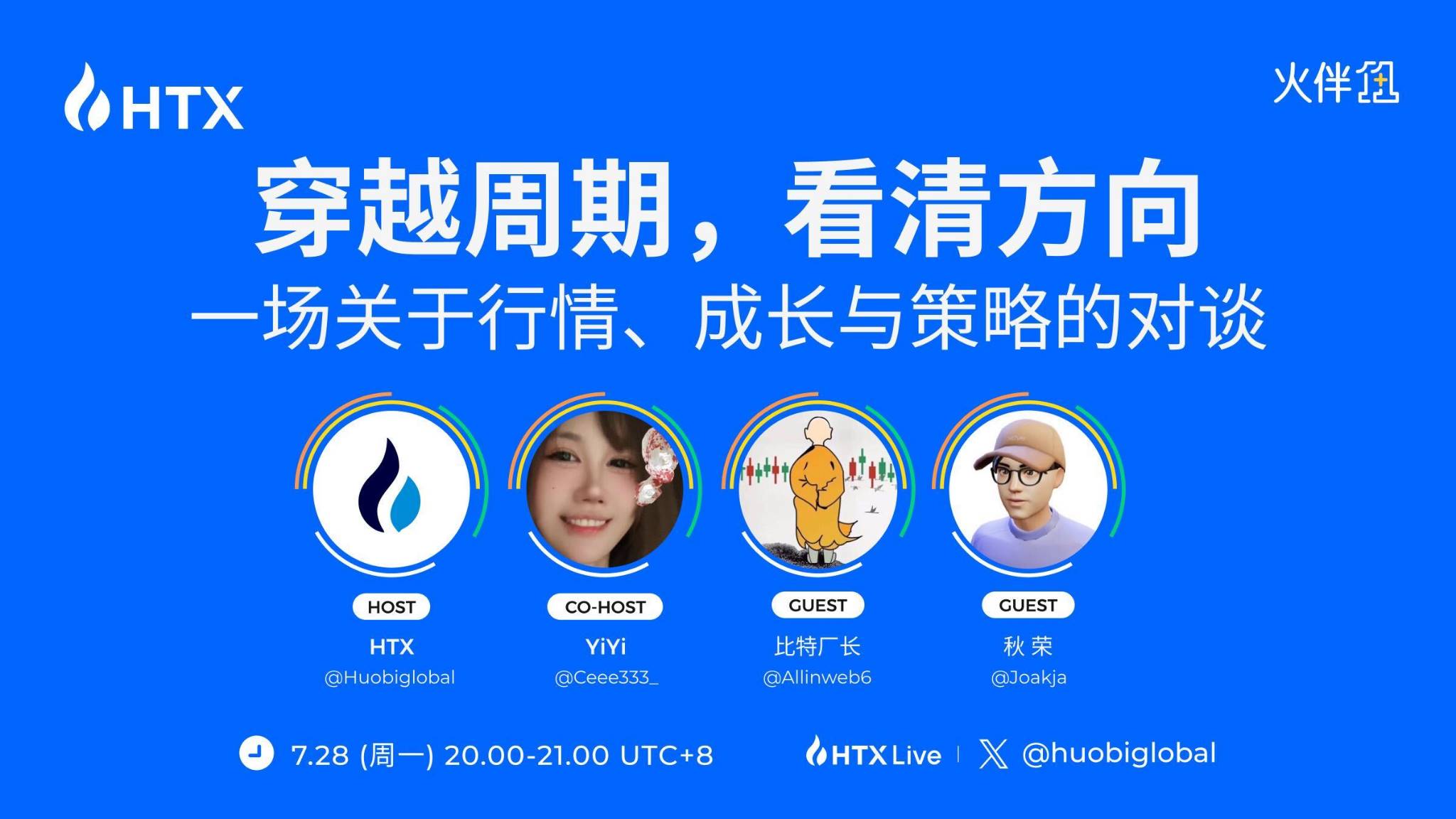
7月28日,火币HTX新一期“火伴1+1”以“穿越周期,看清方向:一场关于行情、成长与策略的对谈”为主题,邀请交易大神比特厂长、秋荣,分享了不同市场周期中的实战经验与思考。

市场周期中的交易哲学:保持理性,管理风险


对于行情判断,秋荣强调交易应立足于市场结构而非点位预测,核心在于严格的风险管理和策略执行。他认为,牛市结构的典型特征是“更高的高点与更高的低点”,一旦形成突破趋势通道,就应顺势而为。他建议投资者在明确的需求区间内布局,持有底部筹码,并在趋势发展中动态调整持仓结构。


秋荣表示,稳定币与RWA等叙事已经步入爆发期,建议关注生态增长潜力;同时,不推荐除比特币外的资产定投。


比特厂长指出当前阶段是“有仓者纠结是否卖出,无仓者犹豫是否追高”的震荡状态。他提醒投资者不应被短期波动干扰,应时刻管理好仓位与情绪。建议有仓者继续持有等待回调,而无仓者不宜盲目追高,始终保持理性节奏。


直播中,秋荣还回顾了312、519、FTX等黑天鹅事件,总结出成功交易的关键在于纪律、盈亏比与胜率的平衡,打造完善的交易系统,并在危机中敢于抄底。他提出交易的“不可能三角”:高胜率往往牺牲盈亏比,需通过量化逻辑和心态管理应对市场波动,保持动态调整。


比特厂长特别指出,很多投资者的亏损并非发生在熊市,而恰恰是在牛市行情中盲目加码所致。因此,在牛市保持理性、适当止盈、避免盲目挥霍,在熊市注重现金流管理、提高风险意识,是穿越牛熊的必修课。


交易策略:找到适合自己的操作节奏


直播中,比特厂长分享了自己的资产配置方案:80%的资金长期配置于比特币和以太坊,10%关注热点资产如Meme币,10%参与一级市场投资或撸毛。他习惯使用冷钱包进行存储,避免情绪干扰,坚定看好比特币的长期价值。


而秋荣更偏好中短线结合的趋势交易方式。他判断本周BTC和ETH将维持震荡走势,建议关注趋势明确、动能持续的板块,例如Solana生态。


秋荣还强调,严格仓位管理,将资金分为现货与合约,设置明确止盈止损点,通过分批操作降低风险。


秋荣坦言交易无捷径,每一个成熟的系统背后都建立在无数次亏损与试错中。他认为复制他人策略难以成功,因为交易节奏与盘感因人而异。唯有构建适合自身的交易逻辑,才能走得更远。


比特厂长也指出,盘感是经验与天赋的结合,不应盲目模仿他人。建议投资者尤其是新手投资者,结合自身资源与能力,选择适合的赛道进行深耕,逐步打磨出一套“自己的系统”。

Похожее

From Banning Doubao to Embracing Honor: Why Did WeChat Suddenly 'Change Its Face'?

The article explores the sudden shift in WeChat's strategy towards AI assistants from mobile phone manufacturers, transitioning from strict opposition to active collaboration. For over a year, WeChat fiercely resisted attempts by phone AI assistants (like ByteDance's Doubao in late 2025) to control its features via GUI automation ("simulated clicking"), citing security and data control concerns. This stance created a significant barrier for system-level AI integration. Now, Tencent has initiated A2A (Agent-to-Agent) partnerships with major phone brands like Honor, Xiaomi, OPPO, and vivo. This model allows a phone's system AI (e.g., Honor's YOYO) to parse a user's voice command and send a structured request directly to WeChat's own internal AI agent via secure APIs. WeChat then executes the action (e.g., sending a message) and returns the result. The article attributes Tencent's "change of face" to strategic pressure. While leading in social app usage, Tencent trails rivals like ByteDance and Alibaba in standalone AI app popularity. WeChat, with its vast mini-program ecosystem, is Tencent's key asset for an AI comeback. The upcoming WeChat AI agent aims to handle tasks like booking and payments within the app. However, phone system assistants remain the primary AI entry point for most users. The A2A collaboration allows Tencent to extend WeChat's AI reach to this crucial system layer while maintaining control over its core functions and data. For phone manufacturers, embracing A2A is a pragmatic move. The GUI route proved unviable due to WeChat's blocks. A2A offers a compliant path to integrate a vital service, enhancing their AI assistants' usefulness. It allows them to focus on developing their own AI ecosystems for other services while cooperating on WeChat access. The collaboration is framed as a mutual, strategic necessity: Tencent gains a distribution channel, and manufacturers gain a key functionality. The partnership relies on a "dual authorization" mechanism for security, requiring both user and app consent for each action. While questions about long-term data privacy practices remain, experts note A2A is more secure and compliant than GUI automation. Ultimately, this cooperation is seen as a tentative, calculated truce. Tencent's long-term goal is to make WeChat an AI-powered "service OS." Phone manufacturers aim to make their system AI the central user interface. Their paths may converge or clash in the future, but for now, the A2A deal represents the opening chapter in the battle for the AI-era user入口, driven by necessity and strategic calculus on both sides.

marsbit32 мин. назад

From Banning Doubao to Embracing Honor: Why Did WeChat Suddenly 'Change Its Face'?

marsbit32 мин. назад

On-Chain Figures on the Eve of Kickoff: 1.6 Billion Traded Before the World Cup Even Begins

"On-Chain Numbers on the Eve of the World Cup: $1.6 Billion Traded Before Kick-off" Analysis of on-chain markets before the 2026 FIFA World Cup reveals significant crypto integration into football. The most striking figure is the approximately **$1.6 billion** in total trading volume on the single "World Cup Winner" contract on the Polymarket prediction market platform, accumulated before a single match was played. This represents explosive growth for a sector whose annual volume surged from ~$16B in 2024 to ~$64B in 2025. The ecosystem is maturing beyond speculation. Key developments include: 1) **Infrastructure upgrades** like Polymarket's migration to native, regulated USDC stablecoin for settlements; 2) **Reliable data oracles**, such as Chainlink, being used to resolve real-world match outcomes on-chain; and 3) **Official recognition**, with FIFA appointing its first-ever "Prediction Markets" partner. Over 100 contracts now cover everything from the outright winner to individual match results and even non-sporting risks like venue relocation. This evolution marks a fundamental shift. While crypto firms are absent from FIFA's top-tier sponsor list, the technology has deeply penetrated the tournament's financial and predictive infrastructure through regulated stablecoin settlements, decentralized oracles, and new official partnership categories. The regulatory landscape remains complex and varies by jurisdiction, but on-chain markets for the World Cup are already a multi-billion-dollar reality.

marsbit1 ч. назад

On-Chain Figures on the Eve of Kickoff: 1.6 Billion Traded Before the World Cup Even Begins

marsbit1 ч. назад

From SpaceX's IPO to the Future of Crypto: Which Crypto Sectors Will Host the Trillion-Dollar Narrative?

From the SpaceX IPO, which targets a $750 billion raise at a $1.77 trillion valuation, we can extrapolate capital flow trends relevant to crypto. The focus shifts from speculative narratives to foundational infrastructure and real-world asset (RWA) integration. Key crypto sectors poised to benefit include: 1. **AI Infrastructure**: The narrative is moving from consumer-facing AI applications to underlying, scarce resources like compute power and decentralized GPU networks (e.g., TAO, RENDER, AKT, IO). These protocols are positioning as the essential "picks and shovels" providers for the AI economy. 2. **Real-World Assets (RWA)**: Beyond tokenized treasury bonds, RWA's future lies in on-chain equity and pre-IPO assets like SpaceX. This could democratize access to high-growth assets and reshape global capital flows, benefiting infrastructure projects like ONDO, LINK, and Plume that facilitate issuance, data, and liquidity. 3. **Core Financial Infrastructure**: Stablecoins, payment networks, and DePIN (Decentralized Physical Infrastructure Networks) are critical for settling the future on-chain economy. Their role expands from internal trading tools to foundational layers for global finance, AI systems, and real-world asset networks, leading to potential value reassessment. In summary, the next cycle may prioritize long-term infrastructure value—AI compute, asset tokenization networks, and settlement layers—over short-lived application hype, mirroring the broader market's shift towards funding the foundational systems of the future.

marsbit1 ч. назад

From SpaceX's IPO to the Future of Crypto: Which Crypto Sectors Will Host the Trillion-Dollar Narrative?

marsbit1 ч. назад

Торговля

Спот
Фьючерсы

Популярные статьи

Обсуждения

Добро пожаловать в Сообщество HTX. Здесь вы сможете быть в курсе последних новостей о развитии платформы и получить доступ к профессиональной аналитической информации о рынке. Мнения пользователей о цене на HTX (HTX) представлены ниже.

活动图片