The Silver Crisis: When the Paper System Begins to Fail

marsbitPublished on 2025-12-13Last updated on 2025-12-13

Abstract

Silver Crisis: When the Paper System Begins to Fail In December, silver became the standout performer in the precious metals market, surging from $40 to over $60 per ounce, hitting a historic high of $64.28 on December 12 before experiencing sharp declines. Year-to-date, silver rose nearly 110%, far outpacing gold’s 60% gain. The rally appears justified by fundamental factors: expectations of Fed rate cuts, strong industrial demand from solar, EV, and AI sectors, and declining global inventories. However, the surge lacks stability. Unlike gold, which is backed by central bank purchases, silver has almost no official reserves, making it an isolated asset with low market depth and high volatility. The real driver behind the price spike is a futures squeeze. The market structure shifted into prolonged futures premium (contango), indicating either extreme bullish sentiment or deliberate market manipulation. Physical delivery demands surged on exchanges like COMEX and LBMA, exposing the fragility of the paper silver system—where paper claims vastly exceed actual physical silver. JPMorgan, a key player historically accused of silver market manipulation, now controls nearly 43% of COMEX silver inventories and acts as the custodian for major silver ETFs. Its influence over physical supply and delivery eligibility adds to market instability. The situation reflects a broader loss of confidence in financialized assets. Investors and central banks are increasingly shifting...

Author: Xiaobing, Deep Tide TechFlow

In December's precious metals market, the spotlight wasn't on gold; silver was the most dazzling light.

From $40, it surged to $50, $55, $60, breaking through historical price levels at an almost uncontrollable pace, leaving the market little time to catch its breath.

On December 12, spot silver briefly hit a historic high of $64.28 per ounce before sharply reversing and falling. Year-to-date, silver has risen nearly 110%, far exceeding gold's 60% gain.

This was a rise that seemed "extremely rational," yet it was therefore particularly dangerous.

The Crisis Behind the Rise

Why is silver rising?

Because it seems worthy of rising.

<极简翻译模式,后续内容已按相同规则翻译并保留所有HTML标签>

Related Questions

QWhat are the main factors driving the surge in silver prices according to the article?

AThe main factors include the Federal Reserve's interest rate cut expectations, strong industrial demand from solar energy, electric vehicles, data centers, and AI infrastructure, and declining global inventories due to lower-than-expected mine output from countries like Mexico and Peru.

QWhy is the silver market considered more vulnerable and volatile compared to gold?

ASilver lacks the systemic support of central bank reserves (with almost zero official reserves), has a much smaller daily trading volume ($50 billion vs. gold's $150 billion), and is dominated by 'paper silver' products like futures and ETFs, making it more susceptible to liquidity crises and manipulation.

QWhat is a 'short squeeze' in the silver futures market, and how did it manifest recently?

AA short squeeze occurs when investors push futures prices higher, forcing sellers to cover their positions. In silver, this was seen through 'futures premium' (where futures prices exceeded spot prices) and a surge in physical deliveries on COMEX, indicating distrust in paper contracts and a demand for actual silver.

QWhat role does JPMorgan play in the silver market, as described in the article?

AJPMorgan is a key player, holding about 43% of COMEX silver inventory and acting as the custodian for the largest silver ETF (SLV). It has historically been involved in market manipulation through spoofing and now controls a significant portion of eligible silver, giving it substantial influence over physical supply and pricing.

QWhat broader trend does the article highlight regarding the shift from financialized assets to physical assets like silver and gold?

AThe article notes a global move away from financialized assets (ETFs, derivatives) towards physical assets due to eroding trust in paper systems. This is driven by central banks hoarding gold, rising demand for tangible assets amid dollar weakness and deglobalization, and a preference for certainty over liquidity, with silver benefiting as a gold alternative.

Related Reads

Detained for 37 Days: The First Wave of People Who Got Rich from 'AI Gateways' Are Starting to Go to Jail

A prominent AI proxy service operator was reportedly detained for 37 days and is now on bail pending trial, highlighting the legal risks in China's booming but unregulated AI intermediary market. These services act as "AI scalpers," providing domestic users with access to restricted overseas models (like OpenAI, Claude) by bundling APIs, handling payments, and bypassing network blocks, all for a fee. Their controversial profitability stems from practices like bulk-registering accounts to resell free credits, exploiting refund policies, overcharging for tokens, substituting cheaper models, and illegally selling user conversation data. Major figures, including cryptocurrency entrepreneurs, are now entering this space. Legally, these operations face severe risks. Their core model often involves unauthorized API access and operating without required telecom licenses, potentially constituting illegal business operations. They fail to meet data security obligations for the vast amounts of user data they process, risking charges for failing to fulfill network security duties. Crucially, the unauthorized collection and sale of user data, which can include personal and commercial secrets, easily meets the threshold for the crime of infringing on personal information. The case underscores a critical juncture for the AI industry. While proxies lower access barriers, they expose user data to unsecured middlemen and undermine the business models of AI developers, forcing them to divert resources to security and distorting market value perceptions. The article argues that the industry's sustainable future depends on building trust, protecting data, and fostering compliant competition, moving away from its current "wild growth" phase.

marsbit2h ago

Detained for 37 Days: The First Wave of People Who Got Rich from 'AI Gateways' Are Starting to Go to Jail

marsbit2h ago

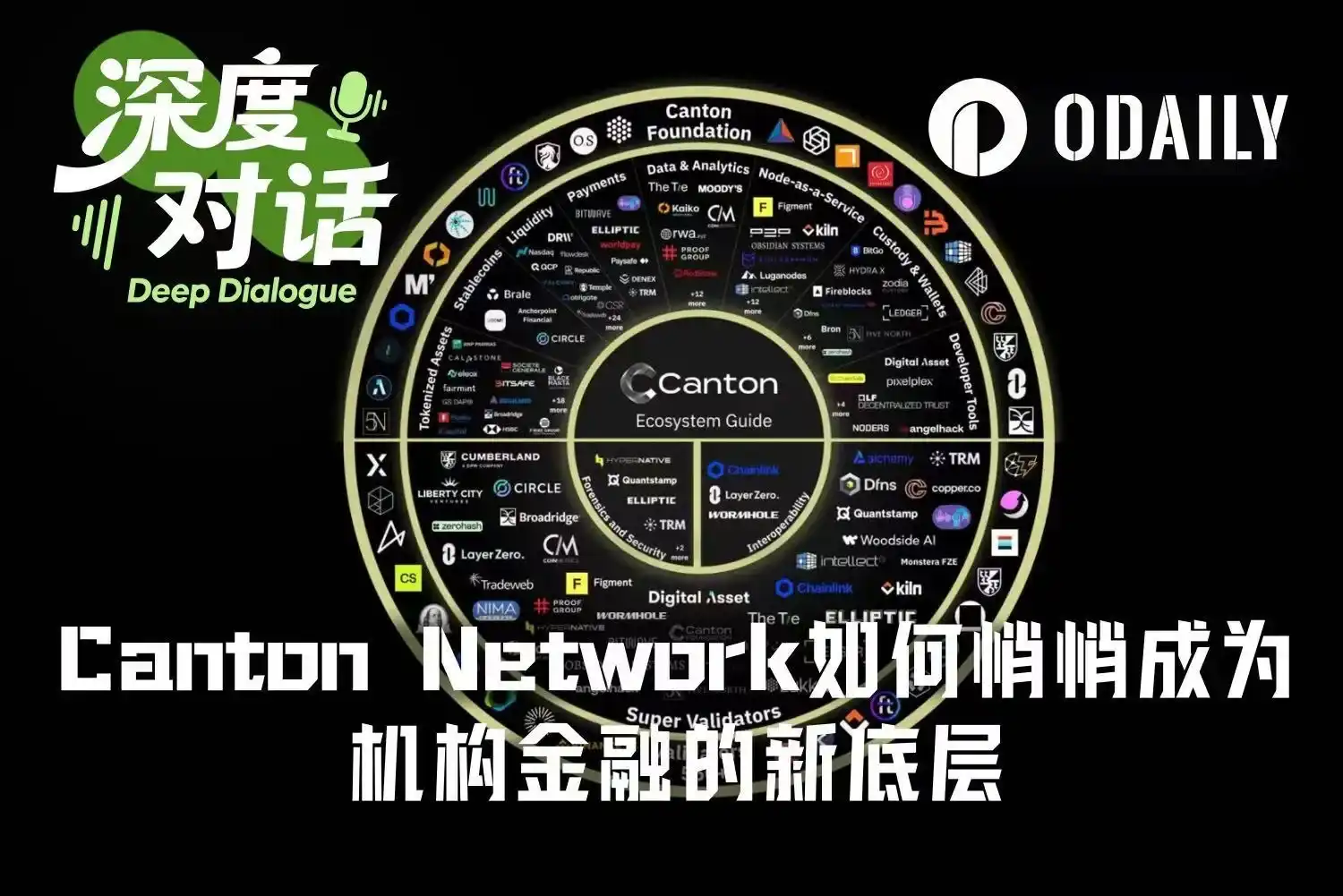
Putting Markets On-Chain: Canton Network Quietly Becomes the New Backbone of Institutional Finance

**Title: Letting the Market Itself Go On-Chain: Canton Network Quietly Becomes the New Backbone for Institutional Finance** **Summary:** The Canton Network, a blockchain platform designed for institutional finance, is gaining significant traction. A key sign of its maturity was Visa's recent entry as a super-validator, a proposal approved in just three days—highlighting prior, extensive collaboration between traditional finance and crypto. Unlike public chains like Ethereum that prioritize transparency and asset onboarding, Canton focuses on enabling confidential, compliant business operations for regulated institutions. Its core design features built-in **data visibility control**, meaning transaction details are only shared between direct counterparties. This privacy is fundamental, allowing competing institutions (like banks Goldman Sachs, JPMorgan, and BNP Paribas, all validators) to interact on the same network without exposing sensitive positions or strategies. Developed by Wall Street veterans at Digital Asset, Canton has taken a slow, deliberate approach to onboard real financial activity. It now handles over **$9 trillion monthly** in transaction volume, primarily from real-world institutional use cases like **tokenized repo agreements**, Treasury settlements, and collateral mobility. Major live applications include **JPM Coin** for institutional payments and **DTCC's tokenized U.S. Treasuries** project. Canton's native token, **CC**, is framed as a "network utility asset" with zero pre-mine or VC allocations. Its value is intended to be driven by the volume of real financial activity on the network. Looking ahead, Canton aims to become the invisible foundational layer for global finance—enabling atomic settlement (where payment and asset delivery occur simultaneously), 24/7 capital flows, and the native issuance and settlement of various asset classes, from corporate bonds to potentially equities. The main challenges are no longer technical but involve navigating fragmented global regulations and integrating with legacy financial systems.

marsbit2h ago

Putting Markets On-Chain: Canton Network Quietly Becomes the New Backbone of Institutional Finance

marsbit2h ago

Trading

Spot
Futures

Hot Articles

Discussions

Welcome to the HTX Community. Here, you can stay informed about the latest platform developments and gain access to professional market insights. Users' opinions on the price of S (S) are presented below.

活动图片