Why Avalanche’s Broadridge integration fails to stop AVAX’s 10% slide

ambcryptoPublished on 2026-04-07Last updated on 2026-04-07

Abstract

Despite the integration of Avalanche with Broadridge's on-chain proxy voting platform, which began its rollout on Avalanche and was adopted by Galaxy Digital, AVAX's price fell nearly 10%. This decline was driven by weak on-chain fundamentals, including a significant drop in Total Value Locked (TVL) to $720 million—its lowest since July 2024—indicating capital outflow and reduced activity. Derivatives market data showed increased bearish sentiment, with a Long/Short Ratio of 0.89 and negative Funding Rates, reflecting dominant short positions. Additionally, exchange netflows revealed distribution, as more AVAX was moved to exchanges and sold, suggesting investors used the news as an exit opportunity rather than a bullish catalyst.

On the 6th of April, Broadridge Financial Solutions (NYSE: BR) expanded its governance platform to support on-chain proxy voting. The rollout began on Avalanche.

The firm processed nearly $8 trillion in transactions monthly, showcasing its scale in global markets.

The system allowed firms to manage voting, corporate actions, and disclosures across traditional and tokenized securities. Galaxy Digital (NASDAQ: GLXY) became the first adopter, planning usage for its May shareholder meeting.

However, Avalanche [AVAX] fell nearly 10% over the past day despite this integration.

Weak on-chain fundamentals undermine sentiment

That divergence traced back to weakening on-chain activity as capital exited the ecosystem.

Total Value Locked [TVL] dropped to $720 million, its lowest level since the 9th of July 2024. That period also reflected weak sentiment and reduced activity.
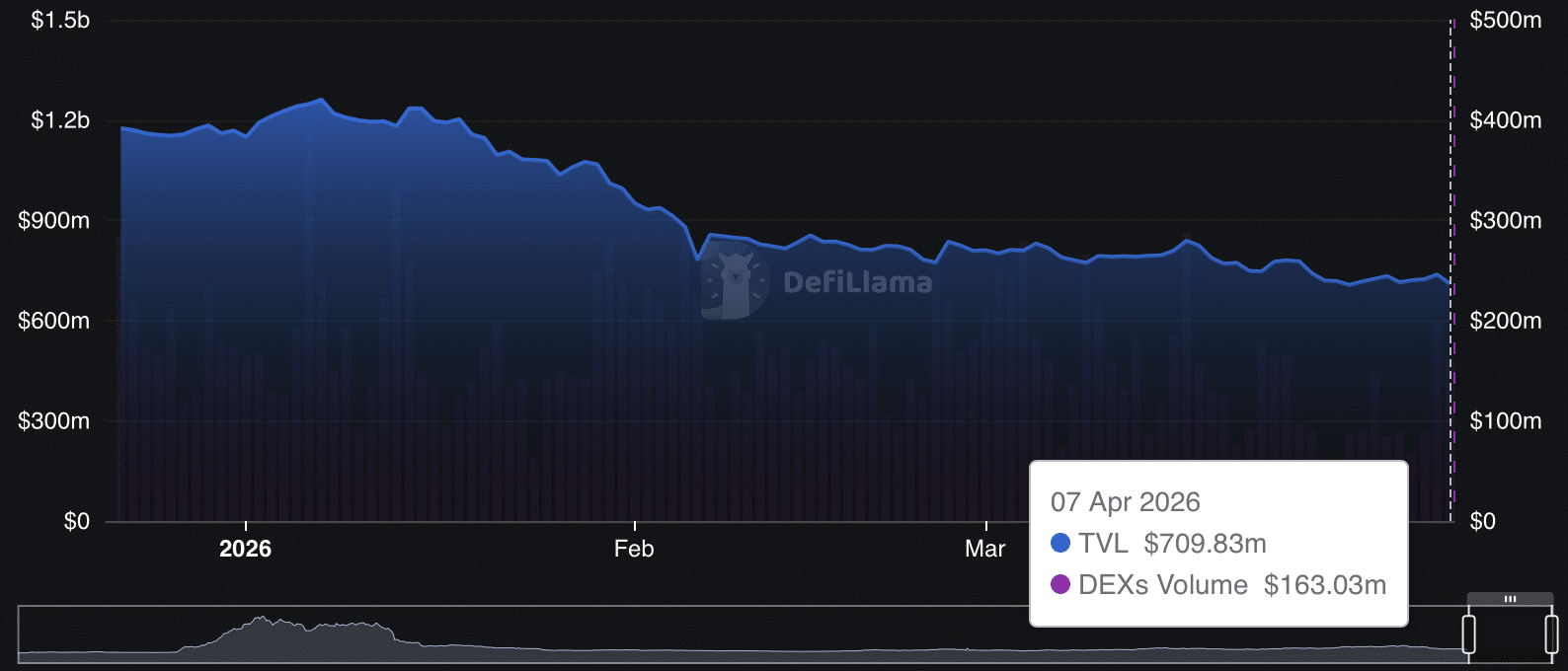
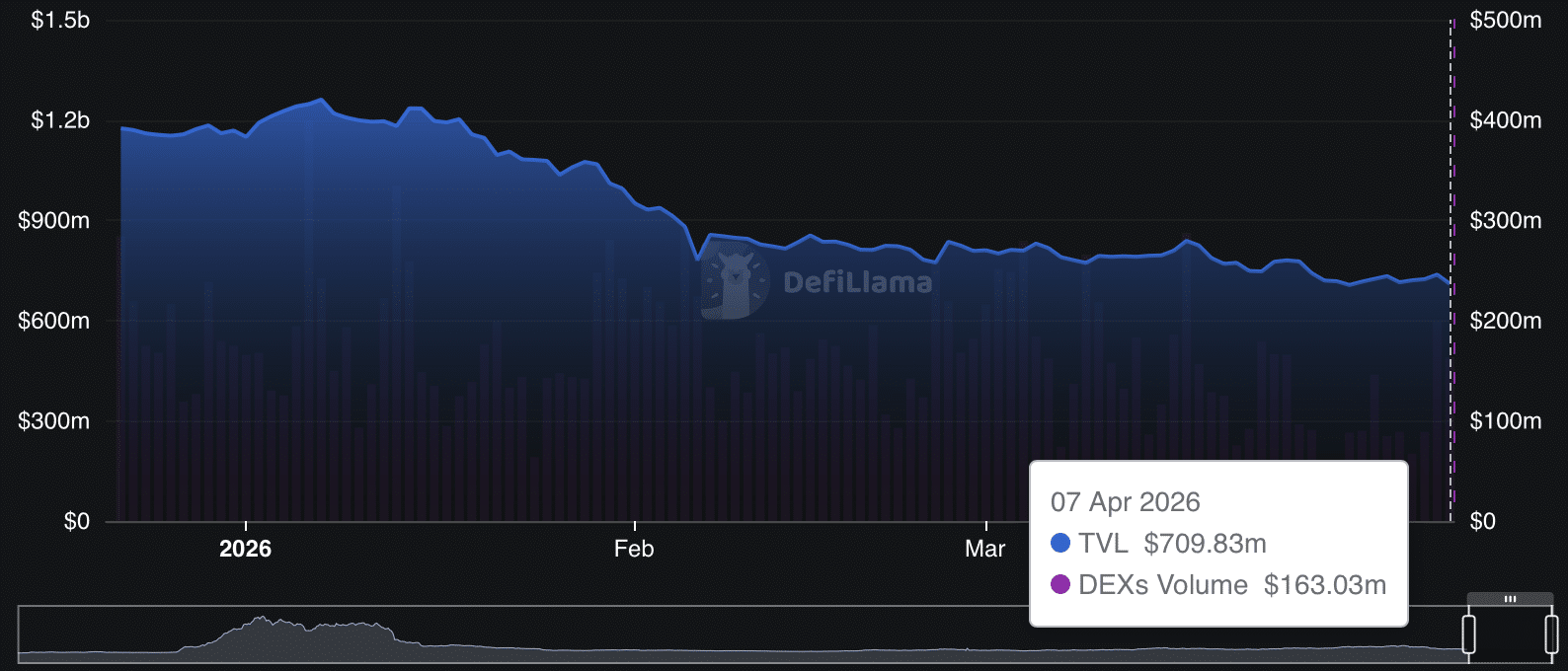
Source: DeFiLlama

Sustained outflows suggested investors remained cautious, limiting conviction in any short-term recovery.

On top of that, Decentralized Exchange Volumes rose steadily since the 4th of April. This increase reflected distribution rather than accumulation.

Derivatives market accelerates downside

In the Derivatives market, traders have amplified the bearish move.

Data from CoinGlass showed a clear uptick in sell-side activity across AVAX perpetual contracts. The Long/Short Ratio fell to 0.89, confirming short dominance.

A ratio below 1 typically signals that bearish bets outweigh bullish ones, and the current reading points to sustained downside positioning.

At the same time, Open Interest [OI] declined by nearly $37 million. This suggested that traders closed positions instead of adding risk.
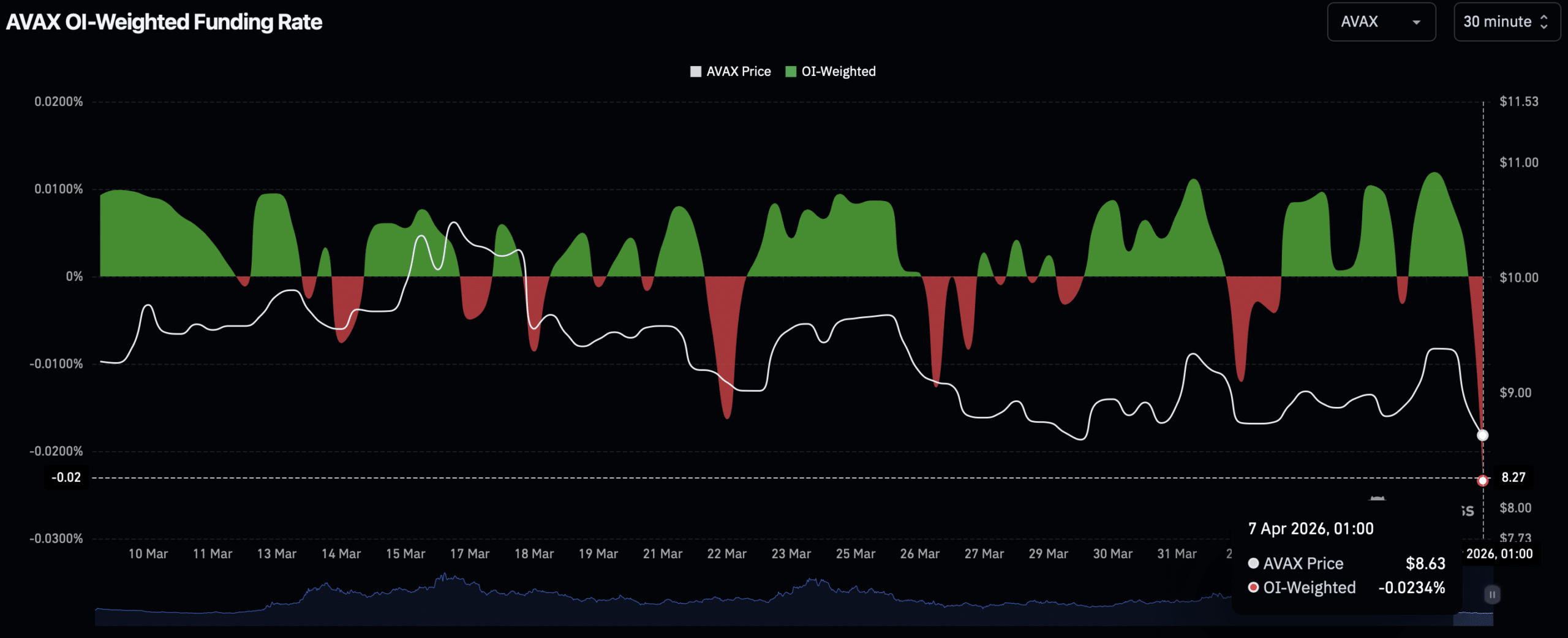
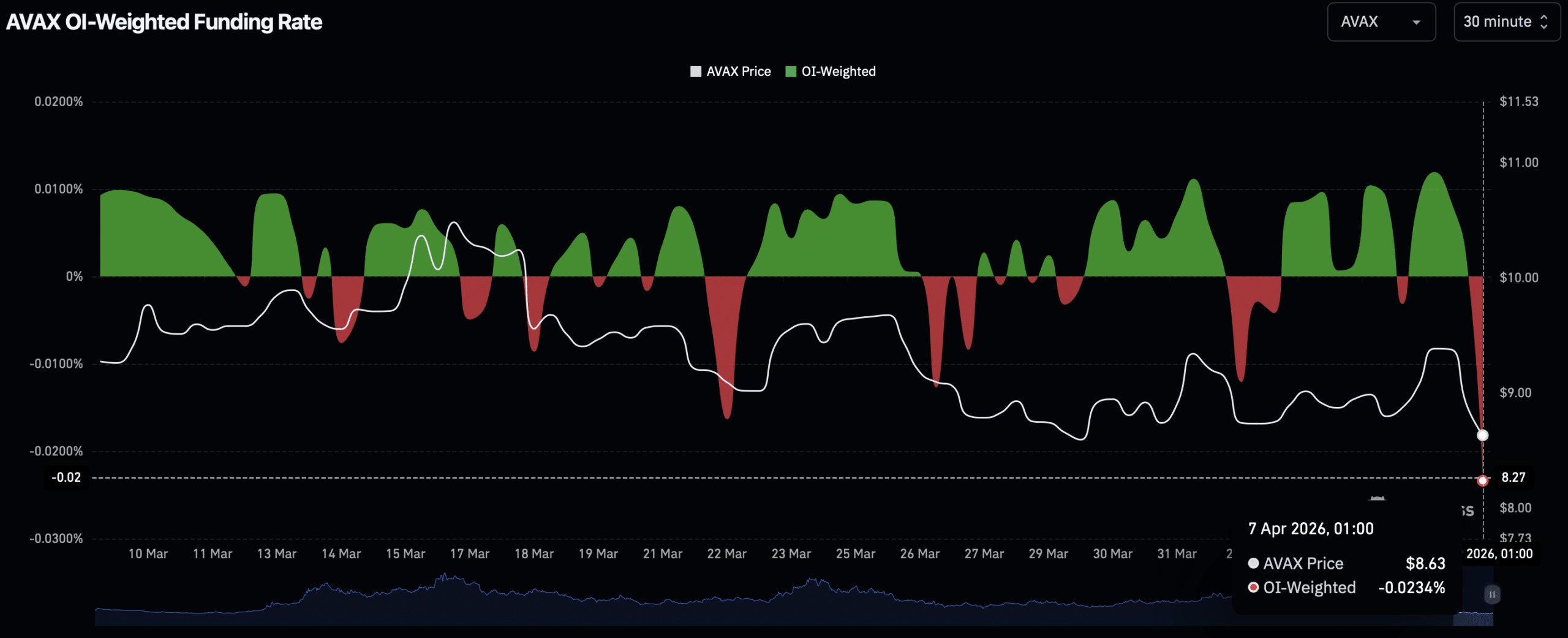
Source: CoinGlass

Funding Rates also turned negative, reinforcing downside pressure. This structure meant short traders paid longs, reflecting a persistent bearish bias.

Spot market reveals distribution

By contrast, Spot data showed mixed signals before aligning with the broader trend.

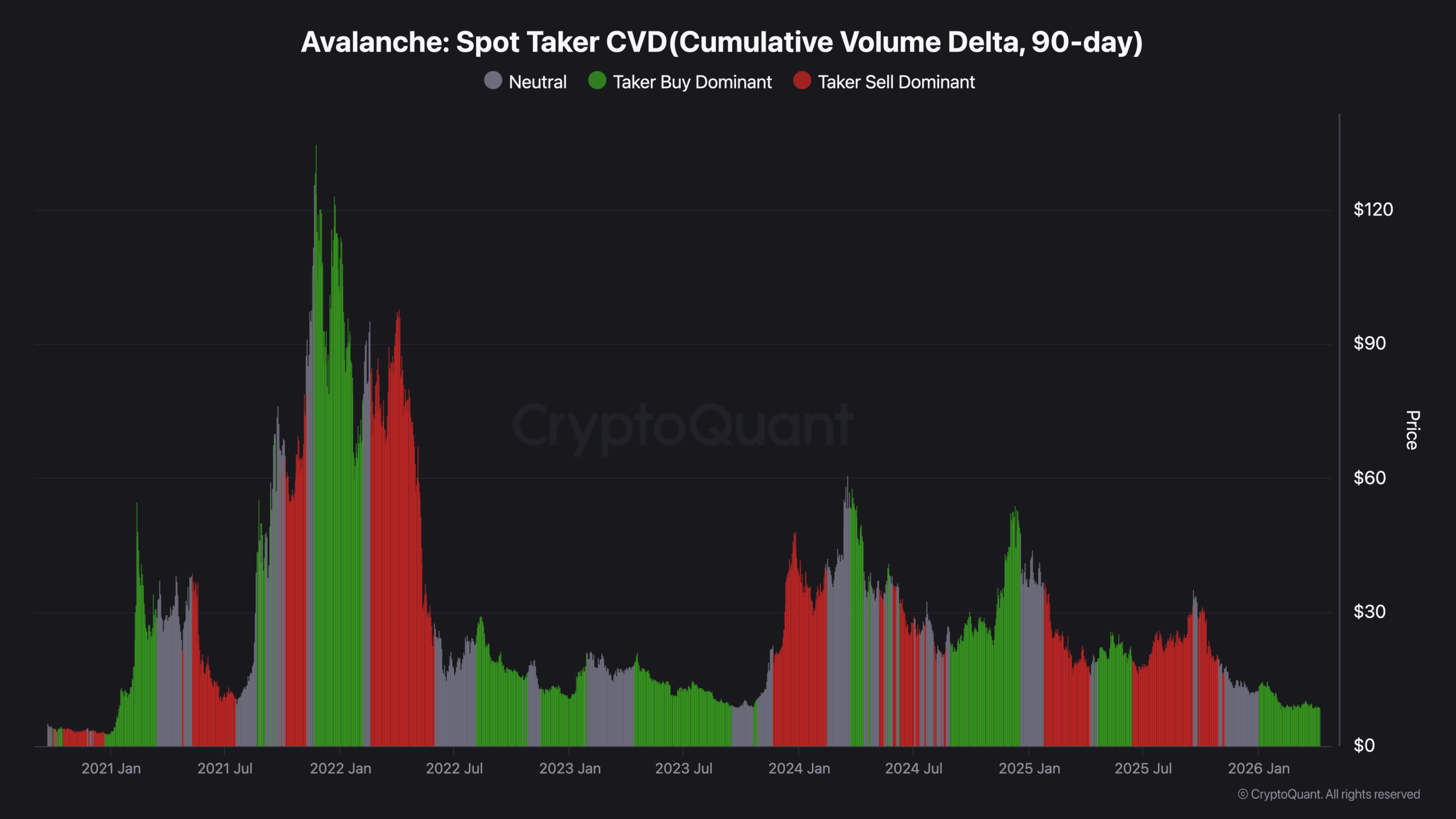
Taker Buy Volume increased, indicating pockets of demand. However, Exchange Netflows pointed to rising sell pressure.

More AVAX moved onto exchanges than was withdrawn, signaling potential distribution.
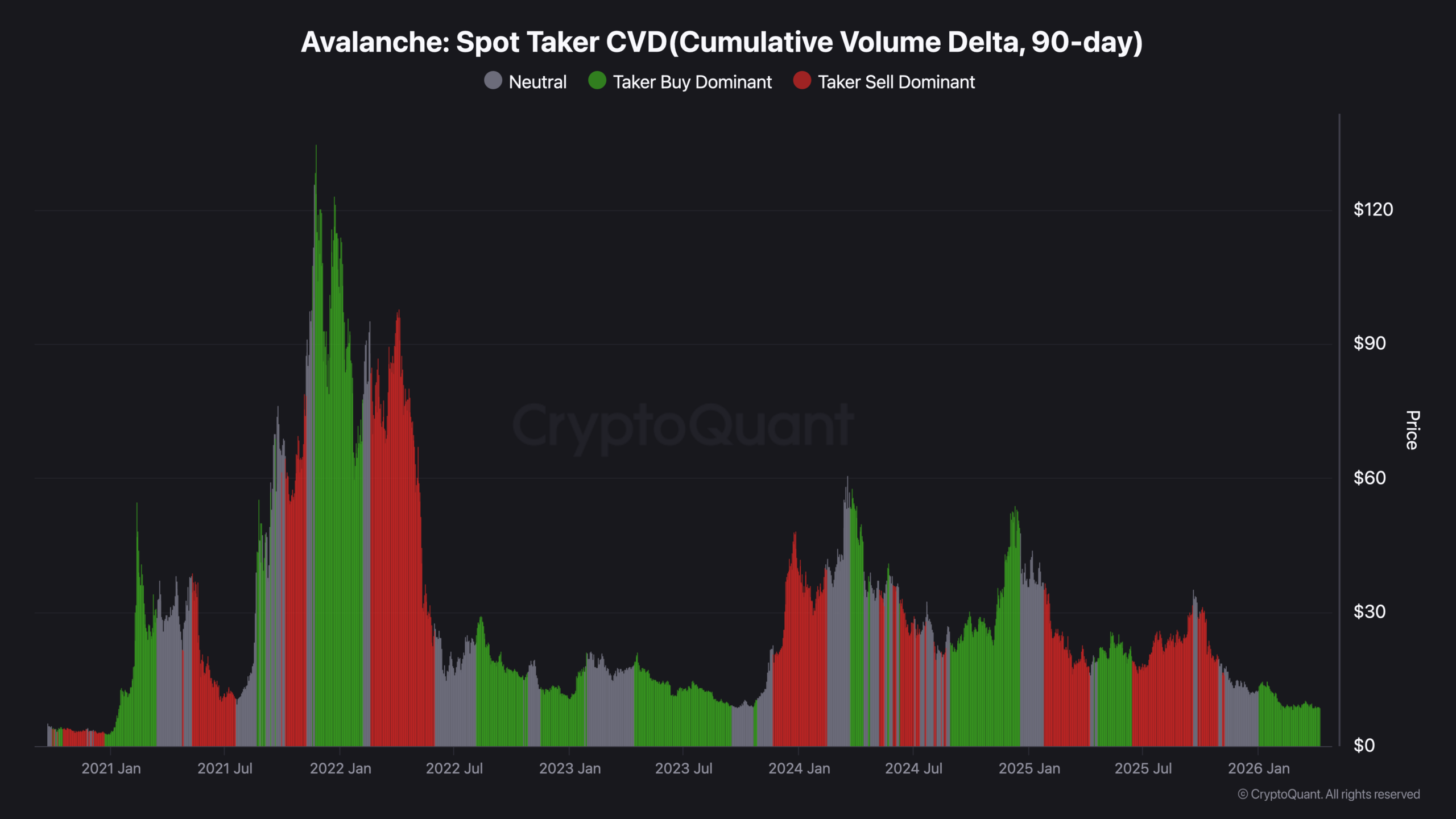
Source: CryptoQuant

Net inflows reached $2.26 million, while $20.46 million worth of AVAX was sold after the announcement.

That sequence suggested investors positioned ahead of the news and exited once it materialized.

For now, AVAX remained under pressure as weak fundamentals and bearish derivatives positioning outweighed institutional developments.


Final Summary

  • AVAX dropped because investors sold into the news, using the announcement as an exit point rather than a trigger for upside.
  • The fall in TVL to yearly lows showed capital leaving the ecosystem and weakening network activity.


Related Questions

QWhat was the key announcement from Broadridge Financial Solutions on April 6th and which blockchain did it begin with?

ABroadridge Financial Solutions expanded its governance platform to support on-chain proxy voting, and the rollout began on Avalanche.

QDespite the positive integration news, by how much did AVAX's price fall and what was the primary on-chain metric that weakened?

AAVAX fell nearly 10% over the past day, and the primary on-chain metric that weakened was the Total Value Locked (TVL), which dropped to $720 million, its lowest level since July 9th, 2024.

QWhat did the Long/Short Ratio of 0.89 and the negative Funding Rates in the derivatives market indicate about trader sentiment?

AA Long/Short Ratio below 1 (0.89) indicated that bearish bets outweighed bullish ones, and negative Funding Rates meant short traders were paying longs, both reflecting a persistent bearish bias and downside pressure.

QWhat did the spot market data, specifically Exchange Netflows, reveal about investor behavior following the announcement?

AExchange Netflows showed that more AVAX was moved onto exchanges than was withdrawn, with net inflows reaching $2.26 million, signaling potential distribution as investors sold into the news, using the announcement as an exit point.

QWhich company was named as the first adopter of Broadridge's new on-chain proxy voting system and for what purpose?

AGalaxy Digital (NASDAQ: GLXY) became the first adopter, planning to use the system for its May shareholder meeting.

Related Reads

DeepSeek Funding: Liang Wenfeng's 'Realist' Pivot

DeepSeek, a leading Chinese AI company, has initiated its first external funding round, aiming to raise at least $300 million at a valuation of no less than $10 billion. This move marks a significant shift from its founder Liang Wenfeng’s previous idealistic stance of rejecting external capital to maintain independence. Despite strong financial backing from its parent company, quantitative trading firm幻方量化 (Huanfang Quant), which provided an estimated $700 million in revenue in 2025 alone, DeepSeek faces mounting challenges. Key issues include a 15-month gap in major model updates, delays in its flagship V4 release, and the loss of several core researchers to competitors offering significantly higher compensation. The company is also undergoing a strategic pivot by migrating its infrastructure from NVIDIA’s CUDA to Huawei’s Ascend platform, a move aligned with China’s push for technological self-reliance amid U.S. export controls. However, DeepSeek lags behind rivals like智谱AI and MiniMax—both now publicly listed—in areas such as product ecosystem, multimodal capabilities, and commercialization. The funding round, though relatively small in scale, is seen as a way to establish a market-validated valuation anchor, making employee stock options more competitive and facilitating talent retention. It also signals DeepSeek’s transition from a pure research-oriented organization to a commercially-driven player in the global AI ecosystem.

marsbit32m ago

DeepSeek Funding: Liang Wenfeng's 'Realist' Pivot

marsbit32m ago

Solana Q1 Report: Revenue Plunges 68% Year-on-Year, Developers Decrease by 30%

Solana Q1 2026 Report: Key Metrics Show Significant Decline Amid Market Reset Solana experienced a substantial downturn in Q1 2026, with key performance indicators reflecting a broader market cooling. Total network revenue (REV) fell to $89.9 million, down 68% year-over-year (YoY) and 1.4% quarter-over-quarter (QoQ). This decline was driven by reduced speculative activity, which had previously fueled the network during the 2024/2025 bull market. Key revenue components saw mixed results: base fees dropped 8.7% QoQ, Jito tips (MEV) fell 19.7%, priority fees rose 23%, and vote fees declined 44.5%. The annualized real yield for stakers was just 0.17%, down 67% YoY. Network GDP, generated by top applications, fell 7% QoQ to $451 million. Pump Fun emerged as a standout, generating $103 million (up 3% QoQ), surpassing Solana's L1 revenue. However, daily active addresses averaged 2.4 million, down 4.8% YoY. Stablecoin supply on Solana reached $15.9 billion, down 2.7% QoQ but up 18% YoY. USDC and USDT remained dominant. DEX volumes averaged $3.2 billion daily, with private DEXs now accounting for 60% of all volume. The network's net dilution rate was 4.38%, while the cost to produce $1 of REV was $8.10, up 93% YoY. The number of new tokens created on launchpads grew 42% QoQ to 3 million, with Pump Fun dominating 85% of this market. Despite the downturn, Solana's core strengths remain: its position as a hub for retail trading apps, potential in perpetual markets, and growing use in stablecoin-based fintech applications, particularly in Latin America. However, developer activity declined 32% YoY, slightly worse than Ethereum's 29% drop. The network must now focus on attracting traditional finance, competing in perpetual markets, and sustaining developer ecosystem growth to drive the next expansion cycle.

marsbit1h ago

Solana Q1 Report: Revenue Plunges 68% Year-on-Year, Developers Decrease by 30%

marsbit1h ago

Trading

Spot
Futures

Hot Articles

Discussions

Welcome to the HTX Community. Here, you can stay informed about the latest platform developments and gain access to professional market insights. Users' opinions on the price of S (S) are presented below.

活动图片