‘USD debasement risk’ – Will Taiwan adopt a Bitcoin reserve now?

ambcryptoPublished on 2026-04-02Last updated on 2026-04-02

Abstract

Taiwan is reconsidering the adoption of a Bitcoin Reserve, a significant shift after initially rejecting the idea in 2025 due to concerns over Bitcoin's volatility, liquidity, and security risks. A research paper by a U.S. Department of Defense civil servant suggests Taiwan could join 29 other countries with Bitcoin exposure by 2026, driven by the U.S. Strategic Bitcoin Reserve executive order. With over 80% of its foreign reserves held in USD assets and a $157 billion trade surplus, Taiwan is increasingly significant exposure to potential USD debasement risks from growing U.S. debt and monetary expansion. Bitcoin is seen as a potential hedge against geopolitical tensions and economic instability. Currently, Taiwan holds 210 BTC, a small fraction compared to the U.S. (328,372 BTC) and China (190,000 BTC). Concurrently, U.S. lawmakers are proposing the "Mined in America Act" to strengthen domestic cryptocurrency mining and establish a Strategic Bitcoin Reserve.

The Bitcoin Reserve race is not just limited to the U.S. Competitors and crypto critics are now showing interest in the idea of Bitcoin Reserve.

In a recent update, Taiwan, officially the Republic of China, is planning to reconsider the idea of a Bitcoin Reserve. For those unaware, this isn’t the first time the country has thought on these lines.

In fact, the first time the idea was proposed, it got ruled out in December, 2025.

Now, coming up with a fresh perspective, in a research paper authored by Jacob Langenkamp, a civil servant for the U.S. Department of Defense, said,

Taiwan would join 29 countries that have gained bitcoin exposure as of January 2026, a trend accelerated by the U.S. Strategic Bitcoin Reserve executive order.
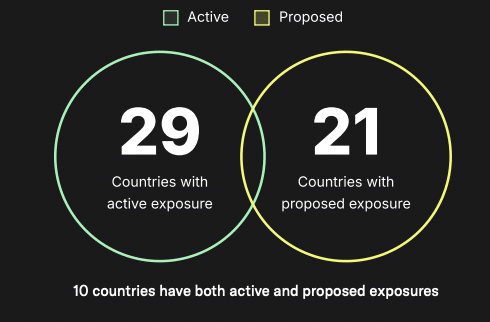
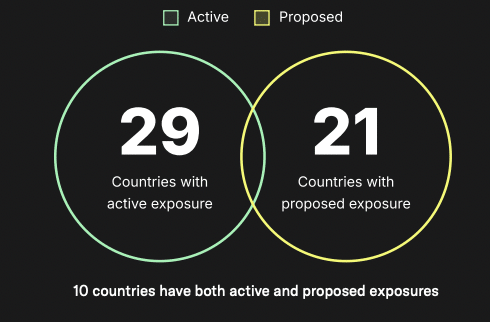
Source: Bitcoin Policy Institute/Research Paper

Why had Taiwan rejected the Bitcoin Reserve in 2025?

That said, if we look back in 2025, Taiwan had stepped back because of Bitcoin’s high volatility and low liquidity compared to traditional assets like U.S. dollars or gold.
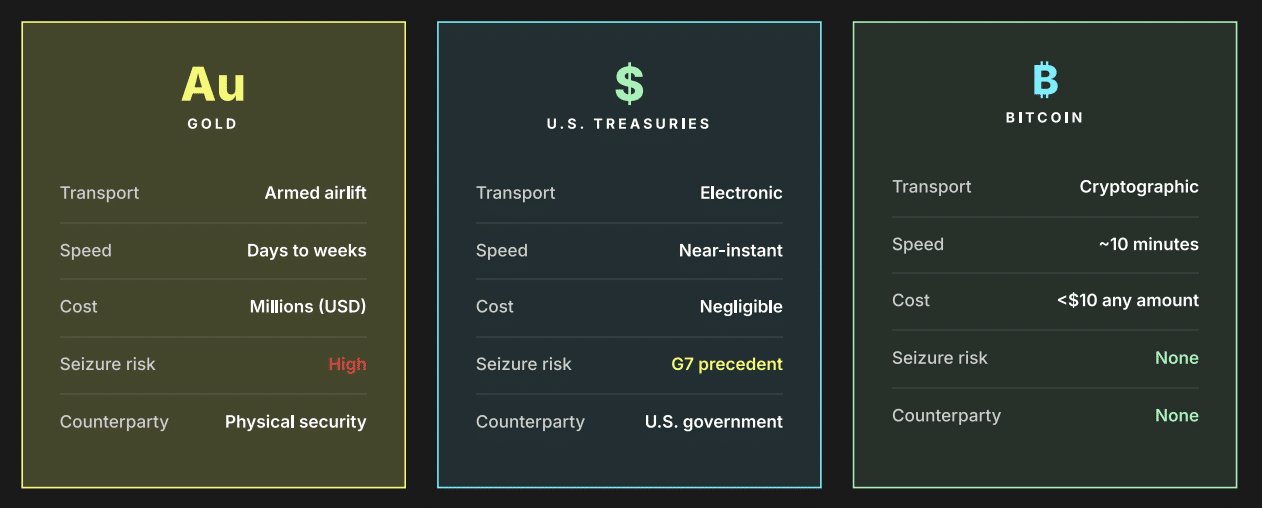
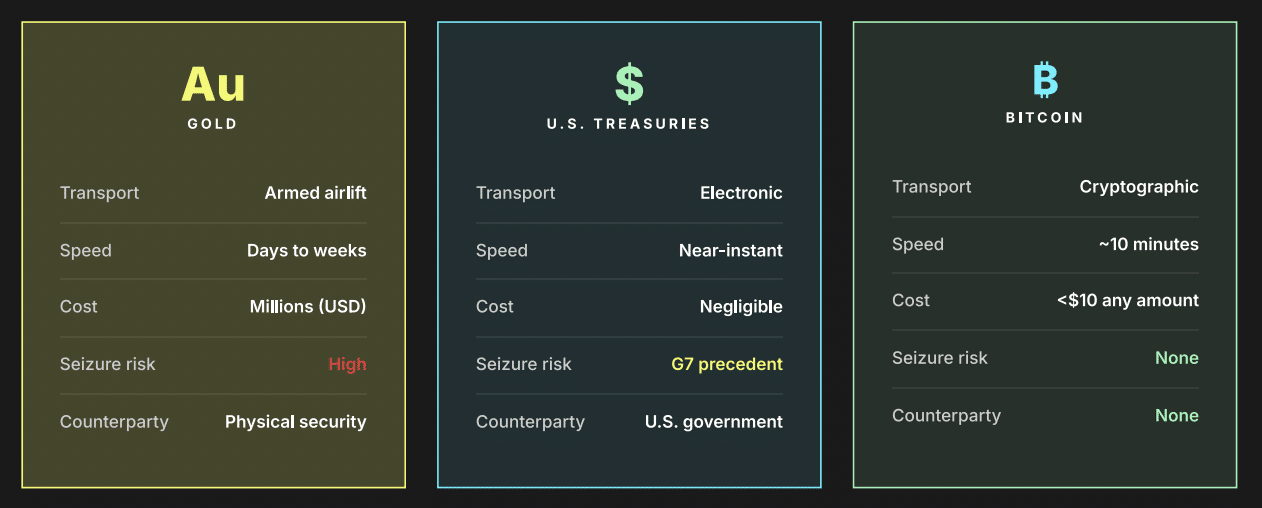
Source: Bitcoin Institute Policy/Research Paper

Additionally, operational and security risks, including potential vulnerabilities in storage, and compliance with anti-money laundering (AML), were other reasons behind saying ‘NO’ back then.

However, with a huge $157 billion trade surplus, these concerns seem invalid, now. In fact, with over 80% of its foreign reserves held in USD, the perspective required some alteration.

Now, with the growing U.S. debt, the Fed’s monetary base expansion, and the worries around AI bubble bursts, Taiwan is leaning towards Bitcoin [BTC].

Langenkamp believes that Bitcoin can act as a hedge against geopolitical tensions and support Taiwan’s economy in times of war.

Expressing fears about the ongoing turmoil, Langenkamp added,

For Taiwan specifically, the American debt and deficit situation is nuanced. While Taiwan is not fully dollarized, 85-90% of its exports are estimated to be priced in USD, and more than 80% of the CBC reserves are in U.S. Treasuries. The country is heavily exposed to potential USD debasement.

Taiwan vs U.S and China’s Bitcoin holdings

This comes as Taiwan’s Bitcoin stash stands at 210 BTC worth $14M, just 0.001% of the total Bitcoin supply as per BitcoinTreasuries.Net. Meanwhile, the U.S holds 328,372 BTC worth $21,822 million.

Whereas China holds 190,000 BTC worth $12,619 million.
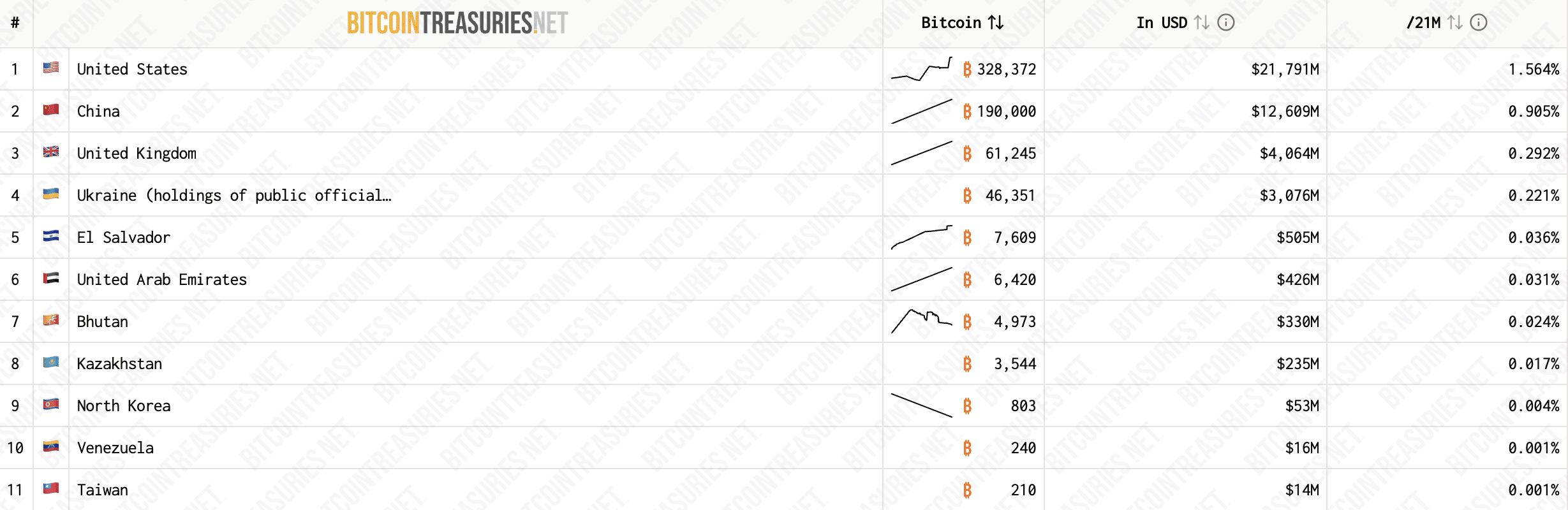
Source: BitcoinTreasuries.Net

Bitcoin traded at $66,420.97 at press time, after falling 3.12% in the past 24 hours. However, with Bitcoin dominance at 58.58%, BTC appears focused on longer-term positioning rather than short-term volatility.

Additional developments in the U.S

Amidst all these developments, two U.S. lawyers have proposed the “Mined in America Act,” introduced by Bill Cassidy and Cynthia Lummis.

The bill is meant to widen the scope of U.S.-based cryptocurrency mining while also reducing dependence on foreign supply chains. This new bill also codifies a Strategic Bitcoin Reserve, very much in line with earlier executive actions signed in 2025.


Final Summary

  • In just 3 months, Taiwan, which once rejected Bitcoin Reserve, is now shifting its stance.
  • With over 80% of foreign reserves held in USD assets and the growing concerns of USD debasements, Taiwan bends down to Bitcoin.

Trending Cryptos

Related Questions

QWhy did Taiwan initially reject the idea of a Bitcoin Reserve in 2025?

ATaiwan rejected the Bitcoin Reserve in 2025 due to Bitcoin's high volatility, low liquidity compared to traditional assets, and concerns over operational and security risks, including vulnerabilities in storage and compliance with anti-money laundering (AML) regulations.

QWhat has changed that is making Taiwan reconsider adopting a Bitcoin Reserve now?

ATaiwan is reconsidering due to its huge $157 billion trade surplus, over 80% of its foreign reserves being held in USD assets, and growing concerns about U.S. debt, the Fed's monetary expansion, and potential USD debasement, making Bitcoin an attractive hedge.

QAccording to the research paper, how many countries had gained bitcoin exposure by January 2026?

AAccording to the research paper authored by Jacob Langenkamp, 29 countries had gained bitcoin exposure as of January 2026.

QHow much Bitcoin does Taiwan currently hold, and how does this compare to the U.S. and China?

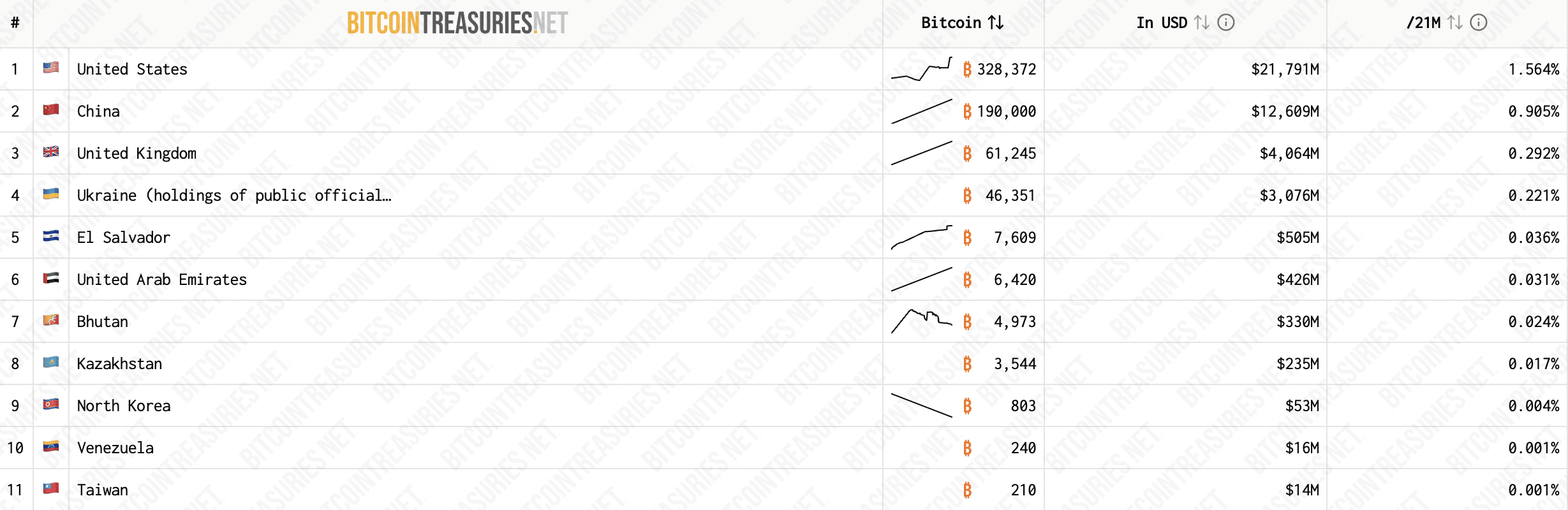
ATaiwan's Bitcoin stash stands at 210 BTC worth $14 million. In comparison, the U.S. holds 328,372 BTC worth $21,822 million, and China holds 190,000 BTC worth $12,619 million.
QWhat is the name of the purpose of the new bill proposed by U.S. lawyers Bill Cassidy and Cynthia Lummis?

AThe new bill is called the 'Mined in America Act.' Its purpose is to widen the scope of U.S.-based cryptocurrency mining, reduce dependence on foreign supply chains, and codify a Strategic Bitcoin Reserve.

Related Reads

STRC Major De-pegging's First Financial Report, How Will Strategy Repair Its Capital Flywheel?

Bitcoin treasury company Strategy released its Q2 2026 earnings report on July 31. Despite a 6.9% year-over-year revenue increase to $122 million, the company recorded a net loss of $8.22 billion, largely due to $8.32 billion in unrealized losses from Bitcoin price fluctuations. As of quarter-end, Strategy holds 843,775 BTC with an average cost of $75,000 per coin, and Bitcoin per share increased. The report highlights a critical shift in Strategy's capital model following the de-pegging of its key financing tool, STRC (Strategic Coin), which fell below its $100 target. Management's top priority is restoring STRC to its target value, aiming for a recovery by September 8. They rule out discounted STRC issuances and plan to maintain its dividend yield at 12%, instead focusing on bolstering its $3.75 billion cash reserve. Strategy has moved from a one-way "buy-and-hold" Bitcoin strategy to active capital management. This new approach, part of its "Digital Credit Capital Framework," involves flexibly managing its balance sheet across four elements: BTC, USD cash, common stock (MSTR), and digital credit securities like STRC. This allows for BTC monetization (having sold $218.4 million in BTC so far), strategic repurchases of discounted securities, and debt optimization, as seen with a $1.5 billion convertible bond buyback. The company's future hinges on two key tests: successfully re-pegging STRC to restore market confidence in its digital credit system, and a long-term recovery in Bitcoin's price to ultimately support its growth thesis.

marsbit37m ago

STRC Major De-pegging's First Financial Report, How Will Strategy Repair Its Capital Flywheel?

marsbit37m ago

STRC's First Financial Report Post-Depegging, How is Strategy Restoring the Capital Flywheel?

On July 31, 2026, Bitcoin treasury company Strategy released its Q2 financial report. Despite a 6.9% year-over-year increase in revenue to $122 million, the company recorded a substantial net loss of $8.22 billion, primarily due to $8.32 billion in unrealized losses from Bitcoin holdings. While Strategy's core Bitcoin strategy remains intact—its holdings grew 11% to 843,775 BTC—the company is undergoing a fundamental shift in its capital model. Following the de-pegging of its key financing tool, the STRCoin (STRC), from its $100 target in May, Strategy has pivoted from a one-directional "raise funds, buy Bitcoin" cycle to a more dynamic, multi-asset capital management approach. A key part of this new framework is the "Monetization Program," through which Strategy has sold approximately $218.4 million worth of BTC to bolster liquidity. The company's top priority is repairing STRC's peg, committing not to issue discounted shares until it returns to its target range. It has initiated a $1 billion buyback program for discounted digital credit securities, having repurchased $28.9 million face value of STRC so far. Management aims to restore the peg around September 8, 2026. Strategy now actively manages a matrix of assets: Bitcoin (for accumulation or strategic sales), USD cash reserves (now at $3.75 billion), common stock (MSTR), and digital credit securities like STRC. This allows for tactical moves like repurchasing discounted debt or equity to capture value. The future success of Strategy's "capital flywheel" hinges on two factors: the short-term ability to successfully re-peg STRC to restore market confidence in its digital credit system, and the long-term price trajectory of Bitcoin, upon which its entire investment thesis ultimately depends.

Odaily星球日报43m ago

STRC's First Financial Report Post-Depegging, How is Strategy Restoring the Capital Flywheel?

Odaily星球日报43m ago

With Two Consecutive Quarters of Losses, Coinbase Must Rely on Paths Beyond Trading

Coinbase posted its second consecutive quarterly net loss of $359 million on $1.22 billion in revenue for Q2, highlighting its vulnerability to crypto market cycles where weaker prices and lower volatility reduce user trading. However, the report also reveals a strategic shift in its business model. Despite a 25% quarter-over-quarter decline in global spot trading volume, Coinbase increased its market share to a company-record 10.3%. This suggests its position as a compliant U.S. on-ramp is strengthening even in a cooler market. A key development is the diversification of revenue streams. Transaction revenue fell to $599 million, nearly equaling subscription and services revenue of $555 million. Stablecoin services, generating $292 million, are becoming a crucial revenue "floor." This income, derived from interest on the $20 billion average USDC balance held on its platform, is less tied to daily trading activity. Furthermore, while spot trading volume dropped significantly, derivatives volume held steady at $1.03 trillion. Coinbase is pushing to integrate spot, stablecoin, and derivatives liquidity to create a more interconnected and sticky ecosystem for users. The GAAP net loss includes non-cash expenses like stock-based compensation and crypto asset valuation changes. Its adjusted EBITDA remained positive at $208 million for the 14th straight quarter, indicating core operations can cover ongoing costs. The company is also reducing expenses to manage the downturn. The central question moving forward is whether Coinbase's growing market share, stablecoin revenues, and expanding product integration can sufficiently offset the inherent cyclicality of its core trading business during future market contractions.

marsbit58m ago

With Two Consecutive Quarters of Losses, Coinbase Must Rely on Paths Beyond Trading

marsbit58m ago

Trading

Spot

Hot Articles

What is $BITCOIN

DIGITAL GOLD ($BITCOIN): A Comprehensive Analysis Introduction to DIGITAL GOLD ($BITCOIN) DIGITAL GOLD ($BITCOIN) is a blockchain-based project operating on the Solana network, which aims to combine the characteristics of traditional precious metals with the innovation of decentralized technologies. While it shares a name with Bitcoin, often referred to as “digital gold” due to its perception as a store of value, DIGITAL GOLD is a separate token designed to create a unique ecosystem within the Web3 landscape. Its goal is to position itself as a viable alternative digital asset, although specifics regarding its applications and functionalities are still developing. What is DIGITAL GOLD ($BITCOIN)? DIGITAL GOLD ($BITCOIN) is a cryptocurrency token explicitly designed for use on the Solana blockchain. In contrast to Bitcoin, which provides a widely recognized value storage role, this token appears to focus on broader applications and characteristics. Notable aspects include: Blockchain Infrastructure: The token is built on the Solana blockchain, known for its capacity to handle high-speed and low-cost transactions. Supply Dynamics: DIGITAL GOLD has a maximum supply capped at 100 quadrillion tokens (100P $BITCOIN), although details regarding its circulating supply are currently undisclosed. Utility: While precise functionalities are not explicitly outlined, there are indications that the token could be utilized for various applications, potentially involving decentralized applications (dApps) or asset tokenization strategies. Who is the Creator of DIGITAL GOLD ($BITCOIN)? At present, the identity of the creators and development team behind DIGITAL GOLD ($BITCOIN) remains unknown. This situation is typical among many innovative projects within the blockchain space, particularly those aligning with decentralized finance and meme coin phenomena. While such anonymity may foster a community-driven culture, it intensifies concerns about governance and accountability. Who are the Investors of DIGITAL GOLD ($BITCOIN)? The available information indicates that DIGITAL GOLD ($BITCOIN) does not have any known institutional backers or prominent venture capital investments. The project seems to operate on a peer-to-peer model focused on community support and adoption rather than traditional funding routes. Its activity and liquidity are primarily situated on decentralized exchanges (DEXs), such as PumpSwap, rather than established centralized trading platforms, further highlighting its grassroots approach. How DIGITAL GOLD ($BITCOIN) Works The operational mechanics of DIGITAL GOLD ($BITCOIN) can be elaborated on based on its blockchain design and network attributes: Consensus Mechanism: By leveraging Solana’s unique proof-of-history (PoH) combined with a proof-of-stake (PoS) model, the project ensures efficient transaction validation contributing to the network's high performance. Tokenomics: While specific deflationary mechanisms have not been extensively detailed, the vast maximum token supply implies that it may cater to microtransactions or niche use cases that are still to be defined. Interoperability: There exists the potential for integration with Solana’s broader ecosystem, including various decentralized finance (DeFi) platforms. However, the details regarding specific integrations remain unspecified. Timeline of Key Events Here is a timeline that highlights significant milestones concerning DIGITAL GOLD ($BITCOIN): 2023: The initial deployment of the token occurs on the Solana blockchain, marked by its contract address. 2024: DIGITAL GOLD gains visibility as it becomes available for trading on decentralized exchanges like PumpSwap, allowing users to trade it against SOL. 2025: The project witnesses sporadic trading activity and potential interest in community-led engagements, although no noteworthy partnerships or technical advancements have been documented as of yet. Critical Analysis Strengths Scalability: The underlying Solana infrastructure supports high transaction volumes, which could enhance the utility of $BITCOIN in various transaction scenarios. Accessibility: The potential low trading price per token could attract retail investors, facilitating wider participation due to fractional ownership opportunities. Risks Lack of Transparency: The absence of publicly known backers, developers, or an audit process may yield skepticism regarding the project's sustainability and trustworthiness. Market Volatility: The trading activity is heavily reliant on speculative behavior, which can result in significant price volatility and uncertainty for investors. Conclusion DIGITAL GOLD ($BITCOIN) emerges as an intriguing yet ambiguous project within the rapidly evolving Solana ecosystem. While it attempts to leverage the “digital gold” narrative, its departure from Bitcoin's established role as a store of value underscores the need for a clearer differentiation of its intended utility and governance structure. Future acceptance and adoption will likely depend on addressing the current opacity and defining its operational and economic strategies more explicitly. Note: This report encompasses synthesised information available as of October 2023, and developments may have transpired beyond the research period.

1.1k Total ViewsPublished 2025.05.13Updated 2025.05.13

What is $BITCOIN

Discussions

Welcome to the HTX Community. Here, you can stay informed about the latest platform developments and gain access to professional market insights. Users' opinions on the price of BTC (BTC) are presented below.

活动图片