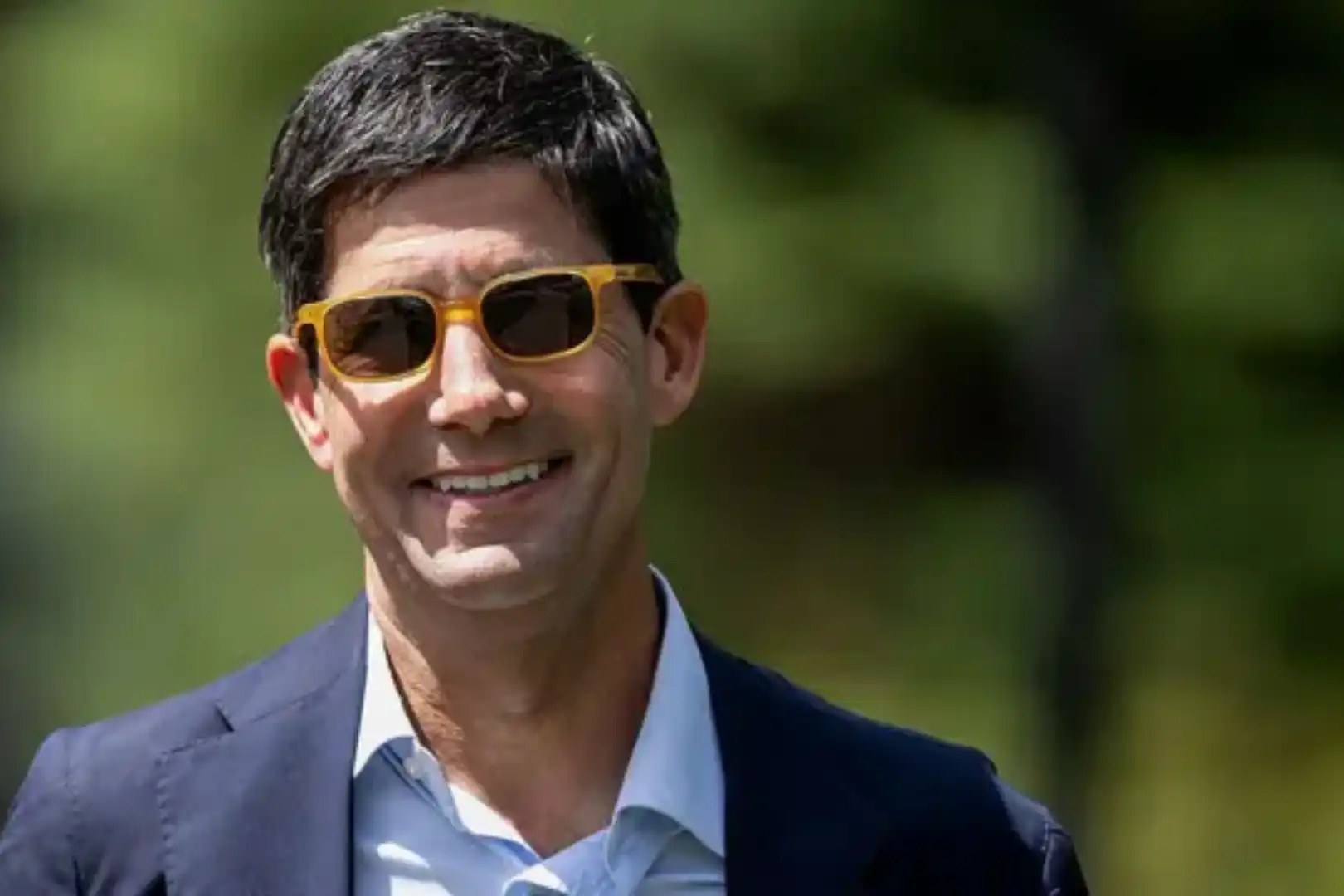
Tether CEO says AI bubble is Bitcoin’s biggest risk in 2026

cointelegraphPublished on 2025-12-18Last updated on 2025-12-18

Abstract

Tether CEO Paolo Ardoino warns that the biggest risk to Bitcoin in 2026 could be a potential AI bubble. He expressed concern that Bitcoin remains too correlated with traditional capital markets, making it vulnerable if the current AI investment boom leads to a stock market downturn. Ardoino believes that excessive spending on AI infrastructure and data centers could create a market bubble. If sentiment shifts in 2026, the resulting turmoil could negatively impact Bitcoin's price. However, he also noted that increased adoption by pension funds and governments may prevent the sharp 80% corrections seen in previous cycles. While bullish on Bitcoin and real-world asset tokenization, Ardoino is pessimistic about crypto innovation in Europe, criticizing its regulatory approach, and is skeptical of companies that function solely as digital asset treasuries without strong operational businesses.

Paolo Ardoino, CEO of Tether, the issuer of the world’s largest stablecoin, has raised concerns about how a potential AI bubble could affect Bitcoin by 2026.

Ardoino shared his outlook on Bitcoin (BTC) and the broader crypto industry on Thursday during the Bitcoin Capital podcast, co-hosted by Bitfinex Securities and Blockstream.

The executive said he sees Bitcoin “still too much correlated” to capital markets, thus potentially being impacted by the AI bubble, or a theorized stock market bubble growing amid the current AI boom.

“That is the so-called AI bubble, this concern about the fact that AI companies are spending too much money in AI infrastructure and data centers and trying to build a gazillion gigawatts of power and installing GPUs,” Ardoino said.

Ardoino predicts no sharp BTC corrections as seen in 2022 anymore

In a potential scenario where AI sentiment shifts in 2026, the associated stock market turmoil in the US could affect the price of Bitcoin, Tether CEO predicted.

Apart from AI bubble-associated risks, Ardoino sees no other major risks to Bitcoin performance in 2026 due to growing adoption by pension funds and governments.
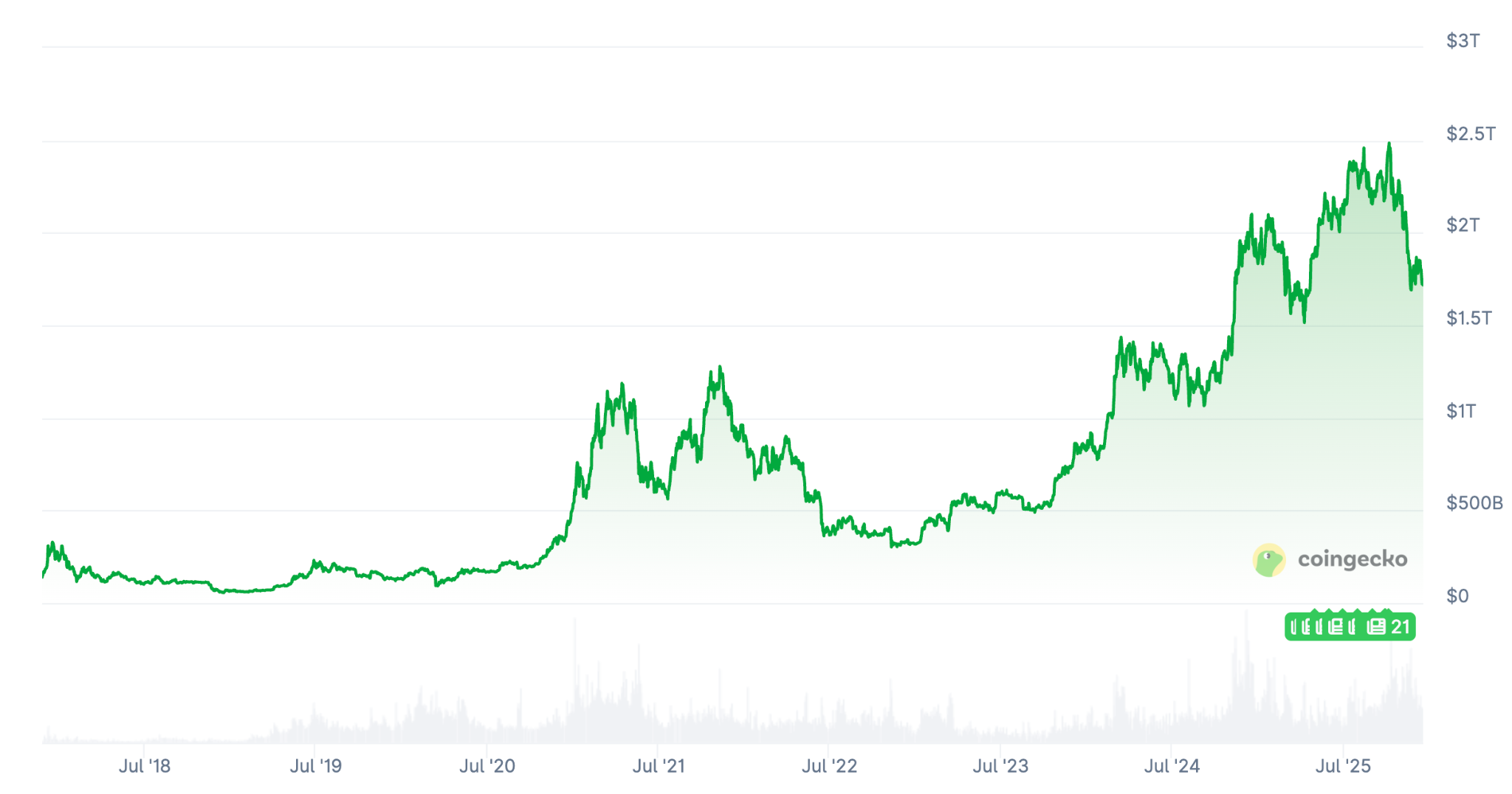
Bitcoin (BTC) price chart since 2018. Source: CoinGecko

“So I would imagine that sharp corrections of 80%, like we saw in 2022 or early 2018, might not be the case anymore,” Ardoino predicted.

Ardoino also expressed bullishness on real-world asset (RWA) tokenization, saying that tokenized securities and commodities are “going to be massive.”

“The only downside I see is like. Bitcoin is for Bitcoin, right? You don’t want 99% of Bitcoin being institutionalized,” he said.

Ardoino bearish on Europe and “just treasury companies”

While remaining bullish on Bitcoin and tokenization in 2026, Tether CEO Paolo Ardoino expressed a far less optimistic view on crypto adoption in Europe and on certain developments in digital asset treasuries in the year ahead.

“I’m very bearish on Europe,” Ardoino said in the interview, arguing that the region continues to lag behind on innovation.
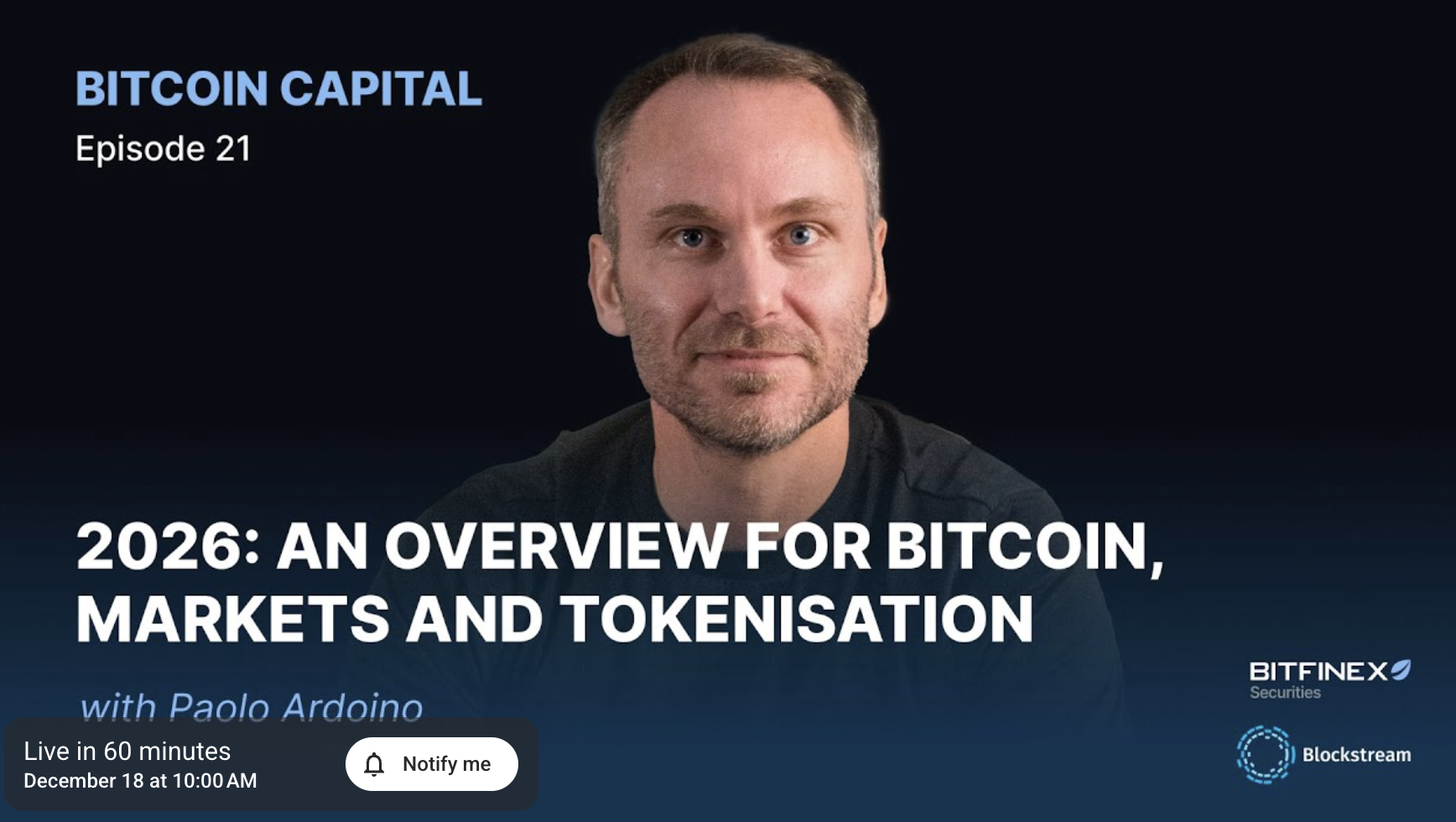
Source: Bitfinex

“Europe will always remain the last wheel of the cart whenever we talk about innovation. Europe is trying to regulate something that it doesn’t understand yet. That is very sad,” he added.

Ardoino pointed to the implications of the European Union’s Markets in Crypto-Assets Regulation (MiCA), which has intensified debate over centralized versus local oversight in the crypto sector.

Related: Europe reconsiders crypto oversight as ESMA centralization gains momentum

Tether has been among the most prominent companies to openly refuse compliance with MiCA, a stance that has led many European crypto asset service providers to delist the Tether USDt (USDT) stablecoin.

Addressing DATs, Ardoino said he’s “not very bullish” on crypto treasury companies that are “just treasury companies.”

“I think that you want a treasury company to have an amazing operational business,” Ardoino said, adding remarks about the Tether-backed Bitcoin company Twenty One:

“The aim for Twenty One is for Twenty One to be an amazing Bitcoin company that provides Bitcoin services and also has a Bitcoin treasury, a very important, big Bitcoin treasury.”

Related Questions

QWhat is the main risk that Tether CEO Paolo Ardoino identifies for Bitcoin in 2026?

APaolo Ardoino identifies the potential AI bubble as the biggest risk for Bitcoin in 2026, as he believes Bitcoin is still too correlated to capital markets and could be impacted by a stock market downturn associated with a shift in AI sentiment.

QWhy does Ardoino believe sharp Bitcoin corrections like those in 2018 or 2022 are unlikely to happen again?

AArdoino believes sharp corrections of 80% are unlikely to happen again due to Bitcoin's growing adoption by pension funds and governments, which provides more stability.

QWhat is Paolo Ardoino's view on the European Union's approach to crypto regulation?

AArdoino is very bearish on Europe, stating that the region 'will always remain the last wheel of the cart' in innovation. He criticizes the EU for trying to regulate something it doesn't fully understand, specifically pointing to the Markets in Crypto-Assets Regulation (MiCA).

QWhat is Tether's stance on complying with the EU's MiCA regulation?

ATether has been among the most prominent companies to openly refuse compliance with the European Union's Markets in Crypto-Assets Regulation (MiCA), a stance that has led many European crypto asset service providers to delist its USDT stablecoin.

QBesides the AI bubble, what other major trend does Ardoino express optimism about?

AArdoino expresses strong optimism about real-world asset (RWA) tokenization, predicting that tokenized securities and commodities are 'going to be massive'.

Related Reads

Why Do You Always Lose Money on Polymarket? Because You're Betting on News, While the Pros Read the Rules

Why do you always lose money on Polymarket? Because you bet on news, while the pros study the rules. This article explains how top traders ("che tou") profit by meticulously analyzing market rules, not just predicting events. Polymarket, a prediction market platform, often sees disputes over event outcomes due to ambiguous rule wording. For instance, a market asking "Who will be the leader of Venezuela by the end of 2026?" was misinterpreted by many who bet on Delcy Rodríguez, assuming she held power. However, the rules specified "officially holds" as the formally appointed, sworn-in individual. Since Nicolás Maduro was still recognized as president officially, he won the market—even being in prison. To resolve such disputes, Polymarket uses a decentralized arbitration system via UMA protocol. The process involves: 1. Proposal: Anyone can propose a market outcome by staking 750 USDC, earning 5 USDC if unchallenged. 2. Dispute: A 2-hour window allows challenges with a 750 USDC stake; successful challengers earn 250 USDC. 3. Discussion: A 48-hour period on UMA Discord for evidence and debate. 4. Voting: UMA token holders vote in two 24-hour phases (blind then public). Outcomes require >65% consensus and 5M tokens voted; otherwise, four re-votes occur before Polymarket intervention. 5. Settlement: Results are final and automatic. Unlike traditional courts, Polymarket’s system lacks separation between arbitrators and stakeholders—voters often hold market positions, creating conflicts of interest. This leads to herd mentality in discussions and non-transparent outcomes without explanatory rulings, preventing precedent formation. Thus, success on Polymarket hinges on deep rule interpretation, not just event prediction, exploiting gaps between reality and contractual wording.

marsbit1h ago

Why Do You Always Lose Money on Polymarket? Because You're Betting on News, While the Pros Read the Rules

marsbit1h ago

DeepSeek Funding: Liang Wenfeng's 'Realist' Pivot

DeepSeek, a leading Chinese AI company, has initiated its first external funding round, aiming to raise at least $300 million at a valuation of no less than $10 billion. This move marks a significant shift from its founder Liang Wenfeng’s previous idealistic stance of rejecting external capital to maintain independence. Despite strong financial backing from its parent company, quantitative trading firm幻方量化 (Huanfang Quant), which provided an estimated $700 million in revenue in 2025 alone, DeepSeek faces mounting challenges. Key issues include a 15-month gap in major model updates, delays in its flagship V4 release, and the loss of several core researchers to competitors offering significantly higher compensation. The company is also undergoing a strategic pivot by migrating its infrastructure from NVIDIA’s CUDA to Huawei’s Ascend platform, a move aligned with China’s push for technological self-reliance amid U.S. export controls. However, DeepSeek lags behind rivals like智谱AI and MiniMax—both now publicly listed—in areas such as product ecosystem, multimodal capabilities, and commercialization. The funding round, though relatively small in scale, is seen as a way to establish a market-validated valuation anchor, making employee stock options more competitive and facilitating talent retention. It also signals DeepSeek’s transition from a pure research-oriented organization to a commercially-driven player in the global AI ecosystem.

marsbit2h ago

DeepSeek Funding: Liang Wenfeng's 'Realist' Pivot

marsbit2h ago

Trading

Spot
Futures

Hot Articles

Discussions

Welcome to the HTX Community. Here, you can stay informed about the latest platform developments and gain access to professional market insights. Users' opinions on the price of S (S) are presented below.

活动图片