DeepSeek Funding: Liang Wenfeng's 'Realist' Pivot

marsbitPublished on 2026-04-20Last updated on 2026-04-20

Abstract

DeepSeek, a leading Chinese AI company, has initiated its first external funding round, aiming to raise at least $300 million at a valuation of no less than $10 billion. This move marks a significant shift from its founder Liang Wenfeng’s previous idealistic stance of rejecting external capital to maintain independence. Despite strong financial backing from its parent company, quantitative trading firm幻方量化 (Huanfang Quant), which provided an estimated $700 million in revenue in 2025 alone, DeepSeek faces mounting challenges. Key issues include a 15-month gap in major model updates, delays in its flagship V4 release, and the loss of several core researchers to competitors offering significantly higher compensation. The company is also undergoing a strategic pivot by migrating its infrastructure from NVIDIA’s CUDA to Huawei’s Ascend platform, a move aligned with China’s push for technological self-reliance amid U.S. export controls. However, DeepSeek lags behind rivals like智谱AI and MiniMax—both now publicly listed—in areas such as product ecosystem, multimodal capabilities, and commercialization. The funding round, though relatively small in scale, is seen as a way to establish a market-validated valuation anchor, making employee stock options more competitive and facilitating talent retention. It also signals DeepSeek’s transition from a pure research-oriented organization to a commercially-driven player in the global AI ecosystem.

By | Chaoyang Capital Review, Author | Sha Hua

The competition in the AI industry has evolved from a battle over model technology to a full-scale war encompassing computing power, talent, products, and ecosystems.

In the face of this war, any attempt to remain aloof in a "technological utopia" has found itself trapped within walls of its own making.

In April 2026, domestic AI star company DeepSeek was revealed to have initiated its first external funding round, planning to raise at least $300 million at a valuation of no less than $10 billion.

The news sent shockwaves through the market.

DeepSeek, which "lacks no money," is asking for funds.

This move shattered the idealistic narrative previously maintained by founder Liang Wenfeng of "rejecting funding to maintain independence."

But intriguingly, a $10 billion valuation seems "absurdly cheap" compared to the market capitalizations of Zhipu AI and MiniMax, which soared to hundreds of billions of Hong Kong dollars after their listings in Hong Kong.

Even the $300 million fundraising target is less than a fraction of a single funding round by peers in today's large model arena.

Moreover, DeepSeek's accounts are not short of cash. With quantitative trading firm幻方量化 (Huanfang Quant) continuously injecting hundreds of millions of USD in annual profits, and Liang Wenfeng having publicly stated that "VC money is a burden," why suddenly embrace capital markets at this juncture, with such an amount and valuation?

The Dilemma of the Technological Ideal

During the 2025 Spring Festival, DeepSeek stunned the AI circles in China and the US with its R1 model, which was trained at a cost of $5.6 million, shattering conventional wisdom about large model development. American venture capitalist Marc Andreessen called it a "Sputnik moment" for AI.

Even more memorable than the technological breakthrough was Liang Wenfeng's rejection of capital.

Investment offers from Tencent and Alibaba were turned down one by one; almost every top venture capital firm was on his list of rejected suitors. His reason was blunt: VCs all manage money for LPs and need to make profits, so they just can't see eye to eye.

In Liang Wenfeng's ideal, DeepSeek should not be held hostage by anyone's commercialization timeline; it should pursue AGI, embrace open source, and let the technology speak for itself.

This confidence stemmed from its parent company, Huanfang Quant.

According to data from Simuwang.com, Huanfang Quant's average return rate in 2025 was as high as 56.6%, with assets under management exceeding RMB 70 billion. Industry insiders estimate that Huanfang brought in over $700 million in revenue for Liang Wenfeng in 2025 alone. This was DeepSeek's "infinite ammunition."

DeepSeek did not need to bow to any external capital, nor did it need to present a stellar commercialization report any quarter.

But by the spring of 2026, this story could no longer continue. The change first appeared on the product front.

DeepSeek had gone 15 months without a major version update, suddenly hitting the brakes. The flagship model V4, originally planned for release around the Spring Festival in February 2026, was delayed from January to April, repeatedly keeping developers on edge. Meanwhile, OpenAI and Anthropic entered a "monthly update mode."

More致命 (fatal) than the slowed product pace was the loss of talent.

According to public information, from the second half of 2025 to now, at least five core R&D members have confirmed their departure from DeepSeek. Wang Bingxuan, a core author of the first-generation large language model, went to Tencent; Luo Fuli, a core contributor to V3, was poached by Lei Jun with an annual salary of tens of millions to Xiaomi; Guo Daya, a core researcher on the R1 project, joined ByteDance's Seed team with a reported total package nearing RMB 100 million; and core OCR series author Wei Haoran and multimodal achievements core contributor Ruan Chong also left successively.

DeepSeek has fewer than 200 employees in total, with a core research team of just over 100 people, and a base model architecture team of only a few dozen. In this small team极度依赖 (heavily reliant on) individual capability, the loss of every core researcher means the halt of an entire technical line.

DeepSeek's internal difficulties were magnified by external pressure.

The company, once placed on a pedestal, was being gradually pulled back to earth by time.

Zhipu and MiniMax have already listed in Hong Kong, with market capitalizations reaching HKD 400 billion and HKD 270 billion respectively. Overseas, Anthropic, with its agent products, achieved an annualized revenue exceeding $30 billion, overtaking OpenAI in one fell swoop.
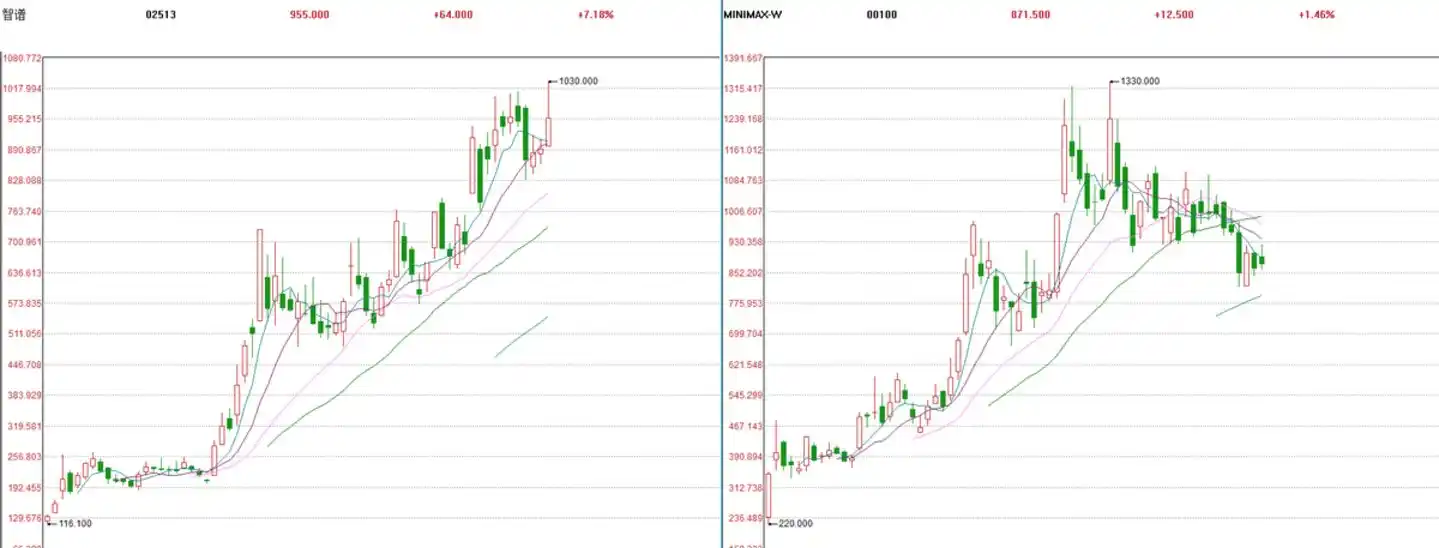
The soaring ARR of Anthropic, Zhipu, and MiniMax reveals that industry competition has entered a stage of commercialization race centered around computing power, talent, products, and ecosystems.

Pure technological idealism is no longer sufficient to support an AI company's continuous leadership in the industrialization process, nor can it solidify the confidence of top talent to stay.

DeepSeek Needs an Anchor to Price the "Ideal"

Why is talent leave?

The numbers on compensation are the most straightforward account.

DeepSeek's absolute salaries are not low within the industry, but competitors offer conditions that are "no problem to double or triple," with some even providing eight-figure total packages. For instance, behind Luo Fuli's departure was Lei Jun personally stepping in to recruit with a tens-of-millions salary.

Behind this lies a profound talent inflation happening in the AI industry. A 2025 report from Liepin indicated that China's AI talent gap has exceeded 5 million. McKinsey predicted that China's demand for AI professionals would increase sixfold by 2030 compared to 2022.
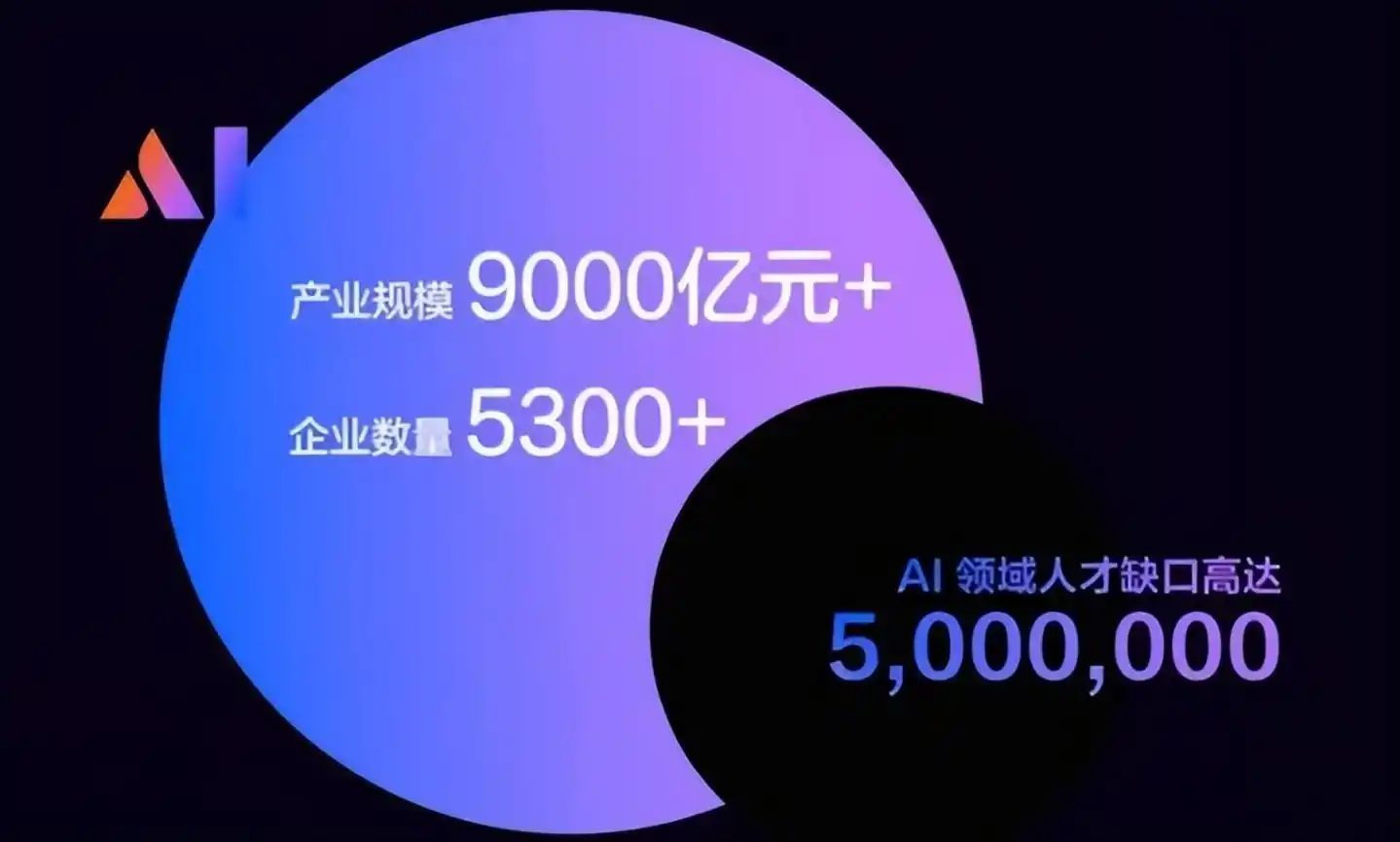
Image Source: Liepin 2025 Annual Talent Supply and Demand Trends Report

Capital giants are pricing top brains at an almost frantic pace, using proven talent to hedge against their own R&D uncertainties.

But the high salaries offered by giants are only the first reason; more致命 (fatal) than the salary figures is the uncertainty caused by the stock options themselves being "unpriced."

The challenge DeepSeek faces is not just a gap in base amount, but more critically, its options lack a market-based price benchmark for comparison.

DeepSeek has never accepted any external funding since its inception, so the options held by employees rely entirely on internal valuation. Before external institutions confirm the price with real money, this paper wealth lacks sufficient liquidity and a premium anchor in the eyes of top AI talent. Without IPO expectations, no equity变现 (liquidation) channel, and no comparable valuation anchor, this option is merely an un-cashable promissory note.

Liang Wenfeng might not need VC money to keep the company running, but he lacks a market-validated "price anchor."

With this anchor, DeepSeek's options transform from an elusive concept into a financial asset with fair value, and the organizational incentive mechanism shifts from idealism to market logic.

$300 million is not a large figure in today's AI赛道 (arena). For DeepSeek, it means giving up only 3% equity to gain market value recognition and reconstruct DeepSeek's talent incentive mechanism. Under the iron law of "talent is everything" in the AI industry, this might be a more pragmatic step than any technological breakthrough.

Beyond this, where Liang Wenfeng spends this money speaks louder than the fundraising itself.

From Research Institution to Ecosystem Player: The V4 Bet on Domestic Computing Power

The real reason for V4's delay was never a technical bottleneck.

Previously, a Reuters report disclosed a detail: After the release of DeepSeek R1, relevant authorities encouraged the company to adopt Huawei's Ascend processors.

An informed source told the press that over the past few months, DeepSeek's engineers have been engaged in a thankless task: migrating the entire V4 from Nvidia's CUDA ecosystem to Huawei Ascend's CANN architecture.

To do this, DeepSeek had to rewrite underlying code, adjust communication libraries and training frameworks, and perform precision alignment of the model's outputs on different hardware. But it was a strategic shift that had to be made.

Why was it absolutely necessary?

From an industry chain logic perspective, under the US export controls on high-end chips, this is a guarantee for long-term secure and stable development.

Nvidia CEO Jensen Huang stated bluntly in a recent interview: "New models based on domestic hardware platforms could be a bad outcome for the US." He worries that once top AI models are optimized to perform better on domestic chips, the ecosystem moat Nvidia has built over years will no longer be secure.

Escalating US export controls caused Nvidia's share of China's high-end AI chip market to drop from a former 95% directly to zero.

If V4 succeeds, it will become the world's first cutting-edge large model not reliant on Nvidia.

It's worth mentioning that having a cutting-edge model alone is not enough; today's AI competition is no longer a single-point game of "whoever has the most parameters wins."

An industry insider summarized the current landscape in one sentence: Whoever can build a complete ecological closed loop at the application layer can truly survive.

In this regard, ByteDance's strategy is to decompose AI capabilities into reusable "building blocks" embedded into product lines like Douyin, Jiemeng, Feishu, etc., forming a "product matrix + AI mid-platform" building block layout. Tencent directly reached into WeChat, which boasts 1.2 billion users, launching the ClawBot plugin allowing users to call AI agents without jumping apps. Even Zhipu AI achieved scaled revenue on the coding track; after the release of GLM-5.1, the配套 (supporting) Coding Plan subscription一度 (once) "sold out instantly."

In comparison, DeepSeek's shortcomings are clear.

DeepSeek lacks a super app entry point like Douyin or WeChat, and also lacks a commercially proven closed loop. Its powerful models and open-source community reputation are its moat, but it明显滞后 (lags noticeably) in end products, multimodal capabilities, and Agent ecosystem.

In other words, DeepSeek is still fighting the war of the ecosystem era with a model-era mindset, which is not just being half a step slow, but running on the wrong track.

Considering long-term competition, the deeper strategic intent behind the fundraising is to announce DeepSeek's formal entry into the "second half" of AI ecosystem competition.

Introducing external capital means DeepSeek's corporate governance structure will become more standardized, transforming into a commercial entity that must face market tests and answer to investors.

This step is DeepSeek's entry ticket to transform from a research institution into an industry-level player.

Whether V4 can prove itself on domestic computing power, and whether the funding can leverage it to补齐 (fill) the shortcomings at the application layer, will determine its possibility of metamorphosing (蜕变为) from a "dark horse in technology" to an "ecosystem player." And this transformation requires far more than $300 million.

A new storm has just appeared.

Trending Cryptos

Related Questions

QWhat is the significance of DeepSeek's decision to seek external funding at a $10 billion valuation?

ADeepSeek's decision to seek external funding at a $10 billion valuation marks a shift from its founder's previous idealistic stance of rejecting capital to maintain independence. This move is seen as a pragmatic step to establish a market-validated 'price anchor' for its employee stock options, which is crucial for retaining top AI talent in a highly competitive and inflationary talent market. It also signals the company's transition from a pure research institution to a commercial player in the AI ecosystem.

QWhy has DeepSeek faced challenges in retaining its core research talent?

ADeepSeek has faced talent retention challenges due to intense competition in the AI industry, where rivals offer salaries 2-3 times higher, including packages reaching eight figures. Additionally, the lack of a market-based valuation anchor for its stock options made them less attractive compared to the liquid and high-value equity offered by publicly listed or well-funded competitors. The loss of key researchers has directly impacted its product development timelines.

QWhat strategic shift is DeepSeek making with its V4 model regarding hardware infrastructure?

ADeepSeek is strategically shifting its V4 model from NVIDIA's CUDA ecosystem to Huawei's Ascend CANN architecture. This move is driven by the need to ensure long-term security and stable development amid U.S. export controls on high-end chips. If successful, V4 would become the first cutting-edge large model globally that does not rely on NVIDIA hardware, potentially disrupting NVIDIA's ecosystem dominance and aligning with national strategic priorities.

QHow does DeepSeek's position compare to competitors like Anthropic, Zhipu AI, and MiniMax in terms of commercialization and ecosystem development?

ACompared to competitors like Anthropic (with $30 billion annualized revenue), Zhipu AI, and MiniMax (both listed on HKEX with market caps of HK$400 billion and HK$270 billion, respectively), DeepSeek lags in commercialization and ecosystem development. It lacks a super-app entry point (e.g., like TikTok or WeChat), a proven commercial闭环, and robust multi-modal or agent capabilities. While it has strong model technology and open-source community support, it is still operating with a model-centric mindset in an ecosystem-driven competitive landscape.

QWhat broader industry trend does DeepSeek's funding and challenges reflect?

ADeepSeek's funding move and challenges reflect a broader industry trend where AI competition has evolved from pure model technology battles to a comprehensive war involving compute power, talent, productization, and ecosystem building. The need for market-valued equity to retain talent, the shift to domestic hardware for strategic autonomy, and the pressure to develop commercial applications highlight that idealistic, technology-only approaches are no longer sufficient for leadership in the产业化 AI race.

Related Reads

After Three Consecutive Quarters of Decline, Can the Crypto Market Find a Window for Stabilization in Q3?

The cryptocurrency market has just concluded its worst-performing quarter since 2022, with total capitalization dropping 12.6% to $2.1 trillion. All core metrics indicate capital is leaving the sector, not just rotating within it. Bitcoin fell 14.2% and Ethereum dropped 25.4% in Q2, breaking their previous correlation with US tech stocks. A key driver is the reversal in US spot Bitcoin ETF flows, which saw a net outflow of approximately $4.67 billion in Q2, including a record monthly outflow near $4.5 billion in June. While recent data suggests long-term holders are accumulating again, sustained ETF outflows mean continued selling pressure. Market focus is now singularly on the Federal Reserve. The upcoming July FOMC meeting is seen as the most critical event for Q3. A dovish signal could support Bitcoin reclaiming a $68,000-$84,000 range, while a hawkish stance might establish a new trading band around $50,000-$56,000. Additionally, regulatory uncertainty persists, with the progress of the crucial *CLARITY Act* stalling in the Senate, reducing its perceived 2026 passage probability to 40-45%. Despite the broad downturn, a few sectors showed growth. Prediction markets saw nominal volume surge 48.7% year-over-year to $113.8 billion, and tokenized collectibles transaction volume rose 143% quarterly to $1.4 billion. The Real-World Asset (RWA) tokenization sector also continued steady growth, now representing ~$28.1 billion in on-chain value. The market's foundation for an extreme crash appears limited, with Bitcoin price hovering near its 200-week moving average. However, the trading paradigm has shifted from narrative-driven speculation to decisions based on price action, policy developments, and interest rate expectations, making a broad sentiment-driven rally unlikely in the near term.

marsbit8h ago

After Three Consecutive Quarters of Decline, Can the Crypto Market Find a Window for Stabilization in Q3?

marsbit8h ago

BIT Trading Moment: BTC Still Suppressed by Weekly 200 EMA, Rejection May Restart Decline; Storage and Semiconductors that Surged Last Night Begin Falling in Evening Trading

**Crypto & Stock Market Wrap: Bitcoin Tests Resistance, Stocks Retreat After AI Surge** Bitcoin consolidates around $66,000, facing key resistance near $68,000—an area seen as a major psychological and technical hurdle where previous rallies have failed. Analysts note the cryptocurrency is caught between its 200-week moving average (~$63,333) and 200-week EMA (~$68,328). A clear break above $68k is needed to signal a stronger bullish trend, while a rejection could lead to a retest of $63k support. Market sentiment remains cautious, with low futures open interest pointing to a low-liquidity rebound rather than a full bull market. Bitcoin spot ETFs saw another $203 million inflow. US stock futures pointed lower after a strong Tuesday session led by a massive rebound in semiconductors and memory stocks. The rally was fueled by renewed optimism about AI-driven hardware demand, with Micron, SanDisk, and SK Hynix surging. However, those gains reversed in pre-market trading. Super Micro Computer (SMCI) soared over 20% after hours on strong guidance and a record backlog. Other standouts included Rocket Lab and nuclear energy plays Oklo and X-Energy. Rising oil prices (Brent above $91) and climbing Treasury yields (10-year near 4.64%), however, are reigniting inflation concerns and acting as a headwind for equities. In Asia, markets were mixed. South Korea's KOSPI pared early gains to close slightly higher as semiconductor stocks like SK Hynix gave back initial surges. Japan's Nikkei edged lower as the yen hit a fresh 38-year low against the dollar, raising fears of potential market intervention. Key events to watch include the Samsung Galaxy launch, AMD's AI event, and a slew of major tech earnings from Alphabet, Tesla, and IBM after the close on Wednesday, followed by the ECB meeting and Intel's earnings on Thursday.

marsbit9h ago

BIT Trading Moment: BTC Still Suppressed by Weekly 200 EMA, Rejection May Restart Decline; Storage and Semiconductors that Surged Last Night Begin Falling in Evening Trading

marsbit9h ago

Former CFTC Chairman, Circle President Tarbert: Preaching Long-Termism While Cashing Out $30 Million Himself

Former CFTC Chairman and Circle President Heath Tarbert has consistently advocated for a long-term vision in public, urging patience from investors as Circle’s stock price has fallen significantly from its peak. However, it has been revealed that since Circle’s IPO, Tarbert has continuously sold his CRCL shares through pre-arranged trading plans, cashing out approximately $30 million, without making any public market purchases. This contrast between his public messaging and personal actions has drawn criticism. Tarbert joined Circle in July 2023 as Chief Legal Officer, leveraging his regulatory experience to help guide the company through its IPO and expansion. Despite promoting stablecoins as long-term infrastructure, he established a 10b5-1 trading plan just before Circle went public, leading to substantial stock sales over the following year. In March 2026, he initiated another plan to sell more shares. His career trajectory highlights a pattern of moving between high-level regulatory roles and influential positions in the financial sector. After resigning as CFTC Chairman in early 2021, he joined Citadel Securities as Chief Legal Officer just 27 days later, during a period of intense regulatory scrutiny for the firm. He later joined Circle, aiding its efforts to navigate regulatory challenges for its public listing. While Tarbert's expertise in policy and compliance is valuable to companies like Circle, his actions—advocating long-term confidence while personally divesting—raise questions about the alignment between his public statements and his private financial decisions, leaving investors who followed his advice to bear the market risks.

marsbit9h ago

Former CFTC Chairman, Circle President Tarbert: Preaching Long-Termism While Cashing Out $30 Million Himself

marsbit9h ago

Gate Research Institute: The 'Wall Street-ization' Wave of Crypto Financial Products – Competition or Integration?

The article titled "Gate Research Institute: Are Crypto Financial Products Sparking a 'Wall Street' Wave—Competition or Convergence?" explores the evolving relationship between the crypto ecosystem and traditional finance (TradFi). The piece begins by reflecting on Bitcoin's original 2009 vision of decentralization, disintermediation, and moving away from banks. It then contrasts this with the 2024 landscape, where key crypto assets like Bitcoin are increasingly held through Wall Street products like ETFs issued by giants like BlackRock. The article questions whether this signifies that TradFi is systematically taking over the rights to issue, price, custody, and distribute crypto financial assets. The core argument is that this is not a zero-sum takeover but rather a bidirectional convergence where each side addresses the other's weaknesses. Crypto offers 24/7 global markets, programmable settlement, and open access but lacks compliant channels, institutional-grade custody, deep fiat liquidity, and mainstream distribution. TradFi possesses these but is constrained by legacy systems, limited operating hours, and slow settlement. Two primary convergence paths are highlighted: * **Path A (CEX to TradFi):** Exemplified by Gate, which has progressed from offering tokenized stocks and CFDs to providing direct, real stock trading (US, Hong Kong, South Korea) within its platform, using USDT. * **Path B (TradFi to Crypto):** Exemplified by Robinhood, which has integrated crypto trading, acquired exchanges like Bitstamp, and is moving traditional assets like stocks onto the blockchain via tokenization and its own Layer 2. Both paths are ultimately competing to become the next-generation, unified financial account—a "super account" where users can seamlessly trade cryptocurrencies, stocks, ETFs, RWA (Real World Assets), and tokenized treasury products in one interface. The growth of RWA and tokenized treasuries (e.g., BlackRock's BUIDL) is presented as the asset-layer fusion, providing stable, yield-bearing assets on-chain and acting as a bridge between the two worlds. In conclusion, the "Wall Street-ization" of crypto is framed as a mutual transformation. Decentralized ideals persist in the protocol layer, while at the application layer, a more efficient, global, and accessible unified capital market is emerging from this convergence. The future competition lies not between crypto exchanges and stockbrokers, but between platforms vying to offer the most comprehensive asset coverage, liquidity, and user experience within a single account.

marsbit9h ago

Gate Research Institute: The 'Wall Street-ization' Wave of Crypto Financial Products – Competition or Integration?

marsbit9h ago

Trading

Spot

Hot Articles

Discussions

Welcome to the HTX Community. Here, you can stay informed about the latest platform developments and gain access to professional market insights. Users' opinions on the price of AI (AI) are presented below.

活动图片















