# Web3 Related Articles

HTX News Center provides the latest articles and in-depth analysis on "Web3", covering market trends, project updates, tech developments, and regulatory policies in the crypto industry.


A New Paradigm in Tokenomics? When Backpack Makes VCs 'Delay Gratification'

The article discusses Backpack's innovative tokenomics model, which challenges conventional practices in the cryptocurrency industry. Unlike typical projects where teams and venture capitalists (VCs) receive immediate token allocations, Backpack allocates 100% of liquid tokens to users at TGE. The remaining 37.5% of tokens, traditionally reserved for teams and investors, are locked in a corporate vault and tied to the company’s eventual IPO. This structure ensures that internal stakeholders can only benefit after a successful IPO, with an additional one-year lock-up period post-IPO to prevent early sell-offs. Backpack’s approach emphasizes long-term alignment with user interests and project sustainability. The token distribution prioritizes community incentives, with 25% of tokens released at TGE to reward users and NFT holders. Future unlocks are tied to product milestones, ensuring that new token releases contribute more value to the ecosystem than they dilute the token’s price. Additionally, Backpack prioritizes regulatory compliance, currently serving only 48% of global regions to adhere to legal standards. Its goal is to build a hybrid platform integrating crypto and traditional financial services. Market reactions are mixed: Backpack is reportedly seeking funding at a $1 billion valuation, but predictions about its token FDV reflect uncertainty. Ultimately, Backpack’s model represents a shift toward transparency, long-term value, and user-centric growth in Web3.

marsbit9m ago

A New Paradigm in Tokenomics? When Backpack Makes VCs 'Delay Gratification'

marsbit9m ago

The Darkness Before Dawn: Crypto in 2026 = The Internet in 2002

"DeFi Cheetah argues that the current despair in crypto, marked by high-profile departures like Kyle Samani's shift to AI, is deceptive. The industry is at a critical inflection point, witnessing a rise of "fintech wrappers"—products from traditional finance (like bank-issued stablecoins or tokenized assets) that merely leverage blockchain for efficient settlement while retaining the old, rent-seeking intermediary structures. These wrappers, comparable to "Western Union with private keys," fail to capture value on-chain and fragment liquidity, representing an IT upgrade rather than true crypto innovation. Drawing a parallel to the dot-com bust of 2002, the author contends that just as early internet companies were merely "newspaper wrappers," today's fintech wrappers are placing old finance onto new rails. The real revolution will be built by those who embrace crypto's native properties: a global state instead of siloed databases, atomic composability instead of API integrations, and permissionless liquidity instead of walled gardens. The consensus view that blockchains are merely asset ledgers is where alpha is not found. The current downturn is a filter. The true builders who remain will focus on constructing what cannot exist on private servers, leveraging trustless coordination, permissionless access, and composability to solve problems legacy systems cannot. The work of building the sovereign internet is just beginning."

marsbit3h ago

The Darkness Before Dawn: Crypto in 2026 = The Internet in 2002

marsbit3h ago

How Does HashKey Build Institutional-Grade On-Chain Financial Infrastructure?

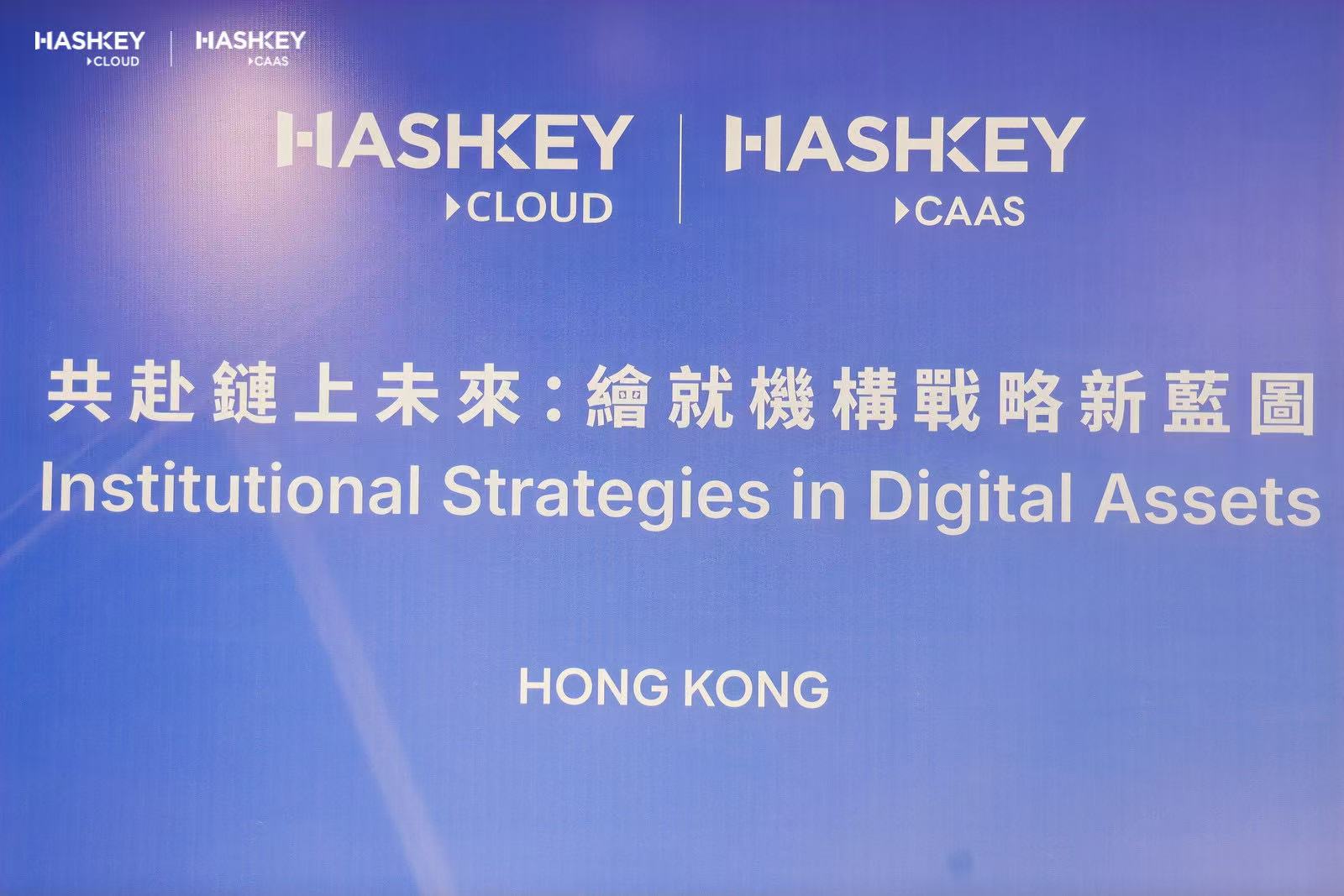
In a recent "Charting a New Institutional Strategy" event held ahead of Consensus, HashKey Cloud and HashKey CaaS introduced a comprehensive on-chain financial infrastructure solution tailored for institutional clients. The event highlighted the growing demand for secure, efficient, and regulatory-compliant services as institutions enter the crypto ecosystem. Leo, CEO of HashKey’s On-Chain Business Group, expressed optimism about the industry’s compliance-driven future, emphasizing Web3’s potential as transparent and secure financial infrastructure, particularly in regions with less developed financial systems. HashKey Cloud, represented by Product Lead Shen Jun, showcased its institutional-grade staking and yield services, operating under a non-custodial model to enable secure asset tokenization and yield generation. The platform supports multi-chain services and offers insurance-backed staking solutions. HashKey CaaS, introduced by Business Development Manager Yu Yi, provides end-to-end services including asset tokenization, staking for ETFs and digital assets, on-chain transactions, and risk management. It aims to bridge traditional finance with crypto through compliant, globally-trusted infrastructure. The event also featured roundtables with participants from firms like Victory Securities, Zodia Custody, WisdomTree, Ether.fi, Lido, and others, discussing the integration of traditional finance with on-chain yields, new earning opportunities with ETH and BTC, and the tokenization of precious metals as part of the expanding RWA (Real-World Asset) ecosystem. HashKey’s strategic shift from a compliant exchange to an institutional on-chain infrastructure provider underscores its commitment to driving the convergence of traditional and digital asset finance in Hong Kong and globally.

marsbit11h ago

How Does HashKey Build Institutional-Grade On-Chain Financial Infrastructure?

marsbit11h ago

活动图片