How Does HashKey Build Institutional-Grade On-Chain Financial Infrastructure?

marsbitОпубликовано 2026-02-10Обновлено 2026-02-10

Введение

In a recent "Charting a New Institutional Strategy" event held ahead of Consensus, HashKey Cloud and HashKey CaaS introduced a comprehensive on-chain financial infrastructure solution tailored for institutional clients. The event highlighted the growing demand for secure, efficient, and regulatory-compliant services as institutions enter the crypto ecosystem. Leo, CEO of HashKey’s On-Chain Business Group, expressed optimism about the industry’s compliance-driven future, emphasizing Web3’s potential as transparent and secure financial infrastructure, particularly in regions with less developed financial systems. HashKey Cloud, represented by Product Lead Shen Jun, showcased its institutional-grade staking and yield services, operating under a non-custodial model to enable secure asset tokenization and yield generation. The platform supports multi-chain services and offers insurance-backed staking solutions. HashKey CaaS, introduced by Business Development Manager Yu Yi, provides end-to-end services including asset tokenization, staking for ETFs and digital assets, on-chain transactions, and risk management. It aims to bridge traditional finance with crypto through compliant, globally-trusted infrastructure. The event also featured roundtables with participants from firms like Victory Securities, Zodia Custody, WisdomTree, Ether.fi, Lido, and others, discussing the integration of traditional finance with on-chain yields, new earning opportunities with ETH and BTC, and the t...

Yesterday, on the eve of Consensus, HashKey Cloud and HashKey CaaS jointly held a launch event titled "Towards an On-Chain Future: Charting a New Strategic Blueprint for Institutions." The event focused on the needs of global institutional clients in digital transformation, showcasing a one-stop on-chain financial infrastructure solution designed to provide secure, efficient, and regulatory-compliant service support for institutions entering the crypto ecosystem.

Leo, CEO of HashKey's On-Chain Business Group; Shen Jun, Product Head of HashKey Cloud; and Yu Yi, Senior Business Development Manager of HashKey CaaS, along with other core business leaders, attended the event. During the launch, the leaders shared HashKey's practical experience and technical expertise in supporting institutional clients in deploying digital assets, based on real cases and industry insights, demonstrating HashKey's professional capabilities in risk management and infrastructure.

Additionally, expert representatives from institutions such as Quzhi Group, Victory Securities, Zodia Custody, WisdomTree, Ether.fi, Lido, Babylon, Quantum Solutions, Silver Age Limited, Eddid Financial, Black Horse Aurum Ltd, and JunHe Law Offices were invited to participate. They engaged in in-depth discussions around three key areas: the integration of traditional finance and on-chain yields, the new landscape of digital asset yields, and the tokenization of precious metal physical assets.

Leo, CEO of HashKey's On-Chain Business Group, delivered an opening speech.
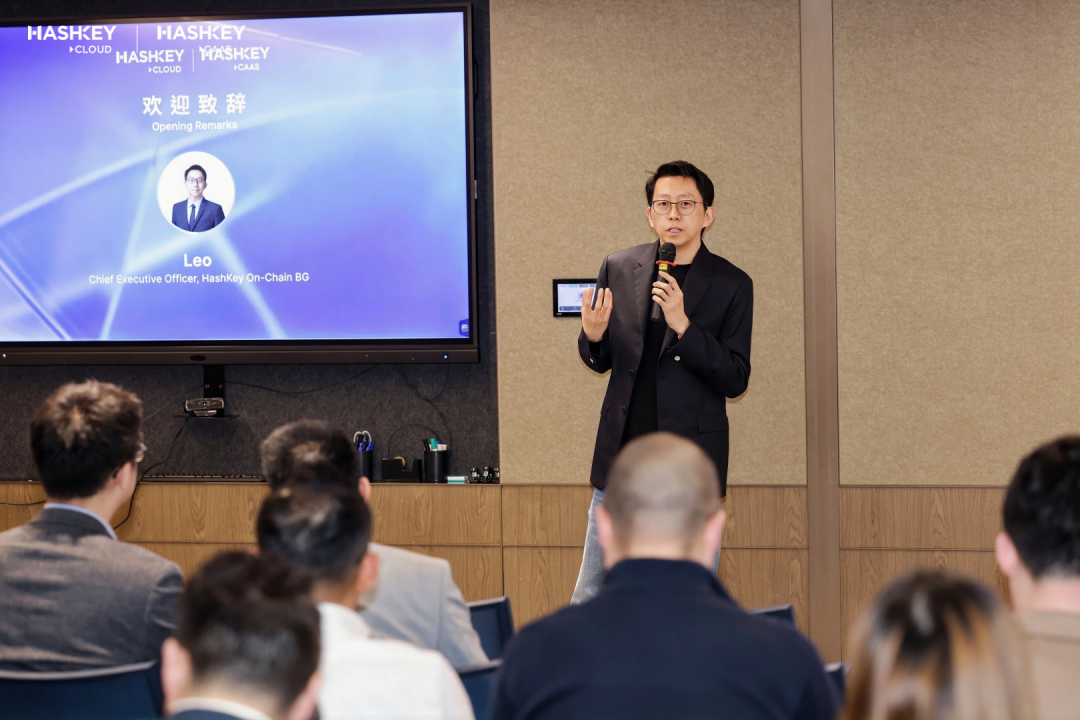
Leo stated that recent significant fluctuations in various assets are a normal cyclical phenomenon, not unique to the crypto industry. He expressed optimism about the future development of the industry, believing that it is accelerating towards compliance, with positive signals from Hong Kong's stablecoin regulations and RWA-related policies. Leo emphasized that Web3, with its transparent, timely, and secure features, can become a critical financial infrastructure, particularly in countries with weaker financial systems, where its value has already been validated through use cases like stablecoins.

Leo indicated that HashKey's future direction is to combine real-world application scenarios to help unlock the maximum value of on-chain assets and promote blockchain's role in serving inclusive finance.

HashKey Cloud: The Infrastructure for Institutional On-Chain Yields

Shen Jun, Product Head of HashKey Cloud, shared the mature practical experience of serving multiple global mainstream ETF companies and provided a detailed breakdown of the compliance framework and technical implementation path for institutional staking services.
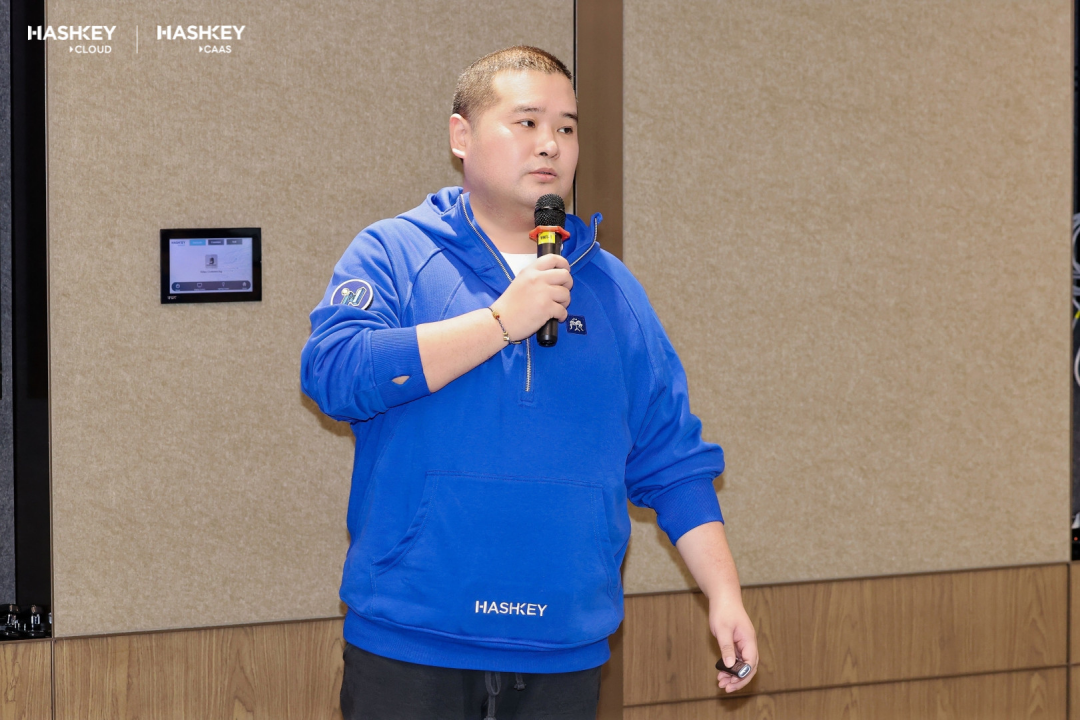
Shen Jun stated that HashKey Cloud, as a leading global institutional-grade, compliant digital asset staking and yield infrastructure, leverages the group's licensing advantages to provide secure and compliant multi-chain services for asset management institutions and other clients. HashKey Cloud adopts a non-custodial model, not directly handling user assets, and helps clients achieve tokenized appreciation and natural yield generation through APIs and online custody. Shen Jun further introduced HashKey Cloud's Staking service, which features non-custodial, on-chain verifiable, and insurance-covered core advantages, offering diversified solutions for different types of clients.

HashKey CaaS: The Core Engine for Institutional-Grade Web3 Ecosystems

Yu Yi, Senior Business Development Manager of HashKey CaaS, systematically presented HashKey CaaS's integrated institutional service system, detailing its complete layout and professional capabilities from underlying infrastructure to upper-layer yield management.
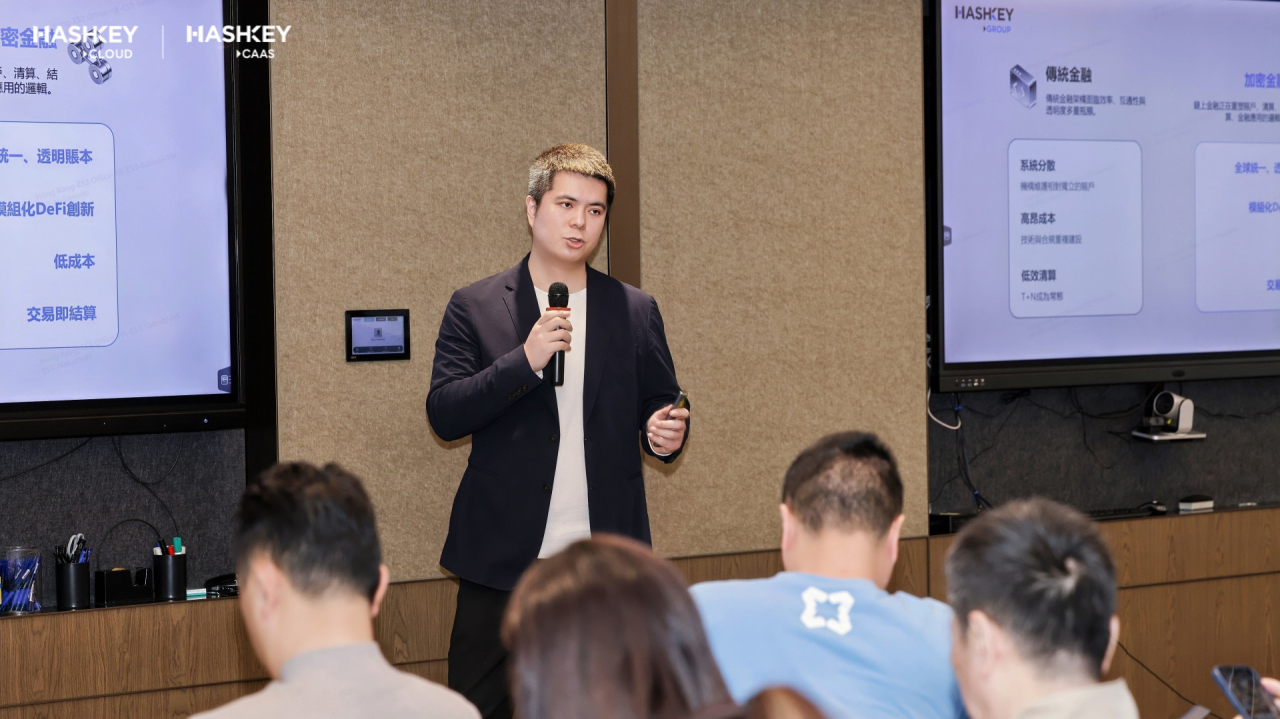
Yu Yi explained that HashKey CaaS primarily addresses traditional financial bottlenecks and helps institutions seamlessly connect to crypto finance through four core modules: asset tokenization, DAT/ETF staking, on-chain transactions and payments, and security and risk control. He noted that in asset tokenization, HashKey CaaS provides end-to-end services from design to distribution, covering products, technology, and distribution platforms. Additionally, Yu Yi stated that HashKey CaaS, with its global compliance layout and industry experience, accelerates product implementation and has gained widespread trust from leading global institutions.

The Integration Path of Traditional Finance and On-Chain Yields

In the roundtable discussion on "The Convergence of Traditional Finance and On-Chain Yields," guests from Quzhi Group, Victory Securities, and Zodia Custody focused on practical implementation experiences in real business scenarios, exploring the integration path of traditional finance and on-chain yields.

New Yield Landscape: The Fusion of ETH, BTC, and Institutional Capital
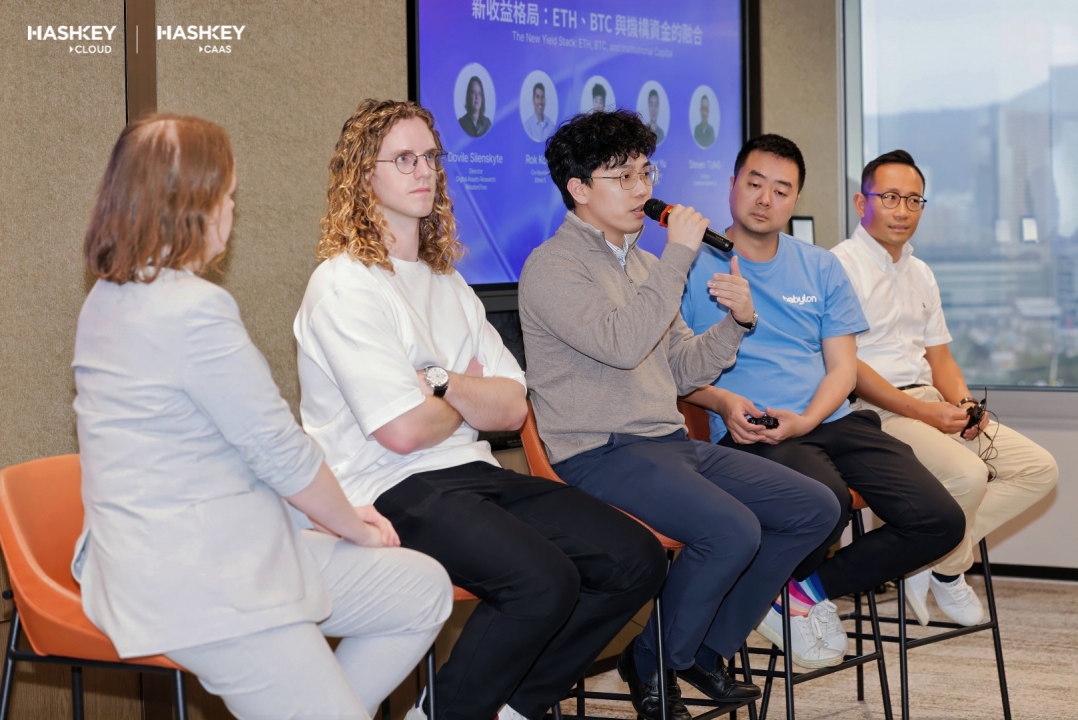
In the digital asset sector, during the roundtable on "New Yield Landscape: The Fusion of ETH, BTC, and Institutional Capital," ecosystem partners such as WisdomTree, Ether.fi, Lido, Babylon, and Quantum Solutions discussed the yield landscape of mainstream digital assets like ETH and BTC, as well as the participation models for institutional capital, exploring industry practices and development directions under the new yield landscape.

Future Prospects for Tokenizing Precious Metal Physical Assets
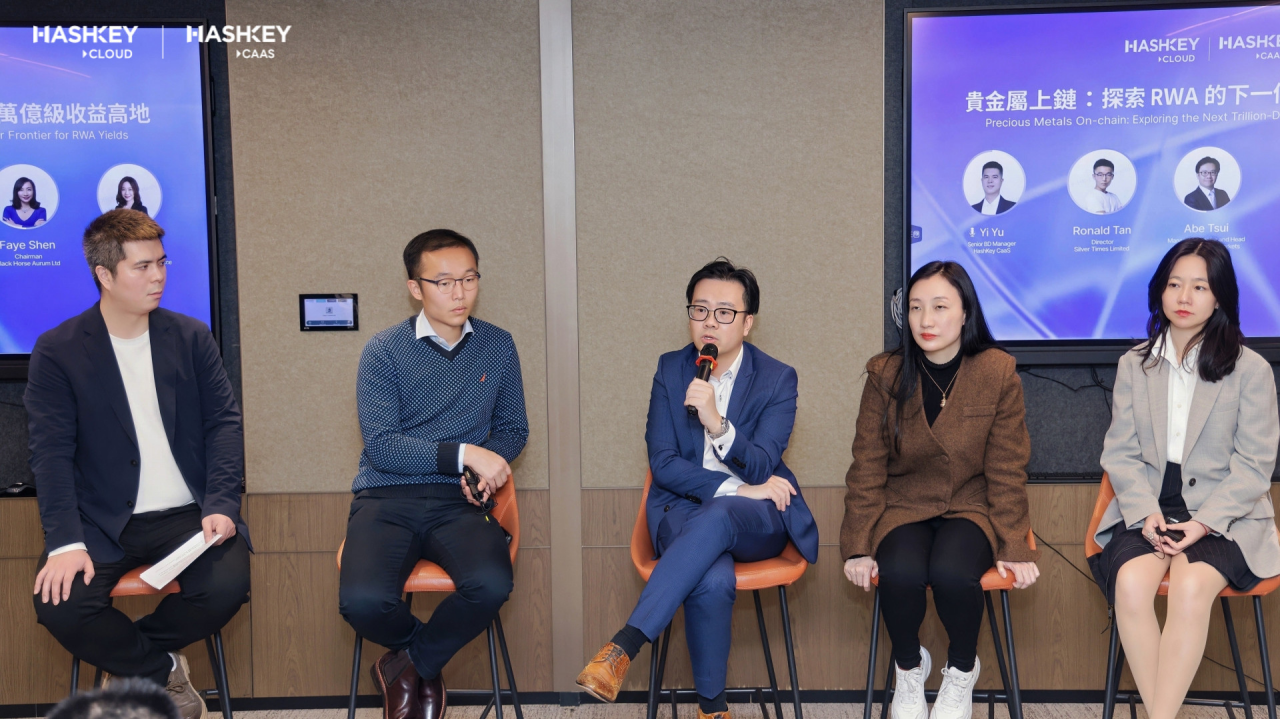
In the roundtable session titled "Precious Metals On-Chain: Exploring the Next Trillion-Dollar Yield Opportunity in RWA," guests from HashKey CaaS, Silver Age Limited, Eddid Financial, Black Horse Aurum Ltd, and JunHe Law Offices, in light of current hot topics, delved into the tokenization potential of precious metals like gold and silver, exploring the yield space and development prospects of RWA assets within the on-chain financial ecosystem.

At this launch event, HashKey Cloud and HashKey CaaS comprehensively demonstrated the core capabilities of their integrated institutional solutions, showcasing HashKey's strategic upgrade from a compliant trading platform to an institutional-grade on-chain financial infrastructure provider. This has fostered industry consensus for the accelerated implementation of institutional-grade on-chain finance in Hong Kong in 2026. With the gradual maturity of compliant products, the continuous deepening of CaaS construction, and the diversified layout of RWA on-chain development, HashKey will continue to promote the deep integration of traditional finance and on-chain assets, driving the development of institutional-grade on-chain finance in Hong Kong and globally.


Связанные с этим вопросы

QWhat is the main focus of HashKey's recent launch event and its provided solutions?

AThe event focused on the needs of global institutional clients in digital transformation, showcasing a one-stop on-chain financial infrastructure solution. It aims to provide secure, efficient, and regulatory-compliant service support for institutions entering the crypto ecosystem.

QHow does HashKey Cloud ensure security and compliance in its staking services for institutional clients?

AHashKey Cloud adopts a non-custodial model, meaning it does not directly handle user assets. It utilizes APIs and online custody methods to help clients achieve tokenized value appreciation and natural interest generation. Its staking services emphasize non-custody, on-chain verifiability, and insurance coverage.

QWhat are the four core modules of HashKey CaaS that help institutions integrate into crypto finance?

AThe four core modules of HashKey CaaS are asset tokenization, DAT/ETF staking, on-chain trading and payment, and security and risk control. These modules work together to break through traditional financial bottlenecks and enable seamless connection to crypto finance.

QWhat positive signals does Leo, CEO of HashKey On-Chain Business Group, see for the future development of the industry?

ALeo holds a positive outlook, believing the industry is accelerating towards compliance. He cites Hong Kong's stablecoin regulations and RWA-related policies as positive signals. He also emphasizes Web3's potential as a key financial infrastructure due to its transparency, timeliness, and security.

QWhat was a key topic discussed regarding the fusion of traditional finance and on-chain assets during the roundtables?

AA key topic was the tokenization potential of physical assets like gold and silver, exploring RWA (Real World Assets) as the next trillion-dollar revenue opportunity in the on-chain financial ecosystem. This was discussed in the roundtable titled 'Precious Metals On-Chain: Exploring the Next Trillion-Dollar Revenue Frontier for RWA'.

Похожее

Why Do You Always Lose Money on Polymarket? Because You're Betting on News, While the Pros Read the Rules

Why do you always lose money on Polymarket? Because you bet on news, while the pros study the rules. This article explains how top traders ("che tou") profit by meticulously analyzing market rules, not just predicting events. Polymarket, a prediction market platform, often sees disputes over event outcomes due to ambiguous rule wording. For instance, a market asking "Who will be the leader of Venezuela by the end of 2026?" was misinterpreted by many who bet on Delcy Rodríguez, assuming she held power. However, the rules specified "officially holds" as the formally appointed, sworn-in individual. Since Nicolás Maduro was still recognized as president officially, he won the market—even being in prison. To resolve such disputes, Polymarket uses a decentralized arbitration system via UMA protocol. The process involves: 1. Proposal: Anyone can propose a market outcome by staking 750 USDC, earning 5 USDC if unchallenged. 2. Dispute: A 2-hour window allows challenges with a 750 USDC stake; successful challengers earn 250 USDC. 3. Discussion: A 48-hour period on UMA Discord for evidence and debate. 4. Voting: UMA token holders vote in two 24-hour phases (blind then public). Outcomes require >65% consensus and 5M tokens voted; otherwise, four re-votes occur before Polymarket intervention. 5. Settlement: Results are final and automatic. Unlike traditional courts, Polymarket’s system lacks separation between arbitrators and stakeholders—voters often hold market positions, creating conflicts of interest. This leads to herd mentality in discussions and non-transparent outcomes without explanatory rulings, preventing precedent formation. Thus, success on Polymarket hinges on deep rule interpretation, not just event prediction, exploiting gaps between reality and contractual wording.

marsbit2 ч. назад

Why Do You Always Lose Money on Polymarket? Because You're Betting on News, While the Pros Read the Rules

marsbit2 ч. назад

DeepSeek Funding: Liang Wenfeng's 'Realist' Pivot

DeepSeek, a leading Chinese AI company, has initiated its first external funding round, aiming to raise at least $300 million at a valuation of no less than $10 billion. This move marks a significant shift from its founder Liang Wenfeng’s previous idealistic stance of rejecting external capital to maintain independence. Despite strong financial backing from its parent company, quantitative trading firm幻方量化 (Huanfang Quant), which provided an estimated $700 million in revenue in 2025 alone, DeepSeek faces mounting challenges. Key issues include a 15-month gap in major model updates, delays in its flagship V4 release, and the loss of several core researchers to competitors offering significantly higher compensation. The company is also undergoing a strategic pivot by migrating its infrastructure from NVIDIA’s CUDA to Huawei’s Ascend platform, a move aligned with China’s push for technological self-reliance amid U.S. export controls. However, DeepSeek lags behind rivals like智谱AI and MiniMax—both now publicly listed—in areas such as product ecosystem, multimodal capabilities, and commercialization. The funding round, though relatively small in scale, is seen as a way to establish a market-validated valuation anchor, making employee stock options more competitive and facilitating talent retention. It also signals DeepSeek’s transition from a pure research-oriented organization to a commercially-driven player in the global AI ecosystem.

marsbit2 ч. назад

DeepSeek Funding: Liang Wenfeng's 'Realist' Pivot

marsbit2 ч. назад

Торговля

Спот
Фьючерсы
活动图片