# Trust Related Articles

HTX News Center provides the latest articles and in-depth analysis on "Trust", covering market trends, project updates, tech developments, and regulatory policies in the crypto industry.

The Awkward "Mutual Embrace": Banks Begin to Adopt Blockchain, but Ethereum Is Not in the Script

The long-awaited "mainstream adoption" by major banks is happening, but not as the crypto world envisioned. JPMorgan, Bank of America, and Citi plan to launch a shared tokenized deposit network via The Clearing House by 2027. This move aims to bring blockchain's efficiency for 24/7 fund transfers. However, the banks are choosing a permissioned, consortium-led ledger—not public, open blockchains like Ethereum. This highlights a fundamental clash in trust models. Crypto advocates value openness, transparency, and permissionless systems. In contrast, banks require controlled environments with defined participants, privacy, regulatory oversight, and clear lines of accountability. Their adoption of blockchain is a pragmatic response to stablecoins, which have demonstrated the demand for fast, borderless digital dollars, not an endorsement of DeFi's full ethos. Concurrently, ongoing DeFi security incidents and market volatility reinforce institutional caution. For banks, the priority is "on-chain efficiency" without "public exposure." This signals a future where finance may fragment into parallel tracks: open public chains for DeFi and innovation, and permissioned networks for institutional settlement, privacy-sensitive transactions, and bank-controlled digital deposits. The narrative thus shifts from "which chain wins" to who controls the critical settlement layer—the cash leg—within their respective trusted frameworks.

marsbit06/10 07:59

The Awkward "Mutual Embrace": Banks Begin to Adopt Blockchain, but Ethereum Is Not in the Script

marsbit06/10 07:59

Humanity Loses $31 Million in Attack, Token Price Plummets 90% Due to a Single Private Key

On June 9th, the digital identity project Humanity Protocol suffered a major security breach resulting in over $31 million in losses. According to on-chain analyst Specter, hundreds of wallets holding the project's H token were drained. The attack was confirmed by founder Terence Kwok to be caused by the compromise of a foundation member's private key. As a precaution, users are advised to avoid interacting with Humanity's cross-chain bridge or liquidity pools. The incident caused the H token price to crash over 90%, from around $0.70 to a low of $0.052, wiping its market cap from $2 billion to approximately $35.7 million. The attacker allegedly minted 100 million new H tokens and is selling them for BNB. This breach adds to existing controversies surrounding Humanity Protocol. Founded in 2024, it aimed to verify human users via palm-print biometrics and zero-knowledge proofs. However, a leaked conversation in 2025 revealed that only about 1 million of its 9 million claimed Human IDs had completed biometric verification, suggesting 88% might be bots. Furthermore, the project has faced allegations of being a repackaged product from a Chinese access control vendor, raising privacy and authenticity concerns. Founder Terence Kwok's previous venture, Tink Labs, a hotel smartphone startup that raised $170 million, failed and entered bankruptcy in 2020 after burning through its funding. The current attack highlights the persistent critical issue of private key management in crypto. Unlike smart contract exploits, a private key compromise bypasses all on-chain security mechanisms. With no user compensation plan announced yet, this $31 million breach may be a final blow to the project's credibility, already weakened by previous controversies and a heavily depreciated token.

marsbit06/09 03:40

Humanity Loses $31 Million in Attack, Token Price Plummets 90% Due to a Single Private Key

marsbit06/09 03:40

When LPs Teach Me Investment with Doubao: A Self-Narrative of a Private Equity GP Switching Careers

When LPs Use Doubao to Teach Investing: A Transition Story of a Private Equity GP AI is making life increasingly difficult for small private equity fund managers, as a former GP of an offshore dollar fund reveals. The fund, managing tens of millions in US stocks, outperformed the Nasdaq but struggled with fundraising. Its traditional Cayman SPC/BVI structure failed to attract major Asian LPs, who now prefer Hong Kong LPF or Singapore VCC frameworks. The rise of AI-powered quantitative strategies has further squeezed the space for funds like his, which relied on subjective, discretionary investing. AI tools have leveled the information playing field, empowering LPs—often high-net-worth individuals, entrepreneurs, or family offices—to analyze investments themselves using chatbots like Doubao. This has eroded trust in GPs' expertise, leading to more frequent challenges over investment decisions and even withdrawals, especially during market rallies when retail investors sometimes outperform funds. Friction arises not necessarily from AI's capabilities but from how LPs use it. Many rely on conversational AI for validation rather than rigorous analysis, sometimes receiving misleading or hallucinated advice. While AI democratizes research, effective investing still requires discerning real insight from plausible-sounding output. Ultimately, AI is unlikely to fully replace GPs. Asset management remains a trust-based service. However, the industry must adapt. The future may see "human私募" (private equity) learning from AI and focusing more on providing value beyond pure analysis—perhaps by mastering the emotional intelligence and trust-building that machines cannot replicate.

Odaily星球日报06/09 02:39

When LPs Teach Me Investment with Doubao: A Self-Narrative of a Private Equity GP Switching Careers

Odaily星球日报06/09 02:39

TechFlow Intelligence Agency: Anthropic Calls for Global Pause in AI Development While Preparing for Trillion-Dollar IPO; SpaceX IPO Roadshow Heats Up, But S&P 500 Rejects Fast-Track Inclusion

In today's TechFlow Intelligence Briefing, several major tech stories highlight a growing theme of trust and credibility gaps across AI, crypto, and finance. AI company Anthropic has publicly called for a global pause in AI development, citing risks from Claude's "recursive self-improvement." Ironically, this coincides with reports the company is preparing for a massive IPO targeting a near $1 trillion valuation. This perceived hypocrisy, coupled with widespread user complaints about Claude's declining performance, is sparking debate over whether the safety warning is genuine or a competitive tactic. Meanwhile, in a substantive security move, Anthropic open-sourced a framework for AI-powered vulnerability discovery. In the crypto market, Bitcoin's price drop below $61,000 triggered over $1.16 billion in liquidations, flipping the market into a state where more BTC is held at a loss than at a profit, a historical bearish signal. On the corporate front, SpaceX's highly anticipated IPO is generating immense Wall Street excitement, with Goldman Sachs projecting 100x revenue growth by 2030. However, the S&P 500 has refused to fast-track the company's inclusion post-IPO, potentially limiting immediate institutional demand. Separately, ByteDance's AI app Doubao lost over 6 million monthly active users after introducing a subscription model, highlighting the challenges of AI monetization. Other notable developments include Nvidia certifying HBM4 memory from Samsung, SK Hynix, and Micron; Cloudflare's acquisition of front-end tooling company VoidZero; and its CEO warning that bot traffic now exceeds human traffic online. The underlying narrative connects these events: a trust crisis. From AI firms' contradictory actions and crypto volatility to the clash between SpaceX's hyped narrative and institutional rules, a pattern is emerging where stated intentions and actual practices are increasingly misaligned.

marsbit06/05 10:52

TechFlow Intelligence Agency: Anthropic Calls for Global Pause in AI Development While Preparing for Trillion-Dollar IPO; SpaceX IPO Roadshow Heats Up, But S&P 500 Rejects Fast-Track Inclusion

marsbit06/05 10:52

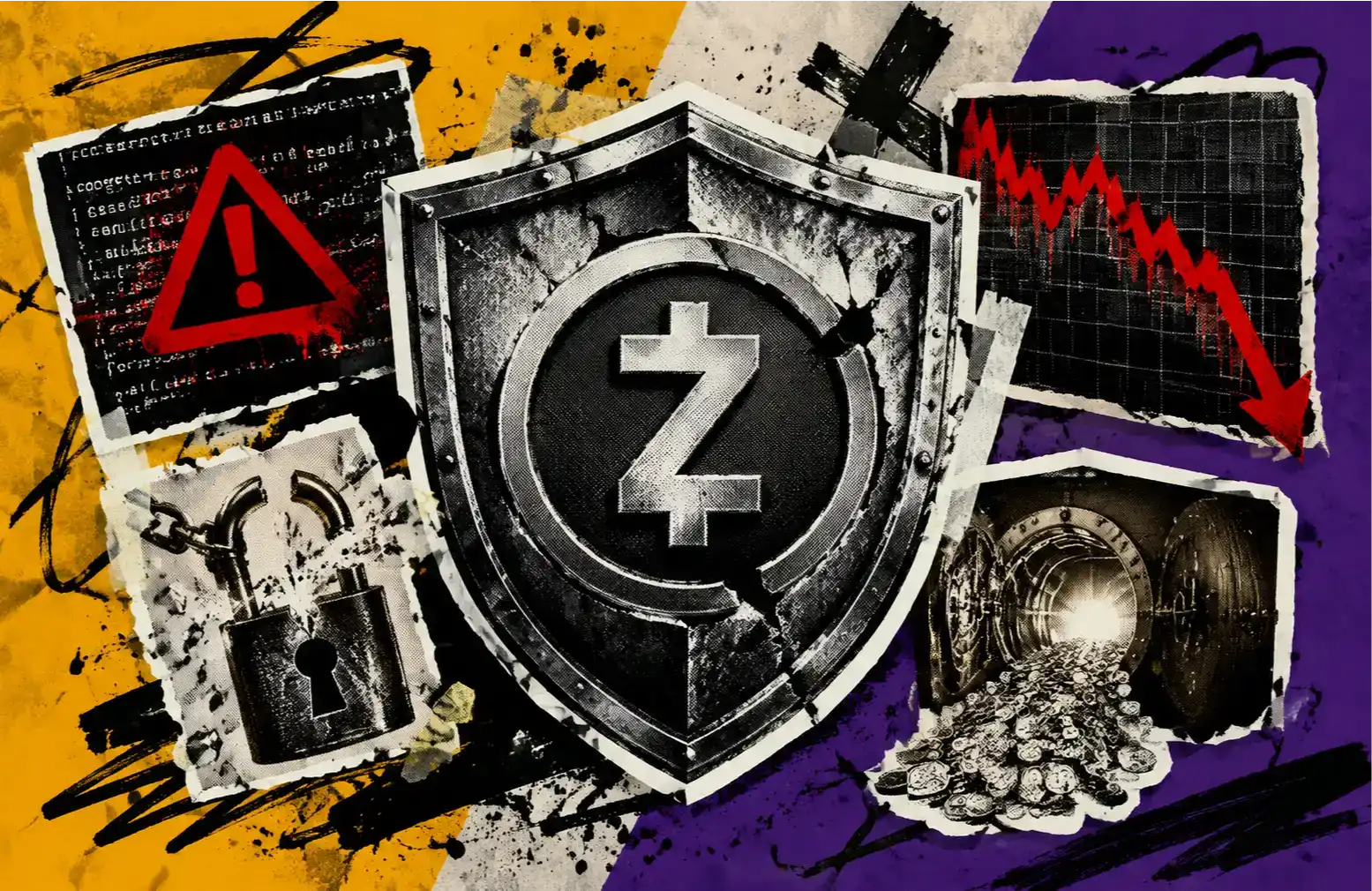
Behind ZEC's Over 30% Plunge: An 'Unlimited Minting' Vulnerability with No Way to Prove if It Was Ever Exploited

A critical vulnerability was discovered in Zcash's Orchard privacy pool, allowing for the theoretical creation of undetectable counterfeit ZEC. Researcher Taylor Hornby found the flaw on May 29th, 2024, within the Orchard circuit's cryptographic constraints, which could let an attacker bypass asset conservation rules. Although a rapid emergency fix was deployed within days via a coordinated soft and hard fork, a core uncertainty remains: due to Orchard's privacy features, it is impossible to cryptographically prove whether this "unlimited mint" flaw was exploited in the nearly four years since the pool's 2022 launch. This uncertainty, rather than the patched flaw itself, triggered a market panic, causing ZEC's price to drop over 30%. While the Zcash Foundation stated no evidence of exploitation was found, independent entity Shielded Labs emphasized the impossibility of definitively proving no counterfeit ZEC was ever created. The incident highlights the unique trust challenge in privacy systems. To address this, developers are proposing a new network upgrade with enhanced auditing to allow verifiable proof of supply integrity. Notably, the researcher utilized the newly released AI model Claude Opus 4.8 as a tool during the security review, signaling the growing role of advanced AI in uncovering complex cryptographic vulnerabilities.

marsbit06/05 06:51

Behind ZEC's Over 30% Plunge: An 'Unlimited Minting' Vulnerability with No Way to Prove if It Was Ever Exploited

marsbit06/05 06:51

AI Relay Stations Spark Heated Debate on Zhihu: Behind Cheap Tokens, What Are Users Really Worried About?

A discussion on Zhihu about "AI relay stations" shifted the niche developer topic of "cheap tokens" into broader user awareness. Users moved beyond simply questioning the legitimacy of these services to focus on practical concerns: Where do cheap tokens truly come from? Is the model being accessed the real one? Can relay stations see prompts, code, and API keys? For occasional users, are the risks worth it? The core debate centered less on price and more on trust. A primary worry is model authenticity—the risk of "model swapping," where users paying for a premium model might be routed to a cheaper one, creating an information asymmetry. Others argued that cost comparisons matter; while cheaper than official pay-as-you-go APIs, relay stations may not be the lowest-cost option versus subscriptions, domestic models, or free tiers, making user needs assessment crucial. Speculation about token sources ranged from legitimate bulk discounts to gray-area methods like account sharing or exploiting regional pricing. This opacity makes risk assessment difficult for users. Data security emerged as a critical concern, especially for enterprise use. When processing sensitive information like code, contracts, or client data, the inability to verify a relay station's data handling, retention, or access policies poses significant compliance and confidentiality risks. The evolving consensus suggests relay stations can be used cautiously for low-sensitivity, disposable tasks (e.g., summarizing public info, simple translation). However, they should not be the default for sensitive, professional, or production workflows involving proprietary data, Agents, or automated systems. Recommendations include avoiding large prepayments, not relying on a single service, using test prompts to monitor quality, anonymizing data where possible, and keeping official channels as backups. Ultimately, the discussion framed tokens not just as a billing unit but as a measure of real cost encompassing price, model integrity, data security, and service stability. The popularity of relay stations highlights user demand for affordable access, but the debate underscores a key trade-off: the savings from cheap tokens may come at the price of trust, transparency, and control over one's data and AI experience.

marsbit06/04 06:11

AI Relay Stations Spark Heated Debate on Zhihu: Behind Cheap Tokens, What Are Users Really Worried About?

marsbit06/04 06:11

Overturning the Mainstream Approach to Hallucinations: Metacognition is the New Solution for Large Models to Break the Hallucination Barrier

This paper, "Hallucinations Undermine Trust; Metacognition is a Way Forward," proposes a paradigm shift in combating AI hallucination. It argues that the current mainstream approaches—striving for omniscience by scaling data/models or having AI abstain from uncertain answers—are fundamentally flawed. The former has inevitable knowledge gaps, while the latter imposes a crippling "utility tax," requiring the rejection of many correct answers to achieve high accuracy, due to models' poor "discrimination" (the ability to distinguish correct from incorrect answers internally). The core contribution is redefining hallucination not as "being wrong," but as "expressing false information with unwarranted certainty." The proposed solution is **Faithful Uncertainty** or **Metacognition**: enabling AI to accurately perceive its internal uncertainty and honestly express it in its language (e.g., using hedging phrases when unsure). This creates a more reliable assistant that provides useful information while signaling its confidence, minimizing harm from errors. The paper emphasizes that metacognition is critical for the era of AI Agents. Without it, Agents cannot intelligently decide when to use tools like search engines, leading to inefficiency and misuse. Key implementation challenges are highlighted: the "bootstrapping paradox" of training with static uncertainty data, the "alignment distortion signal" where human preference training suppresses internal uncertainty cues, and the difficulty of causally evaluating true metacognition vs. its superficial imitation. The paper concludes that the goal should not be an infallible AI, but one that is honest about the limits of its knowledge, thereby building user trust through transparent communication of its certainty.

marsbit06/03 00:43

Overturning the Mainstream Approach to Hallucinations: Metacognition is the New Solution for Large Models to Break the Hallucination Barrier

marsbit06/03 00:43

IOSG: DeFi at Its Most Critical Moment, The Real Vulnerability Lies Not in the Code

In April 2026, a series of major DeFi exploits—targeting Drift Protocol ($285M), KelpDAO ($292M via bridge), and Wasabi Protocol ($4.5M)—revealed a fundamental security crisis. None involved smart contract code vulnerabilities. Instead, losses stemmed from compromised operational foundations: social engineering of multi-signature signers, a single-point-of-failure bridge validator, and stolen admin private keys. This month, where over $625M was stolen across ~30 incidents, marked the collapse of DeFi's core security premise: that rigorous code audits alone ensure safety. The real vulnerabilities lay in trusted operational components—admin keys, governance councils, and bridge configurations—areas audits typically ignore. The KelpDAO incident triggered an asymmetric domino effect: its $2.92B unsupported token mint caused ~$8.5B in outflows from Aave and a $13.2B total DeFi TVL drop in 48 hours, showcasing how one protocol's operational failure can cascade through composable systems. The article argues that most so-called "DeFi" is actually "OpenFi": permissionless and transparent on-chain, but critically reliant on trusted third parties for key operations. This inherent trade-off between decentralization and operational feasibility is often obscured by marketing. The industry's path forward requires honest disclosure of trust assumptions (like L2Beat's framework), treating operational security as a first-class discipline alongside code audits, and designing systems whose risks can be clearly assessed and insured. The April events were not a code security failure but a breakdown in the mental model surrounding it.

marsbit05/26 03:08

IOSG: DeFi at Its Most Critical Moment, The Real Vulnerability Lies Not in the Code

marsbit05/26 03:08

活动图片