# Stablecoins Related Articles

HTX News Center provides the latest articles and in-depth analysis on "Stablecoins", covering market trends, project updates, tech developments, and regulatory policies in the crypto industry.

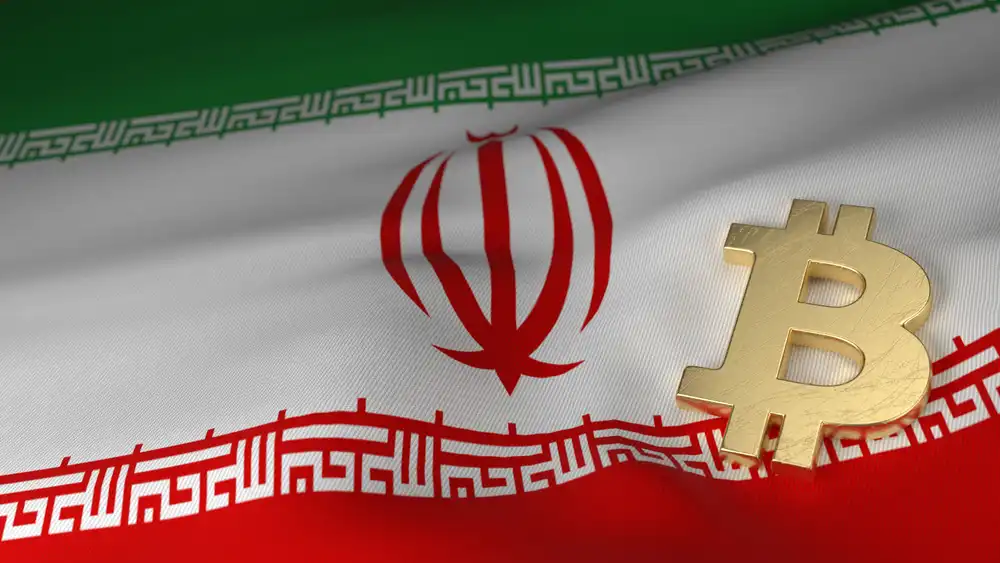
Iran's Path to 'De-Dollarization': When Weapons Begin to Be Settled in Cryptocurrency

Iran's "De-Dollarization" Path: When Weapons Begin to Be Settled in Cryptocurrency Iran has officially integrated cryptocurrency into its national survival and foreign strategy, as evidenced by its defense export center Mindex accepting crypto, barter, or rial for military contracts as of January 2026. This move highlights crypto’s role as an "anti-sanction financial tool" in one of the most sanctioned and regulated sectors: arms trade. Driven by severe constraints—including a depreciating rial, severed international banking ties, and high-risk energy and weapon export channels—Iran has turned to crypto to meet economic targets. In 2025, parliamentary leaders emphasized that without crypto, Iran could not achieve its goal of a 10% digital economy share. Iran is now the world’s fourth-largest cryptocurrency mining hub, leveraging subsidized electricity. Stablecoins, especially USDT, have also become critical for liquidity—reportedly facilitating around $1.5 billion in transactions linked to entities like the Islamic Revolutionary Guard Corps. During a nationwide internet blackout in January 2026, crypto demonstrated resilience through offline workarounds like satellite networks (Starlink, Blockstream), Bluetooth mesh systems (Bitchat), and SMS-based Bitcoin transfers (Machankura). Iran’s experience reflects a broader trend: nations like Russia and Venezuela are also using crypto to bypass sanctions, transforming it from a financial innovation into a strategic geopolitical tool for value transfer and access to global markets.

marsbit01/17 02:32

Iran's Path to 'De-Dollarization': When Weapons Begin to Be Settled in Cryptocurrency

marsbit01/17 02:32

A 'Clarity Act': Why Has It Caused Such an Uproar in the Crypto World?

A historical perspective reveals that money has rarely been neutral—it inherently carries an expectation of return. From ancient Mesopotamia to modern banking, the principle that holding or lending money should yield compensation has persisted. Against this backdrop, stablecoins emerged, promising faster settlement, lower costs, and 24/7 availability within a borderless digital economy. However, the proposed U.S. CLARITY Act, combined with the already-passed GENIUS Act, seeks to prohibit stablecoin issuers from paying interest or rewards to holders, permitting only limited “activity-based rewards.” This has sparked intense opposition from both the crypto industry and banking sectors. Critics argue that the bill effectively reduces stablecoins to mere payment conduits rather than capital-optimizing assets, contradicting the historical function of money. Key concerns include unfair competition, as traditional banks can offer interest and rewards while stablecoin issuers are restricted. The bill also introduces ambiguities around decentralized finance (DeFi) and tokenized assets, potentially stifling innovation and pushing capital overseas. Prominent industry figures, including Coinbase CEO Brian Armstrong, have withdrawn support, stating they would prefer no legislation over a harmful one. The bill currently lacks sufficient congressional support, particularly from Democrats, and faces skepticism for reinforcing existing banking structures rather than fostering healthy competition. Ultimately, the debate highlights the challenge of regulating a form of money inherently designed for efficiency and competition, urging lawmakers to create rules that integrate rather than isolate digital assets.

比推01/17 00:08

A 'Clarity Act': Why Has It Caused Such an Uproar in the Crypto World?

比推01/17 00:08

Encrypted 'Fat Protocols': Key Players in 10 Core Profit Areas

This article, originally titled "Fat Protocols: Key Players in 10 Core Profitability Areas," argues that the original "fat protocol" thesis, where value disproportionately accrues to the base blockchain layer, is outdated. By 2026, value will instead flow to "control points"—entities that capture fees regardless of which chain or application wins. These include interfaces controlling user intent, trading venues internalizing liquidity, issuers with strong balance sheets, and protocols tokenizing inefficient assets. The summary ranks the top 10 "fat" layers based on revenue, users, ARPU, and market dominance: 1. **Fat Wallets (e.g., Phantom):** Dominant on the intent layer, evolving into active financial venues with significant revenue from swaps and perpetual trading. 2. **Fat Blockchains (e.g., Ethereum):** Remains the core settlement layer for high-value transactions and MEV, with strong defensive moats. 3. **Fat Perp DEX (e.g., Hyperliquid):** The most profitable trading format, with Hyperliquid monopolizing the market by integrating liquidity and execution on a dedicated chain. 4. **Fat Lending (e.g., Aave):** The leading DeFi lending platform, characterized by scale, resilience, and steady institutional capital. 5. **Fat RWA Protocols (e.g., BlackRock BUIDL):** Growth is driven by scale and trust, bridging TradFi and on-chain finance with tokenized assets like U.S. Treasuries. 6. **Fat LRT/Restaking (e.g., EigenLayer):** Profits by renting Ethereum's security to Active Validation Services (AVS) and expanding into off-chain compute. 7. **Fat Aggregators (e.g., Jupiter):** Capture value by controlling routing, pricing, and execution quality on DEX trades. 8. **Fat Stablecoin Issuers (e.g., Tether):** Extremely profitable by earning yield on treasury holdings backing the stablecoin supply. 9. **Fat Prediction Markets (e.g., Polymarket):** Profit from attention and event-driven trading, creating a highly profitable layer with strong narrative power. 10. **Fat MEV (e.g., Flashbots):** MEV is an invisible tax on block space, with entities like Flashbots institutionalizing its extraction and redistribution. The key takeaway is that value accumulation has shifted from the base protocol to specific, high-control business models and infrastructure layers across the crypto ecosystem.

marsbit01/16 09:45

Encrypted 'Fat Protocols': Key Players in 10 Core Profit Areas

marsbit01/16 09:45

活动图片