Coingecko 2025 Annual Crypto Industry Report: Total Market Cap Plummets, What's Still Rising?

marsbitPublished on 2026-01-16Last updated on 2026-01-16

Abstract

Based on CoinGecko's 2025 Annual Crypto Industry Report, the cryptocurrency market experienced a significant downturn, with the total market capitalization falling 10.4% year-over-year to $3 trillion. This marked the first annual decline since 2022, driven by a 23.7% crash in Q4 following a historic $19 billion liquidation event. Despite the price drop, key areas demonstrated robust growth. The stablecoin market surged 48.9% to a record $311 billion. Institutional adoption deepened, with Digital Asset Treasury Companies (DATCos) deploying at least $49.7 billion and acquiring over 5% of the total Bitcoin and Ethereum supply. Trading activity remained strong. Perpetual contracts volume on centralized exchanges hit a record $86.2 trillion (up 47.4%), while decentralized exchanges saw even more explosive growth of 346% to $6.7 trillion. Prediction markets also boomed, with volume surging 302.7% to $63.5 billion. The report highlights a decoupling from traditional assets, as gold soared 62.6% while Bitcoin fell 6.4%. The data indicates that despite the price correction, critical market infrastructure and utility continued to expand significantly.

Author:CoinGecko

Compiled by: Deep Tide TechFlow

Original link:

https://www.coingecko.com/research/publications/2025-annual-crypto-report

In the last quarter of 2025, the cryptocurrency market experienced a sharp correction, with its total market capitalization plummeting by 23.7% to close at $3 trillion. This marks the first annual decline for the crypto market since 2022, down 10.4% year-on-year. Although the quarter saw a new all-time high of $4.4 trillion, a historic $19 billion liquidation event in October triggered a significant price drop. Despite the price pullback, market volatility drove the average trading volume to an annual high of $161.8 billion, while the stablecoin market grew by 48.9% year-on-year, reaching a new all-time high of $311 billion.

This year, the crypto market showed signs of decoupling from traditional assets, with gold surging 62.6% and U.S. stock markets performing strongly, while Bitcoin fell 6.4%. However, institutional adoption deepened further, as Digital Asset Treasury Companies (DATCos) deployed at least $49.7 billion in 2025 to acquire over 5% of the total supply of Bitcoin and Ethereum. Other highlights include a 302.7% surge in prediction market trading volume and a record high of $86.2 trillion in annual perpetual contract trading volume on centralized exchanges. These data indicate that, even as prices fell, market infrastructure and utility continued to expand.

Our "2025 Annual Crypto Industry Report" comprehensively covers the crypto market landscape, in-depth analysis of Bitcoin and Ethereum, and explores the decentralized finance (DeFi) and non-fungible token (NFT) ecosystems, while also reviewing the performance of centralized exchanges (CEX) and decentralized exchanges (DEX).

Below are the key highlights from the report, but be sure to delve into the full 60-page content.

Seven Highlights from CoinGecko's "2025 Annual Crypto Industry Report"

  1. The total crypto market cap fell 10.4% in 2025, closing at $3 trillion
  2. Stablecoin market cap surged by $102.1 billion (+48.9%) in 2025, hitting a record high of $311 billion
  3. Gold performed strongly in 2025, rising 62.6%, while Bitcoin lagged, falling 6.4%; the U.S. dollar and oil also underperformed
  4. Digital Asset Treasury Companies (DATCos) invested at least $49.7 billion in 2025, with about 50% concentrated in Q3
  5. Prediction market trading volume grew 302.7% in 2025, reaching $63.5 billion
  6. Centralized exchange perpetual contract trading volume grew 47.4% in 2025, reaching $86.2 trillion, a record high
  7. Decentralized exchange perpetual contract trading volume grew 346% in 2025, reaching $6.7 trillion, another record high

Crypto Total Market Cap Plunged 23.7% in Q4 2025 (Losing $946 Billion), Closing the Year at $3 Trillion

The total cryptocurrency market capitalization fell 23.7% in the fourth quarter, losing $946 billion, and closed the year at $3 trillion, down 10.4% year-on-year. This is the first annual decline for the crypto market since 2022.

The fourth quarter of 2025 started strong, with the total market cap reaching a new all-time high of $4.4 trillion. However, this peak was short-lived, as prices continued to fall through late November before entering a volatile range until year-end. The trigger for this decline was the historic $19 billion liquidation event on October 10, following the U.S. announcement of 100% tariffs on China.

Meanwhile, the average daily trading volume in the fourth quarter grew to $161.8 billion, an annual high, up 4.4% quarter-on-quarter. This increase was primarily driven by the liquidation event and subsequent high volatility. However, as the market entered a consolidation phase, trading volume gradually declined.

Stablecoin Market Cap Surged $102.1 Billion (+48.9%) in 2025, Hitting a Record $311 Billion

In the fourth quarter of 2025, the total stablecoin market cap grew by $6.3 billion, reaching a record high of $311 billion by the end of the quarter. For the full year, the stablecoin market grew 48.9% year-on-year, adding $102.1 billion.

The biggest change in the fourth quarter came from the Ethereum-based stablecoin Ethena's USDe, whose market cap plummeted 57.3% (losing $8.4 billion) after rapid deleveraging in mid-October. Due to a depegging event on Binance, USDe's supply dropped from a peak of nearly $15 billion to $6.3 billion, severely shaking investor confidence in high-yield circular strategies.

Meanwhile, PayPal's stablecoin PYUSD emerged strongly, with its market cap surging 48.4% (adding $1.2 billion) to $3.6 billion, becoming the fifth-largest stablecoin and displacing World Liberty Financial's USD1. Its growth was driven by YouTube's introduction of creator revenue payments and the approximately 4.25% yield offered by Spark Savings Vault.

Gold Leads 2025: Up 62.6%, Bitcoin Lags with 6.4% Drop, Dollar and Oil Also Weak

In 2025, gold was the standout performer, surging 62.6% for the year. In contrast, Bitcoin underperformed, falling 6.4%, mirroring the weak performance of the U.S. dollar and oil.

Gold performed exceptionally well in 2025, rising 62.6% for the year. In the fourth quarter alone, gold grew 11.4%, driven by continued central bank accumulation and tariff-related uncertainties. It was followed by U.S. stock markets, with the Nasdaq up 20.5% and the S&P 500 up 16.6%, buoyed by the ongoing AI narrative.

In contrast to the strong performance of commodities and stocks, Bitcoin (BTC) underperformed, falling 6.4% for the year. Assets that performed worse than Bitcoin included the U.S. Dollar Index (down 10.0%, due to rate cuts and political changes) and crude oil (down 21.5%, due to global oversupply and record production from non-OPEC countries).

Digital Asset Treasury Companies (DATCos) Invested at Least $49.7 Billion in 2025, with About 50% Concentrated in Q3

Digital Asset Treasury Companies (DATCos) became significant market participants in 2025, investing at least $49.7 billion in cryptocurrency purchases throughout the year. The third quarter was the peak for investments, accounting for half of the annual total, largely due to a wave of emerging altcoin DATCos.

However, the pace of investment slowed significantly in the fourth quarter, with only $5.8 billion deployed. The crypto market crash dragged down DATCo stock prices, causing many DATCos' adjusted net asset value (mNAV) to fall below 1.0. This forced them to allocate funds to share buybacks rather than continue accumulating cryptocurrency.

As of January 1, 2026, DATCos collectively held $134 billion in crypto assets, up 137.2% from $56.5 billion on January 1, 2025. DATCos now hold over 1 million Bitcoin and 6 million Ethereum, representing more than 5% of their total supplies.

Prediction Market Trading Volume Surged 302.7% in 2025, Reaching $63.5 Billion

In 2025, prediction markets experienced explosive growth, with trading volume surging 302.7% year-on-year to a record high of $63.5 billion.

The nominal trading volume of prediction markets skyrocketed from $15.8 billion in 2024 to $63.5 billion in 2025, a year-on-year increase of 302.7%.

At the beginning of 2025, Polymarket held an 85.6% market share in the first quarter but was overtaken by Kalshi in the fourth quarter. In Q4, Kalshi's market share reached 39.6%, while Polymarket ranked second with 32.4%. Meanwhile, Opinion, supported by Yzi Labs and built on BNB Chain, launched in November, becoming a strong challenger to existing markets. Opinion's trading volume reached $7 billion in December, on par with Kalshi, though current volume may be influenced by airdrop activities.

Centralized Exchange Perpetual Contract Trading Volume Grew 47.4% in 2025, Reaching $86.2 Trillion, a Record High

In the fourth quarter of 2025, the top ten centralized perpetual contract exchanges (Perp CEXes) recorded a trading volume of $21.2 trillion, down 12.0% from $24.0 trillion in the third quarter. The full-year trading volume reached $86.2 trillion, up 47.4% from 2024, setting a new record high.

October 2025 became the second-highest month for trading volume in history, after August, when Bitcoin set its latest all-time high. In contrast, December was the quietest month for trading in the year, with volume at just $5.3 trillion.

Throughout 2025, the market share of the top ten centralized perpetual contract exchanges remained relatively stable. The only significant change was MEXC's surge in trading volume in November and December, propelling it past OKX, Bybit, and Bitget to claim the second spot. Outside the top ten, KuCoin had a standout performance in 2025, becoming the only non-top-ten perpetual exchange to break $1 trillion in trading volume.

Decentralized Exchange Perpetual Contract Trading Volume Grew 346% in 2025, Reaching $6.7 Trillion, a Record High

Decentralized perpetual exchange (Perp DEX) trading volume grew 80.8% in Q4 2025, rising from $1.8 trillion in Q3 to $3.2 trillion in Q4.

In 2025, the full-year trading volume of the top ten decentralized perpetual exchanges reached $6.7 trillion, a massive 346% increase from $1.5 trillion in 2024. The ratio of Perp DEX to centralized perpetual exchange (CEX) trading volume jumped from 2.5% a year ago to 7.8%.

The growth in trading volume was primarily driven by incentives and airdrop campaigns offered by exchanges like Lighter, Aster, edgeX, GRVT, and Paradex. Hyperliquid remained the most active perpetual DEX overall in 2025 but was overtaken by Lighter in the fourth quarter. Hyperliquid and Lighter now rank among the top ten perpetual exchanges by annual trading volume, recording $2.9 trillion and $1.3 trillion, respectively.



Trending Cryptos

Related Questions

QWhat was the overall trend in the total cryptocurrency market capitalization in 2025, and what was the year-end value?

AThe total cryptocurrency market capitalization declined by 10.4% in 2025, ending the year at $3 trillion. This marked the first annual decline since 2022.

QWhich asset class significantly outperformed Bitcoin in 2025, and what was its percentage gain?

AGold significantly outperformed Bitcoin in 2025, with a gain of 62.6%, while Bitcoin's price by 6.4%.

QHow much did Digital Asset Treasury Companies (DATCos) deploy to acquire cryptocurrencies in 2025, and what percentage of the total Bitcoin and Ethereum supply do they now hold?

ADigital Asset Treasury Companies (DATCos) deployed at least $49.7 billion in 2025 to acquire cryptocurrencies. They now hold over 5% of the total Bitcoin and Ethereum supply.

QWhat was the percentage growth in stablecoin market capitalization in 2025, and what new historical high did it reach?

AThe stablecoin market capitalization grew by 48.9% in 2025, adding $102.1 billion to reach a new all-time high of $311 billion.

QWhich type of exchange saw a larger percentage growth in perpetual futures trading volume in 2025: Centralized (CEX) or Decentralized (DEX), and what were their respective growth figures?

ADecentralized exchanges (DEX) saw a larger percentage growth in perpetual futures trading volume in 2025, surging by 346% to $6.7 trillion. Centralized exchanges (CEX) saw a 47.4% growth to $86.2 trillion.

Related Reads

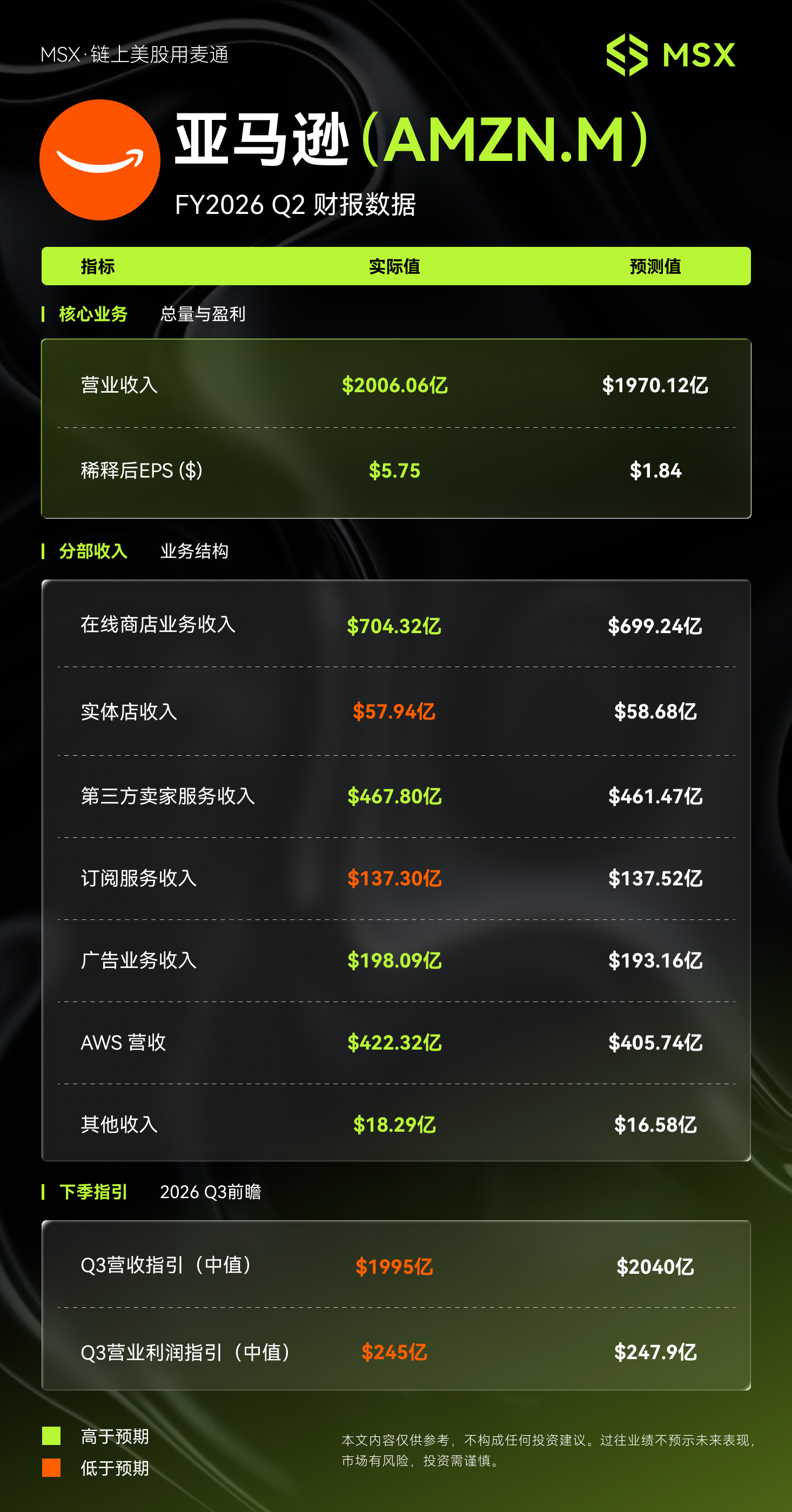
MSX US Stock Daily Insight: Amazon 2026 Q2 Earnings: AWS Records Fastest Growth in Five Years

**MSX Daily US Stock Observation: Amazon's Q2 2026 Earnings: AWS Achieves Fastest Growth in Five Years** Amazon's latest quarterly results exceeded expectations, driven by a strong performance from its cloud computing unit. The company reported revenue of $200.66 billion, surpassing estimates of approximately $197 billion. The key highlight was Amazon Web Services (AWS), which generated $42.232 billion in revenue, surging 37% year-over-year. This marked the segment's fastest growth pace in 18 quarters, indicating robust demand for cloud services. Reported Earnings Per Share (EPS) of $5.75 significantly exceeded the $1.84 forecast. However, this figure included a substantial one-time, non-operating gain of $53.4 billion, primarily from the revaluation of Amazon's investment in AI company Anthropic. Excluding this item, core operating profit was $27.461 billion, a strong increase of 43% compared to the same period last year. Despite the positive results, Amazon provided guidance for the upcoming third quarter that fell short of market expectations. The company's revenue guidance midpoint is $199.5 billion, below the consensus estimate of around $204 billion. Operating profit guidance of $24.5 billion also slightly missed expectations of approximately $247.9 billion. Furthermore, Amazon raised its forecast for full-year capital expenditures to $220 billion, citing rising memory chip costs, which weighed on investor sentiment regarding future profitability. In summary, Amazon's quarter showcased accelerating momentum in its core AWS business. The underlying operational profit growth remains solid. However, cautious forward guidance and increased investment spending present key areas for monitoring in the coming quarters, as the market assesses whether the current growth phase will translate into sustained profit margin expansion.

Odaily星球日报4m ago

MSX US Stock Daily Insight: Amazon 2026 Q2 Earnings: AWS Records Fastest Growth in Five Years

Odaily星球日报4m ago

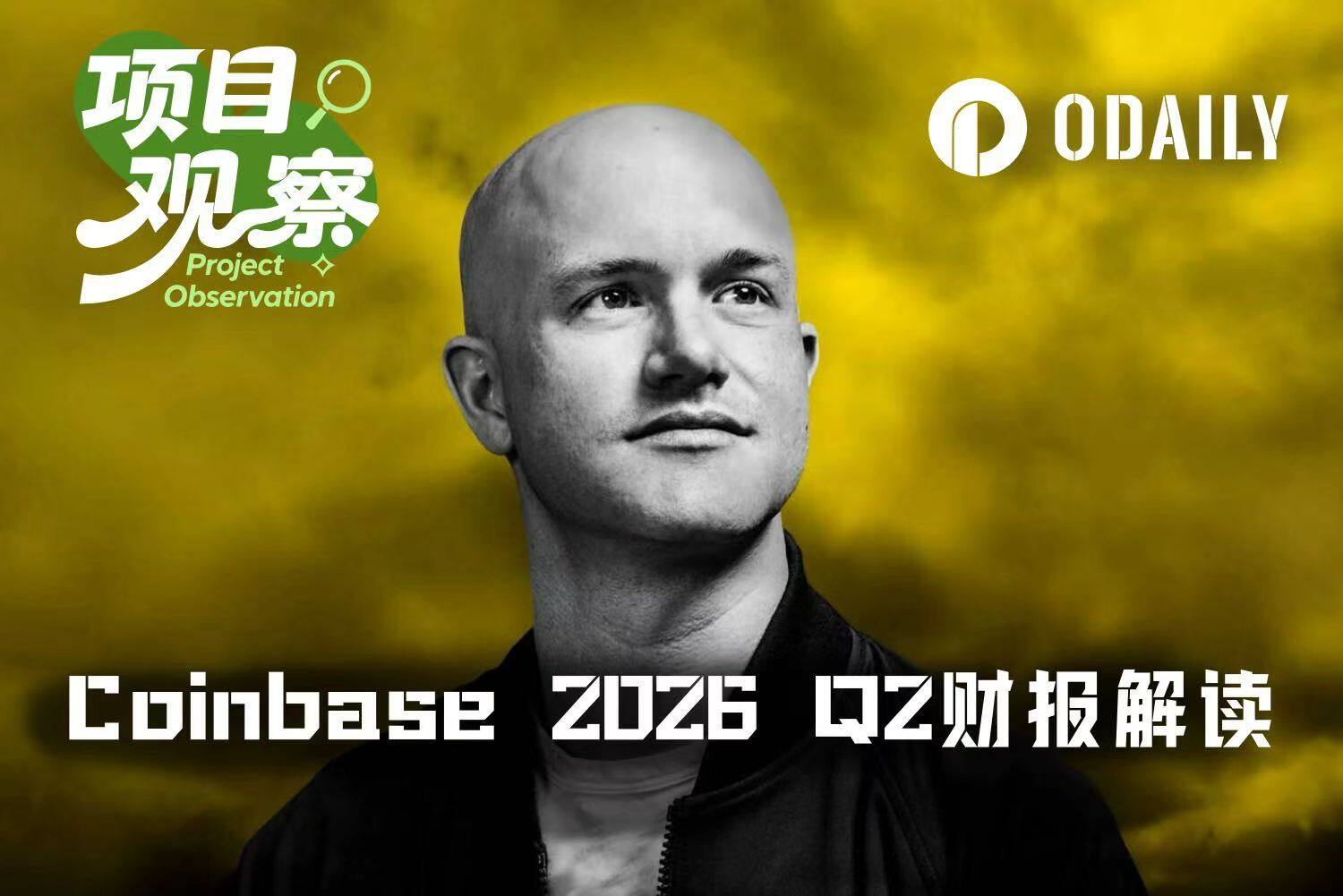
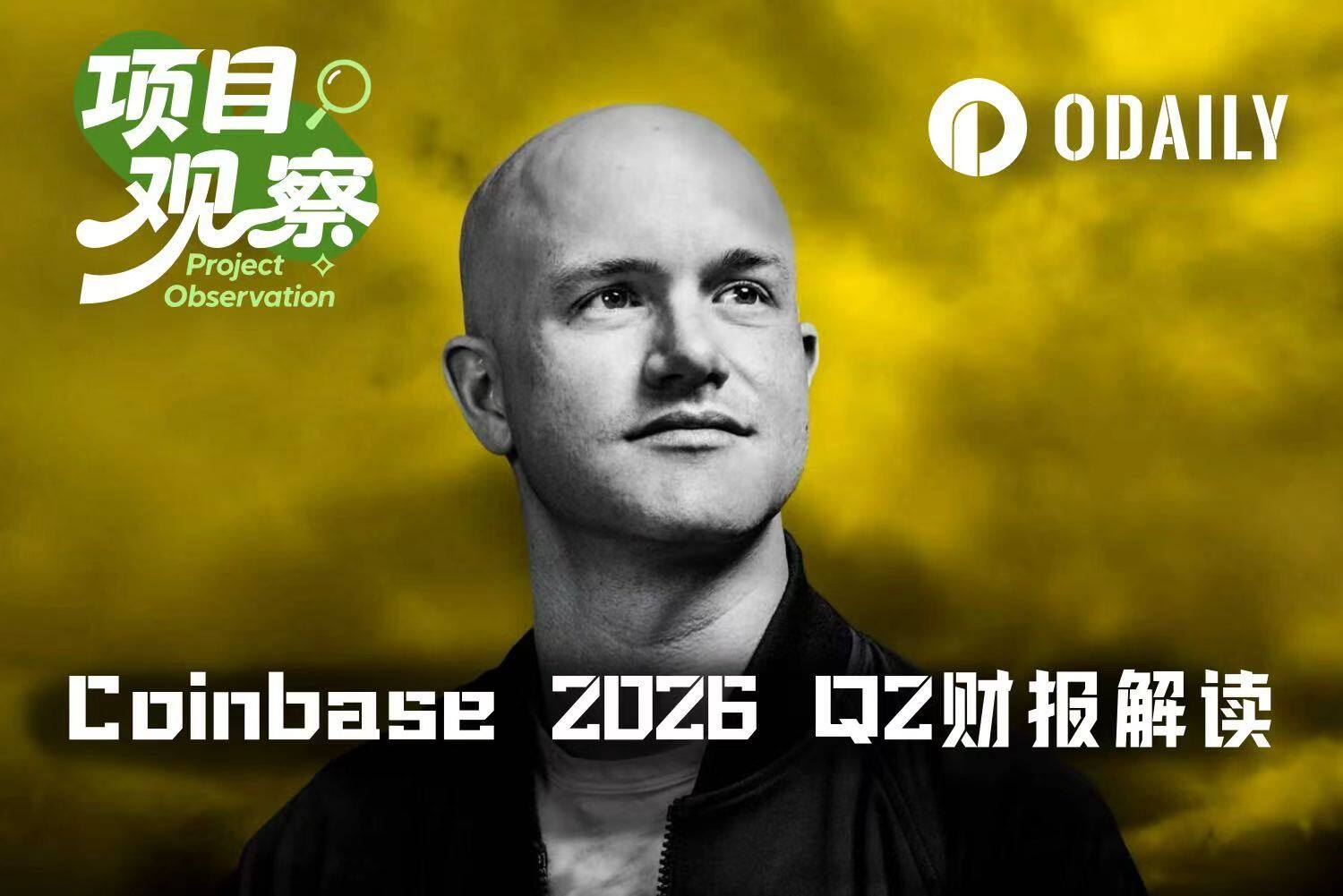
Cyclical Stock or Growth Stock? Coinbase's Q2 Earnings Report Reveals 'Valuation Disagreement'

Coinbase's Q2 2026 financial results revealed a mixed performance, reigniting debate over whether the company should be valued as a cyclical stock tied to crypto markets or a growth stock with future potential. Total revenue missed expectations at $1.22 billion, down 19% year-over-year. Transaction revenue fell to $599 million, with retail crypto spot trading revenue dropping 30% to $452 million, back to 2023 levels. The company reported a net loss of $359 million, marking its third consecutive quarterly loss. Despite CEO Brian Armstrong's positive commentary on metrics like a 10.3% overall crypto trading market share and 106% growth in prediction markets, the market reacted negatively, with shares dropping over 5% after-hours. A key issue is the decline in core retail trading. While Coinbase touted record market share, this figure includes derivatives and new products. Its traditional crypto spot trading share is likely shrinking. New ventures like prediction markets, while growing, contributed less than $30 million, insufficient to offset the core revenue decline. The valuation debate hinges on perspective. As a cyclical stock, Coinbase remains deeply tied to the crypto bear market, with user attrition and competitive pressures justifying a lower valuation. The company's strategy appears focused on surviving until the next bull cycle. Viewed as a growth stock, however, Coinbase shows promising diversification. Subscription and service revenue reached $555 million, nearly matching transaction revenue. Stablecoin revenue, its second-largest source at $292 million, remains strong through its partnership with Circle. Critically, Coinbase is positioning itself as a leader in the emerging on-chain "agent economy." Over 90% of agent-based stablecoin transactions occur on its Base network, which it believes could handle trillions in future agent transactions. The recent acquisition of Deribit also aims to boost its international derivatives offering. In summary, Coinbase's present struggles are clear, but its future hinges on whether its investments in revenue diversification, stablecoins, and the agent economy can ultimately transform its business model and justify a growth premium.

Odaily星球日报24m ago

Cyclical Stock or Growth Stock? Coinbase's Q2 Earnings Report Reveals 'Valuation Disagreement'

Odaily星球日报24m ago

Global Market Share Survey: Japanese Firms Lead in Semiconductor Materials

Global Market Share Survey: Japanese Firms Lead in Semiconductor Materials According to the 2025 "Major Goods and Services Market Share Survey" by Nikkei, Japanese companies maintain strong positions in semiconductor-related materials. In silicon wafers, Shin-Etsu Chemical ranks first with a 26.3% share, followed by SUMCO at 17.8%. Together, they hold 44.1% of the market, widening their lead over competitors from Taiwan, Germany, and South Korea. In photoresists, Tokyo Ohka Kogyo, JSR, and Shin-Etsu Chemical occupy the top three spots, with a combined share of 60.5%. Despite their strength in materials, Japanese firms have a weaker presence in core semiconductor segments like DRAM and NAND flash memory, where South Korean and U.S. companies dominate. For instance, SK Hynix and Samsung lead in DRAM, while China’s CXMT doubled its share to 6% in 2025. The semiconductor market is projected to grow rapidly, with WSTS forecasting a 90% increase to $1.5112 trillion by 2026. Major players like Samsung, SK Hynix, and Micron are making massive investments to expand capacity. To maintain their edge in materials, Japanese companies must similarly commit to large-scale, risk-taking investments. In contrast, Japan’s automotive sector shows stagnation. Toyota remains the global leader but with only a slight share increase to 12.3%, while Japanese brands are absent from the top five in the EV market. In shipbuilding, Imabari Shipbuilding rose to third place globally with a 7.2% share, benefiting from large container ship deliveries. However, Chinese and South Korean firms dominate the sector, holding the top two positions. Japan aims to revitalize its shipbuilding industry through government and corporate efforts, targeting a near doubling of output by 2035. Addressing labor shortages and adopting advanced technologies like physical AI will be critical for competitiveness.

marsbit48m ago

Global Market Share Survey: Japanese Firms Lead in Semiconductor Materials

marsbit48m ago

Trading

Spot

Hot Articles

How to Buy LINK

Welcome to HTX.com! We've made purchasing ChainLink (LINK) simple and convenient. Follow our step-by-step guide to embark on your crypto journey.Step 1: Create Your HTX AccountUse your email or phone number to sign up for a free account on HTX. Experience a hassle-free registration journey and unlock all features.Get My AccountStep 2: Go to Buy Crypto and Choose Your Payment MethodCredit/Debit Card: Use your Visa or Mastercard to buy ChainLink (LINK) instantly.Balance: Use funds from your HTX account balance to trade seamlessly.Third Parties: We've added popular payment methods such as Google Pay and Apple Pay to enhance convenience.P2P: Trade directly with other users on HTX.Over-the-Counter (OTC): We offer tailor-made services and competitive exchange rates for traders.Step 3: Store Your ChainLink (LINK)After purchasing your ChainLink (LINK), store it in your HTX account. Alternatively, you can send it elsewhere via blockchain transfer or use it to trade other cryptocurrencies.Step 4: Trade ChainLink (LINK)Easily trade ChainLink (LINK) on HTX's spot market. Simply access your account, select your trading pair, execute your trades, and monitor in real-time. We offer a user-friendly experience for both beginners and seasoned traders.

9.8k Total ViewsPublished 2024.03.29Updated 2026.06.02

How to Buy LINK

Discussions

Welcome to the HTX Community. Here, you can stay informed about the latest platform developments and gain access to professional market insights. Users' opinions on the price of LINK (LINK) are presented below.

活动图片