# Solana Related Articles

HTX News Center provides the latest articles and in-depth analysis on "Solana", covering market trends, project updates, tech developments, and regulatory policies in the crypto industry.

TGE in a Bear Market: Is Backpack the Starting Point or the End?

Backpack, a prominent Solana ecosystem wallet and centralized exchange, conducted its TGE (Token Generation Event) for the BP token on March 23. The total supply is set at 1 billion tokens, with 25% (250 million) unlocked at TGE—24% for points holders and 1% for Mad Lads NFT holders. No team or investor tokens are in the initial circulation. The tokenomics are designed to prevent insider dumping: founders, employees, and investors receive no direct token allocation. Instead, the team’s share is held in a company treasury, locked until at least one year after a future IPO. Tokens are released based on key milestones like regulatory progress and product expansion. Users could claim tokens by completing TGE verification on Backpack platform. The project implemented strict anti-Sybil measures, including KYC and manual confirmation requirements, reclaiming over 50 million "fake points." Backpack introduced a staking-to-equity mechanism: users staking BP for at least one year can convert tokens into company shares, with 20% of equity allocated to stakers. Market predictions from Polymarket suggest an FDV between $100-200 million at launch, aligning with Backpack’s previous $120 million valuation. The project has raised $17 million in Series A funding and is reportedly negotiating a new round at a $1 billion pre-money valuation. Amid a bear market, Backpack’s TGE is a significant test of market confidence and project sustainability.

比推03/23 08:33

TGE in a Bear Market: Is Backpack the Starting Point or the End?

比推03/23 08:33

Earning Millions Daily in a Sluggish Market: Is Pump.fun's Revenue Real?

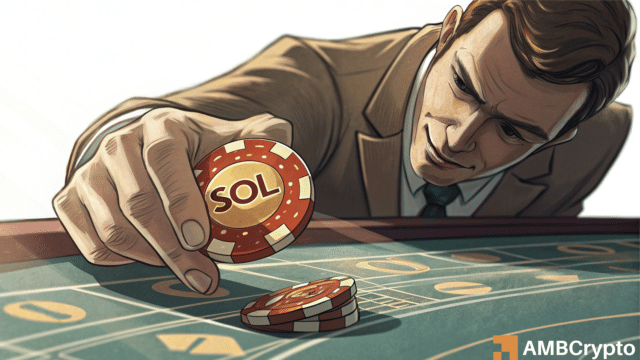
Despite a perceived market downturn, pump.fun remains a top revenue-generating crypto-native application, ranking fourth in earnings behind only Tether, Circle, and Hyperliquid across various timeframes. Its daily income consistently exceeds one million USD, derived from three primary sources: a 0.95% protocol fee on bonding curve transactions, a token’s "graduation" fees on Pumpswap, and revenue from its acquired multi-chain trading platform, Terminal (formerly Padre). On-chain analysis confirms the bonding curve revenue is authentic, with no evidence of fake transfers or data manipulation. However, questions arise about the organic nature of this activity. While Solana’s daily active addresses range between 1.2-2.2 million, pump.fun sees about 150,000, with roughly 30,000 new tokens deployed daily. Data suggests a significant portion of tokens are launched by a small group of sophisticated deployers, not organic users. Moreover, research indicates that 98.6% of tokens on pump.fun are pump-and-dump schemes, turning the platform into a low-cost, high-efficiency "casino" where deployers profit at the expense of retail investors. Despite pump.fun using nearly all its income to buy back its native token, $PUMP, the price continues to fall due to a lack of buyer confidence and organic demand. The fundamental issue is not revenue authenticity but the platform's role in facilitating a predatory ecosystem, making it unattractive to long-term institutional investment.

marsbit03/21 03:18
Earning Millions Daily in a Sluggish Market: Is Pump.fun's Revenue Real?

marsbit03/21 03:18

From Singapore to Solana: Rebalancing Efficiency, Prosperity, and Cost

"From Singapore to Solana: Rebalancing Efficiency, Prosperity, and Cost" explores the governance of blockchain ecosystems through the lens of nation-building, drawing parallels between Singapore’s historical development and Solana’s evolution as a public blockchain. The article begins by comparing Singapore’s sudden independence in 1965 to Solana’s crisis following the collapse of FTX in 2022—both faced existential threats but leveraged unique advantages to survive. Singapore relied on its strategic geographic location, while Solana capitalized on its high throughput and low transaction costs. It traces Solana’s early dependence on FTX—akin to Singapore’s reliance on British military spending—and examines how both entities navigated periods of "grey" economic activity. For Solana, the meme coin boom (e.g., Bonk, WIF) served a similar role as Singapore’s early tolerance of ambiguous capital flows: attracting users, testing infrastructure, and sustaining economic activity during a downturn. The piece also analyzes token economics as monetary policy, comparing Singapore’s managed exchange rate system to Solana’s emission and burn mechanisms. It argues that dynamic, responsive monetary governance—rather than fixed tokenomics—is essential for long-term stability. Finally, it discusses community alignment using Singapore’s public housing system (HDB) as a model for incentivizing stakeholder commitment. Solana’s challenge is to unify diverse groups—speculators, developers, validators—by aligning their interests with the chain’s success. The conclusion emphasizes that blockchain competition is ultimately about governance: short-term narratives, mid-term technology, but long-term institutional and economic design. Solana, like Singapore, must transition from survival to sustainable, value-driven growth.

比推03/20 06:48

From Singapore to Solana: Rebalancing Efficiency, Prosperity, and Cost

比推03/20 06:48

活动图片