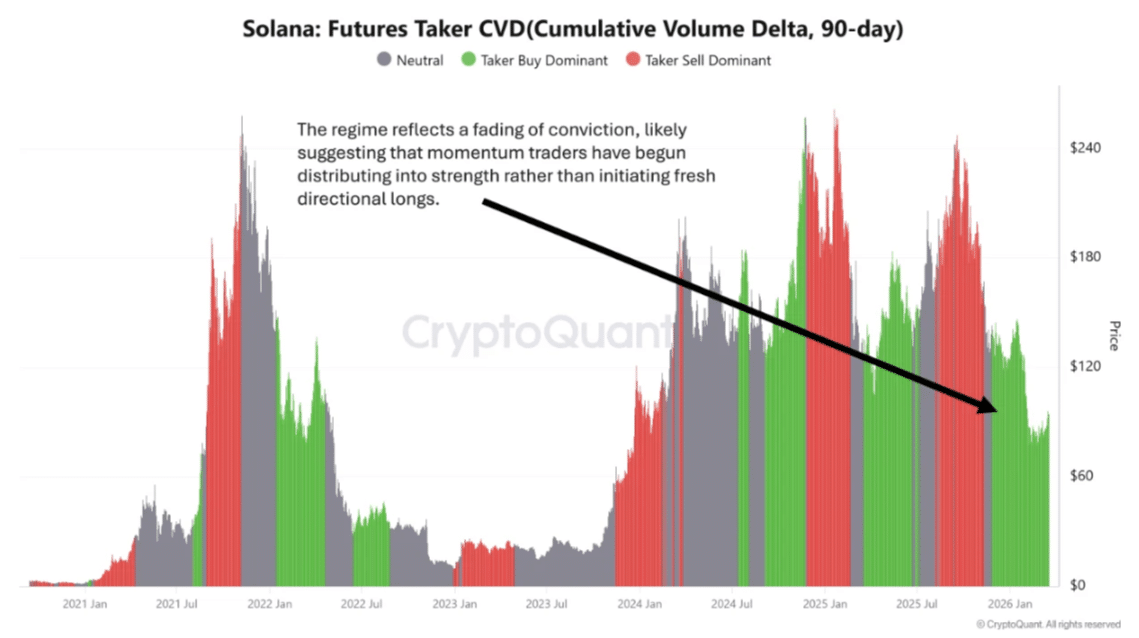
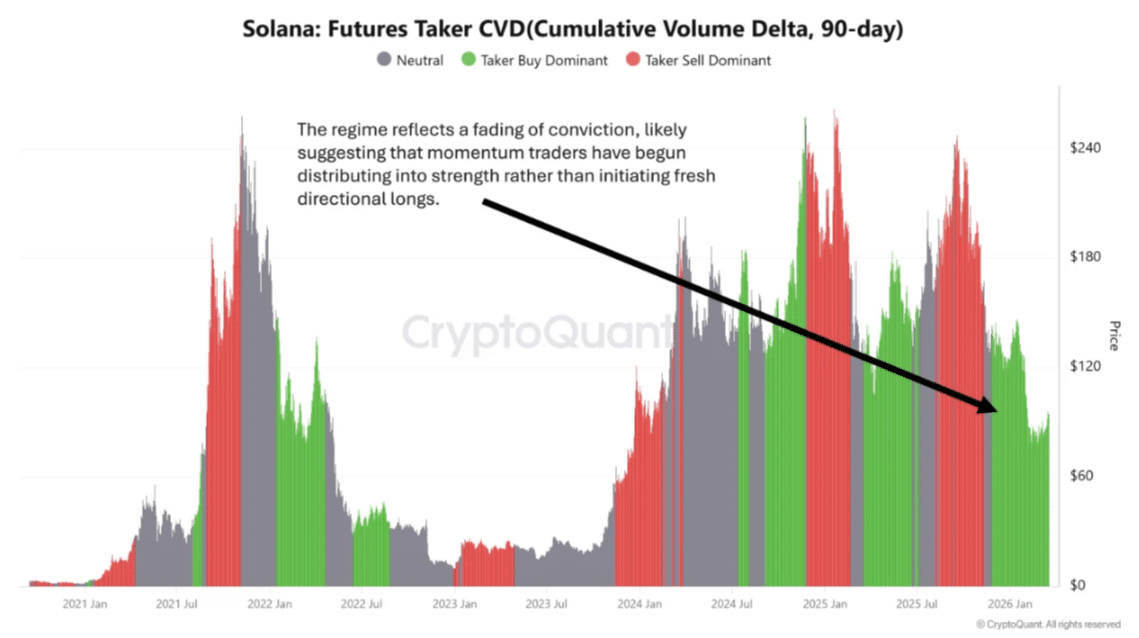
La estructura de mercado de Solana [SOL] reveló un cambio claro en el comportamiento de los participantes, con un debilitamiento del impulso en Futuros mientras la demanda en Spot se construía silenciosamente. De hecho, el CVD de Tomadores de Futuros mostró que, tras una fuerte dominancia de ventas en 2024, la actividad pasó a fases mixtas a lo largo de 2025.
Sin embargo, en 2026, la presión de compra se desvaneció mientras regresaban los grupos de venta, una señal de que los operadores de momentum podrían estar distribuyendo su fuerza en lugar de comprometer nuevo capital. Esto puede ser evidencia de una fatiga de ciclo tardío, donde la convicción apalancada suele disminuir.
Mientras tanto, los tamaños de las órdenes Spot se expandieron entre $80 y $100, marcando el regreso de la participación de ballenas en niveles más bajos.
A medida que los jugadores más grandes acumulan en momentos de debilidad, absorben la oferta sin perseguir el precio, lo que señala un posicionamiento estratégico en lugar de especulación. Este comportamiento suele implicar confianza en el valor a largo plazo mientras se evita la volatilidad a corto plazo.
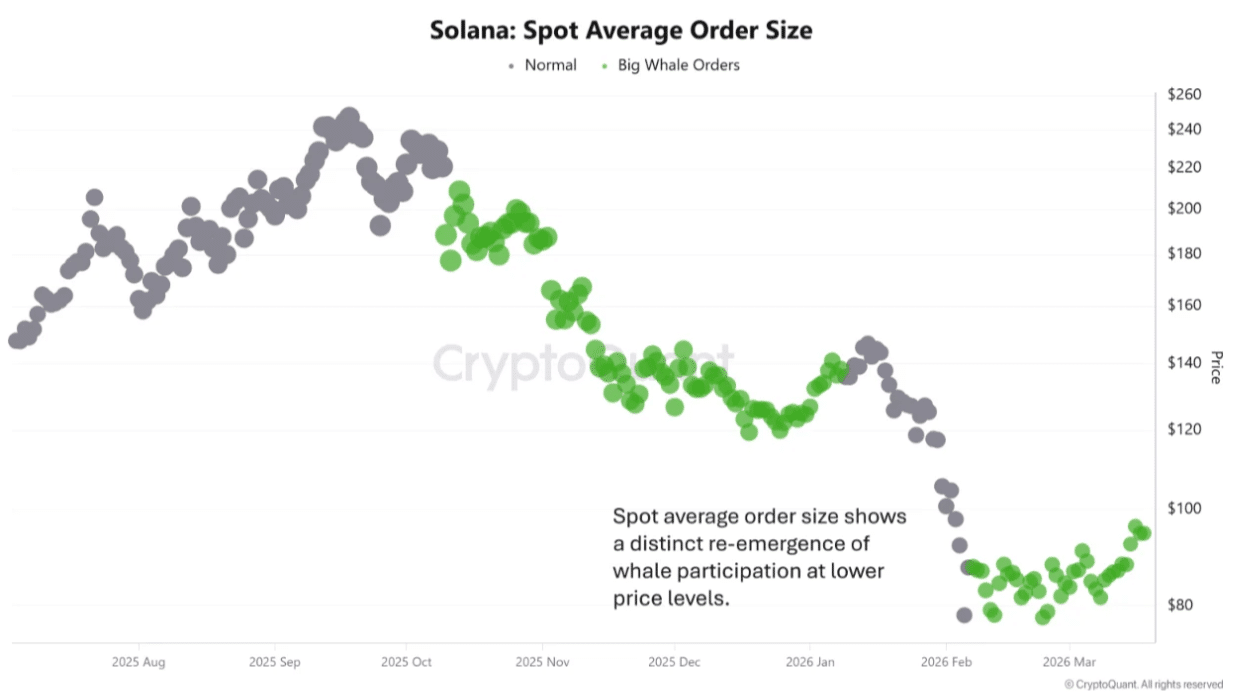
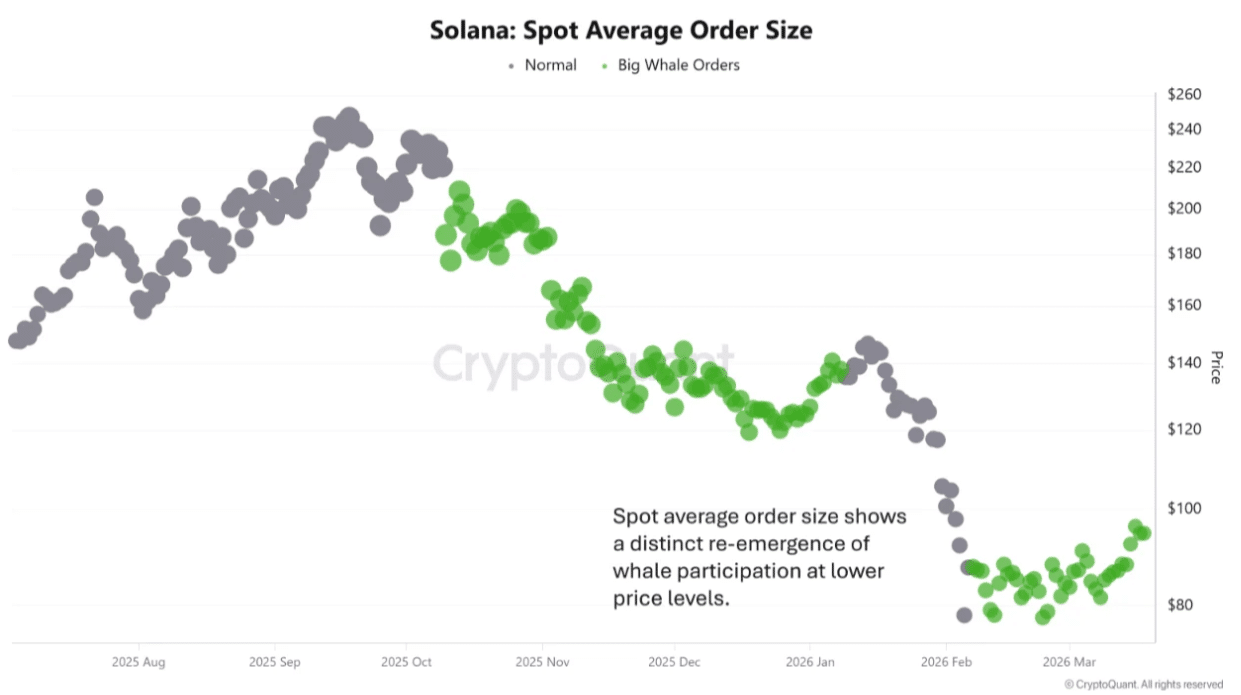
Por el contrario, esta divergencia destacó un reinicio estructural, uno en el que el apalancamiento sale y las manos más fuertes reconstruyen posiciones. Esto podría preparar el escenario para una base más estable antes de cualquier subida sostenida.
Ese mismo cambio del agotamiento de Futuros hacia la demanda impulsada por Spot comenzó a reflejarse más claramente en la capa de liquidez de Solana.
La oferta de stablecoins superó los 17 mil millones de dólares, marcando un nuevo máximo histórico a medida que el crecimiento se aceleró a principios de 2026. A medida que el capital fluye hacia la red, tal expansión significaría que la liquidez no está saliendo, sino que se está reubicando para su despliegue.
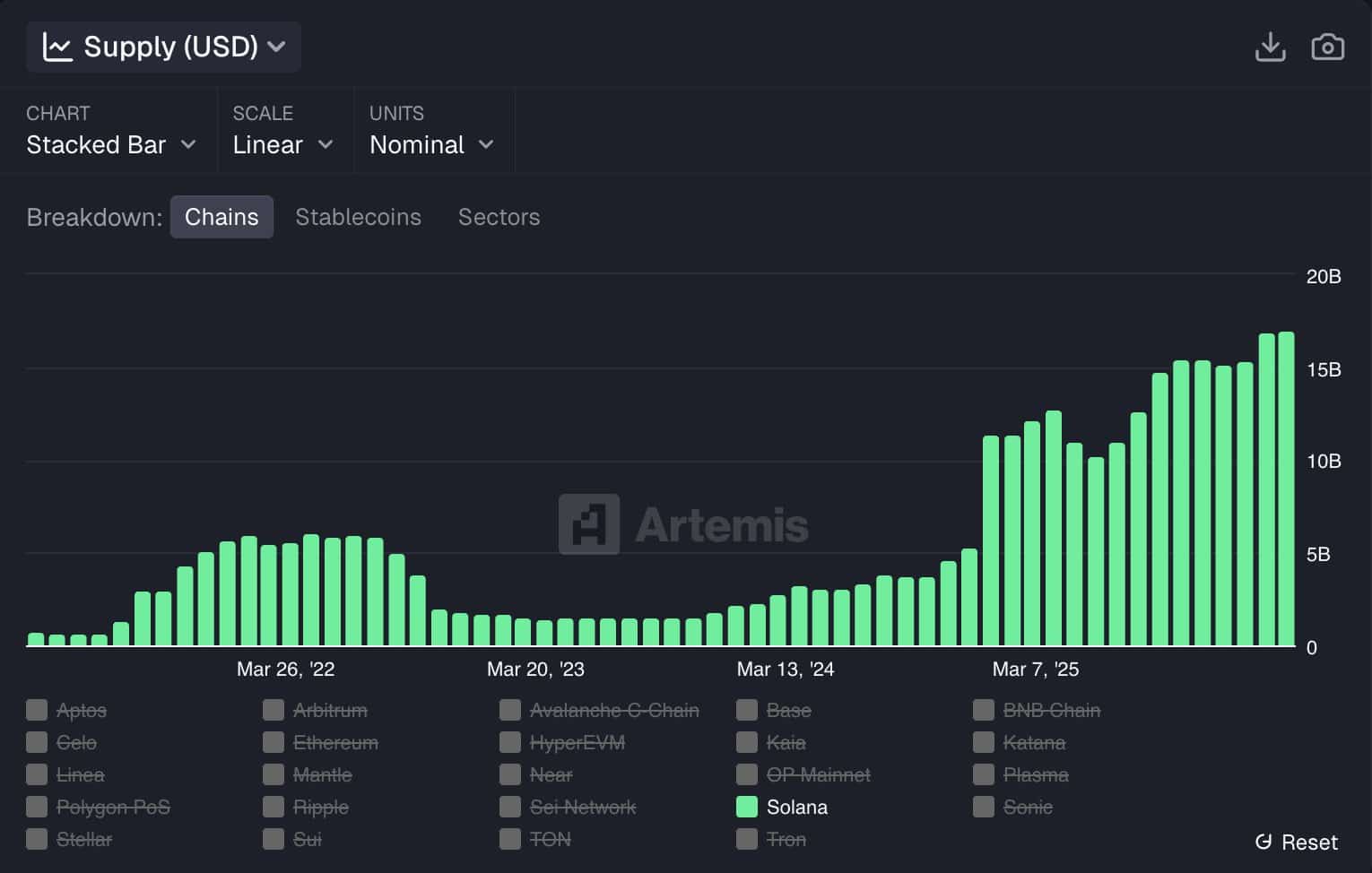
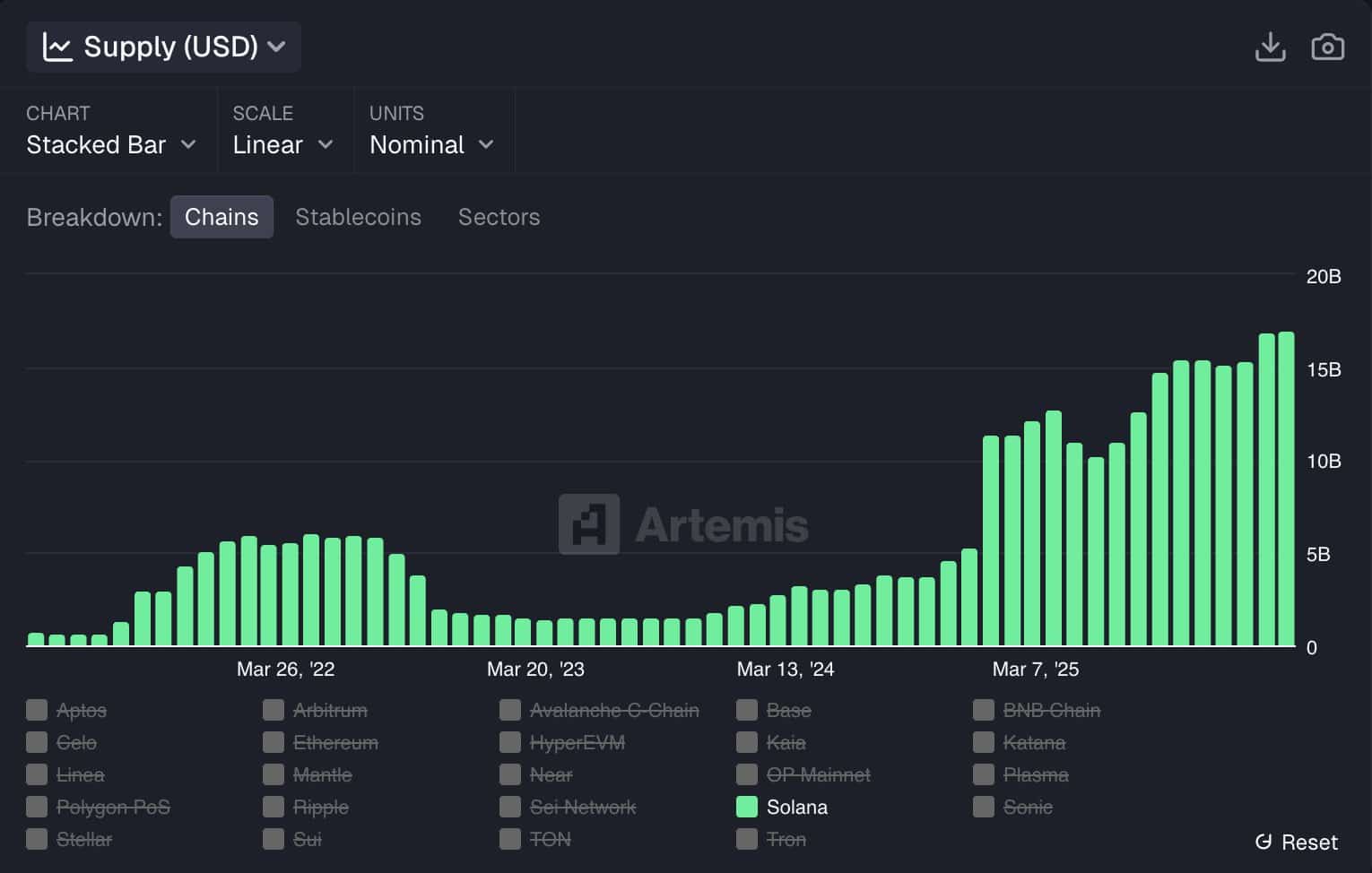
A medida que la oferta supera los techos anteriores, Solana fortalece su papel como capa de liquidación. Como resultado, los usuarios e instituciones canalizan cada vez más capital a través de la red.
Este cambio puede ser evidencia de que los participantes se están preparando para desplegar fondos en actividades de DeFi y de activos del mundo real. En lugar de mantener posiciones inactivas, el capital se mueve con una intención más clara.
A medida que la liquidez se profundiza, el ecosistema obtiene un apoyo más fuerte para una actividad sostenida. A su vez, esto refuerza la transición más amplia, donde la demanda spot reemplaza gradualmente el impulso decreciente impulsado por derivados.
La oferta de Solana se tensa bajo la superficie
Finalmente, esta dinámica de absorción se vuelve más clara cuando se observa a través de los Saldos de Intercambio. Han continuado con una tendencia a la baja, a pesar de las entradas recientes.
De hecho, los saldos cayeron de más de 40 millones de SOL a fines de 2024 a casi 27 millones para marzo de 2026, incluso cuando picos intermitentes apuntaron a depósitos a corto plazo.
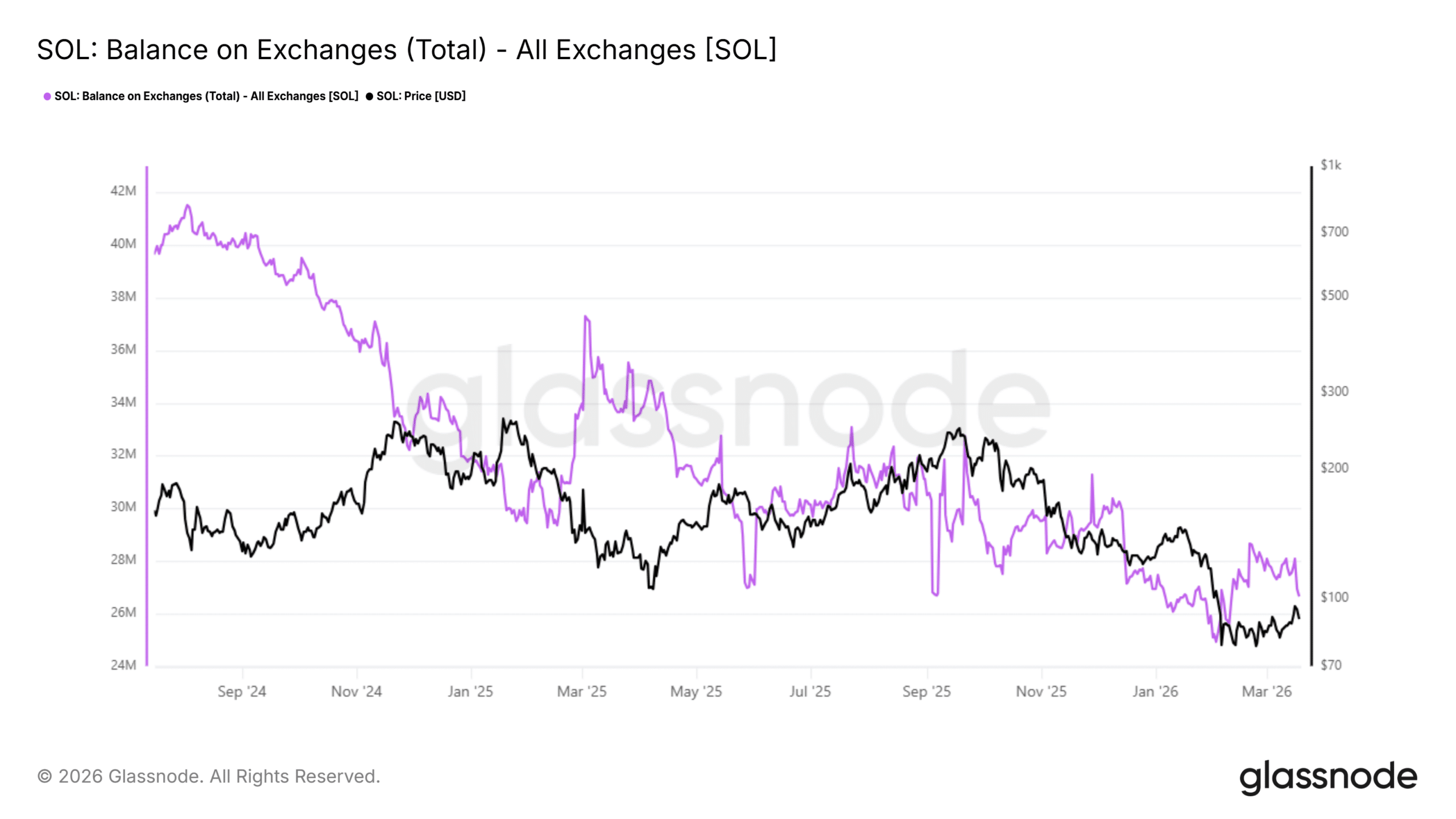
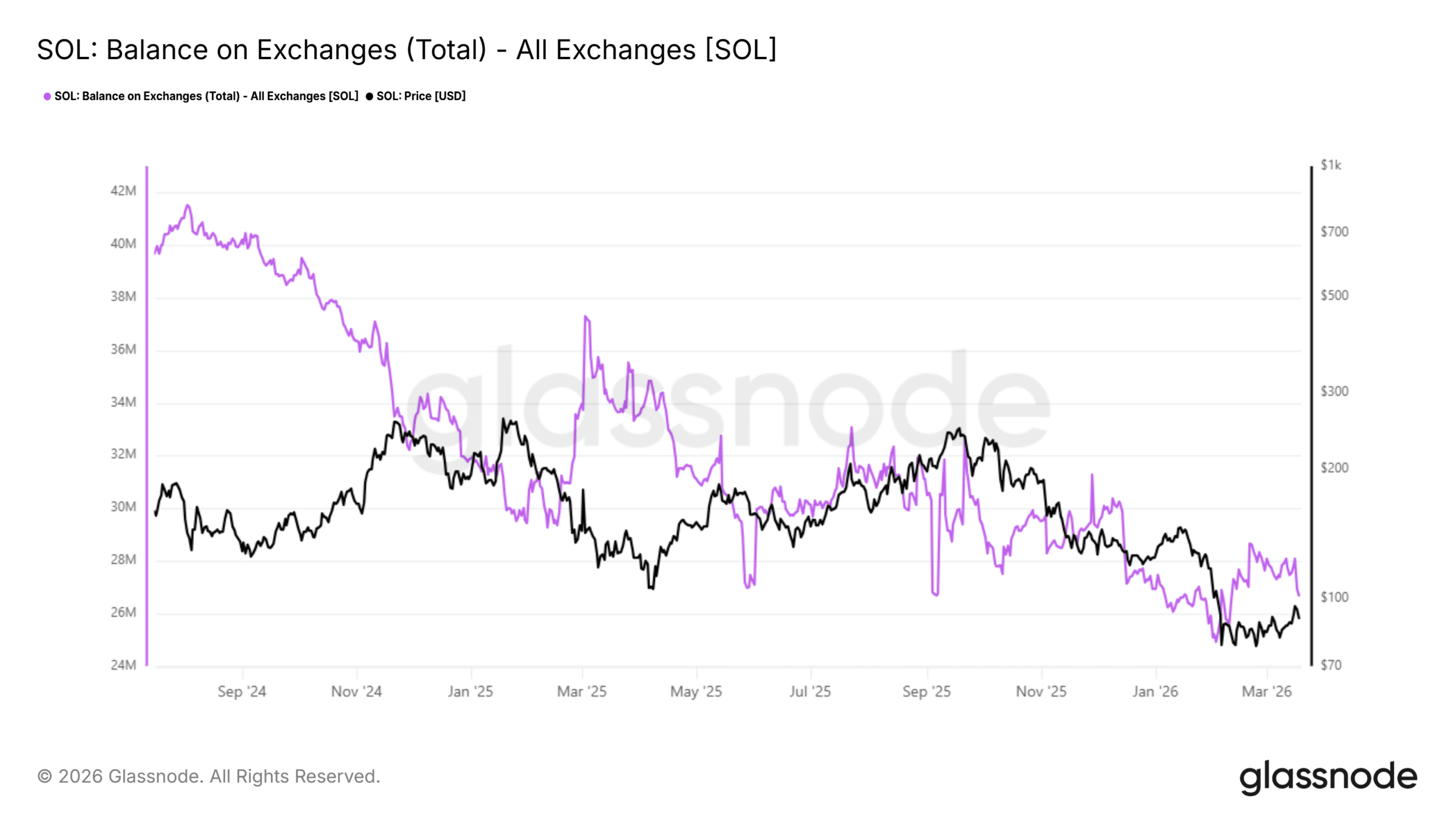
Dado que estas entradas no logran revertir la tendencia general a la baja, significa que la oferta entrante se está absorbiendo rápidamente en lugar de redistribuirse.
A medida que los saldos líquidos se comprimen, la cantidad de SOL fácilmente negociable se reduce, lo que limita la presión de venta sostenida. Tal cambio ocurre cuando los participantes trasladan tokens a custodia privada o staking, lo que señala un comportamiento de tenencia más fuerte.
A medida que la oferta se tensa bajo la superficie mientras la demanda absorbe la liquidez disponible, la estructura del mercado se fortalecerá, reforzando una transición hacia un entorno más estable y controlado.
Resumen Final
- Solana [SOL] está transitando de un impulso impulsado por Futuros a una acumulación liderada por Spot, ya que las ballenas absorben la oferta y la liquidez en stablecoins supera los 17 mil millones de dólares.
- Solana experimentó un ajuste en la oferta en exchanges junto con un aumento de la liquidez en cadena, lo que señala una reducción de la presión de venta y posiciona al mercado para una expansión sostenida.




















