# Bài viết Liên quan Short Selling

Trung tâm Tin tức HTX cung cấp những bài viết mới nhất và phân tích chuyên sâu về "Short Selling", bao gồm xu hướng thị trường, cập nhật dự án, phát triển công nghệ và chính sách quản lý trong ngành tiền kỹ thuật số.

Senior Trader's Confession: How to Trade Market's False Expectations?

Veteran trader's case study: trading the market's "wrong expectations". This trade centered on a textbook "expectation error" after a weak CPI report. While the market initially priced in broad monetary easing (sending Nasdaq to 30,060), the crucial 30-year real yield hit a 20-year high. This signaled a fractured transmission mechanism: short-term rates eased, but long-term funding costs (vital for tech valuations) refused to fall. The trader executed five short positions on the Nasdaq (NQ) as it fell from 30,060 to 28,768. The core methodology: don't just trade the data, but analyze the market's implied causal chain and identify where it breaks. In this case, the chain was: Weak CPI → Policy Easing → Lower Long-Term Funding Costs → NQ Valuation Expansion. The break occurred between policy easing and long-term rates. The "veto variable" – long-term real yields – refused to confirm the bullish narrative. Trades were structured around "fast variables" (price) temporarily repairing while "slow variables" (funding conditions) remained broken. The article outlines a repeatable framework: 1) Map the market's implied causal chain. 2) Identify the veto variable. 3) Observe if it rejects the narrative. 4) Enter when price still follows the old script. 5) Choose the cleanest asset expression (e.g., short NQ, not broad S&P). 6) Define both invalidation and fulfillment exit conditions. The key insight: Alpha often comes not from an information edge, but from a "reaction function edge" – recognizing when the market is applying an outdated causal logic to new data. The critical question: What causal chain is the market's first reaction relying on, and is that chain still valid today?

marsbit07/20 05:13

Senior Trader's Confession: How to Trade Market's False Expectations?

marsbit07/20 05:13

Why Not Short Even When Bearish? Munger Did the Math on a 'Losing Trade'

Why Not Short Even When Bearish? Charlie Munger's Calculated "Loss-Making Account" Many traders, drawn to speculative tools like futures contracts, often face repeated failures. As the article notes, unless one is a genius, such instruments should be avoided for long-term profit-seeking. Similarly, the practice of short selling is viewed with caution. The author firmly states a policy of not shorting, even when bearish, preferring to simply wait. The core reason? Successful short selling requires exceptionally difficult conditions to profit. Legendary investors Warren Buffett and Charlie Munger have themselves reflected on painful short-selling experiences. Munger highlights two critical flaws in the mathematical logic of shorting: 1. Asymmetrical Risk/Reward: A long position has a maximum loss of 100% but unlimited upside. A short position caps profit at 100% (if a stock falls to zero) but carries theoretically unlimited loss potential. 2. The "Promoter" Problem: Fraudulent or struggling companies can prolong their decline. As Munger said, "You can run out of money before the promoter runs out of ideas," meaning short sellers may be forced to cover positions at a loss before the company's true fate unfolds. The article cites Stanley Druckenmiller, a famed hedge fund manager. He once shorted 12 companies that all eventually went bankrupt. However, intense market rallies forced him to cover his positions within three weeks, resulting in massive losses—$200 million of his capital plus an additional $600 million. He concluded he likely never made money shorting in his career. His experience perfectly illustrates Munger's points: facing unlimited losses and being wiped out before being proven right. The conclusion is clear: for most investors, complex instruments like short selling and derivatives are not viable paths to stable, long-term gains. Self-reflection is advised before repeatedly wasting time and capital on such speculative strategies.

marsbit06/03 02:35

Why Not Short Even When Bearish? Munger Did the Math on a 'Losing Trade'

marsbit06/03 02:35

The "Big Short" Prototype Makes a Major Bet: Shorting Nvidia, Going Long on Software Stocks 'Scared Away' by AI

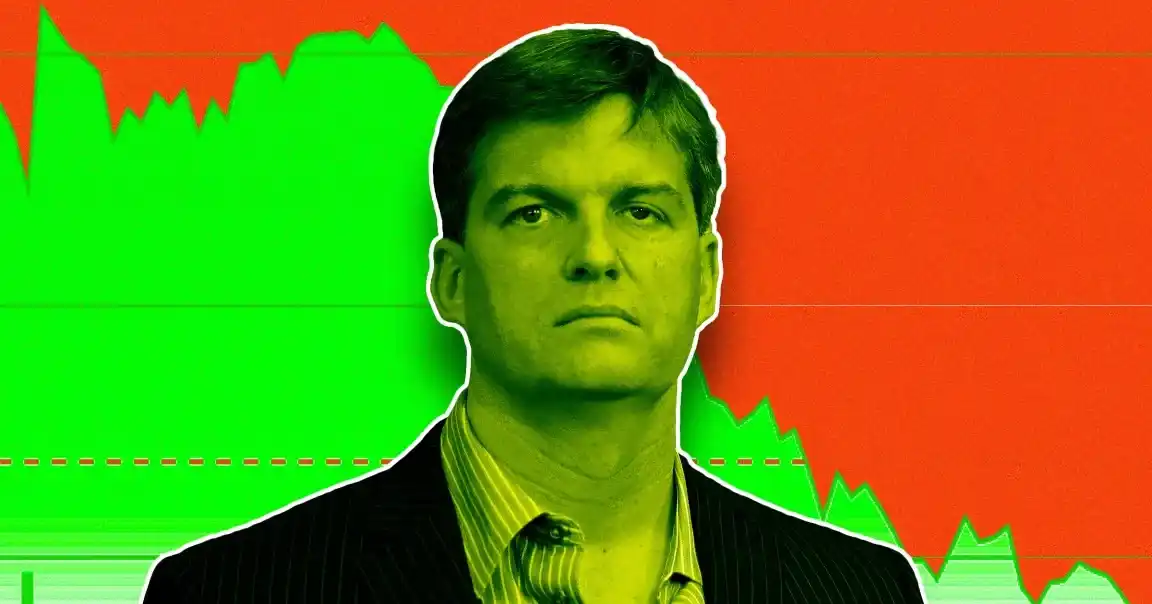
'The Big Short' Legend Michael Burry Doubles Down on AI Bet: Shorts Nvidia, Buys Beaten-Down Software Stocks As the Nasdaq hits record highs and Nvidia's market cap nears $5.3 trillion, Michael Burry—famed for his 2008 subprime mortgage bet—is making a major contrarian move. He is significantly expanding his bearish wagers against the AI frenzy while buying traditional software stocks he believes have been unfairly punished. Burry's latest portfolio adjustments, revealed in his Substack column, include maintaining and increasing put options on Nvidia and Palantir. He has also initiated new short positions on Palantir and expanded bearish bets on the semiconductor ETF (SOXX), the Nasdaq 100 ETF (QQQ), and Oracle. Simultaneously, he is buying shares of software companies like Adobe, Autodesk, Salesforce, and Veeva Systems. He argues these stocks have been sold off due to "AI disruption" fears and technical selling pressure from private credit funds, not deteriorating fundamentals. Their valuations have fallen to multi-year lows. This creates a complete hedge: short the perceived "AI winners" and long the oversold "AI losers." Burry believes the current AI infrastructure spending boom mirrors the late-1990s internet bubble, with inflated demand projections and questionable accounting practices by large cloud customers extending GPU depreciation schedules. While his Palantir short is currently profitable, his Nvidia put options are deeply underwater as the stock trades near all-time highs. Burry remains steadfast, comparing Nvidia to Cisco during the dot-com era. He anticipates a broad repricing of the AI bubble, where overvalued beneficiaries fall and unfairly battered companies rebound.

marsbit05/10 03:06

The "Big Short" Prototype Makes a Major Bet: Shorting Nvidia, Going Long on Software Stocks 'Scared Away' by AI

marsbit05/10 03:06

活动图片