# RWA Related Articles

HTX News Center provides the latest articles and in-depth analysis on "RWA", covering market trends, project updates, tech developments, and regulatory policies in the crypto industry.

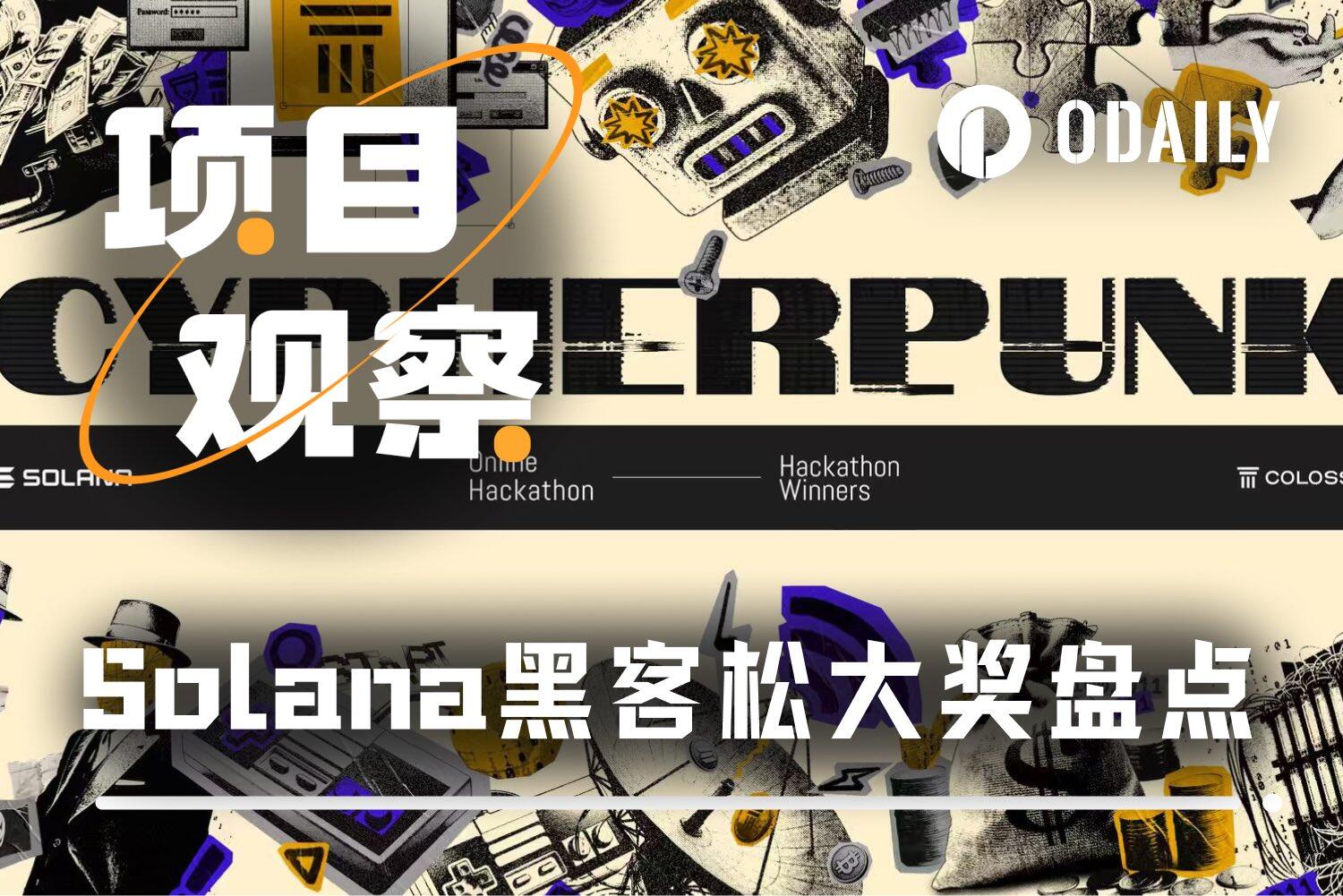
Solana Hackathon Grand Prize Projects: The Industry's Handpicked Seeds

The fifth Solana Breakpoint conference in Abu Dhabi featured the Solana Cypherpunk Hackathon, the largest crypto hackathon to date with over 9,000 participants from 150+ countries submitting 1,576 projects. The event showcased innovative projects across multiple tracks. The grand prize winner was Unruggable, a hardware wallet and app suite optimized specifically for Solana, offering deep integration with key ecosystem protocols for secure and fast transactions. In the Consumer Applications track, winners included Capitola (a prediction market aggregator), Superfan (a元宇宙唱片厂牌 leveraging prediction markets), Fora (a social trading and prediction platform), Toaster.trade (a lightweight trading platform), and Nomu (a marketplace where early product purchases earn rewards). The DeFi track was led by Yumi Finance (an on-chain BNPL solution), Kormos (a fractional reserve-based yield protocol), Rekt (a gamified mobile trading app), Archer (an anti-MEV trading protocol), and Hobba (an automated lending optimization service). Infrastructure winners were Seer (a Solana transaction debugger), Corbits (enabling AI agents to pay API fees via x402), Ionic (a high-speed data aggregation layer), Pine Analytics (a blockchain analytics platform), and Hyperstack (a code-first data infrastructure tool). The RWA track featured Autonom (an oracle for dynamic pricing of real-world assets), Bore.fi (tokenizing cash-flowing small businesses), Legasi (on-chain Lombard loans), Pencil Finance (tokenized student loans), and Watchtower (financing for space infrastructure). The Stablecoin track awarded MCPay (payment infrastructure connecting MCP and x402), Credible Finance (stablecoin-powered USD-INR remittances), Cloak (privacy payments on Solana), Mercantill (banking infra for AI agents), and SP3ND (using stablecoins to shop on Amazon). The Open Track winners were attn.markets (tokenizing Solana ecosystem revenue), Echo (an automated expert network), PlaiPin (a wearable interactive robot protocol), Solana ATM (a physical cash/stablecoin machine), and Humanship ID (privacy-preserving human verification). Additional awards went to Pythia (a prediction market for math modeling) for the University prize and Samui Wallet (a developer-focused open-source wallet) for the Public Good prize. These projects represent promising seeds for the next cycle of crypto innovation.

Odaily星球日报12/15 10:28
Solana Hackathon Grand Prize Projects: The Industry's Handpicked Seeds

Odaily星球日报12/15 10:28

Massively Accumulating 3.86 Million ETH: What Is the Investment Logic of 'Unwavering Bull' Tom Lee?

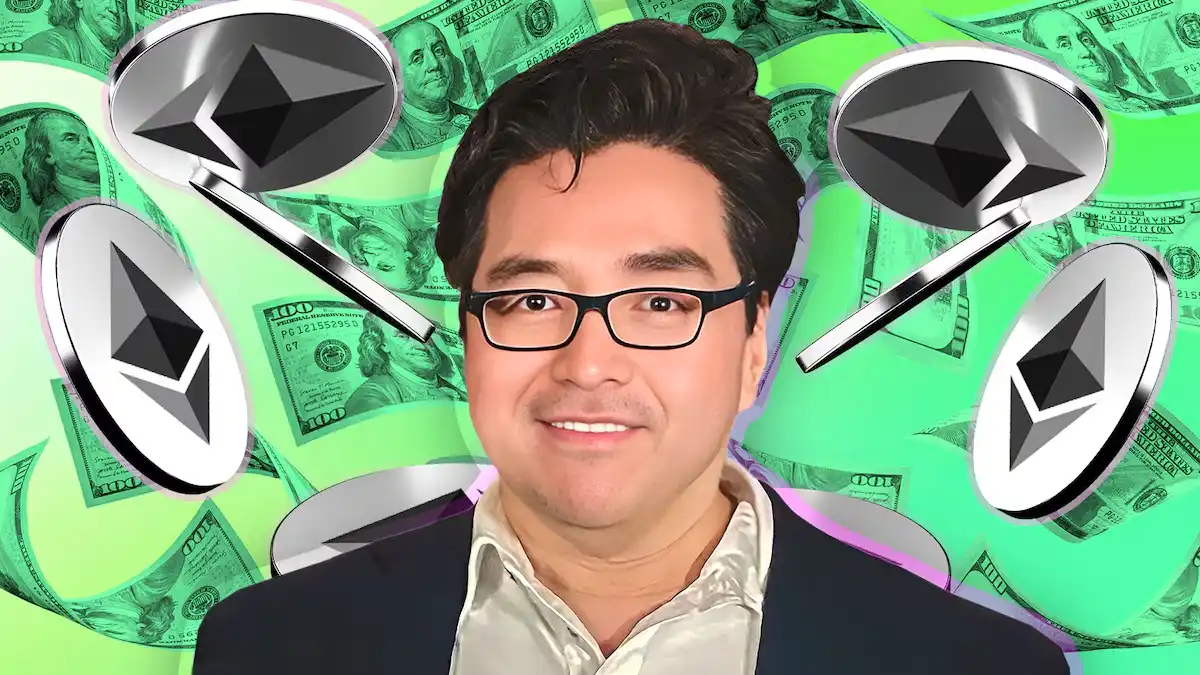
Based on multiple interviews, Tom Lee's core investment thesis for Ethereum (ETH) is built on several key arguments. He views ETH as the fundamental settlement layer for the future of finance, powering critical areas like DeFi, stablecoins, NFTs, and the tokenization of real-world assets (RWA). He believes the massive institutional adoption of RWA, such as Wall Street moving trillions in assets on-chain, will create substantial demand and drive ETH's value independently of Bitcoin. Lee highlights that crypto adoption is still in its early stages compared to traditional finance. He argues ETH's strong developer community, network robustness, and actual utility—such as staking yields and DeFi—make it more suitable for long-term institutional holding than BTC. He also sees a "non-consensus" opportunity, as early investors move to other sectors like AI, leaving the industry ripe for a new wave of entrants. Backing his views with action, Lee is Chairman of BitMine (BMNR), which has accumulated approximately 3.86 million ETH (about 3.2% of supply) and aims to reach 5%. The company continues to buy ETH aggressively, supported by a $1 billion cash reserve and staking rewards. Regarding price, Lee's long-term, extreme target is $62,000 if the ETH/BTC ratio returns to 0.25. More realistic targets are $7,000-$9,000 by 2026, potentially reaching $20,000 if tokenization sees explosive growth. He anticipates 2026 will be a major year for Layer 1 chains, especially Ethereum.

marsbit12/15 06:19

Massively Accumulating 3.86 Million ETH: What Is the Investment Logic of 'Unwavering Bull' Tom Lee?

marsbit12/15 06:19

Looking Back at the Web3 Wallet Undercurrents of 2025: What Are the Major Players Really Competing On?

In 2025, the Web3 wallet sector is undergoing a quiet but significant transformation, driven by major players integrating advanced technologies to enhance security, usability, and functionality. Key developments include Coinbase and Bitget adopting TEE (Trusted Execution Environment) for secure key management and transaction signing, Binance and OKX leveraging TEE with MPC (Multi-Party Computation) and smart accounts for improved security and cross-chain operations, and MetaMask and Phantom introducing social login features using encrypted key sharding for better recovery and user experience. The evolution reflects a shift from purely self-custodial models to hybrid approaches that balance security with convenience, enabling features like automated trading, gas sponsorship, and seamless multi-chain interactions. This transition is fueled by emerging trends such as Perps (perpetual contracts), RWA (real-world assets), and CeDeFi, which demand more complex transaction capabilities. While no new dominant wallets emerged, existing leaders are repositioning as comprehensive entry points for diverse on-chain activities, moving beyond basic asset storage to integrated financial services. The adoption of TEE and MPC technologies, alongside potential future integration with passkeys, indicates a maturation of wallet infrastructure, setting the stage for broader adoption and more sophisticated applications in the coming years.

marsbit12/15 04:05

Looking Back at the Web3 Wallet Undercurrents of 2025: What Are the Major Players Really Competing On?

marsbit12/15 04:05

a16z Bets on Energy Tokenization Experiment: How Will DayFi Use DeFi to Restructure the Power Grid? Jae 2025/12/13 12:00

a16z Backs Energy Tokenization Experiment: How DayFi Aims to Restructure the Grid with DeFi As global tech giants compete for computing power, electricity has become a critical resource. DayFi, a decentralized energy capital markets protocol under the Daylight ecosystem, is launching a $50 million pre-deposit event on December 16. Backed by a16z Crypto and Framework Ventures, DayFi tokenizes future electricity revenue into tradable crypto assets. The protocol allows users to deposit stablecoins to mint GRID—a fully collateralized stablecoin—and then stake it to receive sGRID, a yield-bearing token representing a share in energy asset revenue. This creates a flywheel effect: liquidity funds distributed energy projects, which generate tokenized returns for holders. However, DayFi faces significant regulatory challenges. sGRID may be classified as a security by the SEC, requiring strict disclosures. Additionally, FERC’s restrictions on disclosing critical energy infrastructure data conflict with DeFi’s transparency requirements. Technical solutions like zero-knowledge proofs may be needed to verify收益 without exposing sensitive data. Valuation of the underlying energy assets—solar panels, batteries—also remains uncertain, with risks of depreciation and potential manipulation. Despite these hurdles, DayFi represents an ambitious attempt to bridge DeFi with physical energy grids, transforming electricity into a dynamic, tradable asset amid growing AI-driven power demand.

marsbit12/13 05:42

a16z Bets on Energy Tokenization Experiment: How Will DayFi Use DeFi to Restructure the Power Grid? Jae 2025/12/13 12:00

marsbit12/13 05:42

活动图片