Funding Weekly Report | 19 Public Funding Events, Cross-Chain Protocol LI.FI Raises $29 Million, Led by Multicoin Capital and CoinFund

marsbitPublished on 2025-12-15Last updated on 2025-12-15

Abstract

Financing Weekly Recap: 19 public funding rounds totaling over $178 million were recorded. Key deals include cross-chain protocol LI.FI raising $29 million co-led by Multicoin Capital and CoinFund. Real Finance secured $29 million for RWA tokenization infrastructure. DeFi saw 8 deals, including Magma Finance's $6M raise. Web3 & AI sector had 2 deals, with AI platform Surf raising $15M. Infrastructure & tools featured 4 deals, and CeFi had 5, including MetaComp's $22M Pre-A for stablecoin payments.

Highlights of This Issue

According to incomplete statistics from PANews, there were 19 investment and financing events in the global blockchain space last week (12.8-12.14), with a total funding scale exceeding $178 million. The overview is as follows:

  • DeFi sector announced 8 investment and financing events, among which the RWA tokenization network Real Finance announced it has secured $29 million in a private funding round;
  • The Web3+AI track announced 2 investment and financing events, among which the crypto AI platform Surf completed a $15 million funding round led by Pantera Capital;
  • The Infrastructure & Tools field announced 4 investment and financing events, among which crypto infrastructure startup LI.FI announced the completion of a $29 million funding round led by Multicoin Capital and CoinFund;
  • The Centralized Finance field announced 5 investment and financing events, among which Singapore-licensed stablecoin cross-border payment and fund management service provider MetaComp announced the completion of a $22 million Pre-Series A funding round;
  • Additionally, 1 listed company completed financing for its crypto treasury strategy: TenX Protocols raised approximately $24 million and was listed on the Canadian TSX Venture Exchange.
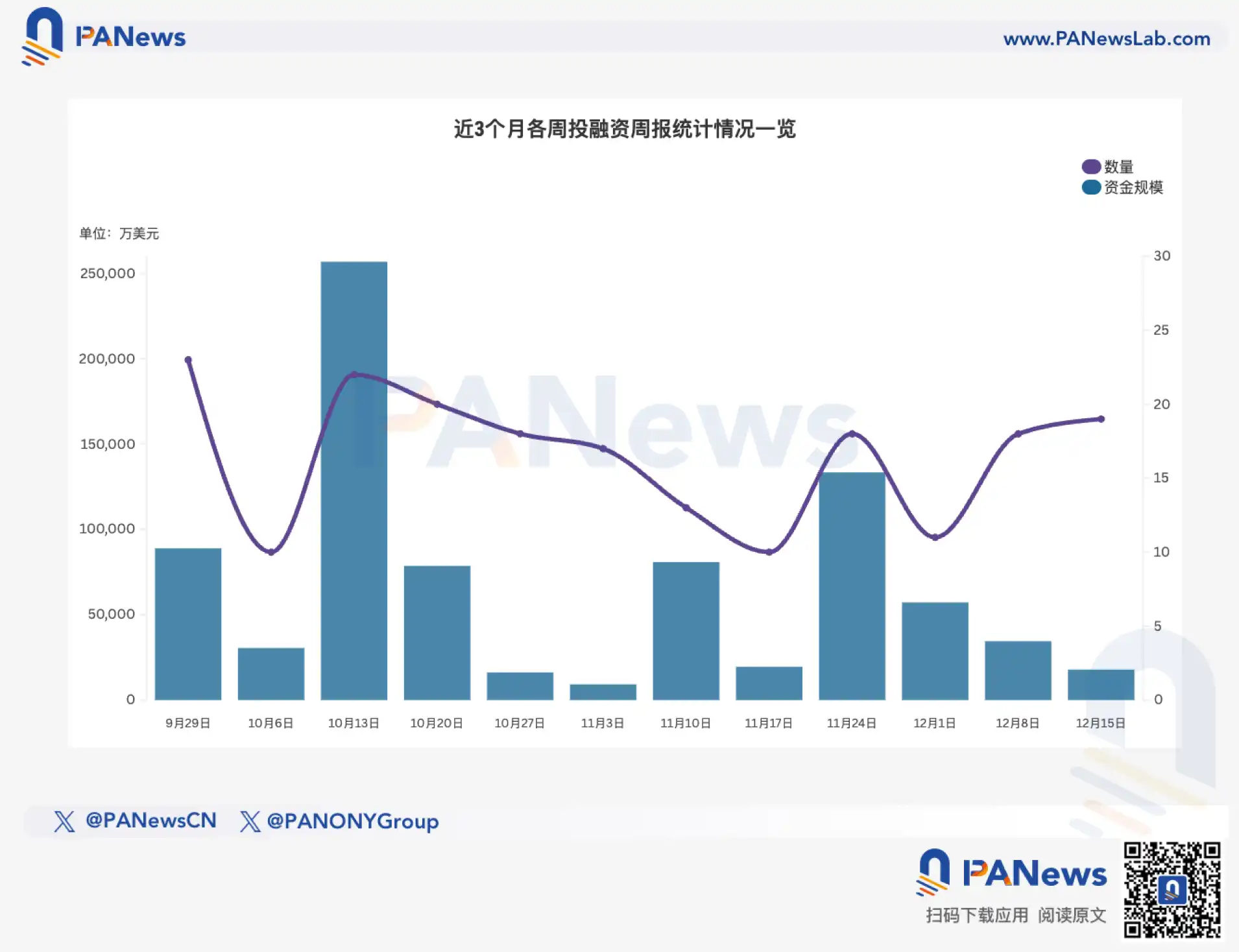
DeFi

RWA Tokenization Network Real Finance Announces $29 Million Private Funding Round

The Real World Asset (RWA) tokenization network Real Finance announced it has secured $29 million in a private funding round to build an RWA infrastructure layer. This round includes a $25 million capital commitment from digital asset investment firm Nimbus Capital, with participation from Magnus Capital and Frekaz Group. The funds will be used to expand its compliance and operational infrastructure to develop a full-stack RWA platform. The company's short-term goal is to tokenize $500 million worth of RWA, accounting for about 2% of the current tokenized asset market size. The current RWA market is primarily dominated by US Treasury products, private credit, and institutional alternative funds, with asset types like tokenized money market funds also growing rapidly. Industry insiders predict the market may see stronger growth in the coming year as the regulatory environment becomes clearer.

ETHZilla Acquires 15% Stake in Digital Mortgage Platform Zippy for Approximately $21 Million

According to an announcement on the ETHZilla website, the company acquired a 15% stake in the digital mortgage platform Zippy for approximately $21 million and reached an agreement to tokenize manufactured housing loans as on-chain RWA. Zippy focuses on the US manufactured housing market, with an annual financing scale of $14 billion. This move will expand ETHZilla's RWA strategic footprint. Over the next 36 months, Zippy's on-chain operations will exclusively use platforms under ETHZilla, such as Liquidity.io, and are expected to provide institutional investors with channels to purchase bonds on-chain.

Magma Finance Completes $6 Million Strategic Funding to Build Adaptive Liquidity Engine on Sui Network

DeFi protocol Magma Finance announced it has secured $6 million in strategic funding to build an adaptive liquidity engine on the Sui Network. This round saw participation from HashKey Capital, SNZ, SevenX Ventures, Puzzle Ventures, Topspin Ventures, among others, and received ecosystem support from Navi Protocol. Magma stated it will address capital inefficiency and liquidity fragmentation on Sui, providing better execution for traders and generating real yield for LPs. The project has already passed security audits by Zellic and ThreeSigma.

Pye Finance Completes $5 Million Seed Round Led by Variant and Coinbase Ventures

Pye Finance announced the completion of a $5 million seed round led by Variant and Coinbase Ventures, with participation from Solana Labs, Nascent, and Gemini. Pye is developing an on-chain marketplace on Solana that makes time-locked staking assets tradable, aiming to split staked SOL into independently transferable principal and reward tokens to enhance liquidity and yield management capabilities. The product is expected to enter private beta in Q1 2026.

DeFi Structured Position Tool Asgard Completes $2.2 Million Seed Round Led by Robot Ventures

Asgard Finance completed a $2.2 million seed round led by Robot Ventures, with participation from Solana Ventures, Colosseum, Primal, Presto, mtnDAO, and Dead King Society. Asgard's flagship product is Credit Backed Positions (CBP), a new type of DeFi structured position tool. Early beta users have already created over $35 million in CBP positions. The project is built on the Solana chain, aiming to enable efficient, composable on-chain structured trading.

Aptos Ecosystem Yield Optimization Protocol Goblin Finance Completes $1 Million Strategic Funding Led by OKX Ventures, etc.

The Aptos ecosystem yield optimization protocol Goblin Finance announced the completion of a $1 million strategic funding round. This round was led by OKX Ventures, Gate Ventures, and BlockBooster, with participation from Aptos, Hyperion, and Avery Ching, Co-founder and CEO of Aptos Labs. According to the introduction, Goblin Finance is a yield optimization protocol specifically built for Aptos DeFi. It can automatically execute V3 DEX and perpetual contract liquidity provider strategies and offers vaults for dynamic rebalancing or concentrated liquidity.

Incentive Completes a Seed Round, Investor is Singularity Venture Hub

Incentive is a blockchain-based DeFi claims market, aiming to turn setbacks like failed investments or protocol losses into opportunities for recovery and growth.

The platform allows users to trade, liquidate, or claim value from DeFi positions that might otherwise be locked or underutilized, essentially creating a secondary market for DeFi claims and rights. Incentive acts as a new infrastructure layer in the decentralized finance ecosystem, bridging liquidity gaps and unlocking the potential value of impaired or legacy DeFi assets.

Jupiter Exchange Acquires Lending Market Rain.fi

According to a disclosure by SolanaFloor, Jupiter Exchange has acquired the lending market Rain.fi, aiming to accelerate the development of the on-chain credit market on Solana. Rain.fi conducted a Droplets snapshot on December 10, 2025. The post-snapshot Droplets holdings will be converted into JUP token rewards, expected to be distributed in early 2026.

AI

Crypto AI Platform Surf Completes $15 Million Funding Led by Pantera Capital

The crypto AI platform Surf, led by Pantera Capital with participation from Coinbase Ventures and DCG, completed a $15 million funding round. Surf was co-founded by former UC Berkeley AI researcher Ryan Li and focuses on providing more accurate, "hallucination"-free crypto market analysis. The platform currently has over 300,000 users and annual revenue has reached millions of dollars, with a target of $10 million by the end of 2026. Surf plans to launch an upgraded model, Surf 2.0, in February 2026, strengthening its leading position in vertical crypto AI.

Pheasant Network Completes $2 Million Funding to Promote AI-Driven DeFAI Interoperability

Pheasant Network, under PG Labs, completed a $2 million seed round and ecosystem grant to advance AI×Intent-driven decentralized financial interoperability. The funding was led by mint, with support from the Ethereum Foundation, Polygon Labs, Optimism, among others. The project has processed over $200 million in cross-chain transactions and plans to expand PNT token applications, launch AI-assisted routing, and one-click cross-chain operations.

Infrastructure & Tools

Cross-Chain Protocol LI.FI Completes $29 Million Funding, Led by Multicoin Capital and CoinFund

Crypto infrastructure startup LI.FI announced the completion of a $29 million funding round led by Multicoin Capital and CoinFund. The funds will be used to build its cross-blockchain price discovery and transaction path optimization tools. This round of funding will be used to expand into areas such as perpetual contracts, prediction markets, yield strategies, and plans to grow the team. The company is currently profitable. LI.FI specializes in providing aggregated routing services for fintech companies, wallets, trading platforms, etc. Current partners include Robinhood, Binance, and Kraken, with monthly trading volume reaching $8 billion. Its platform is known as the "Google Maps for crypto," helping businesses execute multi-chain transactions at the lowest cost.

YO Labs, the Development Team Behind YO Protocol, Completes $10 Million Series A Funding Led by Foundation Capital

YO Labs, the development team behind the YO Protocol, announced the completion of a $10 million Series A funding round led by Foundation Capital, with participation from Coinbase Ventures, Scribble Ventures, and Launchpad Capital. To date, its total funding has reached $24 million. The company plans to use this funding to promote its yield optimization protocol to more blockchains and improve its infrastructure.

Stripe Acquires Valora Wallet Team to Expand Its Stablecoin Services

Payment giant Stripe expanded its cryptocurrency business through an "acqui-hire" of the team from crypto startup Valora. On Wednesday, Valora founder Jackie Bona announced that the team would join Stripe to pursue the mission of expanding access to the global financial system. The specific terms of the transaction were not disclosed, including the number of Valora employees joining Stripe. According to Bona, Stripe's acquisition does not seem to include the intellectual property behind Valora's technology. She wrote that the app will "return to its origins at cLabs to continue operations, with cLabs leading its future development."

Valora was launched in 2021 and developed a mobile-first, self-custody cryptocurrency wallet app, particularly for stablecoins on the CELO blockchain. Valora aims to make sending cryptocurrency as easy as sending a text message. It previously partnered with peer-to-peer apps like M-Pesa to expand into African markets and worked with stablecoin issuer Tether to promote global stablecoin adoption.

Indian Blockchain Cross-Border Remittance Startup Frex Completes Approximately $1.05 Million Pre-Seed Round Led by Zeropearl VC, etc.

Indian blockchain remittance startup Frex announced the completion of a Pre-Seed funding round of 95,000,000 Indian Rupees (approximately $1.05 million), co-led by Zeropearl VC and White Venture Capital, with participation from a group of angel investors. The company uses blockchain technology and the advantages of local banking partners to build a real-time remittance solution, primarily targeting immigrants and overseas workers for cross-border remittance services.

Centralized Finance

Stablecoin Cross-Border Payment Company MetaComp Completes $22 Million Pre-Series A Round with Participation from Sky9 Capital, etc.

Singapore-licensed stablecoin cross-border payment and fund management service provider MetaComp announced the completion of a $22 million Pre-Series A funding round. Investors in this round include Eastern Bell Capital, Noah, Sky9 Capital, Freshwave Fund, and Beingboom Capital, with 100Summit Partners acting as the exclusive financial advisor. The new funds will be used to accelerate the expansion of its StableX Network, which integrates SWIFT and multi-stablecoin networks to provide enterprises with a real-time cross-border settlement layer. MetaComp holds a Major Payment Institution license issued by the Monetary Authority of Singapore. Its stablecoin payment business has a monthly transaction volume exceeding $1 billion, covering over 30 markets. The company plans to deepen its business presence in Southeast Asia, South Asia, and the Middle East.

Cascade Raises $15 Million with Participation from Polychain Capital, etc.

New York-based startup Cascade has raised $15 million to date from investors including Polychain Capital, Variant, Coinbase Ventures, and Archetype. Cascade announced the launch of a new 24/7 brokerage service. The service is built on a unified margin account linked to perpetual markets covering cryptocurrencies, major US stocks, and private company-related标的 like OpenAI, SpaceX, and Stripe. Currently, some invited depositors can access the platform, which is expected to open to the public in early 2026. At launch, the platform will offer over 10 perpetual markets, with plans to gradually expand the product lineup.

Paradigm Invests $13.5 Million in Brazilian Stablecoin Project Crown

Crypto venture capital firm Paradigm announced a $13.5 million investment in the Brazilian stablecoin company Crown. This round values the company at approximately $90 million, marking Paradigm's first investment in Brazil. Crown stated that its Brazilian Real (BRL)-pegged stablecoin, BRLV, has become the "largest emerging market stablecoin globally" and is fully backed by Brazilian government bonds, currently sized at about 360 million Reais (approximately $66 million). BRLV primarily targets institutional clients, and investors can earn high interest rates (around 15%) by holding this stablecoin. Paradigm stated that Crown has established strong network effects and is poised for rapid expansion in Brazil.

AllScale Completes $5 Million Seed Round Led by YZi Labs

AllScale completed a seed round of approximately $5 million, led by YZi Labs (EASY Residency S2), with participation from GSR Ventures and Generative Ventures, and established an ecosystem partnership with BNB Chain. AllScale positions itself as a self-custody stablecoin "neobank" for global micro-enterprises and freelancers, providing stablecoin payment and receipt tools, invoicing, and settlement tools. It supports account abstraction and an LLM financial assistant, featuring a passkey wallet without seed phrases and a multi-chain "paymaster" for gas fee sponsorship, offering zero gas fees and low latency. The platform has integrated with BNB Chain and efficient Layer2s, plans to expand to Latin America next quarter, and claims to have established partnerships with freelancer communities in Africa.

African Stablecoin Payment Startup Ezeebit Completes $2.05 Million Seed Round

South African FSCA-regulated crypto payment startup Ezeebit announced the completion of a $2.05 million seed round. The funds will be used to accelerate product development and merchant expansion in South Africa, Kenya, and Nigeria. The company supports instant stablecoin settlement and next-day local fiat payments, having processed over 30,000 transactions. Investors include Raba Partnerships, Founder Collective, and executives from companies like VISA, Revolut, and Talos.

DAT

(Such transactions are not included in this week's funding statistics)

TenX Protocols Raises Approximately $24 Million, Recently Listed on Canadian TSX Venture Exchange

Blockchain infrastructure company TenX Protocols was officially listed on the Canadian TSX Venture Exchange under the stock symbol "TNX". The company raised over 33 million CAD (approximately $24 million) in 2025, part of which will be used to purchase tokens from chains like Solana, Sui, Sei and participate in staking, while expanding its own infrastructure services. Investors include Borderless Capital, BONK contributors, DeFi Technologies, among others.


Related Questions

QWhat was the total funding amount raised in the blockchain sector for the week of December 8-14, as reported in the article?

AThe total funding amount raised was over $178 million.

QWhich company in the DeFi sector secured the largest funding round, and how much did it raise?

AReal Finance, an RWA tokenization network, secured the largest funding round in the DeFi sector, raising $29 million.

QWhich two firms co-led the $29 million funding round for the cross-chain protocol LI.FI?

AThe $29 million funding round for LI.FI was co-led by Multicoin Capital and CoinFund.

QWhat was the primary business area of the company MetaComp that completed a $22 million Pre-A round?

AMetaComp is a licensed stablecoin cross-border payment and fund management service provider based in Singapore.

QWhich AI-powered crypto platform raised $15 million in funding, and which firm was the lead investor?

AThe crypto AI platform Surf raised $15 million in a round led by Pantera Capital.

Related Reads

First Day Review of "Musk's WeChat" XChat: Even Worse Than Expected

Elon Musk's much-anticipated "WeChat-like" app, XChat, has officially launched after multiple delays. The initial review reveals a product that falls short of expectations, offering an experience largely similar to X Platform's (formerly Twitter) direct messages, despite being marketed as an encrypted communication tool. Key observations from the first-day test include: 1. The app's promoted "end-to-end encryption" and its claimed relation to Bitcoin's architecture were criticized by experts as a superficial attempt to capitalize on crypto buzz, with no real technical connection. 2. Musk's vision of an ad-free "secure communication system" is technically met, but only because the app is currently extremely basic, featuring only a single chat interface. 3. A promised anti-screenshot feature appears inconsistent; it works in X Platform group chats but fails within the XChat app itself, where screenshots still capture avatars. 4. The app supports 45 languages and has a 16+ age rating, indicating a broader tolerance for content compared to WeChat's 13+ rating. 5. A puzzling login process requires users to verify the email associated with their X account. 6. The touted encryption" feels minimal in practice, with its presence only indicated by a simple "Encrypted - Yes" label on messages. 7. Disappearing message timers for groups can be set from 5 minutes to 4 weeks, with the timer starting upon being read by a user. 8. Group invite links are shared with X Platform groups. 9. Group size limits are planned to be increased, aiming for 1000 members, a move that has drawn user criticism. 10. The app offers 8 different colored icons, and its chat bubbles are notably similar to WeChat's. Message deletion options mimic Telegram's. Crucially, many pre-announced features like importing X contacts, integrating Grok AI, X Money payments, and Cashtags are not yet available. The initial release is seen as a bare-bones and underwhelming first step.

Odaily星球日报47m ago

First Day Review of "Musk's WeChat" XChat: Even Worse Than Expected

Odaily星球日报47m ago

Trading

Spot
Futures

Hot Articles

What is USDC(WORMHOLE)

USD Coin (Wormhole): A Comprehensive Overview Introduction In the rapidly evolving world of cryptocurrencies, USD Coin (Wormhole), referred to as $USDC(Wormhole), stands out as a pioneering solution within the DeFi (Decentralized Finance) landscape. Operating on several blockchain platforms, including Solana, USD Coin (Wormhole) is more than just a digital representation of the United States dollar. It embodies the innovative spirit of modern finance, enabling seamless cross-chain transactions and enhanced interoperability among diverse blockchain ecosystems through the advanced Wormhole protocol. What is USD Coin (Wormhole)? USD Coin (Wormhole) is a tokenized version of the US dollar designed to facilitate frictionless transactions across different blockchain networks. Its primary aim is to bolster liquidity and enhance the functionality of the DeFi ecosystem. By leveraging the Wormhole protocol, which establishes a robust cross-chain communication network, users can effortlessly transfer USDC tokens across various platforms. This cross-chain capability marks a significant advancement in cryptocurrency use, promoting a more interconnected and efficient ecosystem where assets can flow freely between different blockchains. The value proposition of USD Coin (Wormhole) lies not only in its stability, being pegged to the US dollar, but also in its ability to bridge gaps between disparate blockchain environments. This innovative approach fosters a greater level of participation among users and developers, paving the way for new and exciting applications within decentralized finance. Who is the creator of USD Coin (Wormhole)? The origins of USD Coin (Wormhole) are intricately tied to the Wormhole network, which was developed by Jump Crypto. While specific individual creators are not prominently documented, Jump Crypto is notable for its involvement in advancing blockchain technology and supporting its applications in finance. By creating the Wormhole network, Jump Crypto has played a vital role in promoting cross-chain asset transfers, enhancing the efficiency and diversity of cryptocurrency usage. Who are the investors of USD Coin (Wormhole)? The success of USD Coin (Wormhole) is supported by investments from several notable funds and organizations within the cryptocurrency realm. Key investors include: Coinbase Ventures: A prominent venture capital arm backed by one of the leading cryptocurrency exchanges in the industry, Coinbase Ventures provides essential capital and strategic support to promising blockchain projects. Arrington XRP Capital: Specializing in digital assets, Arrington XRP Capital recognizes the potential of innovative projects like USD Coin (Wormhole) and has invested accordingly to back its development. Jump Trading: As the parent organization of Jump Crypto, Jump Trading brings not only investment but a wealth of expertise in trading technology and market dynamics to bolster the Wormhole project. How Does USD Coin (Wormhole) Work? The operational framework of USD Coin (Wormhole) is intricately designed to facilitate effective cross-chain transactions, maximizing security and efficiency. Here’s a simplified overview of how it functions: Asset Locking: When a user wishes to transfer USDC from one blockchain to another, they first lock their tokens on the source blockchain. This process ensures that the assets are secure and are set to be either burned or moved later. Token Minting: After the tokens are locked, an equivalent amount of USDC is minted on the destination blockchain. This provides the user with access to their funds on a new platform, reflecting the flexibility that the Wormhole protocol enables. Cross-Chain Transfer: The Wormhole protocol efficiently facilitates the entire transfer process. It ensures that once the USDC is minted on the destination chain, the equivalent tokens are burned on the source chain. The result is a seamless transfer of value between two distinct blockchain environments. This cross-chain methodology ensures that transactions remain secure and transparent, significantly enhancing liquidity within the different DeFi ecosystems. Timeline of USD Coin (Wormhole) Understanding the evolution of USD Coin (Wormhole) provides vital context for its significance in the cryptocurrency arena. Here’s a timeline highlighting important milestones in the project’s history: 2021: The Wormhole project is launched, establishing a framework for cross-chain asset transfers and setting the stage for the development of USD Coin (Wormhole). 2022: The Wormhole network experiences a significant challenge with a security breach that results in a $325 million theft. However, the incident is later addressed and refunded by Jump Crypto, showcasing the project’s commitment to security and transparency. 2023: USD Coin (Wormhole) integrates with Circle’s Cross-Chain Transfer Protocol (CCTP), enhancing its capabilities for cross-chain transfers and further solidifying its place within the DeFi ecosystem. 2024: Ongoing development and expansion of the Wormhole network continue, aimed at increasing the utility and reach of USD Coin (Wormhole) as well as enhancing its operational framework. Key Features The success of USD Coin (Wormhole) can be attributed to several key features that differentiate it from other cryptocurrency offerings: Cross-Chain Interoperability At the core of USD Coin (Wormhole) is its ability to facilitate seamless transfers across multiple blockchain networks. This interoperability serves as a cornerstone for decentralized finance, allowing various platforms to interact with each other, thereby accelerating the evolution of financial services. Security Wormhole employs a well-designed Guardian Network comprised of node validators that ensure secure cross-chain transactions. This collective oversight minimizes the risk of fraud and provides users with confidence that their assets are protected during cross-chain transfers. Liquidity Enhancement By enabling USDC to circulate freely across different blockchains, USD Coin (Wormhole) enhances liquidity in the DeFi ecosystem. This increased liquidity can foster more efficient trading, contribute to better pricing strategies, and improve the overall market dynamics encompassing various digital assets. Conclusion USD Coin (Wormhole) is a pivotal innovation in the blockchain space, reinforcing the capabilities of decentralized finance (DeFi) and establishing a more connected financial ecosystem. With its robust framework for cross-chain transactions, security features, and strong backing from reputable investors, USD Coin (Wormhole) is positioned to play a key role in the future of cryptocurrency. As the digital finance landscape continues to evolve, USD Coin (Wormhole) not only embraces the future of interconnectivity among blockchain networks but also reaffirms the power of tokenization and blockchain technology in transforming how we perceive and utilize value in a digital world. By navigating the complexities of cross-chain functionality, it demonstrates a sophisticated approach to enabling financial inclusivity and innovation in the world of cryptocurrencies.

1.2k Total ViewsPublished 2024.04.01Updated 2024.12.03

What is USDC(WORMHOLE)

What is W$C

World$tateCoin ($W$C): A Comprehensive Exploration of the Emerging Cryptocurrency Project Introduction In the ever-evolving landscape of cryptocurrencies, World$tateCoin ($W$C) has emerged as a project that aims to harness the power of web3 technologies to create a distinctive digital ecosystem. As traditional models of online interaction undergo significant transformation, World$tateCoin seeks to establish itself in this budding third generation of the internet. This article will delve into the intricacies of World$tateCoin, providing an overview of the project, its objectives, and its potential impact on the web3 space. What is World$tateCoin ($W$C)? World$tateCoin ($W$C) is designed as a cryptocurrency that facilitates seamless transactions within a web3 environment. Aimed at creating a decentralized platform where users can interact with various web3 applications, $W$C intends to streamline user experience and enhance accessibility to digital services. While the project aspires to become an integral part of the web3 landscape, detailed insights into its specific objectives and use cases remain limited, raising questions regarding its potential role and utility in a rapidly advancing digital context. The essence of web3 revolves around decentralization and empowering users with greater control over their interactions online. World$tateCoin intends to align with these principles, although specific applications and functionalities of the currency are still under discussion within the community. Who is the Creator of World$tateCoin ($W$C)? In exploring the origins of World$tateCoin, information regarding its creator remains elusive. As of now, there is no publicly available data identifying the individuals or organizations behind the project. This obscurity may cast a shadow of uncertainty over the project’s credibility, but the commitment to innovation within the cryptocurrency framework could be a driving force for its adoption in the future. The lack of identifiable leadership may result in hurdles related to trust and transparency—elements that are crucial for establishing a strong community in the crypto space. Who are the Investors of World$tateCoin ($W$C)? Current research does not reveal any specific investors or backing organizations involved with World$tateCoin. It is not uncommon for emerging cryptocurrency projects to either attract discreet investments or operate in a minimalist financial structure during their initial phase. The ambiguity surrounding investment supports and funding methodologies could affect the project’s sustainability and growth prospects. When assessing new projects within the cryptocurrency domain, investors generally look for transparency regarding financial backing and support from established entities. The absence of this information might necessitate a cautious approach for potential users and stakeholders interested in the future of World$tateCoin. How Does World$tateCoin ($W$C) Work? The operational mechanics of World$tateCoin are grounded in the principles of decentralization, a hallmark of web3 technologies. By facilitating transactions directly between users without the intervention of intermediaries, $W$C is designed to enhance trust and efficiency. However, comprehensive documentation detailing the unique features and operational framework that distinguish World$tateCoin from other cryptocurrencies is markedly sparse. This lack of information complicates the understanding of how $W$C functions within the broader web3 ecosystem and what unique propositions it brings to users and developers alike. Nevertheless, the fundamental goal of allowing for decentralized transactions holds the promise of a more liberated financial landscape, should the project deliver on its aspirations of implementing robust mechanisms and user-friendly interfaces. Timeline of World$tateCoin ($W$C) Constructing a timeline that encapsulates the historical progression of World$tateCoin poses challenges due to an absence of significant documentation on key events and milestones. Nevertheless, an approximate sequence of hypothetical phases can be envisaged, constituting a path forward for the project: Initial Concept (Date Unknown): Conceptualization of the World$tateCoin framework in the broader context of web3 technologies. Development Phase (Date Unknown): Commencement of technical development and coding processes. Community Engagement (Date Unknown): Outreach to potential users and stakeholders to foster community interest in the project. Launch Target (Date Unknown): Announcing an expected launch date, contingent on the progress of development and testing phases. Due to the lack of substantiated dates and details surrounding these phases, stakeholders will need to remain vigilant and engaged with the project's communications for updates regarding its trajectory. Key Topics About World$tateCoin ($W$C) As the project unfolds, certain key subjects arise that embody the potential and aspirations of World$tateCoin: Decentralization: The core philosophy driving the project, aimed at fostering direct user interactions. Web3 Integration: The goal of mirroring web3 principles and enabling seamless user access to an array of digital services. Digital Currency: Positioned as a currency to facilitate internet-based transactions, World$tateCoin aims to inject additional liquidity into the web3 market. Challenge of Information Scarcity: The notable absence of detailed information regarding the project's foundations, creators, and operational methods, necessitating increased transparency from developers to build community trust. Conclusion World$tateCoin ($W$C) is positioned within an exciting yet uncertain terrain of cryptocurrency and web3 integration. While it aims to cultivate a decentralized environment, the limited availability of information regarding its creators, investors, and specific functionalities presents challenges for potential stakeholders and users. In the dynamic world of cryptocurrencies, transparency, engagement, and well-structured communication are vital for the success of projects such as World$tateCoin. As the landscape continues to evolve, stakeholders will be eager to see how the project can solidify its place within the web3 narrative and contribute to the ongoing transformation of the digital ecosystem.

1.0k Total ViewsPublished 2024.04.01Updated 2024.12.03

What is W$C

How to Buy W

Welcome to HTX.com! We've made purchasing Wormhole (W) simple and convenient. Follow our step-by-step guide to embark on your crypto journey.Step 1: Create Your HTX AccountUse your email or phone number to sign up for a free account on HTX. Experience a hassle-free registration journey and unlock all features.Get My AccountStep 2: Go to Buy Crypto and Choose Your Payment MethodCredit/Debit Card: Use your Visa or Mastercard to buy Wormhole (W) instantly.Balance: Use funds from your HTX account balance to trade seamlessly.Third Parties: We've added popular payment methods such as Google Pay and Apple Pay to enhance convenience.P2P: Trade directly with other users on HTX.Over-the-Counter (OTC): We offer tailor-made services and competitive exchange rates for traders.Step 3: Store Your Wormhole (W)After purchasing your Wormhole (W), store it in your HTX account. Alternatively, you can send it elsewhere via blockchain transfer or use it to trade other cryptocurrencies.Step 4: Trade Wormhole (W)Easily trade Wormhole (W) on HTX's spot market. Simply access your account, select your trading pair, execute your trades, and monitor in real-time. We offer a user-friendly experience for both beginners and seasoned traders.

5.4k Total ViewsPublished 2024.04.02Updated 2025.03.21

How to Buy W

Discussions

Welcome to the HTX Community. Here, you can stay informed about the latest platform developments and gain access to professional market insights. Users' opinions on the price of W (W) are presented below.

活动图片













