# Risk Related Articles

HTX News Center provides the latest articles and in-depth analysis on "Risk", covering market trends, project updates, tech developments, and regulatory policies in the crypto industry.

Top Audit Expert Warns: All DeFi is Unsafe, Withdraw Now!

A leading DeFi security expert has issued a stark warning: all DeFi is now unsafe. Manuel Aráoz, founder of major security audit firm OpenZeppelin, stated on X that he is advising friends and family to withdraw funds from major protocols like Aave, MakerDAO, and Compound. The core reason for this drastic shift is the rise of AI. Aráoz argues that AI-powered coding agents can now identify and exploit smart contract vulnerabilities at an exponentially faster rate. This turns DeFi's transparency into a liability, providing a vast training dataset for attackers. The fundamental asymmetry of security—where defenders must patch every flaw, but attackers need only find one—is being catastrophically unbalanced by AI. Recent months provide chilling evidence. April saw massive exploits, including a $280 million loss at Drift Protocol and a $292 million theft from Kelp DAO. The trend continued into May with multiple high-value attacks on protocols like THORChain, Verus, Echo Protocol, and StakeDAO, demonstrating vulnerabilities across both on-chain code and off-chain management. AI acts as a force multiplier for hackers, enabling near-instantaneous vulnerability scanning, automated exploit script generation, and sophisticated social engineering. The recent development of ultra-powerful AI models like Anthropic's Mythos—so advanced its public release was delayed over security fears—signals even greater threats ahead. The article concludes that the risk-reward calculus for DeFi participants has fundamentally broken. With yields on many "blue-chip" protocols now in the single digits, users are essentially risking 100% of their principal for minimal returns, with no recourse in case of attack. In this environment, withdrawing funds may be the most rational risk management decision.

marsbit05/28 04:09

Top Audit Expert Warns: All DeFi is Unsafe, Withdraw Now!

marsbit05/28 04:09

Top Audit Guru Alerts: All DeFi is Unsafe, Withdraw Now!

Leading DeFi security auditor and OpenZeppelin founder Manuel Aráoz has issued a stark warning, declaring all DeFi protocols unsafe and advising the withdrawal of funds, even from established platforms like Aave and MakerDAO. This warning stems from the rapidly growing threat posed by AI-powered hacking tools. Aráoz highlights that AI agents can now identify and exploit smart contract vulnerabilities in minutes, a task that previously took expert teams weeks. This creates a critical asymmetry: defenders must patch every flaw, while attackers need only find one. Recent months have seen a surge in high-profile exploits, with billions lost in April and May alone across protocols like Drift Protocol, Kelp DAO, and THORChain. The acceleration is attributed to AI's ability to perform rapid code scanning, generate automated attack scripts, and even orchestrate social engineering and infrastructure attacks faster than human defenders can respond. The article cites Anthropic's powerful new AI model, Mythos, which demonstrated such proficiency in finding zero-day vulnerabilities that its public release was delayed over security concerns. This evolution fundamentally disrupts DeFi's risk-reward calculus. With yields on reliable protocols falling to single digits, users now face the potential of 100% capital loss for minimal returns. Aráoz's conclusion is that for most users, withdrawing funds to secure wallets is the most rational risk-management choice in the current landscape.

Odaily星球日报05/28 03:57

Top Audit Guru Alerts: All DeFi is Unsafe, Withdraw Now!

Odaily星球日报05/28 03:57

What Are the Key Variables Determining the AI Bull Market?

Title: What Determines the AI Bull Market? Key Variables Revealed Despite rising oil prices above $100/barrel, persistent inflation, and fragile Fed rate cut expectations—a traditionally hostile environment for high-valuation tech stocks—the AI sector continues to drive the market to new highs. According to analysts, the current AI boom is in a phase of "rational fervor": while bubbles exist, they are not yet out of control. The crucial shift is the emergence of Agentic AI, which is evolving from an assisting tool (Copilot) to an autonomous execution tool (Autopilot), creating a clearer commercial path from investment to revenue. This shift accelerates Token consumption and inference computing demand while boosting revenue forecasts for leading firms. The market is now rewarding capital expenditure as it transforms from a burden into a competitive moat, supporting hardware chains like GPUs, optical modules, and storage. However, valuations have already priced in growth expectations for 2027-2028. The forward P/E ratio for the "Magnificent Seven" tech giants is about 35x, compared to 25x for the rest of the S&P 500. This premium implies AI adoption must occur 5 to 8 times faster than past technological revolutions—a scenario with little room for error. The sustainability of the AI bull market hinges on three key variables: 1. **Short-term liquidity shocks**: Risks include sustained high oil prices, resurgent inflation, rising interest rates, and potential unwinding of the yen carry trade. The critical question is whether the upward revision speed of Annual Recurring Revenue (ARR) can outpace the rise in interest rates. 2. **Mid-term industry realization**: Can the actual pace of AI adoption and commercialization match the current lofty valuations? Historically, general-purpose technology revolutions follow a non-linear path with periods of acceleration and deceleration. 3. **Long-term structural constraints**: These include energy and power grid limitations, employment displacement and consumer purchasing power, social acceptance and potential backlash, and potential hardware technology breakthroughs that could disrupt current supply chains. While the long-term prospects for AI remain optimistic with potential for significant productivity gains, the stock market's pricing depends not just on the vision but on the actual speed of realization amid these growing constraints. The direction is clear, but the pace of execution will determine whether the bubble remains controlled or spirals out of control.

marsbit05/27 02:05

What Are the Key Variables Determining the AI Bull Market?

marsbit05/27 02:05

IOSG: DeFi at Its Most Critical Moment, The Real Vulnerability Lies Not in the Code

In April 2026, a series of major DeFi exploits—targeting Drift Protocol ($285M), KelpDAO ($292M via bridge), and Wasabi Protocol ($4.5M)—revealed a fundamental security crisis. None involved smart contract code vulnerabilities. Instead, losses stemmed from compromised operational foundations: social engineering of multi-signature signers, a single-point-of-failure bridge validator, and stolen admin private keys. This month, where over $625M was stolen across ~30 incidents, marked the collapse of DeFi's core security premise: that rigorous code audits alone ensure safety. The real vulnerabilities lay in trusted operational components—admin keys, governance councils, and bridge configurations—areas audits typically ignore. The KelpDAO incident triggered an asymmetric domino effect: its $2.92B unsupported token mint caused ~$8.5B in outflows from Aave and a $13.2B total DeFi TVL drop in 48 hours, showcasing how one protocol's operational failure can cascade through composable systems. The article argues that most so-called "DeFi" is actually "OpenFi": permissionless and transparent on-chain, but critically reliant on trusted third parties for key operations. This inherent trade-off between decentralization and operational feasibility is often obscured by marketing. The industry's path forward requires honest disclosure of trust assumptions (like L2Beat's framework), treating operational security as a first-class discipline alongside code audits, and designing systems whose risks can be clearly assessed and insured. The April events were not a code security failure but a breakdown in the mental model surrounding it.

marsbit05/26 03:08

IOSG: DeFi at Its Most Critical Moment, The Real Vulnerability Lies Not in the Code

marsbit05/26 03:08

Raised $1.3 Billion in Seven Weeks, Yet SpaceX's Weighting Halved: The Dilution Trap of the NASA ETF

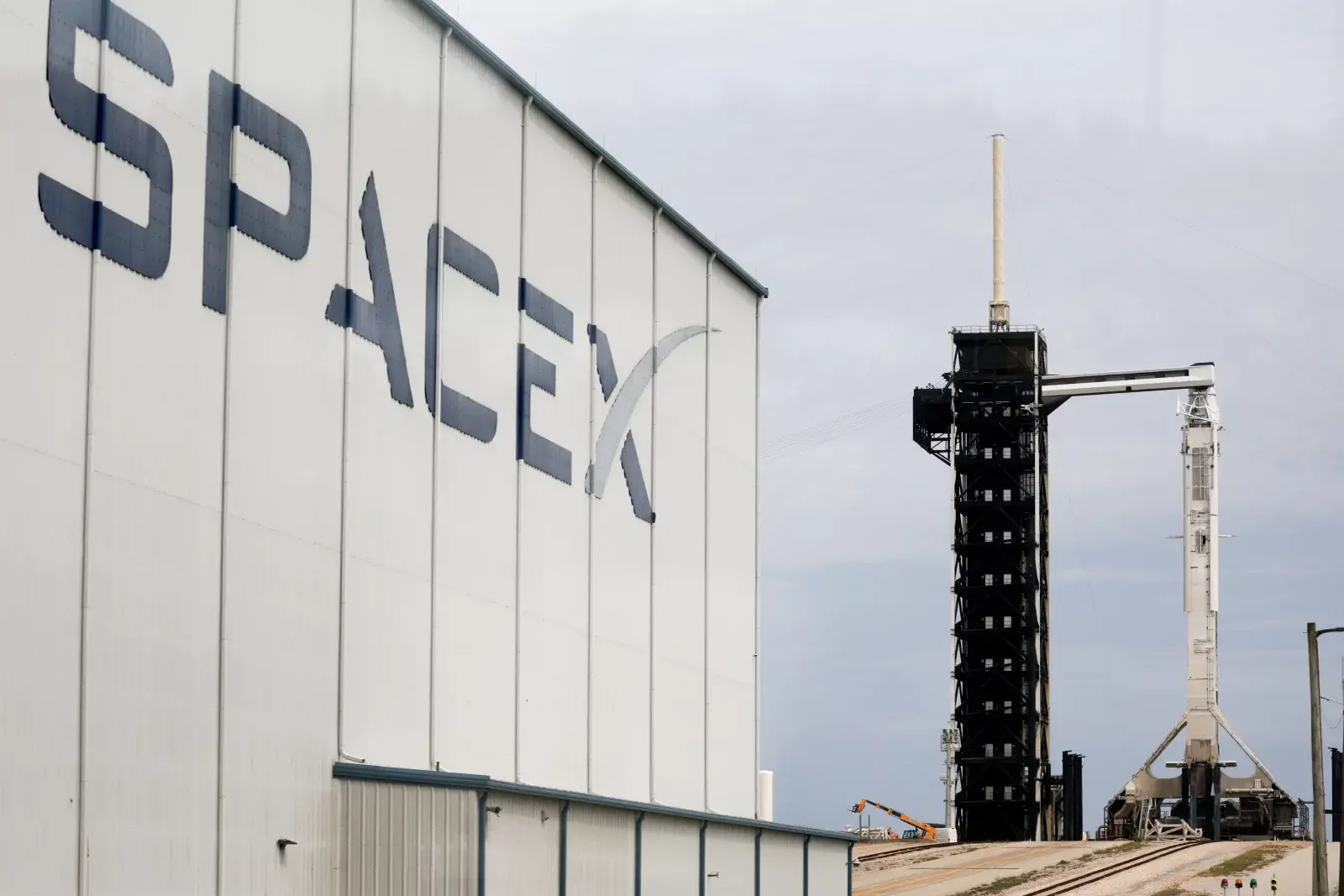
A new ETF named NASA, launched just seven weeks ago, has rapidly become the world's largest space-themed fund, amassing $1.3 billion in assets. Its primary draw is its unique position as a "pure" space ETF holding SpaceX stock through a special purpose vehicle (SPV). However, its exposure to SpaceX has been drastically diluted from 10.3% to 4.6% due to a massive, rapid inflow of investor cash. New money is forced into buying other public space stocks like Rocket Lab, meaning investors seeking SpaceX exposure end up with a portfolio of other companies. Further complications arise from the SPV's valuation mechanism, which only updates during specific manager trades, potentially lagging behind SpaceX's market price. This SPV will also face a six-month lock-up post-IPO, preventing investors from selling that portion if SpaceX shares drop after listing. The article highlights a valuation bubble in the broader space sector, with stocks like Planet Labs surging nearly 1000% in a year, driven more by the "SpaceX IPO narrative" than underlying fundamentals. Meanwhile, SpaceX's own financials show significant losses in 2024, and its record-breaking IPO valuation bundles its space business with other Musk assets like xAI, creating a complex investment proposition. The core warning is that the NASA ETF essentially uses SpaceX as bait but delivers a different product. The real beneficiaries may be the ETF issuers collecting high fees, while investors face dilution and hidden risks ahead of SpaceX's historic IPO on June 12th.

marsbit05/25 08:34

Raised $1.3 Billion in Seven Weeks, Yet SpaceX's Weighting Halved: The Dilution Trap of the NASA ETF

marsbit05/25 08:34

After $HYPE Hits a New High, Is It Worth Considering the Stock of "HYPE Version MicroStrategy" $PURR?

**HYPE Hits New Highs: Is $PURR, the "HYPE Version of MicroStrategy," Worth Considering?** The stock of Hyperliquid Strategies (NASDAQ: $PURR), a publicly-traded company that exclusively buys and holds the cryptocurrency HYPE, has gained over 100% year-to-date, mirroring HYPE's own 150% surge to new all-time highs. This has sparked discussions about PURR being a more "capital-efficient" play than MicroStrategy's bitcoin strategy, given its reported ~$1 billion unrealized gain on a ~$220 million investment. The article clarifies that PURR is essentially a pure-play wrapper for HYPE, with no other business. It resulted from a 2025 SPAC merger led by firms like Paradigm and Atlas Merchant Capital, bringing traditional finance veterans to its board. Its value is entirely derived from the price of HYPE. While PURR offers a crucial compliance bridge for US-based institutional and retirement accounts unable to access HYPE directly, the analysis questions the "capital efficiency" narrative. The outsized gains are attributed to HYPE's exceptional performance, not superior corporate strategy. For investors who can buy HYPE directly, holding PURR introduces unnecessary risks: potential shareholder dilution from future stock offerings, incomplete passthrough of staking rewards, market hour mismatches, and counterparty risk via its single custodian. A key metric is its mNAV (modified net asset value). Current calculations show PURR trades at a discount to its HYPE holdings, but this could flip to a premium depending on the execution of registered share issuances. The article concludes that PURR is primarily a "conduit product." The investment thesis hinges entirely on one's bullishness on HYPE itself, not on the PURR wrapper, which adds friction and risk for those with direct crypto access.

marsbit05/25 08:02

After $HYPE Hits a New High, Is It Worth Considering the Stock of "HYPE Version MicroStrategy" $PURR?

marsbit05/25 08:02

21Shares Report: HYPE's P/S Ratio Only Half That of CME, Bull Market Target Price $70

21Shares Research Report: HYPE's P/S Ratio Half of CME's, Bullish Target $70 A recent report from 21Shares highlights Hyperliquid's evolution from a crypto derivatives DEX into a 24/7 "everything exchange" for perpetual contracts across various asset classes. The platform gained prominence during a February geopolitical incident when it provided real-time price discovery for WTI crude oil while traditional markets like CME were closed. Non-digital assets now account for approximately 35% of its volume, with traditional commodities and indices featuring among its top-traded assets. Hyperliquid's business model is rapidly diversifying, significantly reducing its dependence on crypto market cycles. Its cumulative trading volume and revenue are approaching levels comparable to CME Group's crypto derivatives segment. A key feature is its Assistance Fund, which directs 97%-99% of protocol fees to automated HYPE token buybacks, creating a deflationary mechanism with an implied buyback yield significantly higher than CME's traditional share repurchase program. Despite strong fundamentals, HYPE currently trades at a Price-to-Revenue (P/R) ratio of ~10x, roughly half of CME's ~17x. The report outlines valuation scenarios: a bullish case targets $62-$70 based on annualized revenue reaching $12-$15B and applying CME's P/R multiple. A bear case considers $15-$19 if growth slows. Key risks include platform centralization during crises, regulatory uncertainty for on-chain commodities, dependence on geopolitical volatility for non-crypto volume, and the need for sustained high trading volume to offset token unlocks. The analysis concludes that HYPE is increasingly being valued as a legitimate exchange business rather than a speculative crypto asset.

marsbit05/22 05:56

21Shares Report: HYPE's P/S Ratio Only Half That of CME, Bull Market Target Price $70

marsbit05/22 05:56

Financial Changes under the New SEC Rules: Opportunities and Regulatory Red Lines Behind "Tokenized Stocks"

The article discusses the emergence of "Tokenized Stocks" following the U.S. SEC's proposed "innovation exemption" framework, which could allow some assets to be traded on blockchain. It clarifies key misconceptions for investors, particularly those in China. Firstly, it emphasizes that most "tokenized stocks" currently offered by third-party crypto platforms are synthetic assets, not actual equity. Purchasers do not gain shareholder rights like dividends or voting; instead, they hold a derivative contract dependent on the issuing platform's credit and its ability to track the underlying stock's price. The article examines the risks of 24/7 trading, a major selling point. It notes the absence of circuit breakers, which could lead to sudden, unrecoverable losses during off-hours market shocks. It also warns of liquidity traps and high volatility due to the market's currently small size. It reveals that the primary drivers are institutional players like BlackRock and JPMorgan, who are focused on using blockchain for efficiency gains in areas like treasury settlements (T+0), not retail speculation. For Chinese readers, it strongly cautions that platforms offering "easy" access to U.S. stocks via tokens with RMB likely violate strict domestic regulations on cross-border securities and virtual currencies, offering no legal protection. The conclusion offers practical advice: use legal channels like QDII for long-term investment, be wary of high-return promises, monitor evolving regulations like the U.S. CLARITY Act, and prioritize compliance and risk management over chasing innovation. The SEC's move is framed as a strategic experiment in financial tech leadership, but for individual investors, understanding the risks and regulatory boundaries is paramount.

链捕手05/22 05:42

Financial Changes under the New SEC Rules: Opportunities and Regulatory Red Lines Behind "Tokenized Stocks"

链捕手05/22 05:42

活动图片