# Risk Related Articles

HTX News Center provides the latest articles and in-depth analysis on "Risk", covering market trends, project updates, tech developments, and regulatory policies in the crypto industry.

Why Not Short Even When Bearish? Munger Did the Math on a 'Losing Trade'

Why Not Short Even When Bearish? Charlie Munger's Calculated "Loss-Making Account" Many traders, drawn to speculative tools like futures contracts, often face repeated failures. As the article notes, unless one is a genius, such instruments should be avoided for long-term profit-seeking. Similarly, the practice of short selling is viewed with caution. The author firmly states a policy of not shorting, even when bearish, preferring to simply wait. The core reason? Successful short selling requires exceptionally difficult conditions to profit. Legendary investors Warren Buffett and Charlie Munger have themselves reflected on painful short-selling experiences. Munger highlights two critical flaws in the mathematical logic of shorting: 1. Asymmetrical Risk/Reward: A long position has a maximum loss of 100% but unlimited upside. A short position caps profit at 100% (if a stock falls to zero) but carries theoretically unlimited loss potential. 2. The "Promoter" Problem: Fraudulent or struggling companies can prolong their decline. As Munger said, "You can run out of money before the promoter runs out of ideas," meaning short sellers may be forced to cover positions at a loss before the company's true fate unfolds. The article cites Stanley Druckenmiller, a famed hedge fund manager. He once shorted 12 companies that all eventually went bankrupt. However, intense market rallies forced him to cover his positions within three weeks, resulting in massive losses—$200 million of his capital plus an additional $600 million. He concluded he likely never made money shorting in his career. His experience perfectly illustrates Munger's points: facing unlimited losses and being wiped out before being proven right. The conclusion is clear: for most investors, complex instruments like short selling and derivatives are not viable paths to stable, long-term gains. Self-reflection is advised before repeatedly wasting time and capital on such speculative strategies.

marsbit06/03 02:35

Why Not Short Even When Bearish? Munger Did the Math on a 'Losing Trade'

marsbit06/03 02:35

24/7 Unstoppable Derivatives Wave: Cryptocurrency Is Forcing Traditional Finance to 'Change Time Zones'

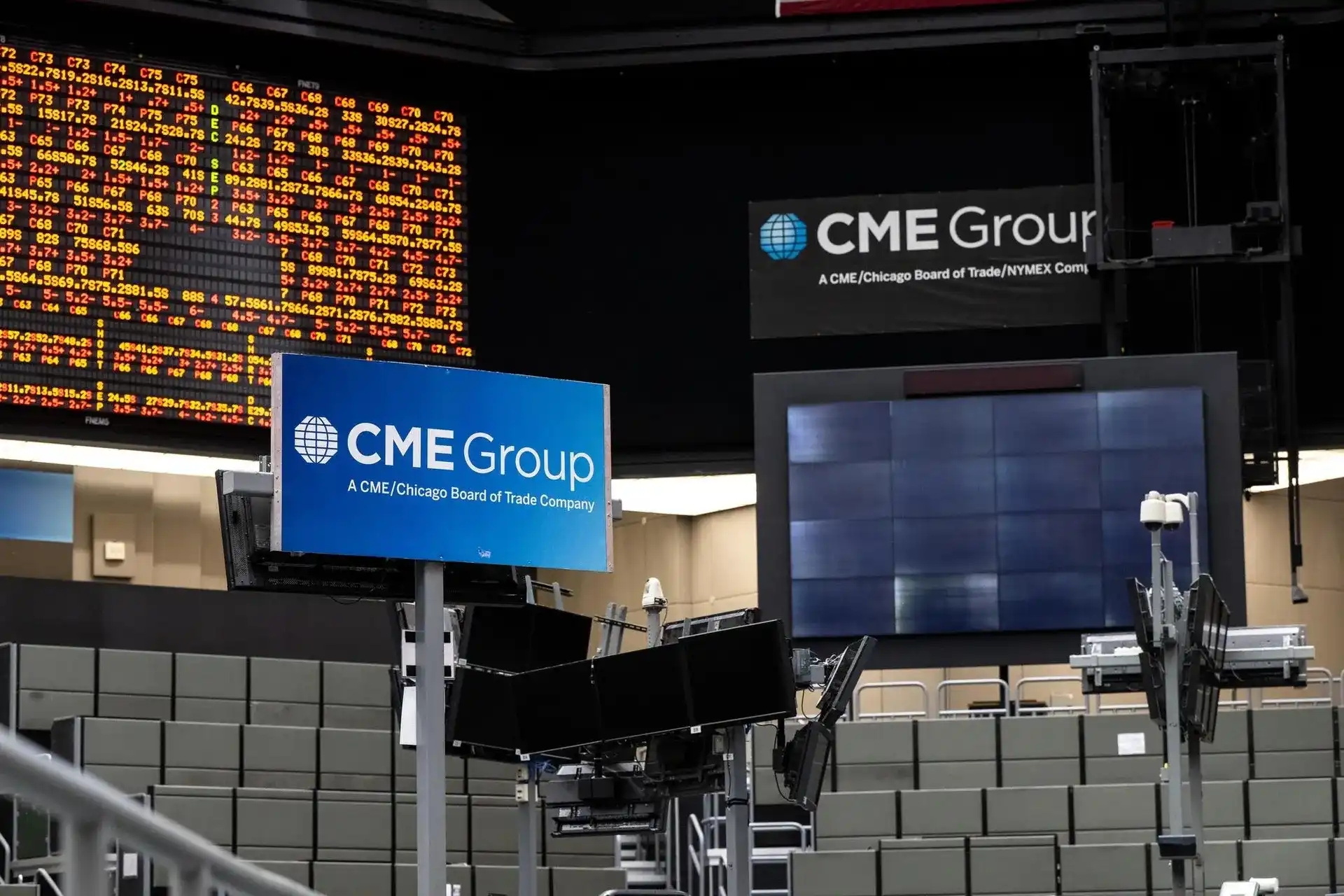
The article discusses how the 24/7 nature of the cryptocurrency market is compelling traditional finance to adapt its operating hours and infrastructure. The key catalyst is the CME Group's planned launch of nearly round-the-clock trading for regulated crypto derivatives, a move driven by strong institutional demand for continuous risk management. This shift highlights a fundamental change: derivatives, not spot trading, now dominate crypto market activity and price discovery. However, integrating continuous trading into traditional finance reveals structural tensions. While execution times can be extended, settlement, clearing, and regulatory reporting largely remain bound to traditional business-day cycles. This creates a lag where weekend price movements can impact risk exposures before traditional control systems are fully active. Furthermore, the article explores new challenges arising from this always-on environment. The inherent transparency of public blockchains, while ensuring auditable settlement, also exposes sensitive corporate information like treasury flows to competitors in real-time. This has elevated privacy from a feature to a core requirement for institutional adoption. The next phase hinges on building systems that balance this necessary privacy with regulatory accountability and compliance. In conclusion, the move towards 24/7 trading signifies more than crypto becoming institutionalized. It represents traditional finance beginning to adopt the temporal structure of crypto-native markets. The future will be defined by how successfully traditional risk, identity, privacy, and settlement frameworks can operate at the continuous speed cryptocurrency markets demand.

marsbit06/01 10:36

24/7 Unstoppable Derivatives Wave: Cryptocurrency Is Forcing Traditional Finance to 'Change Time Zones'

marsbit06/01 10:36

Are Rising U.S. Stocks Getting More Dangerous? Goldman Sachs: Downside Protection Mechanisms Have Almost Failed

The US stock market rally is showing signs of becoming increasingly precarious as key downside protection mechanisms fail, according to Goldman Sachs. Derivatives strategist Brian Garrett notes that the S&P 500 options volatility skew has plunged to an 18-month low, indicating the market now prices an 8% probability for both a 10% drop and a 10% rise—a sign of "skew failure." Concurrently, Goldman's Panic Index hit a two-year low, reflecting minimal demand for tail-risk hedging. This complacency emerges amid a relentless market surge, with the S&P 500 setting new records frequently in 2024. Garrett highlights three major concerns: extreme concentration in the top ten stocks (40% of index weight), heavy reliance on AI-themed performance, and a price pattern eerily similar to the 1998-1999 period. Despite pervasive media pessimism, this fear is absent in options pricing. Downside hedge costs are historically low. Goldman suggests tactical trades: buying RSP outperformance options versus the SPX for a broadening rally, purchasing VIX calls for protection, and going long on Bitcoin ETF volatility. Hedge funds have been net buyers for two weeks, with sector rotation into financials and out of industrials. Notably, the global single-stock leveraged/ inverse ETF AUM has doubled to over $60 billion in two months, underscoring growing speculative activity.

marsbit06/01 09:45

Are Rising U.S. Stocks Getting More Dangerous? Goldman Sachs: Downside Protection Mechanisms Have Almost Failed

marsbit06/01 09:45

Comics Illustration: Helping You Understand China's New Regulations on Outbound Investment

Summary: Understanding China's New Regulations on Overseas Investment The State Council has announced new regulations on overseas investment, effective July 1, 2026. The core message is not a prohibition on international investment, but a call for both companies and individuals to operate with strong regulatory awareness. Here are the key points: 1. **Scope is Broad:** The rules apply not only to companies but also to other organizations and individual residents. 2. **Definition of Investment is Wide:** It encompasses not just capital transfers but also asset contributions, obtaining equity or rights, financing, providing guarantees, and direct or indirect acquisition of rights related to overseas entities or assets. 3. **Companies Must Plan Comprehensively:** Beyond simple ownership charts, firms need clear plans covering the investing entity, required approvals or filings, fund transfer paths, and compliance with technology, data, and security reviews. 4. **Individuals Should Prioritize Compliance:** Before focusing on returns, individuals must first assess their eligibility, understand legal channels for capital outflow, know what they are acquiring, and identify responsible parties in case of issues. 5. **Penalties are Significant:** Violations can result in fines and potentially restrictions on future overseas investment activities. In essence, overseas investment remains possible, but it must be approached with regulatory compliance as a fundamental priority, not solely based on commercial opportunity. *Note: This is a general informational summary and does not constitute legal advice or investment recommendations.*

marsbit06/01 09:06

Comics Illustration: Helping You Understand China's New Regulations on Outbound Investment

marsbit06/01 09:06

Wang Chuan: When the Neighbor Old Wang Made 30x on Memory Stocks, How to Avoid Anxiety (Part Six) - The Trap of Commoditized Goods

Wang Chuan: When the Neighbor Lao Wang Made 30x on Storage Stocks, How to Stay Anxiety-Free (Part 6) - The Trap of Commoditized Goods. This essay uses historical and current examples to analyze the cyclical and high-risk nature of the data storage industry. It begins with the 1990s rise and dramatic fall of Iomega, whose stock soared over 160x in 18 months before collapsing 97% from its peak, illustrating the fleeting success of storage "meme stocks." The core problem is that storage products, like DRAM and flash memory, are highly commoditized. This leads to extreme volatility: prices have plummeted over 80% multiple times, and company stocks often crash 95% or go bankrupt. The industry's dynamic is defined by "elastic demand facing heavy-asset, long-cycle, rigid supply." When demand spikes and supply is fixed, prices skyrocket, as seen recently with AI-driven demand for High Bandwidth Memory (HBM). Companies like Sandisk and Micron have reported massive revenue and gross margin jumps (e.g., Sandisk's gross margin rising from 22.5% to 78.3%) despite minimal increases in production volume. However, these high margins are self-defeating. They incentivize massive new capacity investments (hundreds of billions planned from 2026), with supply expected to surge by late 2027. Once new supply meets demand, prices and profits will crash, potentially leading to a scenario where "selling more results in earning less." The article debunks the safety of long-term supply agreements, comparing them to fragile non-aggression pacts easily broken when market conditions shift. It warns that when an industry is highly profitable but trades at low P/E ratios, the risk is greatest, as plummeting prices quickly erase those earnings. Multiple asymmetric risks loom, including economic recession, reduced AI spending, faster-than-expected capacity expansion (especially from Chinese firms), and technological innovations that reduce memory requirements. In conclusion, the storage sector is a cyclical trap where periods of euphoric profits are often precursors to devastating downturns, luring unprepared investors into a "wealth incinerator."

marsbit06/01 07:13

Wang Chuan: When the Neighbor Old Wang Made 30x on Memory Stocks, How to Avoid Anxiety (Part Six) - The Trap of Commoditized Goods

marsbit06/01 07:13

Bitcoin's Weak Rebound Fails to Mask Adjustment Trend, HYPE's Top Signal Warns of Short-Term Risks | Invited Analysis

**Title:** Bitcoin's Weak Rebound Fails to Mask Downtrend; HYPE Top Signal Alerts of Short-Term Risks | Exclusive Analysis **Abstract:** This weekly market analysis examines the current technical structures of Bitcoin and HYPE, outlining key trading strategies. Bitcoin's daily chart shows it has broken below the median line of its primary ascending channel, indicating structural weakness. It is currently experiencing a weak rebound within a short-term descending channel, targeting resistance at $75,000-$76,000. Failure to break above this zone could lead to a resumption of the downtrend, testing support at $69,500-$70,500. Trading strategies include positioning for a rebound rejection (Plan A) or a breakdown below key support (Plan B) with controlled short positions. For HYPE, the 4-hour chart reveals a potential seven-wave advance from the May 14 low, now showing signs of exhaustion. A bearish divergence (momentum weakening) has been observed, coupled with a top signal from the proprietary "Spread Trading Model" at potential endpoint 47. The key this week is to monitor if a confirmed top forms here, especially upon a breach of the $62.5-$64.57 support area. If broken, a larger corrective move towards $54-$56.30 is anticipated. The short-term strategy for HYPE focuses on cautious long entries only upon confirmed stabilization within the support zone. The report also details a successful short BTC trade from the previous week, yielding a ~5.07% profit, executed based on model signals and price action. Strict risk management rules, including dynamic stop-loss adjustments, are emphasized.

marsbit06/01 05:53

Bitcoin's Weak Rebound Fails to Mask Adjustment Trend, HYPE's Top Signal Warns of Short-Term Risks | Invited Analysis

marsbit06/01 05:53

AI Bubble Warning: AI Investments Are Negative Returns for Most Tech Giants

The article issues a stark warning about a potential AI investment bubble. It notes that while the AI boom shares similarities with the TMT bubble of the late 1990s, its scale is vastly larger, currently driving 93% of U.S. GDP growth. Major hyperscale cloud providers like Microsoft, Alphabet, Amazon, Meta, and Oracle are planning to invest trillions in AI data centers over the coming years. However, calculations based on analyst projections for 2025-2030 reveal a concerning math problem: expected capital expenditure growth far outpaces projected revenue growth. Even under an extremely optimistic scenario of zero costs, the implied return on investment for most of these tech giants (except Amazon) is deeply negative. This suggests that the current trajectory could lead to one of history's largest shareholder value destruction events. The piece outlines two potential escapes: AI generating vastly more revenue than currently anticipated—a near-impossible task—or a significant cutback in the planned investment splurge. The latter scenario could trigger a domino effect, severely impacting the entire tech supply chain (from Nvidia to TSMC), potentially pushing the U.S. economy into recession, and causing a major stock market downturn. The author suggests upcoming high-profile IPOs by companies like OpenAI and Anthropic might represent a transfer of risk from early investors to public market participants. While the peak of the hype cycle might sustain investment through 2026, the fundamental financial dilemma remains unresolved, setting the stage for a potential market correction in 2027 or 2028, similar to the years following Alan Greenspan's "irrational exuberance" warning.

marsbit05/31 12:43

AI Bubble Warning: AI Investments Are Negative Returns for Most Tech Giants

marsbit05/31 12:43

Reddit Discussion: After 11 Years in Crypto, RWA Is One of the Few Things That Doesn't Feel Like 'Old Wine in a New Bottle'

Reddit Discussion: After 11 Years in Crypto, RWA Feels Unlike the Usual 'Old Wine in a New Bottle' A user with experience since 2014 shares that, having witnessed major crypto cycles from ICOs to FTX, most new narratives are just rebranded old ideas. However, Real World Assets (RWA) feel genuinely different. It's not about moving existing on-chain capital but bringing yields from real-world assets onto the blockchain. While many projects are flawed, the underlying premise is stronger than most. The user outlines key checks before engaging with any RWA project: 1) Existence of a lending business *before* the token launch (citing examples like Maple and 8lends). 2) Clear, transparent handling of defaults, using Goldfinch's 2023 issues as a critical lesson about inevitable credit risk. They note a crucial distinction for newcomers: RWA lending involves slow recovery from real assets (taking months), unlike the instant liquidations of over-collateralized DeFi protocols like Aave. Ultimately, the hard part is the traditional credit work, not the blockchain. Commenters agree, emphasizing the importance of documented default procedures and teams with pre-token real-world credit experience. They observe that a project's response to its first default is more telling than any metrics dashboard, summarizing RWA as "old credit on a new rail."

marsbit05/29 06:09

Reddit Discussion: After 11 Years in Crypto, RWA Is One of the Few Things That Doesn't Feel Like 'Old Wine in a New Bottle'

marsbit05/29 06:09

Kelp DAO Vulnerability Triggers Exodus of Hundreds of Billions; Two Major DeFi Lending Pathologies Clash Head-On

Title: Kelp DAO Exploit Triggers $15 Billion Exodus, Exposing a Clash Between Two DeFi Lending Models. In April 2026, a hacker exploited a LayerZero bridge vulnerability in the Kelp DAO project, minting $292 million in fake rsETH tokens. These were deposited into Aave as collateral to borrow real Ethereum, draining the protocol's liquidity. Within three and a half days, Aave saw $15 billion in deposits flee, forcing a costly $160 million bailout. The root cause was identified as Aave's governance, which had previously voted to set rsETH's loan-to-value ratio to a risky 93%, leaving minimal safety margin. This incident starkly contrasts with the experience of Morpho, the second-largest DeFi lending protocol. Some fake rsETH also flowed into Morpho, but the exposure was limited to $1 million across isolated, pre-configured markets, preventing systemic contagion. The event highlights a fundamental divergence in DeFi lending architectures. Aave employs a shared liquidity pool model, where all deposits back all approved collateral assets, governed by DAO vote. This creates systemic risk, as seen when even users who never interacted with rsETH faced frozen funds. Furthermore, Aave's governance, influenced by leveraged borrowers, prioritized their interests during the crisis, even lowering borrowing rates for frozen markets at the expense of safer depositors. Its supplemental insurance mechanism, Umbrella, also failed as providers withdrew capital when needed. Morpho operates on an isolated market model. Anyone can create a separate lending market with fixed parameters (collateral, loan asset, oracle, rates). Independent risk managers (curators) allocate capital to these markets, bearing losses within their own vaults if they occur. This structure prevents risk from spreading and removes governance conflicts, as curators' decisions are not subject to community override. Beyond crisis management, the shared pool model carries a hidden cost: idle capital. In Aave's core markets, the spread between borrowing and deposit rates represents unusable funds, costing an estimated $52 million annually in lost value. Morpho's model targets a higher utilization rate (90% vs. Aave's 60-80%) because it eliminates rehypothecation risk, dynamically adjusting rates to balance supply and demand without governance delays. Consequently, Morpho often offers higher net yields to depositors. Institutional adoption underscores this difference. Major players like Coinbase (powering its lending for over 100M users), Apollo Global Management, Anchorage Digital, and SG-FORGE (Societe Generale) have chosen to build on Morpho. They require compliant, self-controlled risk parameters that Aave's community-governed model cannot provide. This trend is amplified by regulations like the proposed US GENIUS Act, which will push stablecoin issuers to seek neutral, controllable infrastructure like Morpho to manage trillions in reserve assets.

marsbit05/29 01:44

Kelp DAO Vulnerability Triggers Exodus of Hundreds of Billions; Two Major DeFi Lending Pathologies Clash Head-On

marsbit05/29 01:44

活动图片