# Revenue Related Articles

HTX News Center provides the latest articles and in-depth analysis on "Revenue", covering market trends, project updates, tech developments, and regulatory policies in the crypto industry.

After the $250 Million Acquisition, Polygon's Long-Term Strategy Emerges

Polygon Labs has announced the acquisition of crypto startups Coinme and Sequence for a total of over $250 million. The deals are part of Polygon's strategic push into the stablecoin sector and broader financial infrastructure. Coinme, a US-based financial services company holding multiple state money transmitter licenses, will provide crucial regulatory compliance for Polygon to enter the US market. It will continue operating its existing crypto exchange, wallet, and service offerings. Sequence, a wallet and developer infrastructure provider, is intended to bolster the user-facing entry point for Polygon's ecosystem. These acquisitions represent a clear "upstream and downstream" strategy: securing regulatory pathways on one end and user infrastructure on the other. This aggressive, counter-cyclical move aims to transition Polygon from a crypto infrastructure project into a regulated financial infrastructure provider amid a tightening regulatory environment. Despite a broader market downturn, Polygon has shown resilience in on-chain revenue, recently ranking seventh among blockchains. A significant short-term driver of this growth is Polymarket, a prediction market platform whose high transaction volume has substantially increased network fees. This activity has accelerated the burn of POL tokens, creating a deflationary effect that currently outpaces staking rewards. In summary, while short-term fee growth is largely fueled by Polymarket, Polygon's long-term strategy is focused on building a compliant framework for stablecoins and real-world financial applications, positioning itself for the next phase of competition.

Odaily星球日报01/14 12:47

After the $250 Million Acquisition, Polygon's Long-Term Strategy Emerges

Odaily星球日报01/14 12:47

After the Implementation of Uniswap's Fee Switch: Is This DeFi Transformation's 'Report Card' Impressive Enough?

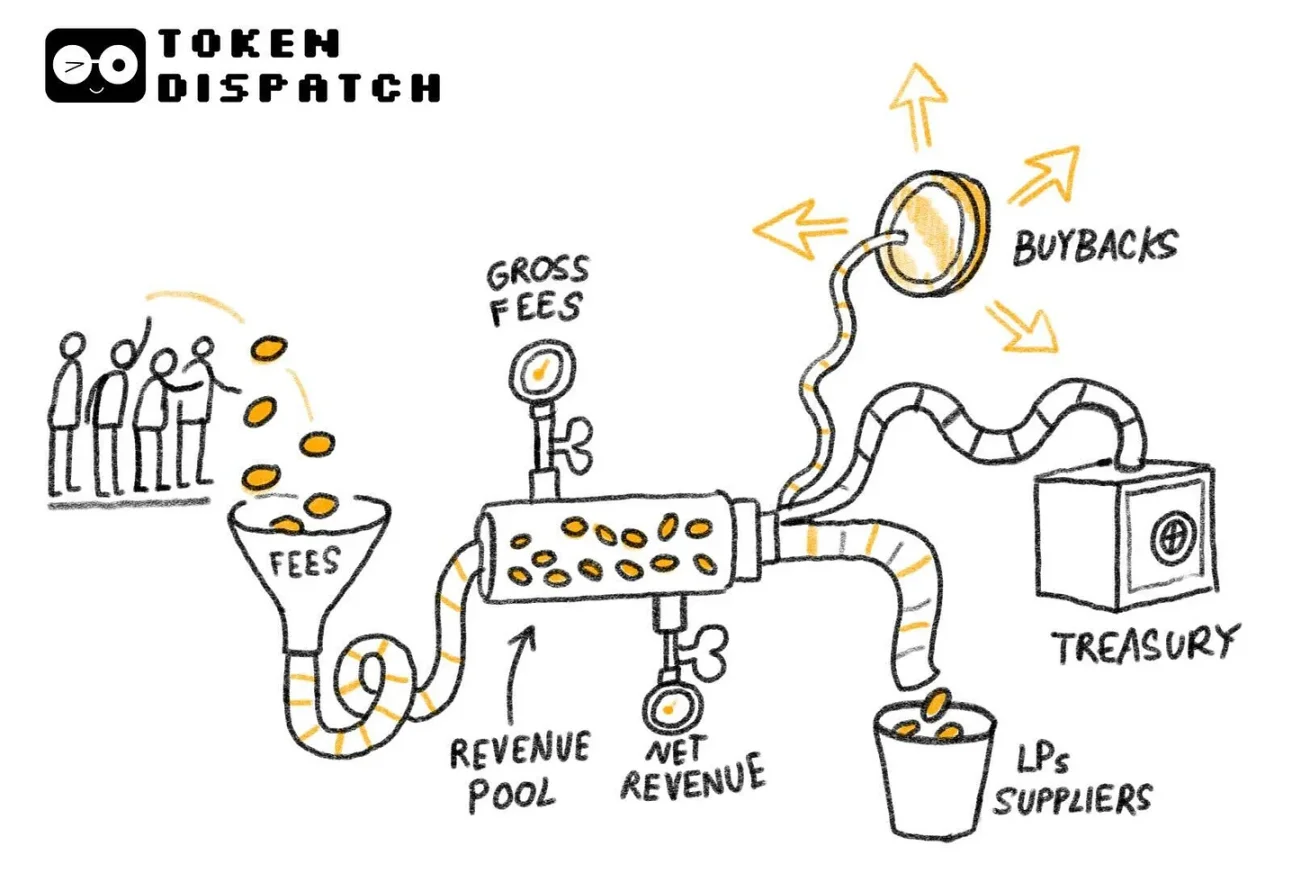
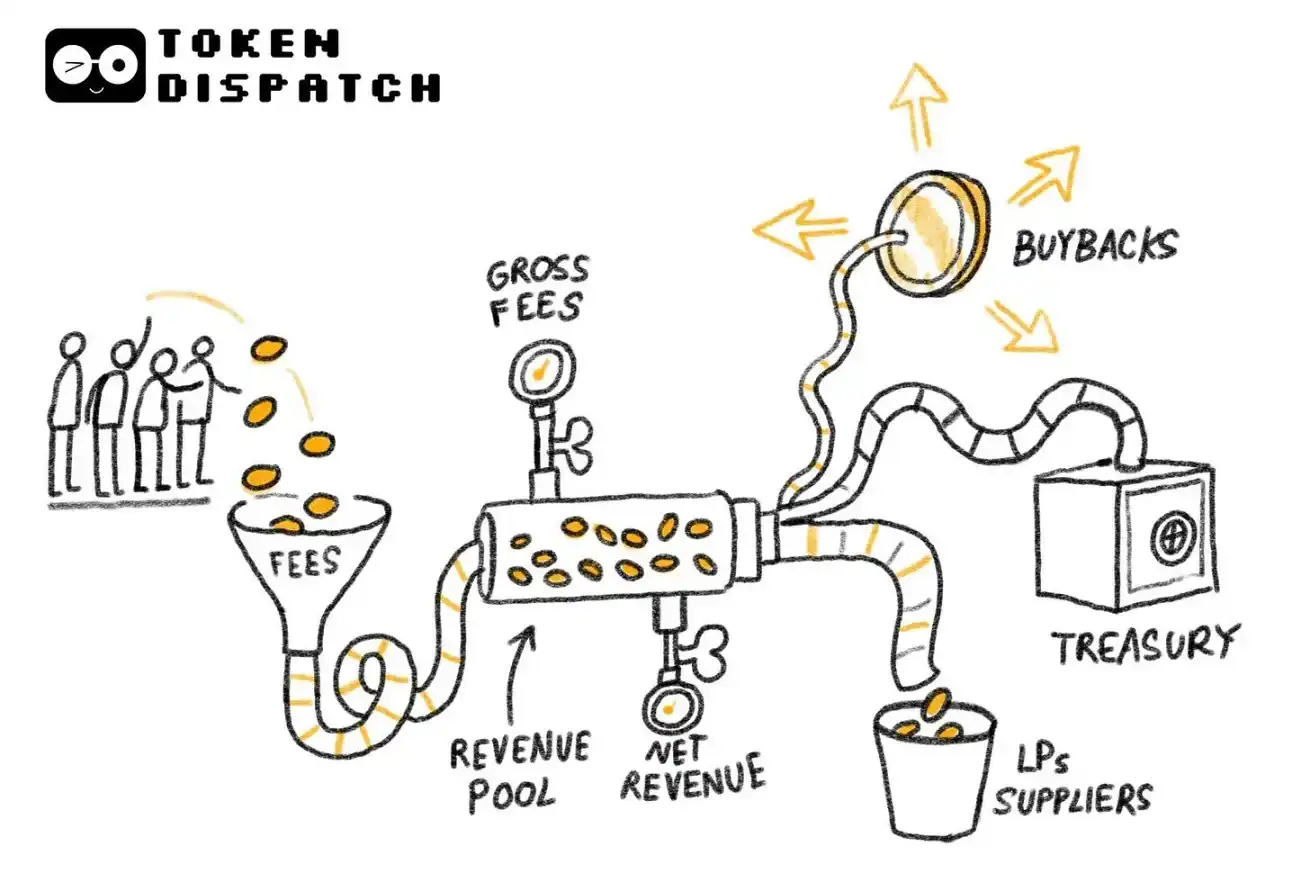
Uniswap's fee switch activation, implemented through the "UNIfication" proposal, marks a pivotal shift in its tokenomics by linking UNI tokens directly to protocol usage and revenue. Previously a governance-only asset, UNI now accrues value through a deflationary mechanism where a portion of protocol fees from Uniswap V2, V3, and Unichain is used to programmatically burn UNI tokens. An initial one-time treasury burn of 100 million UNI was executed to compensate holders for past unaccrued fees. Early data indicates an annualized protocol revenue of approximately $26-27 million, resulting in a revenue multiple of around 207x relative to UNI’s $5.4 billion market capitalization. The current annualized burn rate is estimated at 4-5 million UNI, representing only 0.4% of the circulating supply. This high valuation implies strong market expectations for future growth, requiring expanded fee capture—such as broader pool coverage, V4 hooks, and Unichain optimization—to justify current levels. The move reflects a broader DeFi trend toward "fee-hooked" token models, where tokens are designed to better align holders with protocol economics through mechanisms like burns, staker rewards, or ve-token lockups. This transition makes UNI more analytically grounded but also subjects it to greater scrutiny based on sustainable value accumulation and real yield generation. Regulatory developments regarding revenue-sharing tokens will also play a critical role in shaping its future.

marsbit01/14 10:05

After the Implementation of Uniswap's Fee Switch: Is This DeFi Transformation's 'Report Card' Impressive Enough?

marsbit01/14 10:05

活动图片