# Real Estate Related Articles

HTX News Center provides the latest articles and in-depth analysis on "Real Estate", covering market trends, project updates, tech developments, and regulatory policies in the crypto industry.

Anthropic Drops $19 Billion to 'Sponsor' a Bitcoin Miner

On July 6, 2026, Bitcoin mining company TeraWulf (NASDAQ: WULF) saw its stock surge 15% pre-market following the announcement of a landmark 20-year agreement with AI giant Anthropic. The deal grants Anthropic 401 MW of IT load capacity at TeraWulf's "Justified Data" campus in Kentucky and is projected to generate approximately $19 billion in contracted revenue for the miner over its duration. On the same day, TeraWulf also sold its 50.1% stake in a Texas joint venture for about $530 million. This dual move signals a strategic pivot: divesting non-core assets to fund its fully-owned Kentucky project and shifting focus from cryptocurrency mining to becoming a specialized infrastructure provider for AI. The agreement highlights a key advantage for Bitcoin miners transitioning to AI: their pre-existing access to land and critical power grid capacity, which is becoming a major bottleneck for data center expansion. Unlike peers who operate AI clouds, TeraWulf is adopting a "landlord" model, leasing only the physical space and power for clients' own servers. However, a significant gap exists between the deal's announcement and revenue generation, with the first phase of the Kentucky site not operational until late 2027. The $19 billion figure represents a long-term bet on both TeraWulf's execution and Anthropic's financial durability in the capital-intensive AI race. The market's positive reaction reflects the growing value of fundamental infrastructure—secured land and reliable electricity—in the era of AI compute scarcity.

marsbit07/08 03:56

Anthropic Drops $19 Billion to 'Sponsor' a Bitcoin Miner

marsbit07/08 03:56

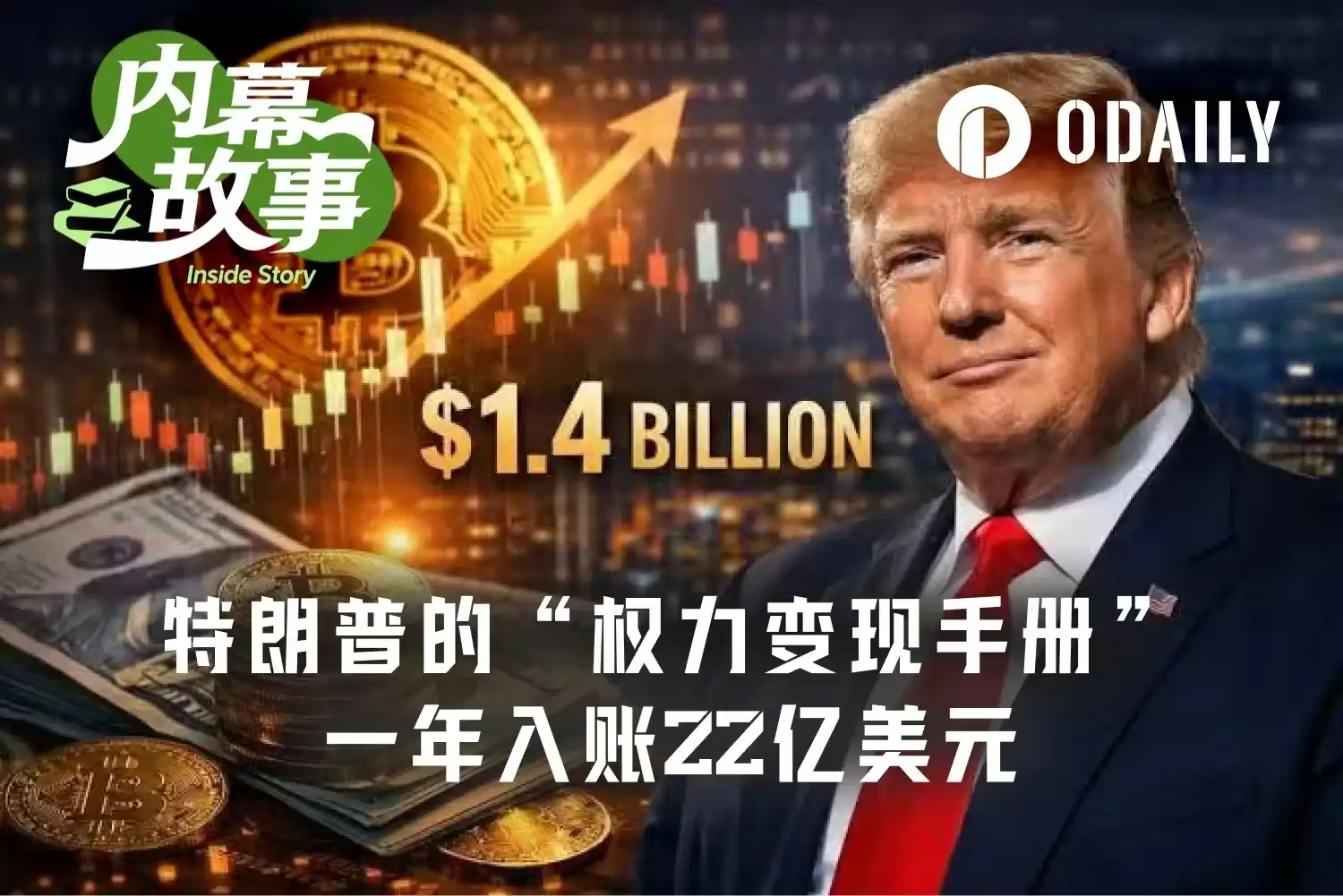
Trump, the President Who Knows Best How to 'Trade Stocks'

Former US President Donald Trump reported a record-breaking $2.2 billion in personal income for 2025, the highest annual income ever disclosed by a sitting president. This figure, from a 927-page government ethics filing, represented a 3.5-fold increase from his $600 million income in 2024 and boosted his net worth to $6.5 billion. The primary drivers were cryptocurrency (64% of income, approximately $1.4 billion) and real estate (26%, approximately $575 million). His crypto earnings stemmed largely from the launch of his personal meme coin, $TRUMP, generating over $600 million in licensing fees, and substantial profits from the WLFI token and its parent company. Despite a sluggish property market, his Mar-a-Lago resort and associated golf clubs saw revenue surges of 50% and 27%, respectively, attributed to their use as venues for presidential events. Trump's financial disclosure also revealed an unprecedented level of stock market activity, with over 22,000 trades executed in 2025, averaging 87 trades per market day. Media analyses noted several instances where significant trading coincided with major policy announcements, such as proposed tariffs, raising questions about potential conflicts of interest. While the White House stated these trades were handled by a family-managed trust fund and not Trump directly, critics highlighted this as a departure from the blind trusts traditionally used by presidents post-Watergate. The report has intensified debate over the commercialization of the presidency. Supporters view it as a success story of a businessman-president, while critics argue it demonstrates an unprecedented conversion of public influence into private wealth, with policy decisions potentially linked to personal financial gains. The controversy centers on whether Trump's earnings represent innovative entrepreneurship or a fundamental conflict of interest, sparking renewed calls for stricter ethics reforms in US governance.

marsbit07/06 15:02

Trump, the President Who Knows Best How to 'Trade Stocks'

marsbit07/06 15:02

Insurance Industry Faces Its Biggest Competitor: Are Prediction Markets the 'Barbarians at the Gate'?

"Insurance Industry Faces New Rival: Are Prediction Markets the 'Barbarians at the Gate'?" Prediction markets, exemplified by platforms like Kalshi and Polymarket, are emerging as potential disruptors to the traditional insurance industry by offering alternative risk-hedging mechanisms. These markets allow users to bet on specific event outcomes, effectively creating a form of customizable, on-demand insurance. Key examples highlight this shift. In sports, Kalshi partnered with insurance broker Game Point Capital to provide NBA teams with more affordable options to hedge performance bonuses compared to traditional insurers. In real estate, Polymarket's collaboration with Parcl lets users speculate on city-specific housing price indices, allowing homeowners to hedge against price drops or buyers against price increases. Furthermore, businesses like a New York bar have used Kalshi to hedge marketing promotions (e.g., offering free drinks if a team wins), framing the transaction explicitly as placing a "hedge." The article argues prediction markets offer advantages over traditional insurance and even sports betting in transparency, liquidity, and flexibility. They provide a wider range of event coverage, act as neutral platforms rather than counterparties, and offer clearer pricing. The piece cites historical precedents like large "refund promotion" hedges by businesses using sportsbooks but notes prediction markets modernize the concept. However, challenges remain for widespread adoption as an insurance alternative, including limited liquidity in some markets, unclear regulatory status, and potential vulnerabilities in event resolution mechanisms. Despite these hurdles, prediction markets are positioning themselves as new tools for risk management, directly challenging certain segments of the conventional insurance landscape.

Odaily星球日报06/22 10:10

Insurance Industry Faces Its Biggest Competitor: Are Prediction Markets the 'Barbarians at the Gate'?

Odaily星球日报06/22 10:10

RWA First Stock's Major Acquisition: Why Buy a 'Traditional' Mortgage Company?

On June 10th, Figure Technology Solutions (Nasdaq: FIGR), a blockchain-native capital markets firm, announced a $717 million acquisition of Kiavi, a leading non-bank lender for residential real estate investors. The deal involves Figure acquiring Kiavi's technology and operations for approximately $538 million, while forming a joint venture with alternative asset manager Sixth Street to purchase Kiavi's existing loan portfolio. Sixth Street also provided a $3 billion forward purchase commitment. This acquisition marks a strategic shift for Figure, known as the "RWA (Real World Asset) first stock," allowing it to expand significantly into the larger market of first-lien mortgages. Kiavi specializes in non-qualified mortgage (Non-QM) loans, such as short-term fix-and-flip (RTL) and rental property (DSCR) loans—a segment traditionally underserved by major banks. The move is expected to increase Figure's first-lien loan origination to over $7 billion annually, aiming for these to constitute about 40% of its business by 2027. Both companies leverage AI for underwriting: Kiavi uses proprietary models to value renovated properties and automate document processing, dominating the fix-and-flip lending space. Figure plans to integrate these assets onto its blockchain platform, Provenance, using its new 'Adaptor' product to standardize and tokenize the loans for institutional investors on its Democratized Prime marketplace. While the integration poses challenges—including merging different asset types, interest rate sensitivity of Kiavi's loans, and post-IPO execution risks—Figure projects the deal to be accretive to earnings with a cash payback period under four years. The transaction is seen as a major step in scaling blockchain-based capital markets, moving RWA tokenization from concept validation toward large-scale operation.

Foresight News06/12 02:05

RWA First Stock's Major Acquisition: Why Buy a 'Traditional' Mortgage Company?

Foresight News06/12 02:05

Earning 1000 Trillion in Half a Year, 'Pocketing' 20 Million per Capita: This Round of Wealth Creation in the Korean Stock Market is Unprecedented in Scale

The South Korean stock market is experiencing an unprecedented wealth surge in 2026, with household equity and fund asset values soaring by over 1,000 trillion KRW (~$730bn) year-to-date. This translates to an average per capita wealth increase of roughly 20 million KRW, fueled by a historic 109% rally in the KOSPI index. The boom is driven by three converging forces: an AI-driven semiconductor supercycle boosting giants like Samsung and SK Hynix; the government's "Value-Up" market reforms addressing long-standing corporate governance issues; and aggressive real estate regulations that have locked capital within financial markets, preventing profits from flowing back into property. This has triggered a wealth effect, boosting high-end consumption significantly. However, the gains are highly concentrated. The two semiconductor behemoths account for over half the index's value, but retail investors own relatively low stakes in them, systematically missing the biggest rallies. Wealth and consumption benefits are skewed towards luxury goods and imported cars, bypassing mainstream retail. Further risks stem from excessive leverage, with high trading volume in leveraged ETFs, and a market sentiment heavily reliant on the AI sector's fortunes and speculative rumors. While this cycle marks a potential shift from real estate to equities as a primary wealth generator for Koreans, its sustainability, amid structural imbalances and leverage, remains a critical test.

marsbit06/05 06:53

Earning 1000 Trillion in Half a Year, 'Pocketing' 20 Million per Capita: This Round of Wealth Creation in the Korean Stock Market is Unprecedented in Scale

marsbit06/05 06:53

Sitting on a Trillion-Dollar Market, Why Hasn't Real Estate Tokenization Taken Off?

For years, real estate tokenization has been hailed as a breakthrough technology poised to democratize property investment. In theory, it promises fractional ownership of premium assets, rapid transactions, and enhanced liquidity. Yet, in practice, it has failed to gain traction, accounting for less than 0.1% of the global real estate market. The core issue is not a lack of tokens, but the absence of a robust legal, operational, and compliant framework that grants them credibility as financial instruments. The industry initially erred by prioritizing technology over investor needs, creating products with unclear ownership and unreliable liquidity. Key infrastructure remains missing: legally sound ownership structures, compliant transfer mechanisms, professional servicing, and interoperability with traditional finance. This regulatory ambiguity and operational complexity deter institutional investors, who already have access to established, well-governed investment channels. A mature model would feature low minimum investments in institutional-grade assets, transparent rental income distribution, and genuine liquidity through regulated secondary markets. While regulatory progress in regions like the UAE and growth in other tokenized asset sectors (like treasuries) are positive signs, the focus must shift from issuing tokens to building foundational systems. The investment proposition of tokenized real estate is not to create new returns, but to improve access, efficiency, and liquidity for existing income-generating properties. For mainstream adoption, the sector must demonstrate tangible economic advantages over traditional models, not just technical novelty. The next phase depends on proving scalable, compliant operations with auditable track records. The barrier is no longer technology, but infrastructure and regulation. The vision remains unfulfilled until this gap is bridged.

marsbit05/28 01:29
Sitting on a Trillion-Dollar Market, Why Hasn't Real Estate Tokenization Taken Off?

marsbit05/28 01:29

Conversation with Bitwise Advisor: From K-Shaped Economy to AI Taking Jobs, How Can Bitcoin Save the Younger Generation?

Jeff Park, a macro strategist and advisor at Bitwise, argues that the traditional financial system is broken, particularly for young generations. He describes a "K-shaped economy" where asset inflation enriches the wealthy while leaving others behind, with unaffordable housing as a key symptom. Park explains that real estate is often a depreciating asset due to maintenance costs and taxes, yet it remains unattainable for many young people due to distorted demand from global capital flows. He proposes Bitcoin as a superior store of value—scarce, portable, and free from maintenance costs or excessive taxation. By diverting capital away from real estate, Bitcoin could help lower housing prices and increase accessibility. Park also discusses the decline of traditional "smart investing" (e.g., value stocks) and the rise of "ideological investing" in non-correlated assets like crypto, luxury goods, and collectibles. On AI, Park warns it could trigger extreme social inequality by eliminating jobs while boosting corporate profits. He believes this will push younger generations toward Bitcoin, not only as a hedge but also as a symbol of decentralization and data sovereignty—offering an alternative to centralized AI systems that use personal data without fair compensation. He advises a diversified portfolio with Bitcoin as a core holding to hedge against currency devaluation and systemic risk.

marsbit04/18 05:41

Conversation with Bitwise Advisor: From K-Shaped Economy to AI Taking Jobs, How Can Bitcoin Save the Younger Generation?

marsbit04/18 05:41

活动图片