# Ethereum Related Articles

HTX News Center provides the latest articles and in-depth analysis on "Ethereum", covering market trends, project updates, tech developments, and regulatory policies in the crypto industry.

An Eight-Year Investment Takes a Sharp Turn: Why Did Ethereum Suddenly Abandon Poseidon?

On August 13, Ethereum researcher Justin Drake announced a significant shift in Ethereum's Layer-1 cryptographic roadmap: abandoning the SNARK-friendly hash function Poseidon in favor of traditional functions like SHA2 or BLAKE2. This decision ends eight years of research and investment, marking a major revision to the post-quantum security strategy. Poseidon, introduced in 2019, was highly efficient for zkRollups and zkVMs within SNARK circuits. However, its need for prolonged cryptanalysis and the pressing timeline for quantum resistance revealed limitations. Recent breakthroughs in SNARK design, specifically using binary fields, now enable traditional, battle-tested hash functions to perform as efficiently as Poseidon within SNARKs. Benchmarks show modern laptops can now verify over a million traditional hash calls per second. This change is partly driven by accelerated concerns over quantum computing threats. Reports warn that "Cryptographically Relevant Quantum Computers" could break current blockchain signatures like ECDSA by the early 2030s, risking trillions in assets. Ethereum's response focuses on hash-based post-quantum signature schemes, deemed more quantum-resistant than some lattice-based alternatives under pressure from AI cryptanalysis. Ethereum's updated post-quantum roadmap targets a production-ready "leanVM" for signature aggregation by 2027, with full deployment across consensus, execution, and data layers by 2028. The shift to mature hash functions like SHA2 reduces reliance on newer algorithms and aligns with the goal of using widely analyzed cryptographic primitives. Other major blockchains are also preparing. Solana's core teams have independently chosen the NIST-standardized Falcon signature scheme for its compact size. Starknet plans a phased migration, starting with replacing its Pedersen hash with BLAKE2. Ethereum's move signifies a strategic pivot towards proven security foundations for the quantum era.

marsbit6h ago

An Eight-Year Investment Takes a Sharp Turn: Why Did Ethereum Suddenly Abandon Poseidon?

marsbit6h ago

Robert Kiyosaki Shares His Mentor's Predictions About the Emergence of Bitcoin and AI

American entrepreneur and author of "Rich Dad Poor Dad," Robert Kiyosaki, discussed the influence of futurist R. Buckminster Fuller on his worldview, linking Fuller's past technological predictions to the emergence of Bitcoin and the development of artificial intelligence. In an X post, Kiyosaki also reflected on personal purpose, sharing his journey from the music business—where he worked with bands like The Police and Iron Maiden—to creating the "Cashflow" board game and writing his famous book. He described feeling an inner emptiness despite his success, a turning point that came after meeting Fuller, whom he studied with for three summers. Kiyosaki described Fuller as a "friendly genius" who foresaw world-changing developments like Bitcoin and AI. However, the core of his post focused on Fuller's philosophical impact, particularly a quote about belonging to the universe and finding purpose by dedicating one's life to the maximum benefit of others. The entrepreneur remains a vocal advocate for cryptocurrencies. He regularly advises buying Bitcoin during market panics, viewing it and assets like Ethereum, gold, and silver as hedges against traditional financial system failures. Kiyosaki has predicted a major market crash by 2026, seeing it as an opportunity for prepared investors, with long-term price targets including $750,000 for Bitcoin and $95,000 for Ethereum.

cryptonews.ru11h ago

Robert Kiyosaki Shares His Mentor's Predictions About the Emergence of Bitcoin and AI

cryptonews.ru11h ago

Etherealize CEO Calls Wall Street's Private Blockchains a 'Race to the Bottom'

Etherealize co-founder and CEO Vivek Raman criticized Wall Street's growing interest in private, permissioned blockchains, calling them a "race to the bottom." In an interview with CoinDesk, Raman argued that consortium networks fragment liquidity and return the industry to the siloed systems that blockchain technology was meant to overcome. He stated that closed networks do not interoperate, undermining two key advantages of the technology: system compatibility and liquidity concentration. Etherealize promotes Ethereum as an open, foundational layer for institutional players. Raman insists that privacy and access restrictions should be built on top of public infrastructure—at the application or L2 level—rather than creating separate, closed networks. He compared Ethereum to HTTP as a base layer, with additional permissioned and private layers akin to HTTPS. Examples of this new wave of "closed" solutions mentioned include Canton Network from Digital Asset, Circle's Arc project, and Stripe's Tempo. Raman termed this trend "consortium chains 2.0," recalling earlier initiatives like the R3 interbank consortium and the Hyperledger corporate ecosystem from 2016 that failed to gain significant traction. He reiterated his firm belief that a global, open, permissionless infrastructure is necessary as a foundational base layer. Raman previously noted in June that traditional financial institutions had begun implementing Ethereum-based solutions into real business processes.

cryptonews.ru11h ago

Etherealize CEO Calls Wall Street's Private Blockchains a 'Race to the Bottom'

cryptonews.ru11h ago

Kerbrat from Robinhood Promotes Tokenization While Memecoins Dominate Its Tokenless L2

Robinhood Crypto's senior vice president, Johann Kerbrat, has emphasized the company's focus on building the technical network infrastructure for tokenization, calling it "just the beginning," rather than on launching tokens. The centerpiece is Robinhood Chain, a tokenless, EVM-compatible layer-2 network built on Arbitrum technology, which settles on Ethereum and uses ETH for gas fees. The network's primary offering is stock tokens, providing 24/7 blockchain-based exposure to companies like Nvidia and Apple for users outside the U.S., though these tokens confer no legal shareholder rights. Despite its focus on tokenized real-world assets (RWAs), currently valued at around $12.81 million, memecoins overwhelmingly dominate trading volume on Robinhood Chain. Research indicates over 99% of trading volume comes from memecoins, with the network's mascot-inspired token, $CASHCAT, surging over 5,500% in a week. Kerbrat, who recently called assets without utility "not a long-term purpose," acknowledged the chain is also "great for memes." The network has seen significant growth since launch. DeFiLlama data shows a Total Value Locked (TVL) of approximately $536 million, a stablecoin market cap of around $634 million, and 24-hour DEX trading volume of about $440 million. Notably, Ethena's USDe stablecoin has grown to constitute nearly 43% of the network's stablecoins. In mid-July, the chain was processing over 7 million daily transactions, surpassing Coinbase's Base. Robinhood is currently covering gas fees for eligible wallet users on swaps, bridges, and perps, but this subsidy is set to end in September. Separately, Robinhood reported Q2 cryptocurrency transaction revenue of $100 million, a 38% year-over-year decline, while its prediction markets generated $156 million, exceeding crypto revenue for the first time.

cryptonews.ru12h ago

Kerbrat from Robinhood Promotes Tokenization While Memecoins Dominate Its Tokenless L2

cryptonews.ru12h ago

Grayscale Research Head Compares Ethereum to a Tiny Country

Grayscale's Head of Research, Zach Pandl, presented a thought experiment on platform X, comparing Ethereum to a minimal nation-state. In this analogy, Ethereum's primary function is to secure property rights and facilitate value exchange. Instead of raising taxes to fund its operations, the network finances itself through "printing money"—specifically, by issuing new ETH tokens. This process, known as seigniorage, funds the network's security. In Pandl's model, validators (or stakers) provide the service of securing the Ethereum network. In return for this service, they are rewarded with newly issued ETH. This structure uniquely merges fiscal and monetary policy into a single cycle, unlike traditional economies. Pandl's framework also highlights a key difference from Bitcoin: while BTC has a fixed supply cap, ETH issuance is dynamic, fluctuating based on network demand and staking volume. This variability makes defining scarcity for ETH as a store of value more complex. The discussion around ETH issuance has gained attention due to current funding challenges. Validators collectively earn roughly 700,000 ETH annually from staking rewards, yet the ecosystem reportedly lacks sufficient cash to fund core developer teams, estimated to cost around $30 million per year. While some have suggested redirecting a portion of validator rewards to cover these costs, critics argue the network could simply issue less ETH instead of creating a new distribution layer. Pandl's nation-state analogy underscores that debates over funding are, at their core, debates about the nature and role of Ethereum's treasury.

cryptonews.ru12h ago

Grayscale Research Head Compares Ethereum to a Tiny Country

cryptonews.ru12h ago

Grayscale Forecasts Increase in Scarcity for Ethereum and Solana

Grayscale Research predicts that Ethereum (ETH) and Solana (SOL) could become scarcer assets due to proposed tokenomics changes in their respective blockchains. According to analyst Zach Pandl, both networks are considering protocol adjustments that would reduce the annual issuance rate of their native tokens. The report compares projected annual supply inflation over the next five years, estimating it could fall to around 0.4% for Ethereum and 1.1% for Solana by 2031, lower than gold's estimated 1.8% annual supply growth. Pandl notes that while the changes are still under community discussion, Solana's proposals have broader support and a higher chance of implementation. Reduced inflation would directly impact network stakers, as their rewards are funded by new token issuance. While stakers would receive fewer new tokens, the potential scarcity could support the market price of ETH and SOL. Non-staking holders could benefit directly from the decreased supply. For Ethereum, the debate on scarcity includes proposals like EIP-8363, which would burn a portion of staking rewards. Pandl concludes that the proposed changes would increase the scarcity of both assets and could create upward pressure on their prices. The analysis also notes Solana's ongoing infrastructure development, including the Alpenglow upgrade to speed up transaction finalization and significant growth in its tokenized asset ecosystem.

cryptonews.ru19h ago

Grayscale Forecasts Increase in Scarcity for Ethereum and Solana

cryptonews.ru19h ago

Crypto Market Declines Amid Halt in U.S. Price Growth: Fresh Review

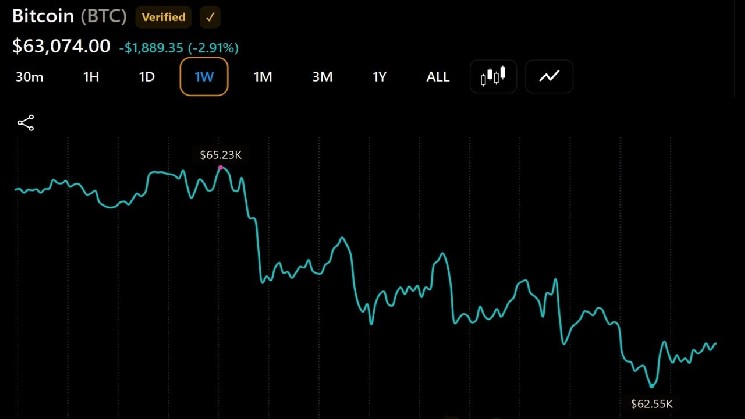
Crypto Market Declines Amid Stalled US Inflation: A Review (August 7-14, 2026) The crypto market faced downward pressure as US inflation data for July showed prices stagnating but remaining above the Federal Reserve's 2% target. This reduced expectations for a September interest rate cut, dampening investor risk appetite. Bitcoin (BTC) fell 2.39% over the week, with low volatility. Spot BTC ETFs saw a weekly outflow of $332.08 million. Major holders like Strategy (formerly MicroStrategy) continued selling BTC, citing debt obligations, while mining firms faced unfavorable conditions. Ethereum (ETH) dropped 1.71%, struggling near $1,900. Despite the price decline, network activity saw a recovery. Spot ETH ETFs recorded a minor outflow of $2.26 million after five weeks of inflows. ETH remains slightly inflationary. Ripple (XRP) fell 1.7%, briefly dropping below $1 for the first time in 20 months, negatively impacted by a hack on the Coreum bridge that stole 200,000 XRP. However, spot XRP ETFs saw their fifth consecutive week of inflows. Cardano (ADA) plunged 9.53% after Grayscale withdrew its application for a spot ADA ETF. Monero (XMR) was a positive outlier, rising 5.32% alongside a significant 28% increase in derivatives market open interest, briefly surpassing $400. Technical analysis for BTC and ETH indicated consolidation within defined ranges. The Crypto Fear & Greed Index remained at 29, signaling persistent fear. The primary catalyst for the market's negative performance was the persistently high US inflation, suggesting a continued restrictive monetary policy from the Fed.

cryptonews.ru19h ago

Crypto Market Declines Amid Halt in U.S. Price Growth: Fresh Review

cryptonews.ru19h ago

活动图片