Anthropic Drops $19 Billion to 'Sponsor' a Bitcoin Miner

marsbitPublished on 2026-07-08Last updated on 2026-07-08

Abstract

On July 6, 2026, Bitcoin mining company TeraWulf (NASDAQ: WULF) saw its stock surge 15% pre-market following the announcement of a landmark 20-year agreement with AI giant Anthropic. The deal grants Anthropic 401 MW of IT load capacity at TeraWulf's "Justified Data" campus in Kentucky and is projected to generate approximately $19 billion in contracted revenue for the miner over its duration. On the same day, TeraWulf also sold its 50.1% stake in a Texas joint venture for about $530 million. This dual move signals a strategic pivot: divesting non-core assets to fund its fully-owned Kentucky project and shifting focus from cryptocurrency mining to becoming a specialized infrastructure provider for AI. The agreement highlights a key advantage for Bitcoin miners transitioning to AI: their pre-existing access to land and critical power grid capacity, which is becoming a major bottleneck for data center expansion. Unlike peers who operate AI clouds, TeraWulf is adopting a "landlord" model, leasing only the physical space and power for clients' own servers. However, a significant gap exists between the deal's announcement and revenue generation, with the first phase of the Kentucky site not operational until late 2027. The $19 billion figure represents a long-term bet on both TeraWulf's execution and Anthropic's financial durability in the capital-intensive AI race. The market's positive reaction reflects the growing value of fundamental infrastructure—secured land and reliable ...

Author: Suanli Zhixin

On Monday, July 6, 2026, the stock price of Bitcoin mining company TeraWulf (NASDAQ: WULF) gapped up sharply at the open, surging 15% in pre-market trading.

What ignited the market was a 20-year lease.

AI giant Anthropic, which is building large models and constantly competing with OpenAI, went and signed a lease agreement with TeraWulf.

This lease has two key numbers.

  • First is the duration: a full 20 years.
  • Second is the scale: 401 megawatts (MW) of IT load capacity.

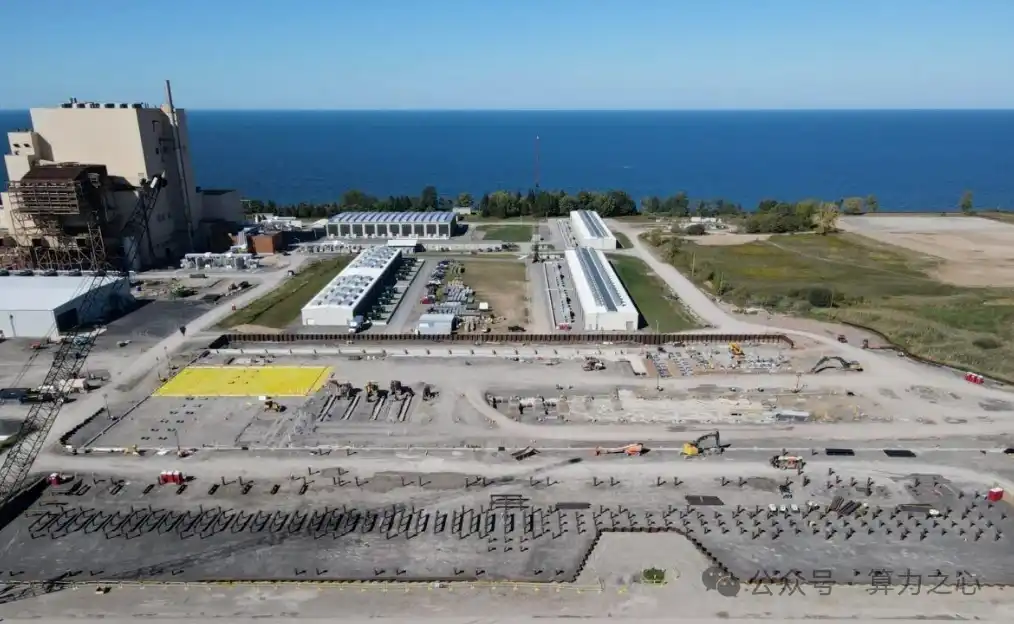
The location is set at a campus called "Justified Data" in Kentucky.

This 20-year contract is expected to bring TeraWulf $19 billion in contracted revenue, equivalent to roughly $1 billion in annual income for the next 20 years.

Locking in its cash flow expectations for the next two decades with a super-long-term contract from an AI giant is the direct reason for TeraWulf's stock price taking off.
I. Signing a Long-Term Deal While Selling Assets

On the same day it announced the $19 billion deal, TeraWulf also sold an asset.

They sold their 50.1% stake in the Abernathy joint venture project in Texas for approximately $530 million, at a premium, to an investment consortium led by Fluidstack.

This Texas project was just established in 2025, with a planned capacity of 168 megawatts, originally also intended for building AI data centers.

On one hand, they are locking down a top-tier client like Anthropic; on the other, they are cashing out of a joint venture project.

These two moves appear opposite but share the same logic:

The Texas project is a joint venture, requiring profit and decision-making power to be shared.

But the Kentucky project is wholly owned by TeraWulf, and it directly secures Anthropic as a client.

TeraWulf's CEO, Paul Prager, has publicly stated that the core strategy is to own and operate infrastructure, directly controlling the long-term development of the campus.

So their thinking is clear: sell the joint venture project at a premium, get cash back, then invest it all into their 100%-owned Kentucky territory, focusing on serving Anthropic, the client willing to pay $19 billion.

Combining these two operations, TeraWulf shifts its strategic focus from being a Bitcoin miner to specializing as a premier AI data center operator.

II. Not Selling Compute, Just Renting Land: The Miner's Ace in the Hole

Actually, TeraWulf isn't the first to pivot from Bitcoin mining to making money from AI.

Industry veterans like IREN, Core Scientific, Hut 8, etc., are all transitioning.

Miners transitioning mainly follow two models:

One is like IREN, which buys GPUs to build its own AI cloud and directly rents it to major clients like Microsoft.

The other is like TeraWulf, which only rents out space and power, with clients bringing their own servers.

TeraWulf chose to be the "big landlord," providing only the AI-standard physical space and power, not managing the servers.

Currently, the AI industry faces shortages on both ends: chips and power are tight.

But power is the harder long-term bottleneck, as large model training is extremely power-hungry. The U.S. grid cannot be expanded significantly in the short term, with transformer lead times of three to five years, and 30% to 50% of 2026 data center projects expected to be delayed until 2028.

Therefore, AI giants are signing long-term build-to-suit leases everywhere, essentially competing for the physical spots with power and land.

This is precisely the biggest ace up the sleeve of Bitcoin miners.

They secured ready access to power and land years ago for mining, having already navigated the cumbersome grid approval processes.

Anthropic signing this $19 billion, 20-year lease is fundamentally about locking down the ready-made land and power that TeraWulf holds in Kentucky.

Prime locations and good grid capacity, if not locked down now, will only become more expensive and scarcer later.

III. The $19 Billion Deal Has an 18-Month Gap in Between

While the $19 billion in long-term revenue is undoubtedly attractive, the contract hides a hard time gap.

The first delivery for this Kentucky campus isn't until the second half of 2027, with full operation expected by early 2028.

But it's July 2026 now.

This means that for at least the next year, TeraWulf cannot generate substantial operating revenue from this contract.

However, during the construction phase, every step—site preparation, data center design, grid connection negotiations, cooling installation—requires investment.

That's why they were in a hurry to sell the Texas joint venture. That transaction, with a total consideration of about $530 million, allows them to recoup approximately $450 million of investment.

After all, upfront infrastructure is a money-burning black hole.

On the other hand, the true value of this 20-year lease is tied to Anthropic's own financial health.

Anthropic is a top AI company, but large model development itself is a cash-burning elimination race.

A 20-year lease demands that the tenant possess extremely strong long-term viability.

Public information does not break down the profit margins and cost structure of this $19 billion deal.

And today's market euphoria is buying into an expectation of future realization.

The name TeraWulf was probably chosen with the idea of a "trillion-level wolf" in mind.

But now, it seems more like a real estate wolf.

No more mining. Now it collects rent.

In the wave of miners transitioning to AI, the most valuable asset has become very clear.

At the end of compute anxiety, the core competition has returned to the most traditional business: securing a piece of land and connecting it to power.


Trending Cryptos

Related Questions

QWhat was the main reason behind the surge in TeraWulf's stock price on July 6, 2026?

ATeraWulf's stock price surged due to the announcement of a 20-year lease agreement with AI giant Anthropic for 401 MW of IT load capacity, which is projected to generate approximately $19 billion in contracted revenue for TeraWulf over the lease period.

QWhat are the two strategic business moves TeraWulf made on the same day, and how are they connected?

AOn the same day, TeraWulf signed the long-term lease with Anthropic and sold its 50.1% stake in the Texas Abernathy joint venture for approximately $530 million. These moves are connected as selling the joint venture provides cash to fund the development of the wholly-owned Kentucky facility for Anthropic, aligning with TeraWulf's strategy to own and operate core infrastructure.

QWhat are the two main business models for Bitcoin miners transitioning to serve the AI industry, and which one did TeraWulf choose?

AThe two main models are: 1) building AI clouds with their own GPUs and leasing compute directly to clients (like IREN), and 2) providing only the physical site and power infrastructure for clients who bring their own servers. TeraWulf chose the latter, acting as a 'landlord' by leasing land and power.

QWhat is the key strategic asset that Bitcoin miners like TeraWulf possess for competing in the AI infrastructure market?

ATheir key strategic asset is pre-existing access to land and, more importantly, significant power capacity with completed grid interconnection approvals. These are critical and increasingly scarce resources for power-hungry AI data centers, giving miners a significant head start over new entrants.

QWhat is a potential financial risk or challenge associated with TeraWulf's $19 billion deal with Anthropic?

AA key challenge is the 18-month timeline gap. The Kentucky facility's first delivery is scheduled for late 2027, meaning TeraWulf will not receive substantial operational revenue from this deal until then, while it must fund significant upfront construction costs. The deal's long-term value also depends on Anthropic's financial health over the 20-year period.

Related Reads

The Danger of Old Bookmarks: How an Expired Tornado Cash Domain Cost a User 1,000 ETH

A user lost over 1,010 ETH (worth millions) due to a phishing attack via an expired official domain of the Tornado Cash protocol. As reported on August 20, 2026, the domain `tornado.cash` was not renewed by the original developers amid U.S. OFAC sanctions and was subsequently registered by malicious actors. They deployed a fake frontend mimicking the legitimate Tornado Cash interface. Through this site, the attackers gained access to the user's deposit notes—the data required to withdraw funds from the protocol's pools—and drained the ETH within 12 hours. On-chain data shows the stolen funds (e.g., wallet 0xd8B356...) were withdrawn from Tornado Cash pools. However, on-chain analyst Specter cast doubt on the victim's story. He suggested the individual might be involved in illicit activity, noting that a large sum of BTC was received from a coin-mixing service (Whirlpool) and converted to ETH before being sent to the fake Tornado Cash site. The victim's explanation of urgently moving funds due to a compromised hardware wallet was questioned, as the fund trail indicated deliberate obfuscation. Specter speculated this might be a conflict between malicious actors rather than a simple phishing case. The incident highlights the danger of expired domains for major protocols, where old bookmarks can lead to compromised sites. WHOIS records show the domain was registered in March 2025. Broader analysis notes that in 2025, over $1.8 billion was lost to scams and exploits, largely through social engineering like phishing via familiar but hijacked links. This case underscores the persistent risk when a domain's legal status changes but user trust and search engine reputation remain.

cryptonews.ru41m ago

The Danger of Old Bookmarks: How an Expired Tornado Cash Domain Cost a User 1,000 ETH

cryptonews.ru41m ago

You'll Be Surprised How Much WeChat's Architecture Differs from Telegram's

An article compares the core architectural philosophies of WeChat and Telegram, highlighting fundamental differences in data storage, monetization, and developer ecosystems. **Data Storage:** Telegram offers unlimited, synchronized cloud storage for seamless access across all devices. In contrast, WeChat stores chat history locally on each device, requiring a manual migration process for transfer and tethering desktop sessions to an active smartphone. **Features & Ecosystem:** Telegram's open Bot API allows for easy, free bot creation, while WeChat's massive ecosystem of over 4.8 million "mini-programs" operates within a closed, curated, and more regulated platform. Commenting also differs: Telegram uses integrated discussion threads for channels, whereas WeChat relies on pre-moderated comments for official accounts and separate chats for interaction. **File Sharing & Payments:** Telegram supports large file transfers (up to 4GB for Premium), while WeChat limits most files to 200MB. A key divergence is in payments: WeChat Pay is deeply integrated into daily life and commerce in China, whereas Telegram lacks a comparable built-in fiat payment system, focusing instead on third-party bots and crypto. **Analysis:** The comparison reveals two distinct models: WeChat is a tightly integrated, closed ecosystem deeply embedded in the real economy, while Telegram prioritizes open protocols, flexible data handling, and low barriers for developers. An added perspective notes that WeChat's fusion of messaging and payments in a single interface without end-to-end encryption for chats potentially broadens the attack surface, raising security questions as more functions converge.

cryptonews.ru6h ago

You'll Be Surprised How Much WeChat's Architecture Differs from Telegram's

cryptonews.ru6h ago

Trading

Spot

Hot Articles

What is $BITCOIN

DIGITAL GOLD ($BITCOIN): A Comprehensive Analysis Introduction to DIGITAL GOLD ($BITCOIN) DIGITAL GOLD ($BITCOIN) is a blockchain-based project operating on the Solana network, which aims to combine the characteristics of traditional precious metals with the innovation of decentralized technologies. While it shares a name with Bitcoin, often referred to as “digital gold” due to its perception as a store of value, DIGITAL GOLD is a separate token designed to create a unique ecosystem within the Web3 landscape. Its goal is to position itself as a viable alternative digital asset, although specifics regarding its applications and functionalities are still developing. What is DIGITAL GOLD ($BITCOIN)? DIGITAL GOLD ($BITCOIN) is a cryptocurrency token explicitly designed for use on the Solana blockchain. In contrast to Bitcoin, which provides a widely recognized value storage role, this token appears to focus on broader applications and characteristics. Notable aspects include: Blockchain Infrastructure: The token is built on the Solana blockchain, known for its capacity to handle high-speed and low-cost transactions. Supply Dynamics: DIGITAL GOLD has a maximum supply capped at 100 quadrillion tokens (100P $BITCOIN), although details regarding its circulating supply are currently undisclosed. Utility: While precise functionalities are not explicitly outlined, there are indications that the token could be utilized for various applications, potentially involving decentralized applications (dApps) or asset tokenization strategies. Who is the Creator of DIGITAL GOLD ($BITCOIN)? At present, the identity of the creators and development team behind DIGITAL GOLD ($BITCOIN) remains unknown. This situation is typical among many innovative projects within the blockchain space, particularly those aligning with decentralized finance and meme coin phenomena. While such anonymity may foster a community-driven culture, it intensifies concerns about governance and accountability. Who are the Investors of DIGITAL GOLD ($BITCOIN)? The available information indicates that DIGITAL GOLD ($BITCOIN) does not have any known institutional backers or prominent venture capital investments. The project seems to operate on a peer-to-peer model focused on community support and adoption rather than traditional funding routes. Its activity and liquidity are primarily situated on decentralized exchanges (DEXs), such as PumpSwap, rather than established centralized trading platforms, further highlighting its grassroots approach. How DIGITAL GOLD ($BITCOIN) Works The operational mechanics of DIGITAL GOLD ($BITCOIN) can be elaborated on based on its blockchain design and network attributes: Consensus Mechanism: By leveraging Solana’s unique proof-of-history (PoH) combined with a proof-of-stake (PoS) model, the project ensures efficient transaction validation contributing to the network's high performance. Tokenomics: While specific deflationary mechanisms have not been extensively detailed, the vast maximum token supply implies that it may cater to microtransactions or niche use cases that are still to be defined. Interoperability: There exists the potential for integration with Solana’s broader ecosystem, including various decentralized finance (DeFi) platforms. However, the details regarding specific integrations remain unspecified. Timeline of Key Events Here is a timeline that highlights significant milestones concerning DIGITAL GOLD ($BITCOIN): 2023: The initial deployment of the token occurs on the Solana blockchain, marked by its contract address. 2024: DIGITAL GOLD gains visibility as it becomes available for trading on decentralized exchanges like PumpSwap, allowing users to trade it against SOL. 2025: The project witnesses sporadic trading activity and potential interest in community-led engagements, although no noteworthy partnerships or technical advancements have been documented as of yet. Critical Analysis Strengths Scalability: The underlying Solana infrastructure supports high transaction volumes, which could enhance the utility of $BITCOIN in various transaction scenarios. Accessibility: The potential low trading price per token could attract retail investors, facilitating wider participation due to fractional ownership opportunities. Risks Lack of Transparency: The absence of publicly known backers, developers, or an audit process may yield skepticism regarding the project's sustainability and trustworthiness. Market Volatility: The trading activity is heavily reliant on speculative behavior, which can result in significant price volatility and uncertainty for investors. Conclusion DIGITAL GOLD ($BITCOIN) emerges as an intriguing yet ambiguous project within the rapidly evolving Solana ecosystem. While it attempts to leverage the “digital gold” narrative, its departure from Bitcoin's established role as a store of value underscores the need for a clearer differentiation of its intended utility and governance structure. Future acceptance and adoption will likely depend on addressing the current opacity and defining its operational and economic strategies more explicitly. Note: This report encompasses synthesised information available as of October 2023, and developments may have transpired beyond the research period.

2.1k Total ViewsPublished 2025.05.13Updated 2025.05.13

What is $BITCOIN

Discussions

Welcome to the HTX Community. Here, you can stay informed about the latest platform developments and gain access to professional market insights. Users' opinions on the price of BTC (BTC) are presented below.

活动图片