# Payments Related Articles

HTX News Center provides the latest articles and in-depth analysis on "Payments", covering market trends, project updates, tech developments, and regulatory policies in the crypto industry.

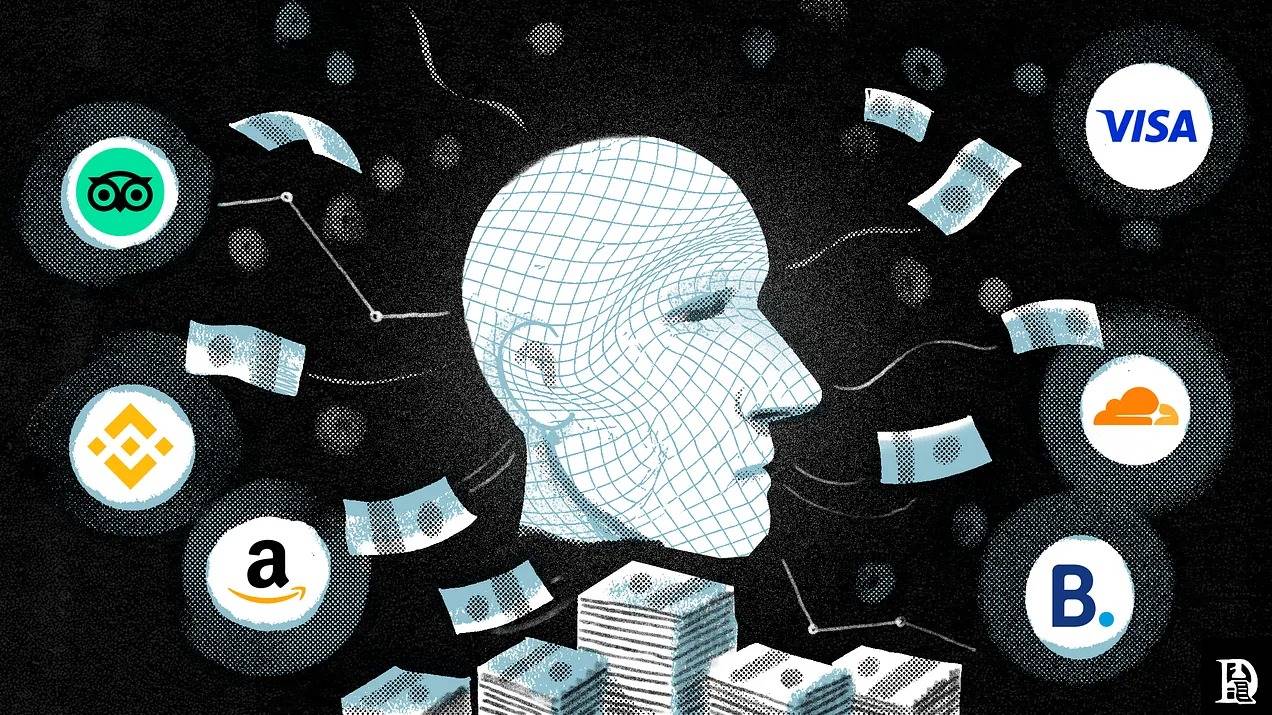
Identity, Recourse, Attribution: Decoding the Three Breakthrough Points of the Next-Generation AI Agent Economy

Identity, Recourse, Attribution: Decoding the Three Breakthrough Points of the Next-Generation AI Agent Economy As AI agents begin to handle transactions, new standards like OpenAI's ACP and Google's AP2 are emerging to facilitate payments, while protocols like x402 enable machine-to-machine micropayments. However, these systems lack the trust infrastructure—identity verification, fraud detection, and dispute resolution—that underpins traditional commerce. This creates a critical gap: while blockchain enables fast, irreversible settlements, agents operate without mechanisms for recourse when errors occur. The solution requires building new layers for the agent economy: a "Know Your Agent" (KYA) identity system to establish persistent, verifiable credentials; a recourse mechanism to handle disputes and provide insurance-like protection; and an attribution layer to track influence on purchasing decisions. Established players like card networks and AI labs are unlikely to lead this effort due to misaligned incentives, creating opportunities for startups. The development of agent commerce will unfold in three stages: as an interface (current stage), executing under human supervision (where trust layers become critical), and fully autonomous transactions. Startups that build identity, recourse, and attribution infrastructure will enable the transition to an economy where agents transact freely and securely at scale.

深潮12/22 10:00

Identity, Recourse, Attribution: Decoding the Three Breakthrough Points of the Next-Generation AI Agent Economy

深潮12/22 10:00

Buying Seafood with USDT in Vietnam: Has Web3 Truly Achieved Mass Adoption?

In Vietnam, a country consistently ranked among the top in global cryptocurrency adoption, the author explores whether Web3 and crypto payments have achieved mass adoption beyond reports and whitepapers. During a two-week trip, the author avoided formal industry events and instead tested crypto payments in everyday scenarios like spas, street food stalls, and taxi rides. Key observations include: - Many local merchants prefer cash over international cards due to high fees and tax avoidance, creating an opening for stablecoins like USDT. - Using Bitget Wallet, the author successfully paid via VietQR—Vietnam’s ubiquitous payment QR system—at many locations, with transactions feeling nearly as seamless as Alipay. - However, a failed payment at a seafood restaurant revealed compatibility issues between crypto wallets and older, non-standard QR systems, highlighting remaining technical barriers. - Public perception of crypto remains mixed: in northern cities like Hanoi, it is often associated with crime and gambling, while southern hubs like Ho Chi Minh City show more enthusiasm, with young people trading or developing crypto projects in cafes. - Despite low visible crypto infrastructure (e.g., few Bitcoin ATMs), underlying adoption is significant, driven by a young, tech-savvy population eager for financial mobility. The author concludes that Vietnam’s combination of demographic youth, high mobile internet use, and informal financial vitality makes it a fertile ground for Web3 growth, though real-world usability and cultural acceptance vary widely. The journey continues into southern Vietnam for deeper exploration.

深潮12/22 08:50
Buying Seafood with USDT in Vietnam: Has Web3 Truly Achieved Mass Adoption?

深潮12/22 08:50

Finance Goes 'Invisible': How Stablecoins Are Becoming the New Arteries of the Digital Economy

This article explores the transformative role of stablecoins as the "new arteries" of the digital economy, moving finance into an "invisible" infrastructure layer. Key developments include Coinbase's major product upgrades, positioning it as an "Everything Exchange" that integrates trading, derivatives, stablecoins, and AI-driven services. Stablecoin adoption is accelerating, with Visa now allowing USDC settlements within the U.S. banking system, marking a structural shift in settlement layers. Regulatory progress is evident as U.S. authorities conditionally approve federal trust bank charters for firms like Ripple and Circle, while the FDIC advances stablecoin rules. New stablecoin products and payments integrations are emerging, such as PayPal's PYUSD for YouTube creator payouts and ADNOC's adoption of a national stablecoin at gas stations. Major financial institutions, including JPMorgan, are actively exploring tokenized deposits and assets on public blockchains. The growth of gold-backed stablecoins and national strategies like the UAE's push for asset tokenization further highlight the expansion of stablecoins beyond pure currency use cases into broader economic infrastructure. However, JPMorgan analysis suggests stablecoin growth may be limited by competition from bank-issued tokenized deposits and CBDCs, projecting a market cap of $500-600 billion by 2028.

比推12/22 06:12

Finance Goes 'Invisible': How Stablecoins Are Becoming the New Arteries of the Digital Economy

比推12/22 06:12

RWA Weekly: Coinbase Announces Launch of Prediction Markets and Tokenized Stocks; Stablecoin U Goes Live on BNB Chain and Ethereum

RWA Weekly Roundup: Coinbase Launches Prediction Markets and Tokenized Stocks; Stablecoin $U Debuts on BNB Chain and Ethereum The on-chain RWA market cap rose slightly to $18.9 billion, while stablecoin market capitalization exceeded $300 billion, though transaction activity declined, indicating a "stagnant liquidity" phase. Regulatory developments accelerated globally, with China promoting the digital yuan, and the U.S., Canada, and Hong Kong advancing stablecoin and asset tokenization frameworks. Traditional financial institutions expanded their involvement: JPMorgan launched a tokenized money market fund on Ethereum and integrated JPM Coin with Base, while Visa and Mastercard extended stablecoin payment services. DTCC partnered with Canton Network for U.S. Treasury tokenization. Coinbase introduced prediction markets and tokenized stocks, PayPal launched a PYUSD savings vault, and SoFi issued its own stablecoin, SoFiUSD. Emerging markets like Brazil and Pakistan also explored sovereign asset tokenization. Stablecoin $U went live on BNB Chain and Ethereum, integrating with DeFi protocols like PancakeSwap and ListaDAO. Despite growth, JPMorgan analysts caution that stablecoin market size may not reach $1 trillion by 2028, projecting a more moderate expansion to $500-600 billion. The sector continues to evolve, driven by regulatory clarity and institutional adoption, embedding RWA deeper into global payment and asset management systems.

marsbit12/19 13:06

RWA Weekly: Coinbase Announces Launch of Prediction Markets and Tokenized Stocks; Stablecoin U Goes Live on BNB Chain and Ethereum

marsbit12/19 13:06

活动图片