# Payments Related Articles

HTX News Center provides the latest articles and in-depth analysis on "Payments", covering market trends, project updates, tech developments, and regulatory policies in the crypto industry.

How Are Stablecoins Evolving from Crypto Assets to New Payment Infrastructure?

"Stablecoins: From Crypto Assets to the Infrastructure of Next-Generation Payments" The article explores the evolution of stablecoins, tracing their journey from speculative crypto assets to foundational infrastructure for global payments. The narrative is framed through the experience of Raj Parekh, former head of Visa's cryptocurrency division and now leading payments at Monad. The pivotal moment was Facebook's 2019 Libra project, which forced traditional finance to seriously consider crypto. At Visa, Parekh's team pioneered using USDC on Ethereum for settlements, solving major inefficiencies like the slow, costly T+2 settlement cycles and the need for large pre-funded accounts. A key insight was that while the technology was powerful, the underlying infrastructure was immature. Parekh left to found Portal Finance, aiming to abstract away blockchain's complexity for developers. However, he encountered a fundamental bottleneck: the need for a high-performance, EVM-compatible chain to make payments truly viable at scale. This led to Portal's acquisition by Monad Foundation. The article highlights a major shift in stablecoin business models. Early issuers like Tether and Circle profited from the interest on reserve assets. Newer models, accelerated by legislation like the GENIUS Act, are passing this yield directly to users, creating a new financial primitive: money that earns interest even while being transacted. This infrastructure enables a new era of global fintech, allowing companies to build for a worldwide audience from day one, unlike traditional banks limited by geography. The future excites Parekh most in two areas: the convergence of AI Agents with high-frequency finance for microsecond transactions, and the fusion of investment and payment accounts into a single, abstracted user experience. The ultimate goal is a future where value moves at the speed of the internet, as seamlessly as sending an email, completely invisible to the end-user.

比推12/26 15:17

How Are Stablecoins Evolving from Crypto Assets to New Payment Infrastructure?

比推12/26 15:17

Stepping into the Stablecoin Wave for Six Years, He Sees the Embryonic Form of the Future of Payments

"Six years into the stablecoin wave, Raj Parekh, former head of crypto at Visa and now leading payments at Monad, reflects on the evolution and future of digital payments. He identifies 2019 and Facebook’s Libra project as a pivotal moment that forced traditional finance to take crypto seriously. At Visa, he led efforts to integrate USDC for near-instant settlement, overcoming slow, costly legacy systems. Parekh later founded Portal Finance to build payment infrastructure, but encountered scalability limitations across blockchains. This led to Portal’s acquisition by Monad, where he now focuses on high-performance, EVM-compatible chains capable of sub-second finality—critical for global payment adoption. He sees stablecoins entering a "email moment" for money: enabling instant, low-cost global value transfer. New business models are emerging where issuers share interest earnings with users, transforming stablecoins into interest-bearing assets even during transactions. This shift, coupled with supportive regulation like the GENIUS Act, is driving broader institutional adoption. Looking ahead, Parekh is excited about AI-powered agentic payments and high-frequency finance, where autonomous agents execute microsecond-speed transactions. He envisions a future where decentralized infrastructure seamlessly integrates into everyday apps, enabling global, efficient, and programmable money movement—ushering in a new era for both finance and user experience."

marsbit12/26 05:40

Stepping into the Stablecoin Wave for Six Years, He Sees the Embryonic Form of the Future of Payments

marsbit12/26 05:40

Circle 2025 Year in Review: Building a Full-Stack Crypto Economy Platform

Circle's 2025 Year in Review highlights the successful construction of its full-stack encrypted economic platform, driven by key regulatory breakthroughs and global expansion. The passage of the U.S. GENIUS Act and the implementation of the EU’s MiCA framework provided regulatory foundation for full-reserve stablecoins, positioning them as core components of the global financial system. Circle’s strategy revolves around three pillars: trusted digital assets (USDC, EURC, USYC), real-world applications, and the Arc blockchain. USDC’s market cap grew 75% to $77B, EURC surged 328%, and USYC reached $1.54B in AUM. Major institutional partnerships were formed with ICE, Deutsche Börse, Finastra, FIS, and others, integrating stablecoins into payments, clearing, and treasury management. The Circle Payments Network (CPN) enabled real-time cross-border transactions, while StableFX reformed foreign exchange with on-chain settlement. The company also advanced AI agent payments and launched the Arc blockchain—an EVM-compatible L1 designed for real-world economic activity, which saw strong institutional interest during its testnet phase. Circle expanded financial inclusion through initiatives like its partnership with Nubank, serving 127M users in Latin America, and its “1% Pledge” program supporting普惠金融globally. The report concludes that 2025 marked a turning point in the transition toward an open, programmable, and internet-native financial system.

深潮12/25 01:54

Circle 2025 Year in Review: Building a Full-Stack Crypto Economy Platform

深潮12/25 01:54

Ripple Chiseled a Crack in the Wall, But Swift Tore Down the Entire Wall

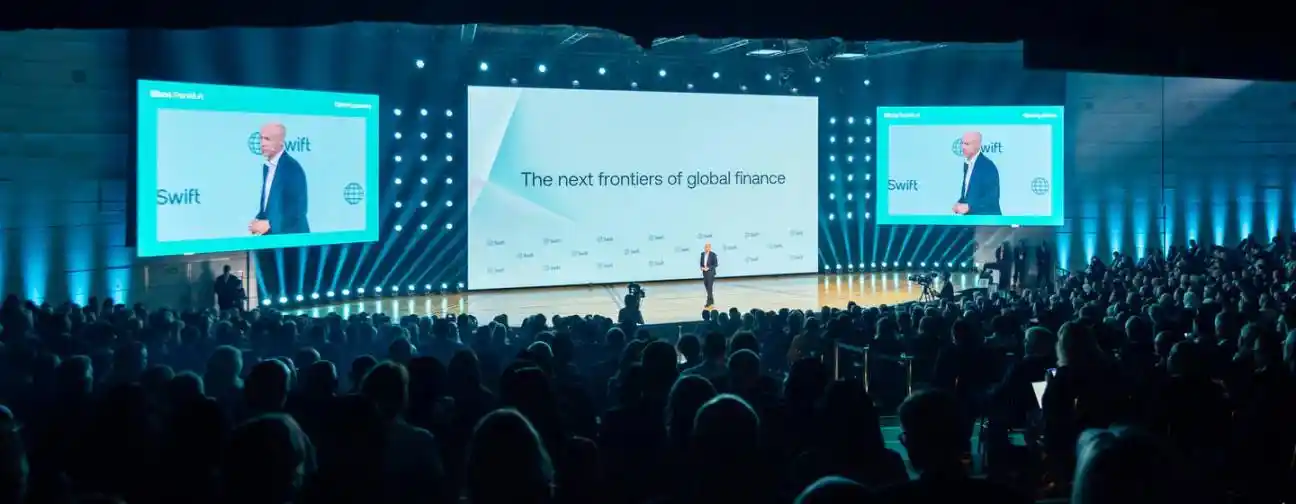
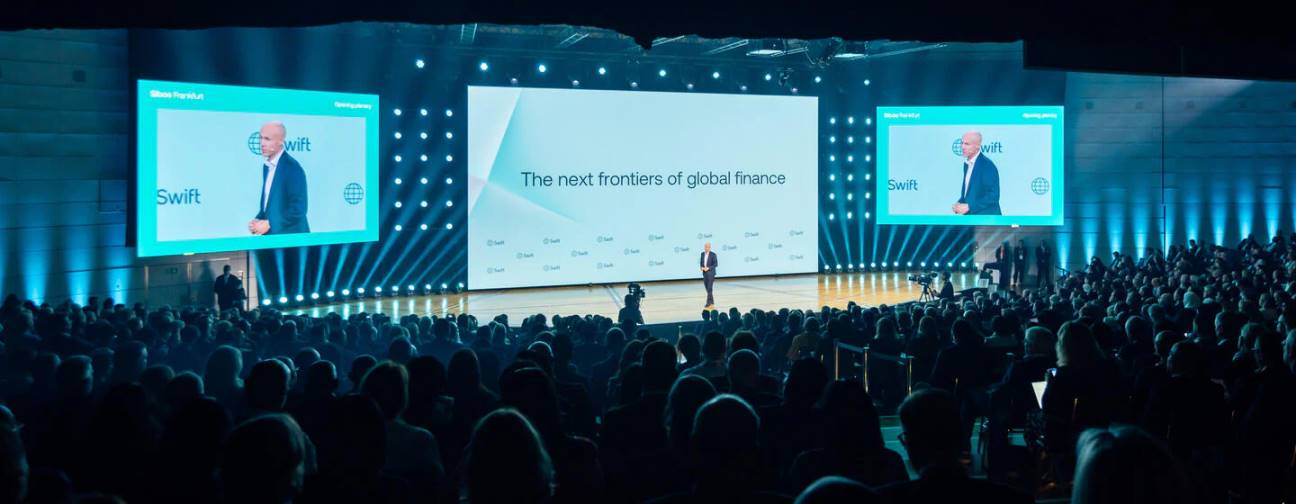
At the Sibos 2025 conference, Swift announced a major evolution of its financial infrastructure by integrating a blockchain-based shared ledger to support tokenized assets and enable secure, real-time, and interoperable global transactions. The new system, built on Consensys' Ethereum Layer 2 network Linea, uses zk-EVM rollup technology to reduce costs and settlement times while meeting banking security standards. Over 30 major banks, including JPMorgan and Citibank, are participating in the pilot. The article reflects on Ripple’s long-standing effort to challenge traditional cross-border payments using XRP and RippleNet, which has seen adoption in retail and corporate remittances despite earlier regulatory challenges. However, Swift’s move represents a broader and more systemic shift. Unlike Ripple’s XRP-dependent model, Swift’s ledger is asset-agnostic, supporting CBDCs, stablecoins, and fiat currencies, and leverages its existing network of over 11,000 institutions. This transition marks a convergence of traditional and decentralized finance, enabling 24/7 settlement, reducing reliance on pre-funded accounts, and potentially freeing up trillions in trapped capital. By adopting a neutral, interoperable, and highly scalable blockchain framework, Swift is positioned to redefine global value transfer—moving from a legacy telegraphic model to a digitally-native, mathematically-verified system.

深潮12/23 02:52

Ripple Chiseled a Crack in the Wall, But Swift Tore Down the Entire Wall

深潮12/23 02:52

活动图片