# Open Source Related Articles

HTX News Center provides the latest articles and in-depth analysis on "Open Source", covering market trends, project updates, tech developments, and regulatory policies in the crypto industry.
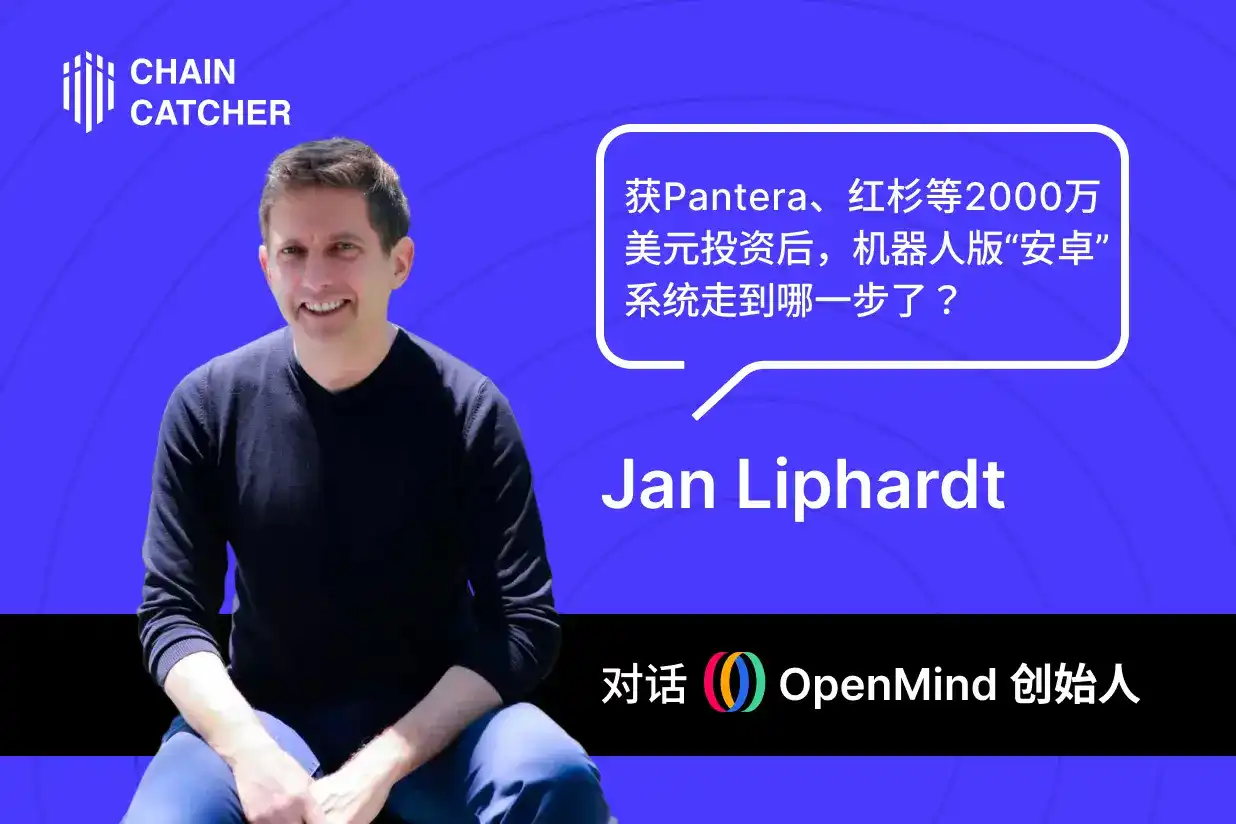
Dialogue with OpenMind Founder: After Securing $20 Million Investment from Pantera, Sequoia, and Others, How Far Has the Robot 'Android' System Come?

Jan Liphardt, founder of OpenMind and a Stanford and UC Berkeley professor, discusses his vision to build a decentralized "Android-like" operating system for robots. After raising $20 million from investors like Pantera Capital and Sequoia China, OpenMind aims to solve fragmentation in the robotics industry, where over 150 hardware vendors operate in isolation with software focused only on mechanical control. OpenMind’s core includes the open-source robot operating system OM1 and the decentralized FABRIC protocol. OM1 enables individual robot intelligence, while FABRIC facilitates secure machine-to-machine and human-machine collaboration, identity verification, and micro-transactions. The system has attracted thousands of developers on GitHub and is being integrated with leading Chinese robotics firms like Unitree, Astribot, and Ubtech. A key milestone is the development of a robot application store, with the first app already launched. OpenMind’s enhanced robot dog can recognize owners, map environments, remember objects, answer questions, and monitor home safety. Liphardt emphasizes the role of blockchain in enabling global governance, immutable record-keeping, and machine-economy transactions. He sees near-term adoption in homes, schools, and workplaces by 2026, with challenges including hardware reliability, adaptive real-world performance, and safe AI behavior. OpenMind’s long-term goal is to develop "social models" for robots that are transparent, open-source, and privacy-centric, ensuring they remain beneficial and secure alongside humanity.

marsbit01/26 02:11

Dialogue with OpenMind Founder: After Securing $20 Million Investment from Pantera, Sequoia, and Others, How Far Has the Robot 'Android' System Come?

marsbit01/26 02:11

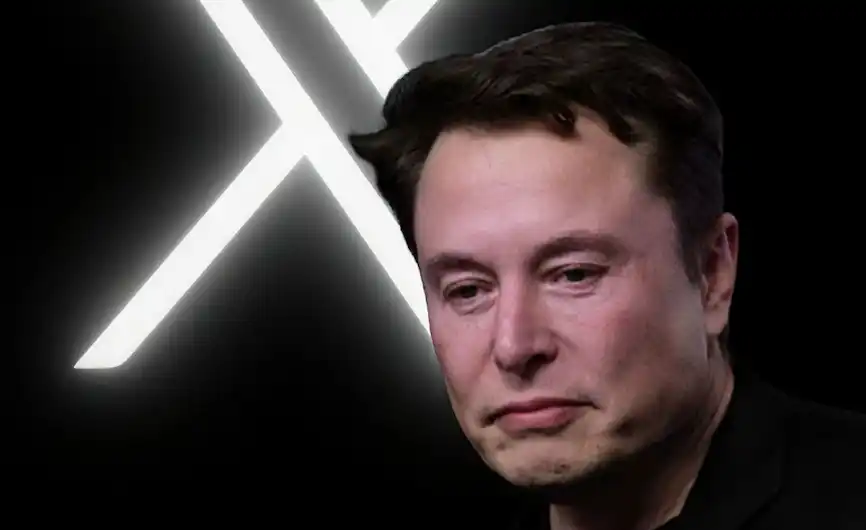
The Ghost of X.com, Musk's 25-Year Revenge

Elon Musk's 25-year quest to reclaim his original vision for X.com culminated in the acquisition and transformation of Twitter. In 1999, Musk invested his entire $22 million fortune from the sale of Zip2 into X.com, an ambitious online financial platform. The venture merged with Confinity (later PayPal), but Musk was ousted in a board coup while on his honeymoon. The X.com brand was discarded, leaving a "fishbone" of regret in Musk. His 2022 acquisition of Twitter was not primarily about free speech but about复仇 (revenge) for that early betrayal. He systematically rebranded it as X and began a gradual transformation from a microblogging site into an all-in-one "everything app." This involved introducing long-form content, enhanced video, creator monetization, and, most crucially, laying the groundwork for financial services. The key development is the "Smart Cashtags" feature, allowing users to embed asset tickers (e.g., $TSLA) in posts that link to real-time data and, ultimately, enable direct trading. This creates a seamless loop from seeing information to making a financial decision to executing a trade, all within X. To build trust for this financial future, Musk took the unprecedented step of open-sourcing the platform's algorithm. The article frames this as Musk finally realizing his 1999 vision, an idea validated by the success of Chinese super-apps like WeChat. The timing is now perfect, with mature mobile payments, crypto adoption, and shifting regulations. Musk's lifelong obsession with the letter "X" (SpaceX, Model X, xAI, his son's name) is presented as a unifying thread in his mission to control the flow of global capital and information, making X the central nervous system of the digital economy.

marsbit01/14 09:21

The Ghost of X.com, Musk's 25-Year Revenge

marsbit01/14 09:21

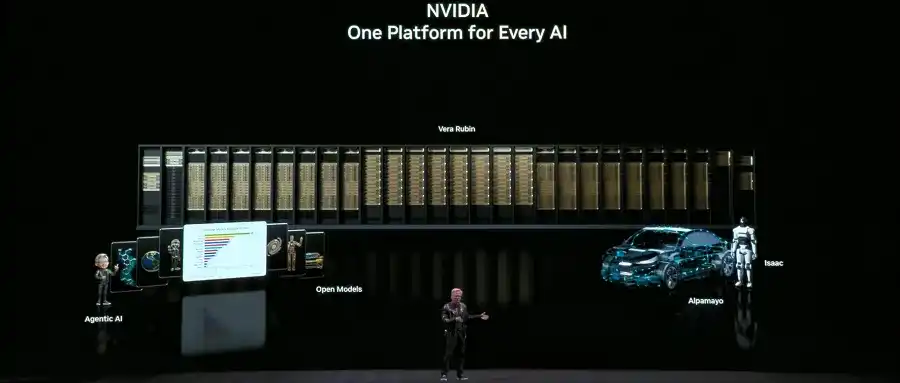
Jensen Huang Announces 8 New Products in 1.5 Hours, NVIDIA Fully Bets on AI Inference and Physical AI

NVIDIA CEO Jensen Huang unveiled eight major announcements during his CES 2026 keynote, focusing on advancing AI inference and physical AI technologies. The centerpiece was the NVIDIA Vera Rubin POD AI supercomputer, which integrates six custom chips—Vera CPU, Rubin GPU, NVLink 6 Switch, ConnectX-9 SuperNIC, BlueField-4 DPU, and Spectrum-X CPO—designed for协同 performance. The Rubin GPU offers 5x higher inference and 3.5x higher training performance than Blackwell, with support for HBM4 memory. The Vera Rubin NVL72 system delivers 3.6 EFLOPS in NVFP4 inference performance in a single rack, with enhanced memory bandwidth. NVIDIA also introduced the Spectrum-X Ethernet CPO for improved power efficiency, a推理上下文内存存储平台 to optimize KV cache storage and reduce recomputation, and the DGX SuperPOD based on Rubin architecture, cutting token costs for large MoE models to 1/10. On the software side, NVIDIA expanded its open-source offerings, including new models and datasets, and emphasized the rise of physical AI. The company open-sourced the Alpha-Mayo model for autonomous driving, enabling reasoning-based decision-making, and announced production-ready NVIDIA DRIVE platforms for Mercedes-Benz. Partnerships with Siemens and robotics firms like Boston Dynamics were highlighted, underscoring NVIDIA’s full-stack approach to AI infrastructure and real-world AI applications.

marsbit01/06 04:36

Jensen Huang Announces 8 New Products in 1.5 Hours, NVIDIA Fully Bets on AI Inference and Physical AI

marsbit01/06 04:36

活动图片