# Open Source Related Articles

HTX News Center provides the latest articles and in-depth analysis on "Open Source", covering market trends, project updates, tech developments, and regulatory policies in the crypto industry.

Recalling 10 Little-Known Key Contributions of the Early TON Core Team

Despite TON Foundation being widely recognized, the early contributions of the NEWTON team—TON's core developers—are less known. As an early member, Dr. Awesome Doge recounts their pivotal role in maintaining TON testnet2 and enhancing developer tools before Telegram’s official endorsement in 2021, marking a historic community-led takeover. Key contributions include: 1. **mytonctrl**: An automated node management tool for validator setup, wallet creation, and DNS registration. 2. **tonmon**: A monitoring tool for blockchain health, tracking metrics like block time and validator status. 3. **tonmine**: A system to monitor Giver contracts, which distributed ~200,000 $TON daily. 4. **Cross-chain bridge**: Enabled transfers between TON, Ethereum, and BSC before jetton standards existed. 5. **cryptobot**: An early Telegram wallet supporting multiple cryptocurrencies. 6. **toncenter**: A public API simplifying blockchain data access for developers. 7. **explorer.toncoin.org**: TON’s first technical blockchain explorer. 8. **ton.sh**: A user-friendly blockchain explorer focusing on wallet balances and transaction memos. 9. **TonWeb**: A JavaScript SDK to simplify interactions with TON’s complex smart contract languages. 10. **ton wallet**: An early functional wallet that remains operational. In June 2021, NEWTON’s public letter to Telegram led to official recognition and GitHub access, catalyzing TON’s growth. These foundational efforts underscore the team’s belief in TON’s potential, now realized through its expanding ecosystem and developer community.

marsbit03/15 02:18

Recalling 10 Little-Known Key Contributions of the Early TON Core Team

marsbit03/15 02:18

Lobsters Not Yet Grown, Giants Already Casting Nets: OpenClaw Ecosystem Faces Enclosure Crisis

The article discusses the controversy surrounding Chinese tech giant Tencent's launch of SkillHub, a localized platform for the OpenClaw ecosystem. OpenClaw founder Peter Steinberger publicly accused Tencent of copying the project without providing support, specifically criticizing its impact on official download statistics. Tencent responded that SkillHub is a mirror site designed to serve Chinese users, citing reduced bandwidth strain on the official source and offering sponsorship. Steinberger countered that the core issue was not technical but a lack of prior communication and the risk of Tencent controlling user access and data. The author argues that the incident reflects a broader pattern of major Chinese tech companies exploiting open-source ecosystems for market dominance. While mirror sites are common in China, Tencent’s move is seen as an attempt to capture the user entry point and potential future commercialization of the Agent-based AI ecosystem represented by OpenClaw. The article warns that such platforms, under the guise of localization and convenience, may eventually lead to walled gardens where Tencent controls distribution, visibility, and monetization—echoing past strategies in sectors like ride-hailing and short-video platforms. The piece concludes that OpenClaw’s open, community-driven vision is at risk of being co-opted by corporate interests before it fully matures.

比推03/13 12:32

Lobsters Not Yet Grown, Giants Already Casting Nets: OpenClaw Ecosystem Faces Enclosure Crisis

比推03/13 12:32

After the Lobster Comes Ashore, the Next Game in AI Hardware Lego

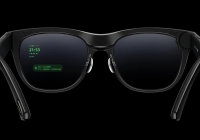
The article "Lobster Comes Ashore: The Next Game in AI Hardware Lego" discusses the growing influence of OpenClaw, an open-source AI framework, as it extends from software into the physical hardware world, reshaping the development and functionality of smart devices. OpenClaw enables hardware products to be combined like Lego blocks, creating diverse intelligent devices. Examples include Rokid AI glasses, which can now connect to any backend system like OpenClaw via an SSE interface, and Apple Watch, which acts as an AI control terminal for tasks like managing notifications and sending commands. WHOOP wearable devices use OpenClaw to provide personalized health advice, while companies like Songling Robotics integrate it into robotic arms for natural language control. Individual developers are also experimenting, such as combining OpenClaw with Meta’s Ray-Ban smart glasses for visual AI agents, or enhancing robot dogs like Vbot for autonomous tasks. These innovations are expanding possibilities but also raise concerns around security and token costs. The trend is particularly strong in China, where OpenClaw has sparked enthusiasm among companies, developers, and policymakers. In Shenzhen, public installations and events around OpenClaw have drawn large crowds, and electronics market Huaqiangbei has started selling modified "Lobster boxes." This movement is also driving the growth of Chinese large language models (LLMs) internationally. Data from OpenRouter shows Chinese models now account for half of global token consumption, with MiniMax M2.5 leading in usage. MiniMax’s market value has surged, exceeding Baidu’s, and its revenue is now over 70% from international markets. Similarly, Kimi2.5 has seen a spike in paid users and overseas revenue since being adopted as OpenClaw’s primary free model. The integration of OpenClaw is blurring traditional boundaries between hardware makers, developers, and AI companies, creating a new ecosystem for AI-powered hardware innovation.

比推03/11 06:49

After the Lobster Comes Ashore, the Next Game in AI Hardware Lego

比推03/11 06:49

活动图片