# Narrative Related Articles

HTX News Center provides the latest articles and in-depth analysis on "Narrative", covering market trends, project updates, tech developments, and regulatory policies in the crypto industry.

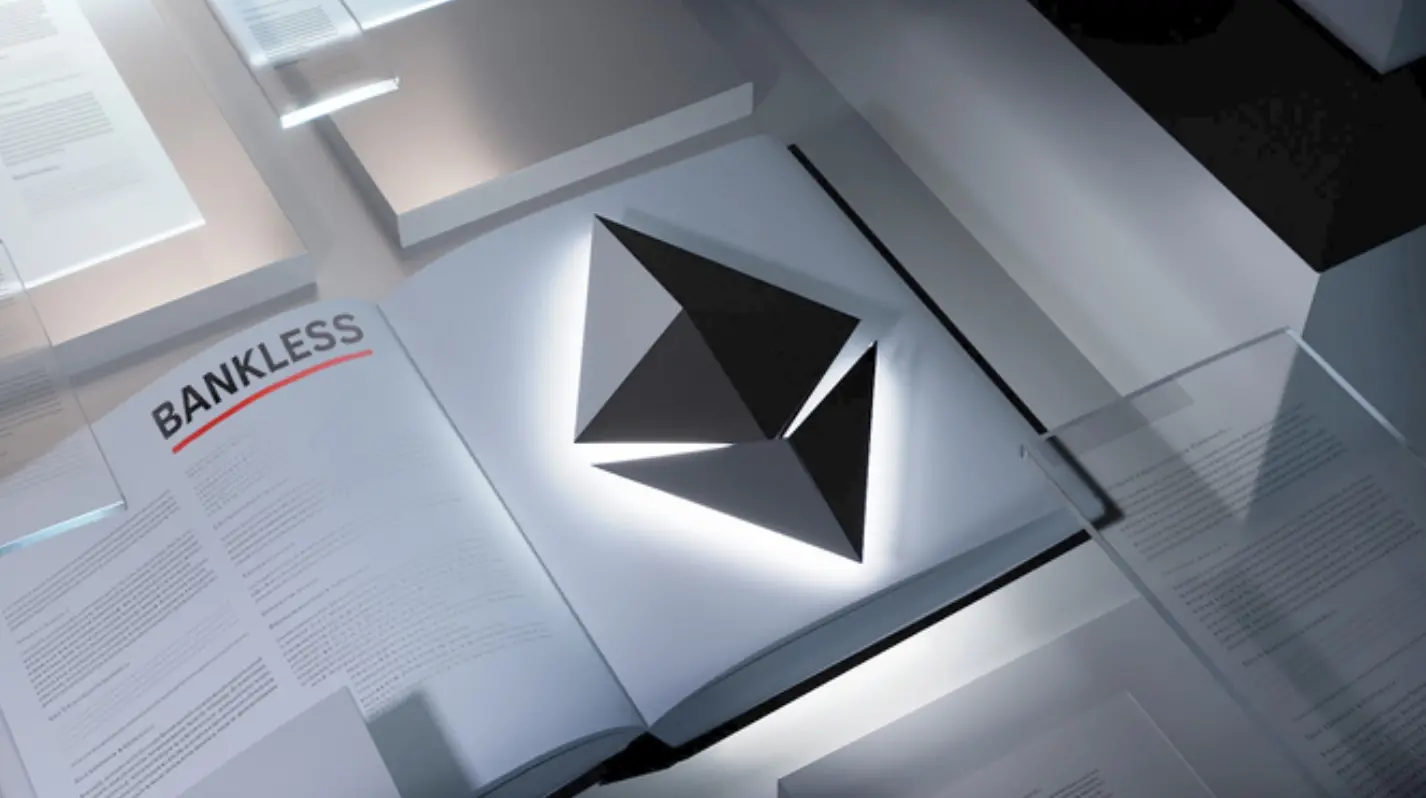
Bankless Co-founder: Why I Sold All My ETH

Author David Hoffman, founder of Bankless, explains his decision to sell all his ETH, despite being a prominent figure in the Ethereum ecosystem. He clarifies that his move is not a bearish take on Ethereum itself, which he remains highly optimistic about as a network. His core argument is that the "ETH is money" thesis, which he helped popularize, has largely played out. Hoffman argues that ETH has achieved the market valuation it deserves based on Ethereum's current success and competitive position. He details several reasons for this view. First, the path for ETH to become global money required nearly flawless execution and sustained dominance across Ethereum's entire technical and social stack—a coordination challenge he now believes had a narrower window for success than anticipated. Second, market data shows a strong correlation between L1 chain activity/fees and the price of its native asset; Ethereum's fee dominance has been challenged by competitors like Solana. Third, the "strong version" of crypto (decentralized, native crypto economies) that ETH's monetary thesis relied upon has struggled to maintain a positive mainstream narrative and stable adoption beyond a brief period. Finally, Ethereum's architecture as a "giver"—providing secure block space and tokenization capabilities at cost to L2s and applications—means it doesn't capture premium value directly. Its rollup-centric roadmap further directs most profits to L2s and applications ("fat app theory"). In conclusion, Hoffman believes the opportunity for ETH to be revalued significantly upward as money has diminished. He sold not because ETH will fail, but because its monetary thesis has matured, and he seeks to allocate capital to other opportunities he finds more compelling.

链捕手05/27 02:11

Bankless Co-founder: Why I Sold All My ETH

链捕手05/27 02:11

CEO's Unexpected Passing: Will ONDO's 'Tokenization Narrative' Change?

Ondo Finance, a leading project in the RWA (Real World Assets) and tokenization space, faces a significant challenge following the unexpected passing of its founder and CEO, Nathan Allman. Known for his traditional finance background and pivotal role in shaping Ondo's strategy, Allman was central to its evolution from a DeFi structured yield platform to a key player tokenizing assets like US treasuries, stocks, and ETFs. The company announced that President Ian De Bode, a former McKinsey partner with deep experience in digital assets and corporate strategy, will assume the CEO role. The leadership transition presents a critical test for Ondo. While Allman's vision and execution were instrumental in establishing its "tokenization narrative," the project's medium to long-term trajectory will depend on the existing team's ability to maintain business continuity. Analysts note short-term concerns regarding vision continuity, institutional partnerships, and market sentiment for the ONDO token. However, Ondo has built a substantial product suite (OUSG, USDY, Ondo Global Markets) and a management team with strong traditional finance credentials. De Bode's background in strategy and execution may align well with the next phase of RWA growth, which focuses heavily on compliance, scaling, and institutional adoption. Ultimately, the event shifts focus to whether Ondo is a founder-driven story or a sustainable financial infrastructure. Its future as a "first tokenization asset" will be determined by the new leadership's success in delivering product growth, asset scaling, and real-world demand, rather than narrative alone.

marsbit05/26 12:35

CEO's Unexpected Passing: Will ONDO's 'Tokenization Narrative' Change?

marsbit05/26 12:35

Ethereum Reduced to a Chinese Concept Stock

The article titled "Ethereum Becomes a Chinese Concept Stock" presents a critical analysis of Ethereum's perceived decline in market confidence and its structural parallels to Chinese companies listed on US stock exchanges. It begins by noting significant sell-offs by early investors like Wanxiang and key figures like Bankless's Hoffman in 2026, despite Ethereum's strong fundamental activity. The piece questions the erosion of trust in Vitalik Buterin and the Ethereum Foundation (EF), arguing that while other ecosystems have faced founder controversies, Ethereum's issues stem from its internal governance model. The author draws a direct comparison to "China concept stocks," which are Chinese businesses operating globally but reliant on foreign capital and listings. Similarly, Ethereum, funded early by Chinese capital like Wanxiang, developed a strong institutional framework from its IXO to its PoS transition. The core problem, according to the article, is a leadership vacuum regarding price and direction. Vitalik's move to make the EF smaller and less active is framed as a mistake. While he advocates for ETH as a "commodity," the ecosystem lacks a clear entity to steward its price stability, creating tension within the PoS system, as seen with Lido's challenges. The narrative suggests that excessive abstraction and a hands-off approach from the EF have left the community adrift, contrasting with more proactive foundations like Solana's. The article then examines emerging technical narratives for Ethereum: privacy (ZK-proofs), AI integration, and a refocus on Layer-1. However, it observes a shift from Ethereum leading as a "world computer" to merely adapting to trends like AI, where crypto-native projects are finding success independently of Ethereum. The piece posits that Ethereum's unique value in an increasingly fragmented world may be as a permissionless, global financial testing ground—a neutral platform amid geopolitical tensions. In conclusion, it asserts that Ethereum's fate mirrors that of China concept stocks: an asset born from one region (conceptually "A"), funded by another ("B"), and dependent on "B" for exit liquidity. While Ethereum's "golden age" may be over, and selling pressure from early backers will continue, it remains positioned as a critical linkage point in a divided global landscape, standing at a new, albeit uncertain, starting point.

marsbit05/26 07:17

Ethereum Reduced to a Chinese Concept Stock

marsbit05/26 07:17

The Veil of Mythos Becomes Anthropic's Lever to Move Trillions

The article discusses Anthropic's reported upcoming $30 billion funding round, which would value the company at over $900 billion. It analyzes how the company has leveraged strategic narratives around its unreleased "Mythos" model, rather than just its publicly available products, to drive this massive valuation. Key points include Google's surprising $40 billion investment in a competitor, suggesting it is buying strategic positioning. Anthropic's "Glasswing" cybersecurity project and the unreleased Mythos model are portrayed not through direct proof, but through carefully crafted narratives of being "too powerful for public release," creating an aura of exclusive, high-level capability. This is bolstered by reports of the White House and NSA seeking access to Claude/Mythos despite previous security concerns, implying indispensable technology. Furthermore, Anthropic's reported rapid revenue growth—from a $1 billion annual run-rate in late 2024 to over $30 billion by April 2026, largely driven by enterprise API and Claude Code—provides a financial story for investors. The article concludes that Anthropic's core business model is effectively converting unverifiable technical potential, government interest, and future revenue projections into a compelling narrative that secures immense capital, using the actions of wealthy investors and powerful institutions as the ultimate validation of its worth.

marsbit05/24 10:10

The Veil of Mythos Becomes Anthropic's Lever to Move Trillions

marsbit05/24 10:10

It's Bankless That Needs Ethereum, Not Ethereum That Needs Bankless

Titled "Bankless Needs Ethereum, Not the Other Way Around," this article analyzes the significant recent news involving Bankless, a prominent crypto media outlet. Bankless co-founder David Hoffman announced the sale of all his ETH holdings, while the company also reportedly underwent major layoffs, with its founders parting ways. The news, likened to a high-profile defection, initially sent shockwaves through the Ethereum community, given Bankless's historical role as a key evangelist and "semi-official" narrative builder for Ethereum. For years, through its podcasts and writings, Bankless championed core Ethereum ideas like "ultrasound money" and the blockchain's role as a new financial settlement layer, acting as a crucial community hub and belief system during its growth phase. However, the article argues this development is not necessarily negative for Ethereum. It suggests Bankless's "first mission"—serving as Ethereum's passionate, inward-facing "propaganda department"—has largely been completed. As Ethereum matures and moves towards mainstream, institutional adoption, the narrative baton has shifted. Today, the value propositions of ETH are increasingly communicated to traditional finance by asset managers like BlackRock and VanEck, public companies adding ETH to their treasuries, and established financial figures. This represents a natural evolution towards a more decentralized, professional, and institutionally-focused narrative network. Therefore, while Bankless's retreat marks the end of an era, it signifies Ethereum's growing resilience and its reduced reliance on any single entity for belief, as its story is now carried forward by a broader and more mature ecosystem of advocates.

链捕手05/21 13:59

It's Bankless That Needs Ethereum, Not Ethereum That Needs Bankless

链捕手05/21 13:59

When Hyperliquid Takes Away Solana's "Internet Capital Markets" Script

The article discusses how Solana's vision of becoming the "Internet Capital Markets" is being challenged, primarily by the rise of Hyperliquid. While Solana positioned itself as a high-performance blockchain for tokenizing all global assets, its native token SOL has significantly underperformed, and its core narrative faces pressure. Hyperliquid, initially a perpetual contracts platform, has evolved into a specialized Layer 1 financial network. Its focused, trading-optimized design is attracting users and capital, suggesting a vertical L1 may be better suited for a core capital market than a general-purpose chain like Solana. This external competition was compounded by an internal $200M+ exploit on Solana's key derivatives protocol, Drift, creating a strategic vacuum. In response, Solana founder Anatoly Yakovenko heavily promoted the Phoenix protocol as a decentralized, composable alternative. However, Phoenix's trading volume remains far behind leading platforms. Solana supporters also launched critiques against Hyperliquid's decentralization, citing its limited validators and closed-source code. Critics countered that Solana's own decentralization metrics have weakened, and the foundation's overt backing of Phoenix caused friction with other ecosystem builders. The piece concludes that Solana risks losing the "Internet Capital Markets" race if it cannot regain dominance in derivatives, potentially remaining a meme coin hub rather than achieving its grand ambition of hosting all global assets.

marsbit05/21 05:57

When Hyperliquid Takes Away Solana's "Internet Capital Markets" Script

marsbit05/21 05:57

Moutai Moment: When Liquidity Dries Up, Everyone Huddles Around HYPE and ZEC

In May 2026, a notable sentiment shift is occurring in the crypto market, symbolized by prominent Ethereum advocate David Hoffman selling his remaining ETH. While major assets like ETH and SOL struggle—ETH is down over 50% from its 2025 high—two assets, HYPE and ZEC, are rallying strongly. This divergence mirrors the "core asset crowding" phenomenon seen in traditional markets during liquidity crunches, where capital concentrates in few perceived safe havens. The market faces liquidity pressure, partly due to Bitcoin ETF outflows and stalled narratives for major Layer 1s. In contrast, Hyperliquid (HYPE) attracts capital due to its strong fundamentals as a leading decentralized perp exchange with substantial protocol revenue and a share of USDC reserve yields. Its tokenomics, heavily favoring users, add to its appeal. Meanwhile, Zcash (ZEC) surges as a "privacy beta" play, driven by growing fears over AI-driven deanonymization and quantum computing threats. Endorsements from figures like Arthur Hayes and Multicoin Capital's Tushar Jain, alongside regulatory clarity and ETF expectations, fuel its rise. This crowding poses risks. Similar to the A股白酒 rally that ended when liquidity returned, the current crypto crowding could unravel if macro conditions improve or if positions become too concentrated, leading to a sharp correction. The article concludes by questioning whether investors hold assets out of conviction or inertia and prompts consideration of what the next crowded trade might be.

marsbit05/21 03:30

Moutai Moment: When Liquidity Dries Up, Everyone Huddles Around HYPE and ZEC

marsbit05/21 03:30

When Hyperliquid Steals Solana's 'Internet Capital Market' Script

The article "When Hyperliquid Steals Solana's 'Internet Capital Markets' Playbook" discusses Solana's struggles to maintain its "internet capital markets" narrative by 2026. Despite its initial success as a high-performance "Ethereum killer," SOL's price has underperformed, dropping significantly compared to other major cryptocurrencies. Solana's vision of a global, on-chain trading network for all assets is being challenged not primarily by Ethereum, but by Hyperliquid. Hyperliquid, evolving from a perpetual contracts platform into a dedicated financial infrastructure Layer 1, has become a major beneficiary of the shift of derivatives trading from centralized exchanges to on-chain. The article argues that for high-frequency financial trading, a specialized, performance-focused chain like Hyperliquid may be more suitable than a general-purpose ecosystem like Solana. Further compounding Solana's issues was a major $200+ million exploit on its key perpetual protocol, Drift, in April, which damaged market confidence. In response, Solana founder Anatoly Yakovenko heavily promoted the protocol Phoenix as a replacement, boosting its visibility but not its trading volume, which remains far behind leading platforms. Solana supporters have launched a public critique of Hyperliquid's decentralization, pointing to its limited validators and closed-source code. Critics, however, note Solana's own declining validator count and centralization metrics. This strategy has also caused internal friction, with developers of other Solana protocols expressing discontent over the foundation's perceived favoritism towards Phoenix. The conclusion is that Hyperliquid's rise represents a challenge to the "general-purpose blockchain" narrative, proving that the core of a capital market might be a specialized trading engine rather than a broad ecosystem. If Solana cannot regain dominance in derivatives, it risks remaining a "meme coin paradise" while its grand "internet capital markets" ambition slips away.

marsbit05/19 15:07

When Hyperliquid Steals Solana's 'Internet Capital Market' Script

marsbit05/19 15:07

When Hyperliquid Steals Solana's 'Internet Capital Markets' Playbook

The article discusses how Solana's grand vision of becoming an "Internet Capital Markets" platform is facing significant challenges in 2026, primarily from the unexpected rise of Hyperliquid. Solana's performance has weakened, with its token SOL experiencing the largest price decline among major cryptocurrencies. Its core narrative of building a global, chain-based marketplace for all assets is under pressure both internally and externally. Hyperliquid, originally a perpetual futures exchange, has evolved into a dedicated Layer 1 financial infrastructure network. Its focused, trading-centric approach is attracting capital and challenging the assumption that a "general-purpose" ecosystem like Solana is necessary for a capital market. Hyperliquid's success suggests that for high-frequency trading, superior performance, liquidity, and user experience may be more critical than a broad application ecosystem. Internally, Solana's strategy suffered a blow from a major hack on the Drift Protocol in April, resulting in over $200 million in losses. In response, Solana founder Anatoly Yakovenko has heavily promoted Phoenix as a new decentralized perpetual futures platform on Solana. While this boosted Phoenix's visibility, its trading volume remains far behind leading platforms. Solana's community has launched a rhetorical attack against Hyperliquid, questioning its decentralization due to its limited validator set and closed-source code. Critics, however, point out Solana's own decreasing validator count and increasing centralization of stake. This focus on "decentralization metrics" has also caused internal friction, with other Solana ecosystem developers expressing discontent over the foundation's perceived favoritism towards Phoenix. The article concludes that the rise of Hyperliquid represents a challenge to the "general-purpose blockchain" narrative, proving that an efficient trading engine might be more central to a capital market than a vast ecosystem. If Solana cannot regain dominance in the derivatives space, it risks remaining a "meme coin paradise" rather than achieving its ambition of hosting global assets.

链捕手05/19 15:00

When Hyperliquid Steals Solana's 'Internet Capital Markets' Playbook

链捕手05/19 15:00

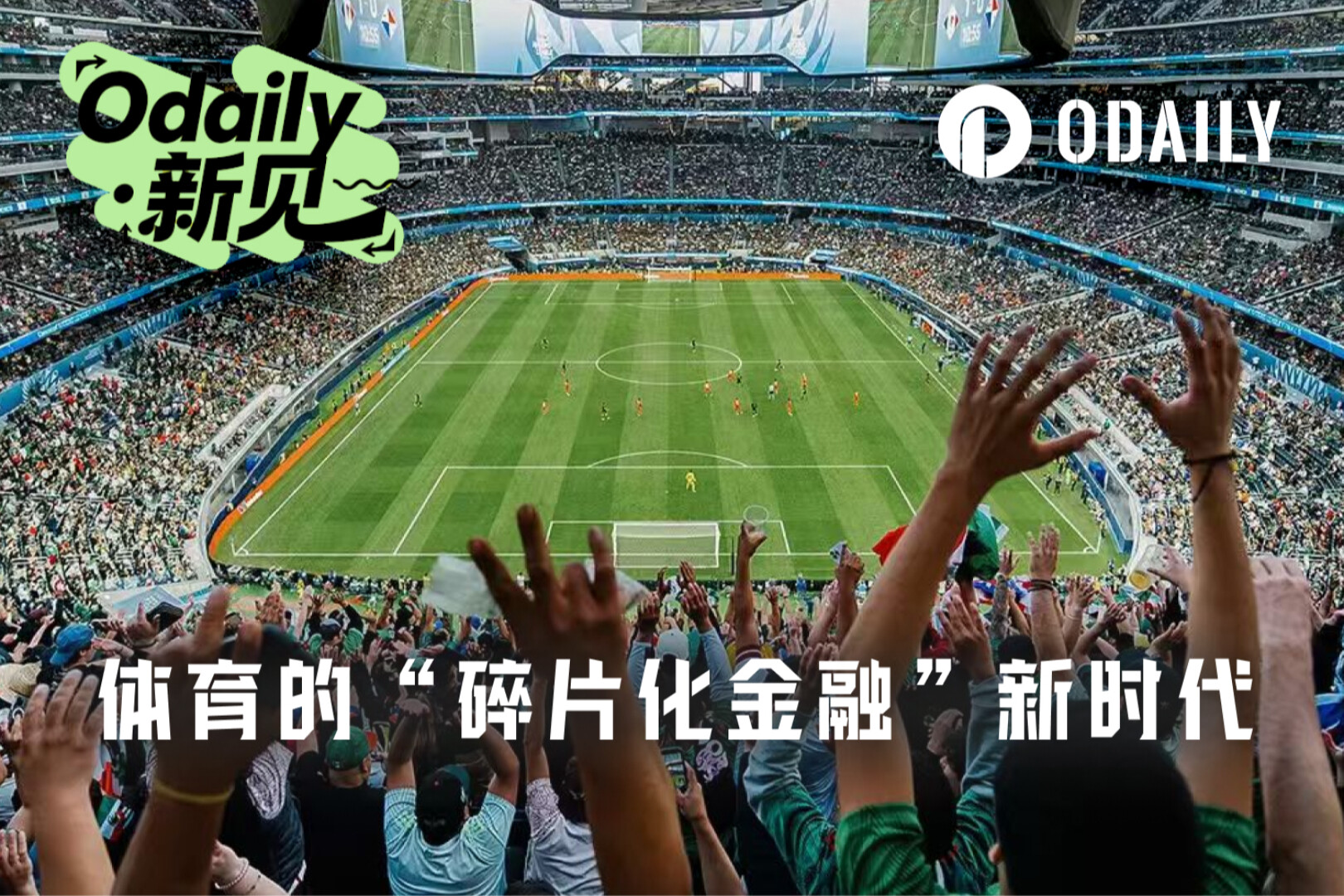
The World Cup is Approaching: Sports Entering the Era of 'Fragmented Finance'

With the approaching World Cup, sports are entering an era of "fragmented finance." This shift is exemplified by FIFA's new rule requiring debutant players to wear a special "World Cup debut patch." Post-tournament, these patches will be authenticated, cut, and embedded into collectible cards, potentially transforming into high-value assets. The global sports trading card market, valued at over $11.5 billion, represents a sophisticated alternative asset class with deep secondary markets and distinct bull/bear cycles. While football has a massive fanbase, its card market has historically lacked the liquidity and unified narrative of the NBA's system. The NBA's success stems from its centralized, star-driven storytelling—from draft nights to championships—which perfectly fuels financialization. The World Cup patch initiative is FIFA's attempt to create similar "financial raw material" for football. The NBA card market, evolving over 70 years, has matured into a financial ecosystem. After a 1990s crash due to overproduction, the industry rebounded by embracing scarcity: limited editions, autographs, game-worn memorabilia (patches), and serial numbering. Today, it features professional grading (e.g., PSA, BGS), auction platforms, live "break" streams, and dedicated marketplaces, mirroring aspects of cryptocurrency markets with their volatility, speculation, and community-driven trading. The core driver is narrative. A card's value is tied to a specific historic moment or player potential—like Stephen Curry's 1/1 card commemorating his Olympic game-winning shot selling for $518,500. This trade in "ownership of history" or "future greatness" parallels prediction markets, both monetizing collective emotion. Unlike many NFT projects that struggle to generate sustained narratives, sports are a perpetual emotion-generating machine. Leagues like the NBA and UFC constantly produce real-world drama—rivalries, comebacks, and triumphs—that fuels ongoing interest and investment. For younger audiences consuming sports via highlights and social media clips, trading cards become a direct financial instrument for engaging with these narratives. Thus, traditional sports leagues are leading the charge in assetization, leveraging their unique advantages: real events, global fan consensus, and endless storytelling. They are becoming platforms for issuing financial assets, turning fragments of history—a patch, a signature, a moment—into tradable commodities.

Odaily星球日报05/19 10:42

The World Cup is Approaching: Sports Entering the Era of 'Fragmented Finance'

Odaily星球日报05/19 10:42

活动图片