# Memory Related Articles

HTX News Center provides the latest articles and in-depth analysis on "Memory", covering market trends, project updates, tech developments, and regulatory policies in the crypto industry.

DRAM ETF Issuer: Samsung, SK Hynix, Micron All Surpass $1 Trillion, the AI Era of Memory Chips Has Only Just Begun

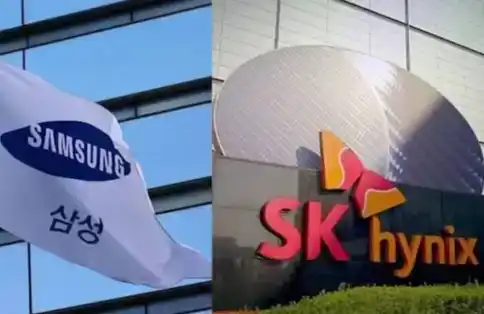
Authors: Dave Mazza, Thomas DiFazio | Source: Deep Tide TechFlow The article, written by Roundhill Investments (issuer of the DRAM ETF), responds to Morningstar's caution about investing in memory chip stocks. Morningstar warns of the sector's history of boom-bust cycles, a lack of economic moats, and potential momentum-driven overvaluation. Roundhill argues the current situation is structurally different due to AI. Key points in Roundhill's rebuttal include: * **Changed Demand & Supply Dynamics:** AI infrastructure, not consumer electronics, is now the primary growth driver for memory demand. New, strict long-term supply agreements with hyperscalers reflect the high capital intensity of advanced manufacturing. * **Existence of a Moat:** High-Bandwidth Memory (HBM), essential for AI, has extremely high manufacturing barriers. The market is dominated by Samsung, SK Hynix, and Micron, with new entrants blocked by technological complexity and long lead times for equipment like ASML's EUV machines. * **Strong Fundamental Outlook:** Analyst consensus projects the three companies will rank among the world's most profitable by 2027, with combined profits of $704 billion on over $1 trillion in revenue. Their operating margins have already reached record highs. * **Valuation Re-rating:** Despite significant stock price gains, memory stocks trade at attractive valuations (e.g., a median NTM P/E of 8.37x for the DRAM ETF) relative to projected explosive EPS growth. Roundhill suggests historical valuation frameworks may no longer apply given the new profitability paradigm. Conclusion: Roundhill contends the rally is justified by fundamentals, marking a structural shift for the memory industry into a new era of sustained, AI-driven demand against constrained supply, rather than a repeat of past cycles.

marsbit14h ago

DRAM ETF Issuer: Samsung, SK Hynix, Micron All Surpass $1 Trillion, the AI Era of Memory Chips Has Only Just Begun

marsbit14h ago

SemiAnalysis Deep Dive into CXMT: $50 Billion Revenue, An IPO Amidst a Supercycle

SemiAnalysis' in-depth report on ChangXin Memory Technologies (CXMT) details its rapid rise as China's largest upcoming semiconductor IPO. Founded in 2016 by Zhu Yiming, CXMT built its DRAM foundation on acquired patents and talent from the bankrupt German firm Qimonda. It achieved its first annual profit in 2025 after nearly a decade of significant capital support, primarily from patient Hefei municipal investors who fostered a local supply chain. The company is now capitalizing on a strong DRAM supercycle. Its revenue soared from ~$3.3B in 2024 to ~$8.6B in 2025, with Q1 2026 alone reaching ~$7.3B. SemiAnalysis projects full-year 2026 revenue could exceed $50B, driven by soaring ASPs rather than massive market share gains. While CXMT is closing the capacity gap with Micron, its product mix remains heavily focused on commodity DDR/LPDDR, which currently offers higher margins than its nascent HBM business. CXMT faces significant challenges in HBM, struggling with yield and stability for HBM3 8-Hi stacks while lagging behind the big three (Samsung, SK Hynix, Micron) in advanced nodes. However, strategic national priorities for AI self-sufficiency may push it to accelerate HBM capacity. Its complex IPO structure reveals heavy state-backed ownership and voting control over its fabs, with Alibaba appearing as both a key cloud customer and a minority shareholder. The IPO aims to raise ~$4.1B, primarily to strengthen its core DRAM manufacturing base.

marsbit16h ago

SemiAnalysis Deep Dive into CXMT: $50 Billion Revenue, An IPO Amidst a Supercycle

marsbit16h ago

Semiconductor Stock Rebound: Is the Technical Correction Over or a Trend Reversal?

The core of recent semiconductor stock volatility is not about daily price swings, but rather the market questioning whether AI-driven semiconductor pricing has entered a new phase. Following a sharp sell-off in Korean stocks on June 23rd, led by Samsung and SK Hynix, a subsequent rebound is seen more as a technical positioning adjustment rather than a confirmed trend reversal. The key variable is HBM (High Bandwidth Memory), essential for AI chips. Its supply-demand imbalance granted memory makers significant pricing power. The current market focus is on whether this dynamic remains strong enough to justify elevated valuations. All eyes are on Micron's upcoming earnings report. The critical factor is not whether results meet already high expectations, but whether the company's guidance confirms that AI memory pricing power, order visibility, and future margins are still expanding. Micron's outlook will serve as a crucial test for the broader AI semiconductor chain, including Samsung, SK Hynix, and other infrastructure players. The recent bounce appears to be a pre-earnings positioning repair. For it to evolve into a sustained uptrend, concrete evidence is needed that the AI infrastructure expansion cycle's fundamentals—particularly for high-end memory—remain robust and can continue to surpass elevated market expectations. The risk is that strong demand alone may not be sufficient if future guidance hints at peaking momentum or increasing supply-side pressures.

marsbit19h ago

Semiconductor Stock Rebound: Is the Technical Correction Over or a Trend Reversal?

marsbit19h ago

Giants Wage the Context War, Reconstructing AI Moats

The article "Giants Launch the Context War, Reconstructing AI's Moat" discusses how leading AI companies—OpenAI, Anthropic, and Google—are shifting their competitive focus from model size to acquiring, managing, and utilizing user context (Context). Initially, Context referred to the length of text a model could process, leading to a "arms race" for longer context windows. However, the competition has evolved through three key phases: expanding text capacity (long context windows), enabling memory across sessions, and finally, integrating AI into real user environments like browsers and desktops to capture dynamic task states. Each company is pursuing a distinct strategy. OpenAI is building Context around the ChatGPT account, turning it into a central hub that accumulates user understanding across various integrated applications and tools. Anthropic, lacking a major user base, focuses on high-value verticals like coding, empowering its Claude model to actively gather Context through GUI interaction (Computer Use) and system connections (MCP protocol). Google, with vast existing user data from products like Search and Gmail, faces the challenge of restructuring this data into actionable, AI-understandable Context for its Gemini model within its ecosystem. The core argument is that the nature of competitive advantage in AI is changing. The internet era prized network effects—connecting more users. The AI era values "individual depth": the ability to build deep, task-specific understanding of a user. This creates a new moat through 1) the compounding value of accumulated Context, 2) deep integration with user tools and permissions, and 3) the establishment of trust for complex tasks. Therefore, the battle for Context is fundamentally about capturing "task entry points" and converting existing digital ecosystems into environments where AI can effectively understand and act, rather than merely scaling user numbers.

marsbitYesterday 23:13

Giants Wage the Context War, Reconstructing AI Moats

marsbitYesterday 23:13

GPU Rental Prices Drop 30% in Three Weeks: AI Value Chain Migrating from Nvidia to Memory Chips

GPU rental prices for Nvidia's flagship B200 chip have fallen by approximately 30% over three weeks, dropping from a high of $6.11/hour to $4.22/hour. This decline signals a potential easing of the "compute scarcity" narrative that has long supported AI hardware valuations. Concurrently, the semiconductor market is witnessing a significant divergence: while the VanEck Semiconductor ETF (SMH) has risen 15% in the past month, with memory giants Micron and SanDisk each surging nearly 60%, Nvidia's stock has declined about 3% over the same period. Analysts suggest this shift indicates that the AI value chain's bottleneck and profits are migrating from compute (GPUs) to memory. Demand for high-bandwidth memory (HBM) remains intensely strong, with contract prices soaring over 100% in H1 2026, granting memory manufacturers significant pricing power. In contrast, increased B200 supply from improved manufacturing yields and competitive pressure from new cloud providers are softening GPU rental rates. While long-term contracts, like SpaceX's $30 billion deal with Google, show sustained large-scale demand for Nvidia hardware, the softening spot prices pressure the margins of cloud providers and could eventually impact Nvidia's order flow if chip prices don't adjust. The key takeaway for investors is not a weakening AI thesis, but a recalibration within the sector: pricing power appears to be strengthening for memory chipmakers while showing signs of strain for leading GPU suppliers.

marsbitYesterday 05:18

GPU Rental Prices Drop 30% in Three Weeks: AI Value Chain Migrating from Nvidia to Memory Chips

marsbitYesterday 05:18

18 Months, Over 50x Surge: KIOXIA's Epic Comeback

KIOXIA, a NAND flash memory giant, staged a dramatic comeback driven by AI demand. After a period of significant losses, a failed merger, and missed HBM opportunities, its 2024 IPO began modestly. However, fueled by explosive demand for AI data storage, its stock price skyrocketed over 50 times within 18 months, making it Japan's most valuable company, surpassing Toyota. Its Q1 FY2026 profit guidance soared 30-fold year-over-year, with 2026 NAND capacity already sold out. Key to its success is its 3D NAND technology, BiCS FLASH. As the inventor of NAND, KIOXIA advanced its technology through generations, reaching over 200 layers by 2023. Key innovations include CBA (CMOS directly Bonded to Array), which separately manufactures control circuits and memory arrays for better performance, and OPS (On Pitch Select Gate) to increase density. The company is now developing high-capacity packages like an 8TB solution stacking 32 dies. Looking beyond NAND, KIOXIA is exploring 3D DRAM with its OCTRAM technology, using oxide semiconductor transistors for ultra-low leakage to reduce power consumption. This fundamental research differs from HBM and represents a long-term bet to extend its 3D expertise from NAND into future DRAM architectures. KIOXIA's story highlights how technological assets and shifting market cycles can rapidly transform a company's fortunes. While questions remain about sustaining growth beyond the current AI boom, its resurgence demonstrates that in semiconductors, being down does not necessarily mean being out.

marsbitYesterday 01:54

18 Months, Over 50x Surge: KIOXIA's Epic Comeback

marsbitYesterday 01:54

Report Interpretation: J.P. Morgan Details Micron's Pre-Earnings Sentiment, Current Hardware Sector Dynamics

Morgan Stanley analyst Joshua Meyers' report (June 21, 2026) highlights key trends in the hardware and semiconductor sector ahead of Micron's earnings. The core takeaways are: 1. **Micron & Memory:** Memory remains a high-conviction long theme, driven by strong AI demand and rising ASPs. However, investor focus is shifting to the sustainability of Micron's >80% gross margins and the specifics of potential new long-term supply agreements (SCAs). 2. **Hardware Supply Chain:** AI-related demand for servers, networking, and storage remains robust, but company performance is diverging. Celestica (CLS) shows improved margin confidence, Western Digital and Seagate benefit from pricing, Fabrinet (FN) sees predictable AI optics growth, and Teradyne (TER) anticipates a new Google customer. 3. **AI Capex & WFE Forecasts:** JPMorgan increased its Wafer Fab Equipment (WFE) market growth forecasts to 28% in 2026 and 29% in 2027. AI infrastructure financing is evolving, with higher project-level debt reducing constraints on capex expansion. The report signals that while the AI-driven hardware cycle is strong, the market is entering a phase focused on execution verification (e.g., Micron's SCA details, Fabrinet's ramp with Amazon) and valuation sustainability. Key near-term signals include Micron's guidance, Arista Networks' outlook, and the pace of demand normalization post potential tariff-related pull-ins.

marsbit2 days ago 14:43

Report Interpretation: J.P. Morgan Details Micron's Pre-Earnings Sentiment, Current Hardware Sector Dynamics

marsbit2 days ago 14:43

活动图片