# Liquidity Related Articles

HTX News Center provides the latest articles and in-depth analysis on "Liquidity", covering market trends, project updates, tech developments, and regulatory policies in the crypto industry.

Understanding Stock Tokenization in One Article: Who's Doing It, How to Buy, and What Are the Risks?

In the past 60 days, the U.S. capital market has undergone structural changes surpassing the last decade. The SEC outlined a blueprint for tokenized securities, Nasdaq received approval for token settlement, and NYSE partnered with Securitize to launch a tokenization platform. Despite a global equity market worth ~$140 trillion, tokenized stocks represent only ~$890 million—a 0.0007% penetration. The SEC’s January 2026 statement classified tokenized securities into four models: - **Model A (Issuer-Sponsored)**: Direct on-chain ownership (e.g., Galaxy Digital tokenizing its own stock). - **Model B (Tokenized Securities)**: Intermediated custody with blockchain settlement (adopted by Nasdaq, NYSE, DTC). - **Model C (Pegged Securities)**: Synthetic claims via omnibus accounts (e.g., Ondo Finance, xStocks, Dinari—dominant with ~$650M TVL). - **Model D (Derivative Contracts)**: Pure synthetic exposure (e.g., Ventuals’ perpetual swaps on Hyperliquid). For public stocks, Models C and B lead, but face challenges: Model C introduces counterparty risk (no SIPC insurance), while Model A requires issuer participation. Private market tokenization is more transformative, addressing illiquidity and high barriers in the $7T private equity space. Platforms like PreStocks and Jarsy offer 24/7 tokenized access to pre-IPO stocks (e.g., SpaceX, OpenAI) but lack direct ownership rights. Traditional private equity platforms (Forge, EquityZen) are regulated but slow and expensive. Key risks include fee stacking in SPV structures, regulatory uncertainty, and synthetic products’ high funding rates (e.g., Ventuals’ 54% annualized cost for long positions). Infrastructure players (e.g., Securitize, Berry) are advancing models with independent custody to mitigate risks. The convergence of institutional adoption and retail demand signals a foundational shift in market structure, though scalability and transparency remain critical hurdles.

marsbit04/16 03:25

Understanding Stock Tokenization in One Article: Who's Doing It, How to Buy, and What Are the Risks?

marsbit04/16 03:25

Polymarket Is Not an All-Powerful "Truth Machine"

Polymarket, a crypto-based betting platform, is often hailed as a "truth machine" for its ability to aggregate crowd wisdom through financial stakes. While it has demonstrated remarkable accuracy in predicting major events like the 2024 U.S. presidential election—outperforming traditional polls—its overall reliability is highly inconsistent. Analysis using the Brier score reveals that its predictive power excels in high-liquidity domains like politics and economics but falls to near-random or worse in categories like sports, culture, and tech. The platform’s growing influence is concerning as its odds are increasingly cited by major media outlets like The Wall Street Journal and CNN, lending them an air of authority. This visibility creates a feedback loop where the odds themselves can influence the outcomes they are meant to predict—a phenomenon known as endogeneity. Moreover, the market is vulnerable to manipulation by well-resourced "whales" with access to exclusive information, such as private polls or even military intelligence, as seen in cases involving bets on geopolitical events. While useful for short-term, high-stakes events, Polymarket’s predictions are often unreliable for the vast majority of its contracts due to low liquidity and wide bid-ask spreads. The danger lies not in its occasional failures, but in the unchecked trust it receives—risking a future where a handful of traders can shape perceived reality through a platform masquerading as an oracle of truth.

marsbit04/15 11:40

Polymarket Is Not an All-Powerful "Truth Machine"

marsbit04/15 11:40

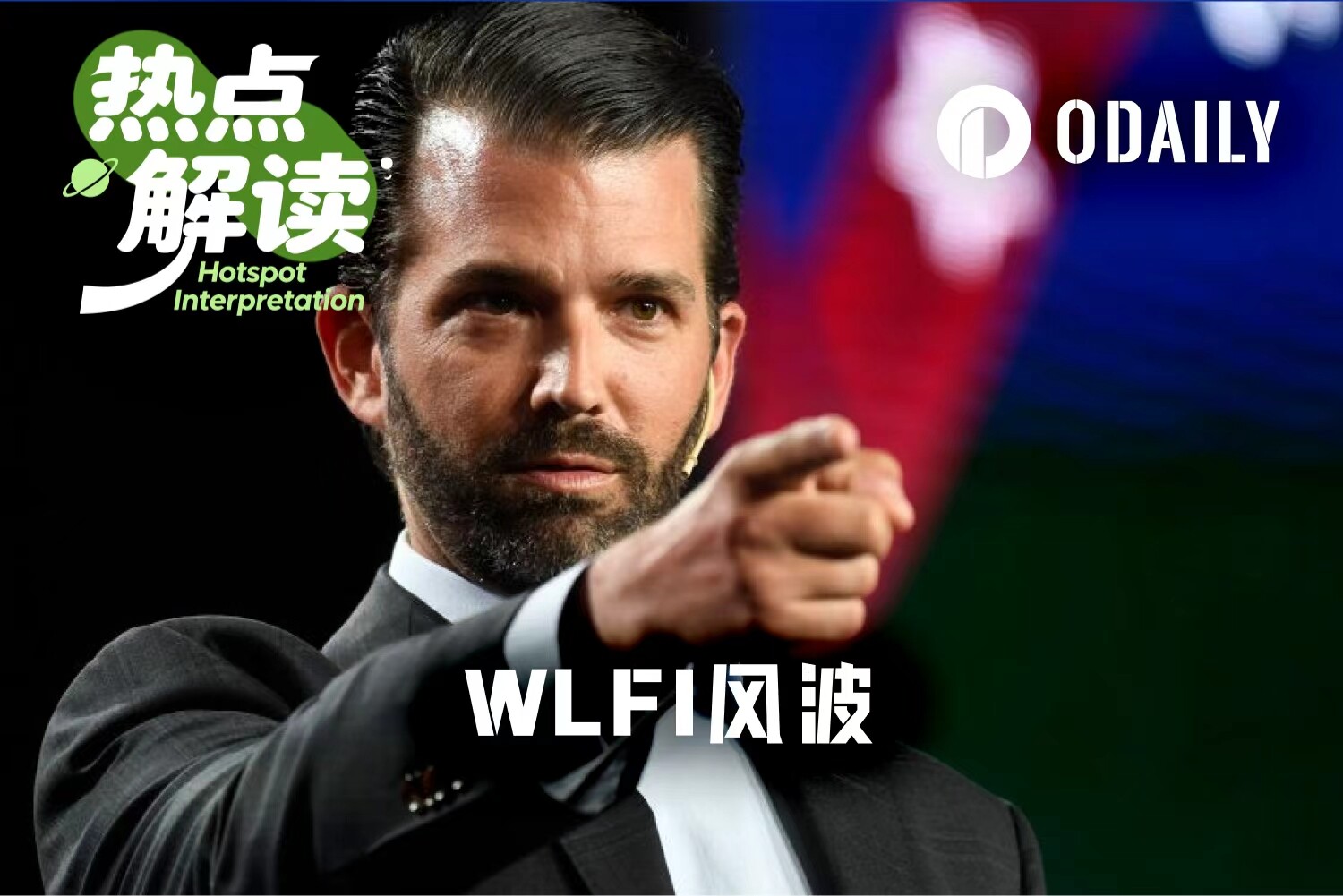
Brother Sun "Rights Protection" Stands Up Against the Trump Family, WLFI Is the Real Scythe in the Crypto Circle

The article details the controversy surrounding World Liberty Financial (WLFI), a cryptocurrency project linked to the Trump family. It reports that WLFI allegedly used the DeFi lending protocol Dolomite, whose co-founder is also a WLFI advisor, as a disguised channel to sell tokens by collateralizing around 5 billion WLFI tokens to borrow approximately $75 million in stablecoins. Despite WLFI's claims that the loans were for ecosystem development and posed no liquidation risk, critics argue it was a way for insiders to cash out, shifting risk to retail investors. The piece highlights WLFI's significant price decline—over 66% since its September 2025 launch—and suggests the Trump family and insiders are the main source of selling pressure, as they control nearly 74% of the token supply. It also revisits WLFI’s prior move to blacklist 272 addresses, including those of investor Justin Sun, under the pretext of preventing large-scale sell-offs, which now appears to be an effort to reduce competition for their own sales. Sun publicly accused WLFI of exploiting users, freezing assets, and treating the crypto community as a "personal ATM." WLFI countered by threatening legal action. The author notes that while Sun’s criticism may gain sympathy, a legal battle in the U.S. against the well-connected Trump family would be risky for him. Finally, the article concludes that WLFI exemplifies how powerful elites can exploit crypto’s regulatory gray areas for profit, and urges the community to reject such projects driven more by political privilege than genuine decentralized finance ideals.

Odaily星球日报04/13 12:17

Brother Sun "Rights Protection" Stands Up Against the Trump Family, WLFI Is the Real Scythe in the Crypto Circle

Odaily星球日报04/13 12:17

How Should Crypto VCs Survive? When Top Projects No Longer Need Institutional Funding

Cryptocurrency venture capital is at a watershed moment. Token exits, once the primary driver of outsized returns, are undergoing a major reset. The definition of token value is being rewritten in real-time, yet no standard valuation framework has emerged. Key market shifts include the rise of tokens with real, on-chain revenue (like HYPE), which exposed the weakness of governance tokens with no fundamentals; a supply shock from meme coins (e.g., PUMP) fragmenting liquidity; and competition from prediction markets, stock perps, and leveraged ETFs diverting retail speculative capital. This has compressed token lifecycles and cratered holding periods. VCs now face critical questions: Are they underwriting equity, tokens, or a hybrid? What is the best practice for on-chain value accrual beyond potentially toxic buybacks? Will the "crypto premium" vanish entirely, forcing valuations to align with public equities and crashing many Layer 1 tokens? The result is a divergence: early-stage investors are becoming more price-sensitive on token projects, while appetite for equity deals is growing. Later-stage crypto VCs are increasingly competing with traditional funds in "Web2.5" deals. To survive, crypto VCs must find their product-market fit with founders. Capital alone is no longer sufficient. Winning the best deals—from projects that may not even need institutional funding—requires providing unmatched brand value and non-capital advantages.

marsbit04/13 04:08

How Should Crypto VCs Survive? When Top Projects No Longer Need Institutional Funding

marsbit04/13 04:08

活动图片