Original | Odaily Planet Daily (@OdailyChina)
Author | Golem (@web3_golem)
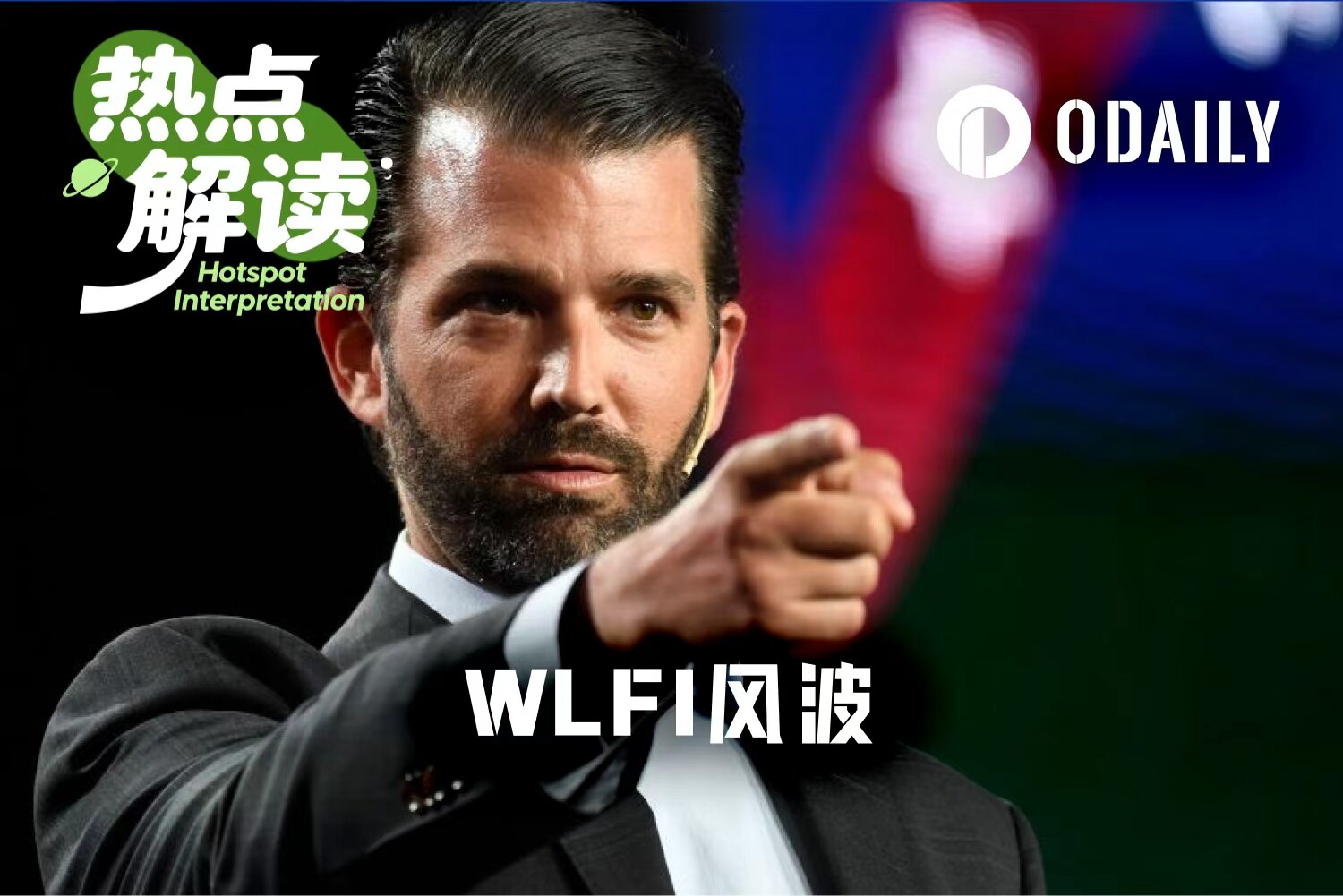
The true face of WLFI has finally been seen clearly by the crypto circle.
On April 9th, foreign media reported that the Trump family's crypto project, World Liberty Financial (WLFI), had conducted multiple collateralized loans through the DeFi lending protocol Dolomite, sparking market concerns about insider trading and USD1 liquidity risks. According to statistics, WLFI used approximately 5 billion WLFI tokens as collateral and mobilized about 75 million USD in stablecoins cumulatively through Dolomite and Coinbase Prime.
Coincidentally, Dolomite co-founder Corey Caplan is also an advisor to WLFI. Although WLFI responded that borrowing stablecoins was to create value for the ecosystem and there was no liquidation risk, and WLFI even repaid 25 million USD1 loans on April 11th, tracking the on-chain path of the borrowed stablecoins makes it clear to anyone that Dolomite is essentially a disguised token selling channel for the WLFI team.
Well-known trader Pickle Cat also believes that WLFI is performing a confidence trick by buying back at high prices with the left hand while borrowing real money with low-value collateral with the right hand. In the end, only the retail investors locked in the Dolomite pool are bearing the risk, so she decisively chose to liquidate all her WLFI spot holdings.
WLFI's price performance since its listing has already said it all. WLFI officially launched on September 1, 2025, and began executing token buybacks in late September of the same year. However, the token has since fallen by over 66%, down about 70% from its peak. So, where is the selling pressure in the market coming from? Most likely from the Trump family and their related interests. Firstly, because it's unlikely they only have Dolomite as one disguised selling channel. Secondly, only they hold large amounts of WLFI tokens and can "sell without restrictions."
Even before WLFI officially launched, Odaily Planet Daily had analyzed WLFI's token holding structure and selling pressure, concluding that the Trump family was the largest source of selling pressure. Out of a total supply of 100 billion tokens, the pre-sale accounted for only 26.05%, while the remaining 73.95% was entirely controlled by the team. (Related reading:WLFI Unlock Countdown: Trump's 15.75% Whale Holdings, Can the Market Withstand the "Presidential Selling Pressure"?)
Furthermore, after the WLFI token officially launched, the team blacklisted 272 addresses, including addresses belonging to Sun Yuchen, under the pretext of protecting user funds and preventing large-scale selling by whales. This move was applauded by the community at the time. But only now, faced with the continuous decline of WLFI, have we come to our senses: the real purpose of freezing the whale addresses was to facilitate their own selling.
The story doesn't end here. After the WLFI team's actions were exposed, Sun Yuchen couldn't sit still anymore. The renowned "Sun Cut" (Sun Ge) doesn't take losses like this—only you can sell, but I can't? So he confronted WLFI once more.
Sun Yuchen Confronts WLFI Again
On April 12th, Sun Yuchen posted on platform X, condemning the WLFI team for extracting fees from users, secretly implanting backdoors to control user assets, freezing investor funds, and using the crypto community as a personal ATM, among other actions. The WLFI team didn't just let Sun's accusations slide; they responded by saying Sun Yuchen is best at playing the victim, fabricating baseless accusations to cover up his own misconduct, and stated they would see him in court.
To understand this drama, we need to review the relationship between Sun Yuchen and WLFI.
WLFI and Sun Yuchen had a honeymoon period. In November 2024, Sun Yuchen announced an investment of 30 million USD into WLFI through the entity TRON DAO, becoming WLFI's largest investor and project advisor at the time. This deal was interpreted then as a political donation from Sun Yuchen to Trump, especially since Trump's election as president was already a foregone conclusion, and crypto figures wanted to build good relations. So it was a win-win: WLFI got the money, and Sun Yuchen opened a channel to connect with the US President.
But when the WLFI token actually launched, the WLFI team kicked Sun Yuchen to the curb. On September 5, 2025, World Liberty Financial (WLFI) blacklisted addresses related to Sun Yuchen, involving approximately 540 million unlocked tokens and 2.4 billion locked tokens. The WLFI team's reason was straightforward: they suspected someone was selling off to suppress the token price. WLFI blacklisted 272 addresses in one go.
Although Nansen CEO Alex Svanevik later stated that Sun Yuchen had not engaged in dumping, and his transfers occurred after the WLFI token had already plummeted, the truth behind WLFI's drop might have been mass profit-taking by retail investors and further panic-driven price crashes. But because WLFI used the community as a shield, Sun Yuchen didn't step out to confront them head-on.
However, some still spoke up for Sun Yuchen. CryptoQuant CEO Ki Young Ju believed that even if Sun Yuchen sold his unlocked tokens, it was his right, as he had autonomy over his assets, and WLFI had no right to freeze user addresses. It's ironic—the Trump family has repeatedly stated in public that "de-banking" was a major reason they chose to join the crypto space, as their family assets had been frozen by the banking system multiple times. But how is their action of blacklisting user addresses any different from the banks that rejected them? This kind of "pseudo-decentralized" behavior deserves condemnation.
That said, although Sun Yuchen's situation is worthy of sympathy, if he chooses to go head-to-head with WLFI, he might not come out ahead. Because behind WLFI stands the Trump family and a group of top-tier elites with deep roots in both American politics and business. Which one can Sun Yuchen afford to offend?
Moreover, given Sun Yuchen's own regulatory history, political situation, and past controversies, if he really ends up in a US court against WLFI, winning the lawsuit might be out of the question; escaping unscathed might be something to be庆幸 (grateful) for.
So, for Sun Yuchen's "rights protection" campaign, he can make noise in the court of public opinion and posture alongside retail investors. But actually taking it all the way to a US courtroom? Better forget it.
The Second Lesson the Trump Family Taught the Crypto Circle
We have to admit that WLFI is the second lesson the Trump family taught the crypto circle (the first lesson was, of course, TRUMP). Its real purpose was never to break traditional banking restrictions or make DeFi better, but to疯狂敛财 (frantically amass wealth) in the grey areas of financial regulation.
Many people were unwilling to admit or ignored this before because the name Trump was still very valuable. In the bull market sentiment, power and influence were automatically translated into a sense of security and a moat. Coupled with Trump's extremely friendly attitude towards crypto during the campaign and early in his term, crypto users did not launch large-scale protests or FUD. The Trump family ate the meat in the crypto market, and we could跟着喝口汤 (follow along and have some soup).
But things are different now. In the broader context, with "Crypto Czar" David Sacks shifting his focus to AI, and Trump being deeply involved in the US-Iran conflict with no time to spare for the crypto industry, the光环 (halo) of the Trump name isn't worth as much anymore. When Trump is no longer our crypto president, what光环 (halo) does his family have left? (Related reading:"Crypto Czar" Steps Down: 130-Day Political Performance Ends, How Much of Trump's Crypto Promises Remain?)
At the same time, specifically regarding the WLFI project, influenced by the token's performance, governance controversies, freezing incidents, and other factors, this滤镜 (filter) has long been torn to shreds in the minds of users. The crypto circle is certainly not innocent; being willing to pay a premium for power and influence, to pay for political backgrounds, is itself a form of speculative collusion. But from now on, when facing "shoddy projects" like WLFI, crafted by American elites in the crypto field, we should have the courage to say no.




















