# Layer 2 Related Articles

HTX News Center provides the latest articles and in-depth analysis on "Layer 2", covering market trends, project updates, tech developments, and regulatory policies in the crypto industry.

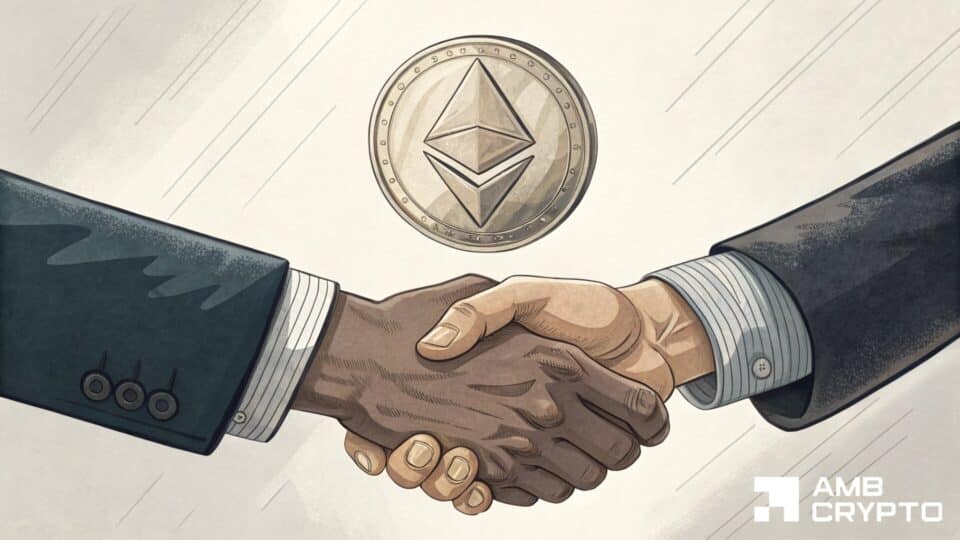
Robinhood Provides the Answer: Why Ethereum Becomes the Optimal Solution After Traditional Businesses Enter

The article argues that as real-world, cash-flow-focused businesses enter the blockchain space, they are increasingly choosing the Ethereum L1 + L2 architecture as the optimal infrastructure solution, in contrast to earlier crypto projects built primarily around token sales. It uses Robinhood as a prime example: after testing its stock tokenization product on Arbitrum One, Robinhood launched its own dedicated blockchain, "Robinhood Chain," which is built as an Ethereum L2 using Arbitrum's technology, relying on Ethereum for data availability (via blobs), using ETH as its native gas token, and employing a standard bridge to Ethereum. The author, Ryan Berckmans, distinguishes between two types of participants with different incentive structures: 1. **The "Old Crypto Economy":** Projects whose primary goal is to create and sell a token, with value derived from utility expectations, speculative "monetary premium," or distant cash-flow promises. Their technology stack choices are often flexible and driven by grants, copycat opportunities, or the need for a new token narrative. 2. **The Emerging "Real-World On-Chain Economy":** Traditional businesses using blockchain to improve existing services or create new cash-flow streams. Their goal is to maximize business profits, not token appreciation. For them, blockchain is infrastructure, and they prioritize low risk, security, user reach, operational control, liquidity, and interoperability. For these real-world enterprises, building a standalone L1 is costly, creating a new "security and liquidity island." Ethereum's L1+L2 model splits their core needs: the L1 provides a highly decentralized, neutral, and liquid global settlement layer, while L2s offer a market of customizable, high-performance, operator-controlled execution environments. An Ethereum L2 grants most benefits of an independent chain (high TPS, control, custom features) while inheriting Ethereum's security, seamless access to its ecosystem and assets, and native, low-trust bridging. The piece concludes that this shift in market participants profoundly benefits Ethereum and ETH. As businesses build on Ethereum (directly on L1, via their own L2 like Robinhood Chain, or on shared L2s like Base), they onboard users, embed ETH into products, and deepen its network effects and monetary premium. The choice is driven not by ideological belief but by rational commercial judgment, making Ethereum L1+L2 the current default optimal solution.

Foresight News07/13 09:11

Robinhood Provides the Answer: Why Ethereum Becomes the Optimal Solution After Traditional Businesses Enter

Foresight News07/13 09:11

The first to catch the wave of the Robinhood Chain hype is Arbitrum, up nearly 20%

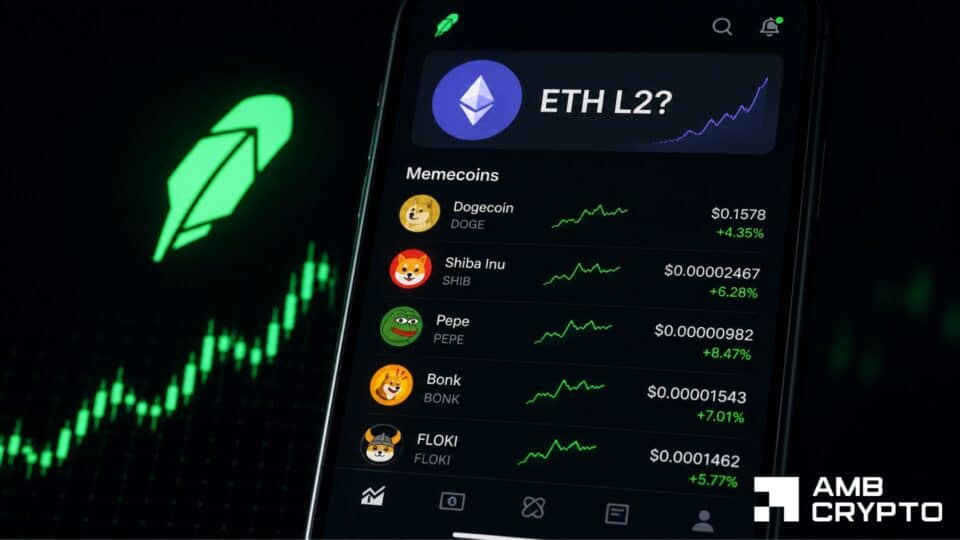
"ARB, the native token of Arbitrum, surged nearly 20% recently, emerging as a top-performing L2 token. This rally is attributed to the launch of 'Robinhood Chain,' a Real-World Asset (RWA) Layer 2 built using Arbitrum's technology. The launch has brought renewed attention to the 'Arbitrum Expansion Plan' (AEP), a year-and-a-half-old program. AEP allows external projects to build their own chains using Arbitrum's Orbit technology. In return, these 'tenant' chains that do not settle on Arbitrum's main networks must share 10% of their net protocol revenue with the Arbitrum ecosystem—8% to the DAO treasury and 2% to the developer guild. While smaller chains like Degen Chain previously triggered AEP, Robinhood Chain is the first major, high-profile tenant, making the revenue-sharing model economically significant for the first time. Initial data from Robinhood Chain is impressive, with over 35 million transactions, 350,000 addresses, $2.5 billion in TVL, and over $1 billion in DEX volume shortly after launch. However, its current protocol revenue, at roughly $146,000 net, translates to only a minimal payout to Arbitrum DAO. The ARB price surge thus reflects the market's anticipation of future revenue as Robinhood's vast $324 billion platform assets potentially migrate on-chain. This 'landlord' model mirrors Optimism's approach with its OP Stack and Superchain. However, Optimism's model faces pressure as its largest tenant, Base, announced plans to depart, causing a significant drop in OP's price. Similarly, analysts question Robinhood Chain's long-term dependence on Arbitrum, noting its daily sequencer revenue already nears three times that of Arbitrum itself. There is speculation that, like Base, it may eventually seek independence, with ETH potentially being its primary economic token rather than ARB."

Foresight News07/10 08:40

The first to catch the wave of the Robinhood Chain hype is Arbitrum, up nearly 20%

Foresight News07/10 08:40

Crypto 美股观察:CRCL、HOOD、COIN 与 MSTR,最近在交易什么?

Recent weeks have seen significant developments for four key US-listed crypto-related stocks—Circle (CRCL), Robinhood (HOOD), Coinbase (COIN), and MicroStrategy (MSTR)—with their core investment theses diverging. For **Circle (CRCL)**, its stock price is increasingly realigning with the fundamental driver of **USDC circulation**. After IPO exuberance faded, CRCL's performance now correlates closely with changes in USDC supply, which is heavily influenced by DeFi activity and risk appetite. The recent contraction in USDC, linked to events like the KelpDAO incident, has pressured the stock. A sustainable recovery signal for CRCL would require a confluence of recovering DeFi TVL, stablecoin demand, and consecutive weeks of USDC net issuance. **Robinhood (HOOD)** gained market attention with the launch of its **Robinhood Chain**, an Ethereum L2. While not an immediate threat to Coinbase's dominant Base network in terms of scale or developer ecosystem, it represents a strategic encroachment. Robinhood's path—leveraging its traditional retail brokerage user base and assets to build a chain-based financial system—challenges Coinbase's narrative as the sole listed company integrating crypto-native infrastructure with traditional finance. This could dilute COIN's long-term scarcity premium. **MicroStrategy (MSTR)** made a notable shift by **selling Bitcoin** for the first time in a meaningful way (3,588 BTC), breaking its long-standing "buy-only" posture. The sales, used to fund dividends and replenish USD reserves, signal a move towards active capital management. While not indicative of a bearish turn on Bitcoin, it introduces new complexity for MSTR investors. The stock must now be evaluated not just as a leveraged Bitcoin proxy, but also considering fixed cash obligations from preferred dividends and debt, alongside its capital allocation strategy between holding BTC and maintaining liquidity. In summary, the investment narratives for these stocks are evolving beyond simple crypto market beta. Key variables now include stablecoin fundamentals, competition in chain-based financial ecosystems, and the balance between asset accumulation and corporate capital structure management.

marsbit07/10 05:58

Crypto 美股观察:CRCL、HOOD、COIN 与 MSTR,最近在交易什么?

marsbit07/10 05:58

Behind Robinhood's Launch of Its Own Chain, the Beautifully Packaged "Tokenized Stocks" Still Have No Equity Rights

Robinhood has launched "Robinhood Chain," an Ethereum-based Layer 2 built with Arbitrum technology, and introduced "Stock Tokens." This article clarifies that these tokens are not actual on-chain equity. They are tokenized debt securities issued by Robinhood Assets Jersey Limited, offering economic exposure to reference stocks or ETFs but lacking direct ownership, voting rights, or other shareholder privileges. The legal structure is conservative, relying on traditional financial intermediaries, custody, KYC/AML controls, and specific jurisdiction rules, even though the tokens are transferable on-chain. The move is part of Robinhood's broader strategy to evolve from a retail brokerage into a global financial ecosystem, integrating services like banking, retirement, crypto, and DeFi. Robinhood Chain aims to provide a programmable settlement layer, making financial products more portable and accessible while masking underlying complexity. However, the "brokerage chain paradox" lies in balancing a simple user interface with the intricate, regulated reality of the wrapped assets. The success of this model depends on users and regulators accepting this structured approach without misunderstanding the tokens as direct stock ownership. Key components supporting this strategy include the Bitstamp acquisition (expanding institutional crypto capabilities), the Robinhood Wallet (bridging brokerage and self-custody), the Robinhood Earn program (integrating DeFi lending), and the Lighter perpetual contracts platform. While ambitious, the initiative is still early, facing challenges in achieving liquidity, developer adoption, and regulatory clarity across jurisdictions.

marsbit07/10 04:45

Behind Robinhood's Launch of Its Own Chain, the Beautifully Packaged "Tokenized Stocks" Still Have No Equity Rights

marsbit07/10 04:45

活动图片