Robinhood Chain flips Hyperliquid – 2 metrics show speculative interest

ambcryptoPublished on 2026-07-11Last updated on 2026-07-11

Abstract

Robinhood Chain, a new Ethereum Layer 2, has rapidly become a major hub for speculative trading, surpassing Hyperliquid and BNB Chain in daily DEX volume. Its volume skyrocketed from under $10 million to a record $600 million, driven largely by viral memecoins like CashCat and a public bet by Robinhood's CEO. This surge has positioned it as the fourth-largest chain for such activity. However, the memecoin frenzy has reignited a broader debate about the value of L2s to Ethereum. Critics, including Bankless's David Hoffman, argue L2s operate as largely independent chains that do not economically benefit ETH. Uniswap CEO Hayden Adams countered that ETH-denominated trading pairs could increase ETH burns. The debate centers on whether L2 growth, while scaling Ethereum, ultimately undermines ETH's value by reducing transaction fees burned on the mainnet.

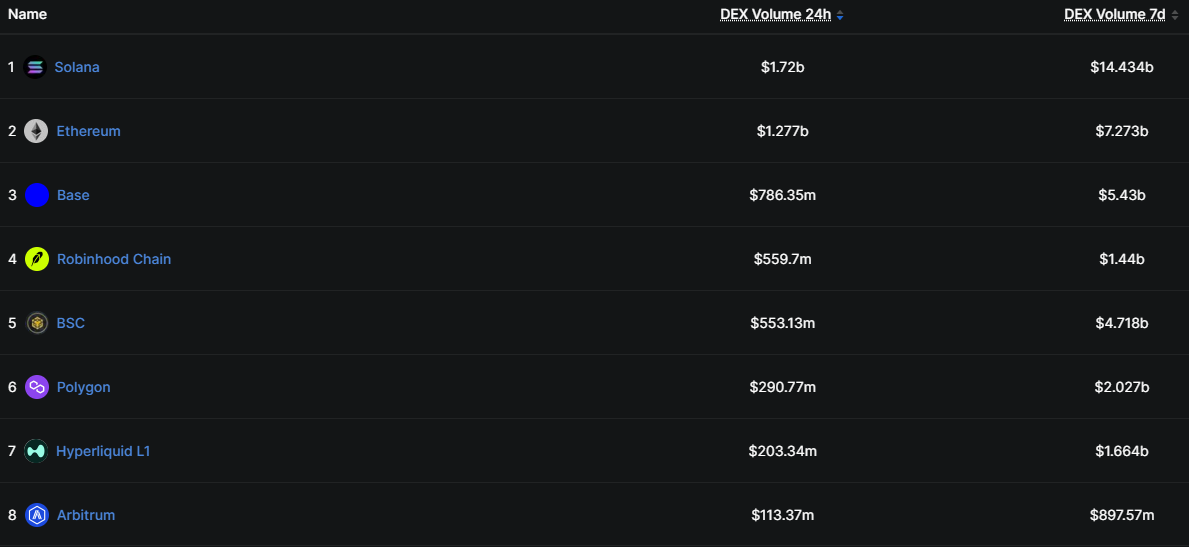
The new Ethereum Layer 2 (L2) Robinhood Chain has surpassed Hyperliquid and BNB Chain in speculative interest.

A week ago, Robinhood’s DEX volume (which tracks trading volume and broader speculative interest) was less than $10M.

As of writing, the daily DEX volume has hit a record level of $600M, making it the fourth dominant chain in speculative activity.

In the past two days, it has effectively surpassed BNB Chain and Hyperliquid on this front thanks to Robinhood’s CEO’s memecoin bet.
Source: DeFiLlama

As Robinhood Chain-based memecoins like CashCat [CASHCAT] went viral and posted massive gains, the FOMO attracted users and capital inflows.

Robinhood’s memecoin frenzy sparks L2 debate

If the memecoin mania persists, it could surpass Base in DEX volume to become the third-largest place for speculative trading.

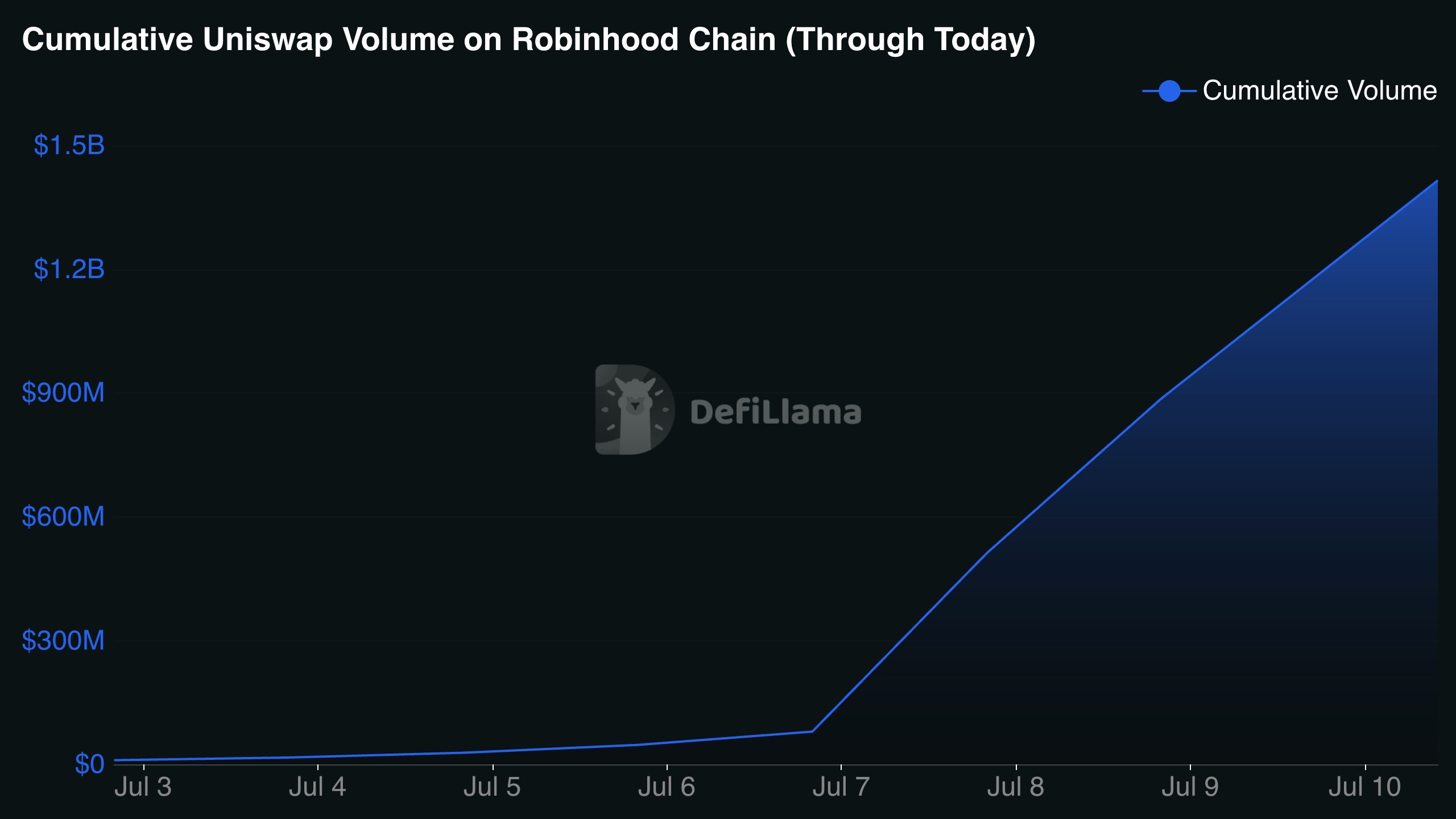
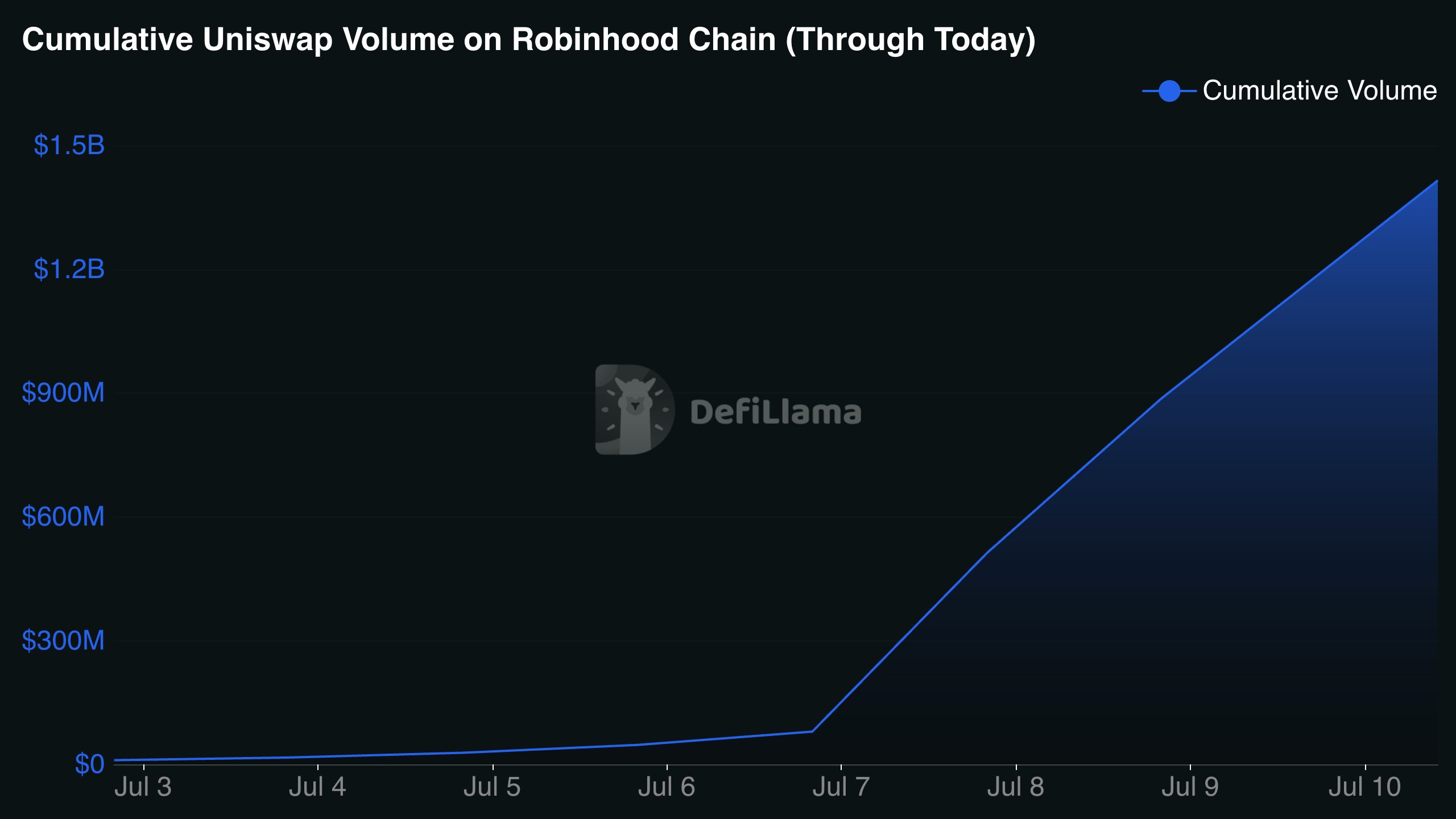
Worth pointing out that Uniswap crossed $1B in volume on Robinhood Chain since launch, further underscoring how crazy the memecoin mania is on the new L2.
Source: DeFiLlama

But critics have been opposing the memecoin push. Most questioned the need for another Ethereum Layer 2 (L2) if its use case is risky memecoin speculation. The debate has since evolved to whether L2 growth benefits ETH’s value.

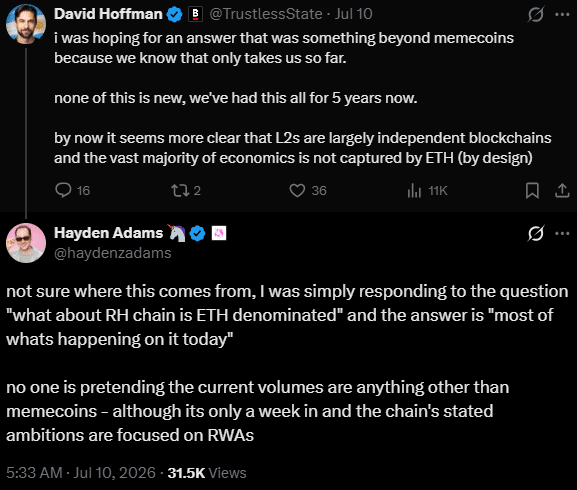
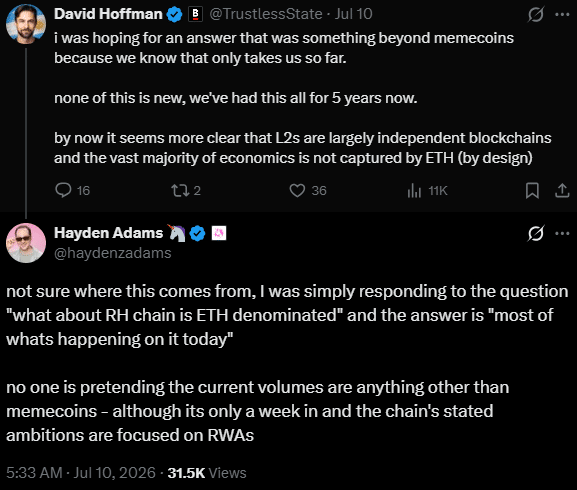
For Bankless’ David Hoffman, L2s aren’t helpful to ETH.

By now it seems more clear that L2s are largely independent blockchains and the vast majority of economics is not captured by ETH (by design).

Uniswap CEO Hayden Adam countered that most of the pairs on the chain are denominated in ETH and will eventually help burn more ETH, especially if the RWA narrative picks up momentum.
Source: X

Do Layer 2s actually help Ethereum?

The L2 roadmap has been under heavy criticism. With corporate chains such as Stripe’s Tempo, SWIFT, and more, the criticism has deepened.

For lawyer Gabriel Shapiro, the entire roadmap was ‘poorly executed’ to benefit ETH value.

The roadmap was just very poorly executed so that it’s mostly negative to ETH & leaves the L2s with too much optionality to become L1s, no real lock-in.

Ethereum’s best shot at scaling was through L2s, and recent upgrades have made them cheaper and attracted more traffic.

But this has also reduced the number of ETH burned, making the asset inflationary and denting its ‘store of value’ narrative.
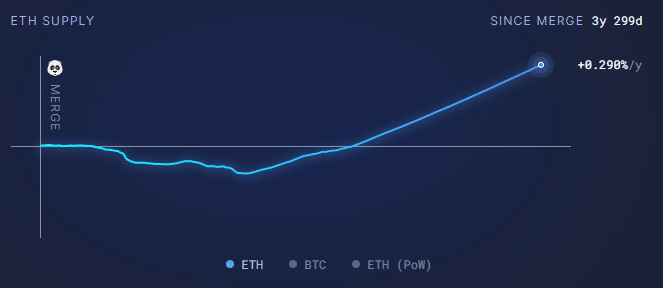
Source: Ultrasoundmoney

Whether the renewed L2 debate will drag ETH’s market sentiment and price remains to be seen. As of writing, Ethereum [ETH] traded at $1.8K, a key inflection point that could trigger the next leg of price recovery or another pullback.


Final Summary

  • Robinhood L2 has become the fourth largest on-chain place for speculative trading, flipping BNB Chain and Hyperliquid
  • Amid the hype, Ethereum L2s are under scrutiny again for being non-beneficial to ETH’s value

Trending Cryptos

Related Questions

QWhat recent achievement did Robinhood Chain accomplish according to the article?

ARobinhood Chain has become the fourth largest on-chain platform for speculative trading, surpassing BNB Chain and Hyperliquid in daily DEX volume, which reached a record $600 million.

QWhat is the primary driver behind the surge in speculative activity on Robinhood Chain?

AThe surge is primarily driven by a memecoin frenzy, particularly following a memecoin bet by Robinhood's CEO, which led to viral memecoins like CashCat [CASHCAT] posting massive gains and attracting significant user interest and capital inflows.

QWhat criticism is highlighted regarding Ethereum Layer 2s (L2s) in the article?

AThe main criticism is that L2s are largely independent blockchains and their economic activity does not significantly benefit Ethereum (ETH) by capturing value for it. Critics argue this design has made L2s potentially negative for ETH's value, reducing the amount of ETH burned and making the asset inflationary.

QWhat does Uniswap CEO Hayden Adams argue about L2s and Ethereum?

AHayden Adams counters the criticism by arguing that since most trading pairs on L2s are denominated in ETH, the increased activity will eventually help burn more ETH. He believes this will be especially beneficial if the Real World Asset (RWA) narrative gains momentum.

QAccording to the article, what is a key concern about Ethereum's current price level?

AAs of the article's writing, Ethereum is trading at $1.8K, which is identified as a key inflection point that could determine whether the price begins its next recovery phase or experiences another pullback.

Related Reads

Miners' Sales and Expensive Oil: Experts Name the Causes of Crypto Market Stagnation

"Sales of Miners and Expensive Oil: Experts Name Reasons for Crypto Market Stagnation" The crypto market currently lacks sufficient internal drivers for growth, and escalating tensions around the Strait of Hormuz could further worsen prospects for crypto assets, according to analysts at Wintermute. Key pressures include a significant $390 million net outflow from US spot Bitcoin ETFs from August 10-14, suggesting recent demand was speculative. While some altcoin ETFs saw inflows, Bitcoin's inability to rally on positive news indicates sellers have returned. Another factor is selling pressure from miners, exemplified by Riot Platforms selling 4,300 BTC last quarter while its mining costs exceeded Bitcoin's market price. With a record hash rate, many miners face unprofitable conditions, potentially forcing further sell-offs from their reserves. The primary external risk is macroeconomics, particularly rising energy prices. Brent crude surged nearly 8% due to the Strait of Hormuz situation, threatening to boost US inflation and potentially delay Federal Reserve rate cuts. Wintermute maintains a neutral stance, noting market positions are moderate, but requires stabilization in ETF flows or sustained capital return for a more positive outlook. Upcoming Fed minutes, PMI data, and the Jackson Hole symposium are key events, while the Strait of Hormuz remains a major external risk.

cryptonews.ru33m ago

Miners' Sales and Expensive Oil: Experts Name the Causes of Crypto Market Stagnation

cryptonews.ru33m ago

Trading

Spot

Hot Articles

Discussions

Welcome to the HTX Community. Here, you can stay informed about the latest platform developments and gain access to professional market insights. Users' opinions on the price of LAYER (LAYER) are presented below.

活动图片