# Hedging Related Articles

HTX News Center provides the latest articles and in-depth analysis on "Hedging", covering market trends, project updates, tech developments, and regulatory policies in the crypto industry.

From Speculation to Risk Management: Predictive Markets Are Filling the Gap in Commercial Insurance

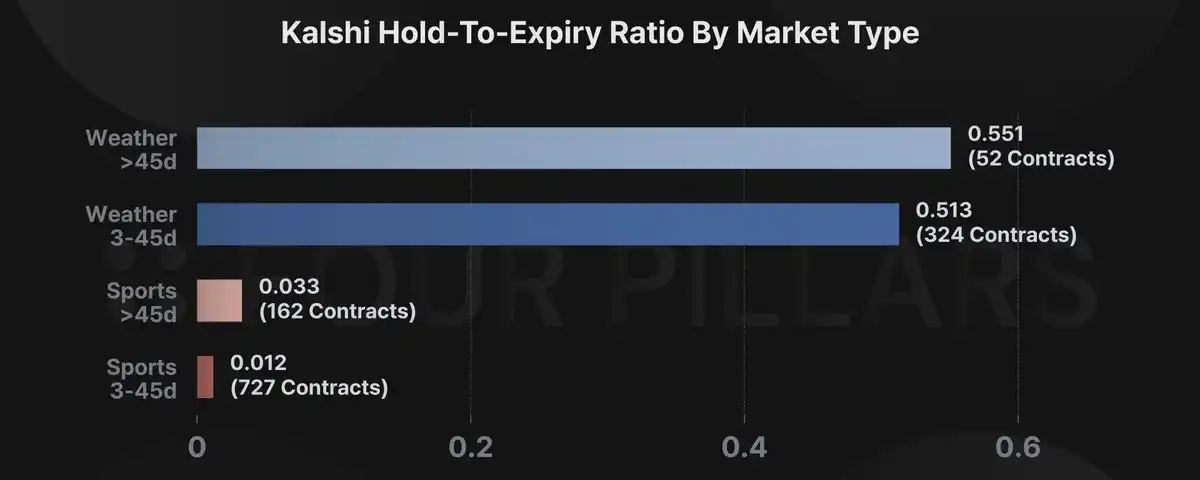
From Speculation to Risk Management: Predictive Markets Filling the Commercial Insurance Gap The emergence of AI risk management tools like Blanket is exploring the potential of predictive markets as a genuine insurance tool for businesses. These markets, with their simple contract structure—paying $1 if an event occurs, $0 if not—allow the real-time market price to reflect collective probability assessments. Businesses can use them to hedge against operational risks (e.g., abnormal weather, energy price fluctuations) that are often not covered by traditional business interruption insurance, which typically requires physical damage. A key question is whether these markets are genuinely used for hedging or remain primarily speculative. Analysis of Kalshi markets from August 2025 to August 2026 compared weather contracts (a potential hedge instrument) against sports contracts (largely speculative) and traditional CME grain futures. Three behavioral metrics were examined: 1. **Daily Turnover Rate:** Weather contracts showed the lowest rate (0.210), lower than corn futures (0.266) and significantly lower than sports contracts (0.315), suggesting longer holding periods. 2. **Hold-to-Expiry Ratio:** Weather contracts had a much higher ratio (over 0.5) compared to near-zero ratios for sports contracts, indicating a stronger tendency to hold positions until settlement, consistent with hedging behavior. 3. **Position Buildup Timing:** Weather market positions reached 50% of their peak much earlier in their lifecycle than sports market positions, aligning with the early risk-locking behavior seen in traditional futures hedging markets. The data indicates that the Kalshi weather market exhibits transaction patterns distinct from pure speculation and more aligned with hedging markets, suggesting real hedging demand exists alongside speculative activity. Crucially, speculation provides the essential liquidity and pricing mechanism that enables the hedging function. The future growth of predictive markets as viable risk management infrastructure depends not on eliminating speculation, but on building real enterprise hedging demand atop this existing liquidity base.

marsbit08/17 11:16

From Speculation to Risk Management: Predictive Markets Are Filling the Gap in Commercial Insurance

marsbit08/17 11:16

Is the US Stock Market Rising Too Smoothly? BTIG Warns of Elevated Risk of Systematic Correction in August to October

U.S. Stocks at Risk of Systemic Pullback in August-October, Warns BTIG BTIG's chief technical market strategist warns that the market is entering the most dangerous seasonal window of midterm election years—August through October—trading at all-time highs with extremely low volatility. Historically, since 1990, the equal-weight S&P 500 (SPW) has experienced at least a 7% pullback in this period almost every midterm year, with 2006 being the lone exception. This pattern is often triggered by unforeseen external shocks. Multiple technical indicators flash warning signs. The maximum drawdown for the Invesco S&P 500 Equal Weight ETF (RSP) since March has not exceeded 2.25%, an unusually calm period signaling risk buildup. RSP currently trades about 11% above its 200-day moving average, a stretched level historically. Furthermore, the NYSE has recorded zero "80% downside volume days" in 2024, a record-long streak far below the annual average of 21, indicating a lack of selling pressure that may be overdue. Market complacency is evident with the CBOE put/call ratio near multi-year lows and the VIX at yearly lows, showing minimal demand for downside protection. A macroeconomic divergence adds to concerns: despite recent soft economic data, long-term Treasury yields remain near cycle highs, contradicting the equity market's optimistic pricing. BTIG suggests this is an attractive time to reduce risk or hedge broad equity exposure. For sector positioning, healthcare has historically shown resilience during midterm year pullbacks, while caution is advised on chasing energy's breakout and semiconductors are expected to continue seeking support near their 200-day average.

marsbit08/17 10:47

Is the US Stock Market Rising Too Smoothly? BTIG Warns of Elevated Risk of Systematic Correction in August to October

marsbit08/17 10:47

Glassnode: Consumer Confidence Falls as AI-Related Stocks Rise, Bitcoin Lags Behind

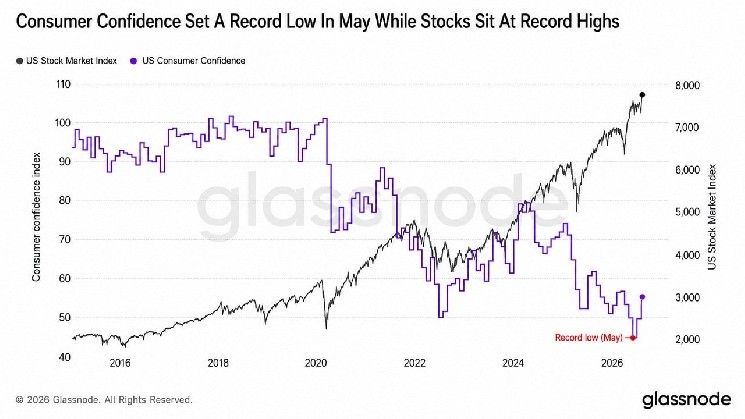
According to Glassnode, consumer confidence remains at one of its lowest levels in a decade, despite two consecutive months of improvement. This has not stopped households from moving money out of cash, as they expect further cost-of-living increases and a broader economic slowdown. The key question is where this capital is flowing. US stocks hit a new all-time high in early August, primarily driven by trading in AI-related stocks rather than a broad market rally. Bitcoin, historically seen as a hedge against declining trust in traditional finance, has not participated in this movement. Spot Bitcoin ETFs saw outflows of $389.7 million in one week, coinciding with rising equity markets—a divergence that aligns with Glassnode's data on capital flows. Bitcoin is currently trading at roughly half its October 2025 peak, stuck in a narrow range. Meanwhile, AI-related trading continues to attract fresh capital from retail traders, hedge funds, and even crypto-native institutional investors, who are redirecting funds into AI stocks and tokens. The macroeconomic backdrop has not been hostile to Bitcoin, with core inflation at a moderate 2.5% in July. However, Bitcoin's muted response to favorable inflation data is seen as a concerning signal, given its supposed role as a hedge against currency debasement. Spot Bitcoin exchange trading volume has fallen to its lowest since 2019, and recent ETF inflows are only a "fraction of any prior accumulation wave," suggesting institutional buying may have paused. This trend extends beyond trading: some Bitcoin miners are repurposing their power contracts and data center capacity for AI workloads. This appears to be a structural shift that could pressure Bitcoin's status as the default destination for capital leaving cash. The fundamental arguments for Bitcoin as a hedge against inflation or scarcity are not invalidated, but their expected impact has not materialized within the timeline anticipated by crypto optimists this summer.

cryptonews.ru08/17 09:55

Glassnode: Consumer Confidence Falls as AI-Related Stocks Rise, Bitcoin Lags Behind

cryptonews.ru08/17 09:55

Держатели XRP могут торговать опционами на платформе Derive, используя FXRP в качестве залога

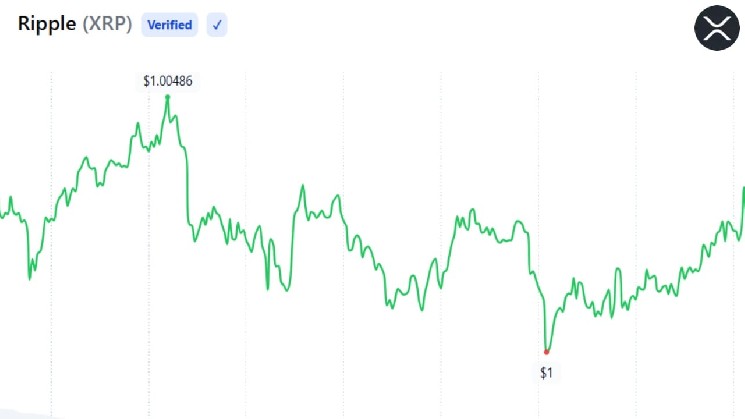
XRP holders can now trade options on the Derive platform using FXRP as collateral, as announced by Flare on August 12. This integration allows users to open positions from self-custody wallets while the underlying XRP backing the FXRP remains on the XRP Ledger. According to DeFi analyst Will Procheska, this provides XRP's dedicated holder base with a permissionless options market for generating yield or hedging. Derive's platform combines protocol-level settlements with an order book managed by Derive Trading Co., enabling users to retain asset control while professional market-makers provide liquidity. XRP options on Derive are cash-settled in USDC, so profits or obligations adjust the trader's USDC balance without transferring XRP or FXRP. The platform's portfolio margin system assesses overall account risk but may still trigger liquidations if margin levels fall below requirements. The launch expands Flare's XRPFi ecosystem. FXRP, introduced via the FAssets system in September 2025, creates an on-chain representation of XRP for use in smart contracts. It has since been integrated into spot trading and, more recently, permissionless lending markets on Morpho. This addition of options on Derive offers XRP holders hedging and premium-earning capabilities comparable to other major assets. While regulated XRP options debuted on CME Group in October 2025, Derive provides a decentralized alternative with USDC settlement and direct wallet access. The platform also supports perpetual futures, offering further trading strategies. Flare and Derive are exploring automated "strategy vaults" to simplify yield-generating options approaches for users.

cryptonews.ru08/17 05:44

Держатели XRP могут торговать опционами на платформе Derive, используя FXRP в качестве залога

cryptonews.ru08/17 05:44

US Debt Approaching $40 Trillion, BofA's Hartnett: Going Long on Gold Is the Optimal Solution Now

U.S. national debt is on the verge of reaching $40 trillion. Bank of America's Chief Investment Strategist Michael Hartnett, in his latest "Flow Show" report, identifies this as the core market narrative and argues that **going long on gold is the optimal solution** currently. He views gold as the best hedge against dollar depreciation, bond market collapse, and asset inflation. Key pressures on the bond market include soaring debt interest payments, nearing $1.4 trillion annually and set to become the federal government's largest expenditure. Simultaneously, a surge in corporate bond issuance, particularly for AI/data center projects (up roughly 12 times historical averages), is structurally steepening the yield curve and crowding out buyers for long-term Treasuries. Hartnett reiterates his asset allocation framework for the 2020s: **ABB (Away From Bonds), ABD (Away From Dollar), and AI (All In AI)**. Within the "ABD" theme, he explicitly recommends going long gold. He suggests policymakers have limited tolerance for significantly higher yields, especially with elections approaching. Under the "ABB" theme, he notes that some previously neglected long-duration assets like REITs, biotech (XBI), regional banks (KRE), and small-cap stocks are quietly outperforming as the market prices in a peak in yields. Conversely, within the "AI" theme, he proposes a counterintuitive trade: **shorting AI-related bonds**, given the sector's massive capital expenditure needs and negative free cash flow. Hartnett outlines key upcoming events (Jackson Hole, CPI data, Fed & BOJ meetings, U.S. elections) that will influence markets. His final outlook is politically contingent: a Republican-held Senate could fuel a further AI-driven market bubble into 2027, while a Democratic victory in November could trigger a >10% decline in stocks, the dollar, and bond yields by year-end.

marsbit08/17 03:11

US Debt Approaching $40 Trillion, BofA's Hartnett: Going Long on Gold Is the Optimal Solution Now

marsbit08/17 03:11

Bitcoin Options Data Tells Us Something: Here's What to Pay Attention To

Recent data from the Bitcoin options market indicates that investor fears regarding short-term price swings have eased, but the market is not yet overly optimistic. According to Glassnode analysis, the $60,000–$70,000 range has become a critical trading zone for determining Bitcoin's next directional move. Market activity remains relatively low overall, with continued narrowing in implied volatility and skew metrics. Notably, short-term implied volatility has decreased significantly. The one-week at-the-money implied volatility has fallen to around 26%, while the six-month measure remains near 39%, steepening the volatility term structure. This suggests investors anticipate less dramatic near-term price action but maintain longer-term uncertainty. Demand for downside protection has also weakened, indicating less defensive positioning. Gamma analysis reveals two key areas. Negative gamma is concentrated below $60,000, which could accelerate volatility and amplify price moves if Bitcoin declines into that zone due to market maker hedging. Conversely, positive gamma steadily increases around $70,000, where hedging activity could suppress volatility and have a stabilizing effect if the price rises to that level. In summary, while short-term panic has subsided, investors are not complacent. The decline in implied volatility and skew points to reduced fear, while the concentration of gamma and open interest suggests the $60,000–$70,000 range will likely be decisive for Bitcoin's next significant directional breakout.

cryptonews.ru08/14 19:50

Bitcoin Options Data Tells Us Something: Here's What to Pay Attention To

cryptonews.ru08/14 19:50

活动图片